
News
Island nations of the Indian Ocean and South Pacific urge non-interference in great power rivalry


President Ranil Wickremesinghe participated in the ‘Ocean Nations: The 3rd Annual Indo-Pacific Islands Dialogue,’ moderated by Dan Baer, Senior Vice President for Policy Research at the Carnegie Endowment for International Peace and hosted by the Carnegie Endowment and Sasakawa Foundation. During this event, he highlighted the reluctance of island nations in the Indian Ocean and South Pacific to become embroiled in the rivalry between major world powers. The President emphasized that these nations are focused on their own priorities, including social, economic, and ecological development and seek to maintain their sovereignty and independence.
President Wickremesinghe asserted that Sri Lanka’s government does not align itself with either India or China and firmly stands for Sri Lanka’s interests above all else. This commitment to sovereignty extends to other island nations in the region.
Island nations in the Indian Ocean and South Pacific have distinct priorities, unrelated to the Quad (comprising the US, India, Japan, and Australia) or China’s objectives, he said, adding that Sri Lanka is open to collaboration with any partners willing to respect its autonomy.
In terms of regional frameworks President Wickremesinghe noted that China’s rise occurred within existing regional frameworks such as APEC and ASEAN, which many nations prefer to maintain. The recent expansion of great power rivalry beyond these frameworks has raised concerns among member nations.
He noted that the South Pacific and the Indian Ocean hold immense strategic value. The South Pacific is a vital hub for the US Navy and the Indian Ocean played a crucial role in World War II. President Wickremesinghe noted, “The South Pacific which includes Hawaii – it is here that the US dominance of the Pacific established in WW2 and Battle of the Coral Sea and Midway as well as the shooting down of Admiral Yamamoto’s plane took place. The importance of the Indian Ocean was best described by Winston Churchill who said the most dangerous moment of war was the capture of Ceylon and consequently the loss of Indian Ocean.”
The Indo-Pacific concept has gained recognition, primarily due to mounting challenges from China, the President said, adding that it has prompted a re-evaluation of regional dynamics and cooperation, such as the Jakarta Concord within the Indian Ocean Rim Association (IORA).
The G7’s attempt to involve European powers and NATO in the Indo-Pacific was met with opposition, with only France expressing interest. This move was seen as violating IORA’s rules-based order, the President pointed out.
The President also noted that the Quad has shifted from a focus on security and dialogue to applying coordinated pressure in the region. While surface warfare threats are minimal in the Indian Ocean, the issue of submarine warfare needs to be addressed within IORA.
In terms of Security Dialogues, the President pointed out that the island nations find security dialogues acceptable but emphasize non-interference in their internal affairs. Many island nations, including Sri Lanka, have not engaged in high-level discussions regarding the Indo-Pacific. Recent developments such as the US opening an embassy in the Maldives were also noted.
The power balance in the Indian Ocean is evolving, influenced by ASEAN, the Russian-Ukraine war, and the emergence of BRICS+. This changing landscape favours the independence of island nations and calls for strengthened cooperation between IORA, ASEAN, and BRICS+.
In response to a question posed on the Hambantota port, President Wickremesinghe said Sri Lanka expressed concerns over the labelling of the Hambantota commercial port as a Chinese military base. The country is developing the Trincomalee harbour in cooperation with India and intends to raise the matter at international forums.
He also emphasized the need for IORA to accommodate the Indo-Pacific concept, recognizing the interconnectedness of the Indian and Pacific Oceans and enabling cooperation among small island states in both regions.
The island nations of the Indian Ocean and South Pacific are resolute in their pursuit of independence, non-interference and the protection of their unique priorities amidst the evolving dynamics of great power rivalry in the Indo-Pacific region.
(PMD)




Latest News
Sun directly overhead Mannar, Periyamadu, Puliyankulam, Welioya and Pulmoddai about 12.11 noon today (30)

The sun is going to be directly over the latitudes of Sri Lanka from 28th of August to 07th of September due to its apparent southward relative motion.
The nearest places of Sri Lanka over which the sun is overhead today (30) are Mannar, Periyamadu, Puliyankulam, Welioya and
Pulmoddai about 12.11 noon.

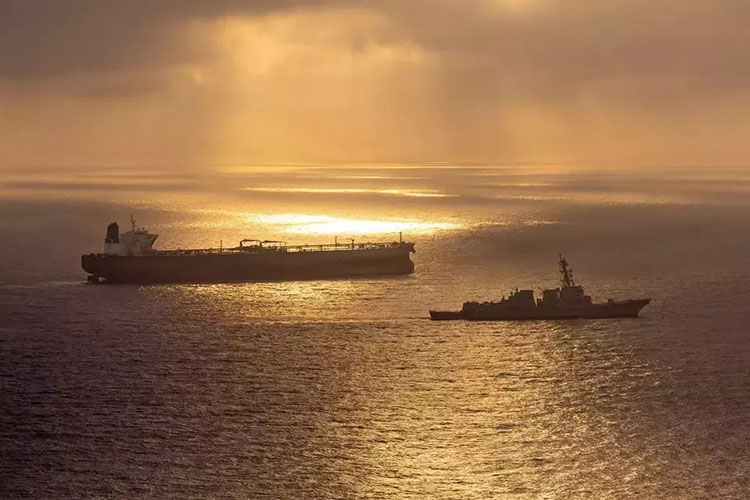
(AFP) Sri Lanka’s maritime authorities were monitoring a fleet of 11 US-sanctioned Iranian oil tankers just off the island’s southern coast, the foreign minister said Wednesday.
The tankers were spotted close to the Galle harbour where an Iranian frigate, IRIS Dena, was sunk by a US submarine in March, killing 104 sailors. Sri Lanka’s navy rescued 32 Iranian sailors from that frigate.
Iranian vessels have been in limbo, unable to return to their home port because of a US blockade.
Sri Lanka’s Foreign minister Vijitha Herath said the tankers were in international waters where they had freedom of navigation.
“These ships are away from our territorial waters… we have no hold on them, nor have we facilitated them,” Herath told AFP.
The military deployed reconnaissance aircraft and patrol boats to monitor the vessels outside Sri Lanka’s 12-nautical-mile territorial waters, a military official told AFP on condition of anonymity.
“There is no indication of any ship-to-ship transfer of oil or illegal discharge of pollutants, so there is no basis for Sri Lankan authorities to take action against them,” the official said.
Many Iranian merchant vessels moved east towards the Strait of Malacca and Singapore due to US sanctions, while several remained near Sri Lankan waters, authorities said.
Sri Lankan officials said Washington had not formally notified Colombo about sanctioned Iranian-flagged vessels
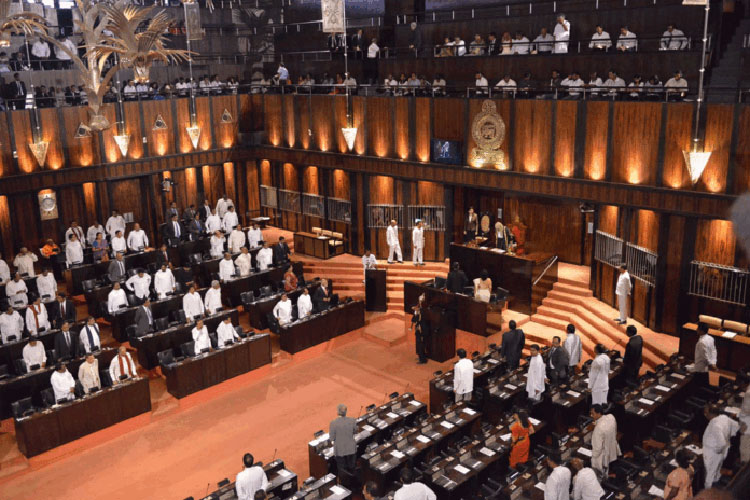
Parliament is to debate next Wednesday the Government’s proposal to abolish the post of Chief of Defence Staff (CDS), with the Second Reading of the Chief of Defence Staff (Repeal) Bill scheduled for September 9.
The Bill seeks to repeal the Chief of Defence Staff Act No. 35 of 2009, which was introduced shortly after the end of the armed conflict.
According to Secretary General of Parliament Kushani Rohanadeera, Parliament will meet from September 8 to 11, with the business for the week approved by the Committee on Parliamentary Business chaired by Speaker Dr. Jagath Wickramaratne.
The debate on the Chief of Defence Staff (Repeal) Bill is scheduled to take place from 11.30 a.m. to 5 p.m. on Wednesday, following questions to the Prime Minister and other parliamentary business.
The CDS post was established under the 2009 Act as part of the country’s higher defence command structure.
On Tuesday, September 8, the House will consider two Orders published in Extraordinary Gazettes under the Motor Traffic Act from 11.30 a.m. to 5 p.m., followed by an Opposition motion at the adjournment.
On Thursday, September 10, Parliament will debate a Resolution under the Women’s Empowerment Act.
The final sitting day of the week, Friday, September 11, has been allocated from 11.30 a.m. to 5.30 p.m. for several Private Members’ Motions.
The motions will cover issues including regulation of the petroleum, fuel and water industries, measures to increase the birth rate, protection of the Diyagama Forest, pension deductions affecting Pirivena teachers, food-crop cultivation in mountainous areas, development of the Kithul industry and the establishment of a Faculty of Medicine at South Eastern University.
Questions at the adjournment will be taken up at the end of each sitting day.

Voting closes in Iceland’s knife-edge EU referendum

Showers in the Sabaragamuwa, Western and North-western provinces and in Galle, Matara, Kandy and Nuwara-Eliya districts

Sun directly overhead Mannar, Periyamadu, Puliyankulam, Welioya and Pulmoddai about 12.11 noon today (30)

Lanka tracks 11 US-sanctioned Iranian tankers off coast

House to debate abolition of Chief of Defence Staff post

Mass graves tragic evidence of failed states – Rathnayake

‘Dates have the highest sugar content to fight Coronavirus’

Sunday Island 27 December – Headlines

#SundayIsland 17th December – Headlines

Sunday Island – 28th March

Sunday Island Headlines – 21 March

Sunday Island – 21st February – Headlines
-

 News5 days ago
Missing doctor’s body found in Mahiyanganaya
-
 News5 days ago
Australia declines to release Finance Secy Suriyapperuma’s citizenship details
-
 News5 days ago
22A: BASL suggests CJ recuse himself from hearing petitions
-

 News2 days ago
Eight politicians in drug kingpin probe
-

 Editorial6 days ago
Govts. drag feet as undergrads age
-
 Features4 days ago
Insights from Chieftains of Uva: Genealogy of two Kandyan Families – Part II
-

 Features4 days ago
Export diversification: Missing the wood for the trees – Part I
-

 Business2 days ago
Sri Lanka opens up: A new season of direct connectivity