
Business
International ‘Mother Language’ Day and Multilingual Education in Sri Lanka

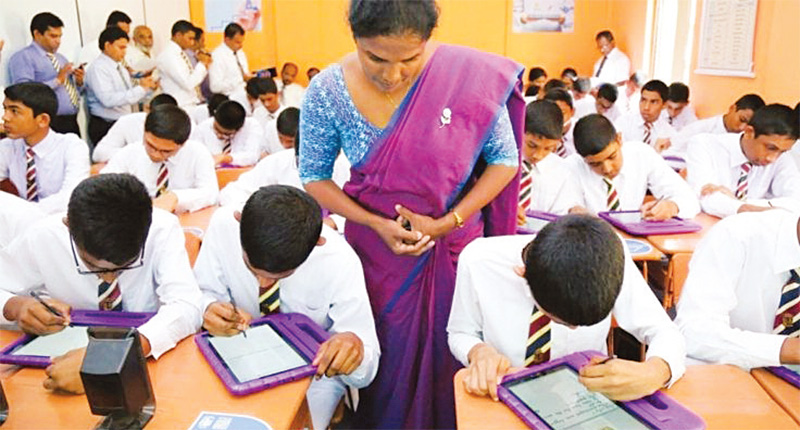
Ayubowan Wanakkam Good morning!
International Mother Language Day is celebrated on 21 February every year by UNESCO and the UN to highlight the significance of languages in advancing human and social development. The theme for 2024 is “Multilingual education – a pillar of learning and intergenerational learning” which is crucial for inclusive education and to preserve and develop indigenous languages.
How does this theme relate to Sri Lanka? This paper outlines a few issues for consideration.
Issues related to multilingual education.
Psychological issues:
Have we considered psychological principles when introducing language policies to Sri Lanka? For example, it is well-known that concepts are best learned using the mother tongue. We know that bilingualism helps in the intellectual development of children. There is an optimum age to learn a second language, and it differs depending on the linguistic characteristics of the mother tongue and the second language. Does this mean primary education in Sri Lanka should be mainly in Sinhala and Tamil? What is the optimum ‘intellectual age’ to introduce a second or third language in school?
Despite some evidence that bilingualism leads to ‘higher intelligence’, demands for monolingual English education is growing. Should academia, educationists and the government cautiously educate the public on the matter?
Social issues:
In Sri Lanka, teaching of English includes a dose of British or Western culture. The dose is higher in international schools, because the subjects taught follow overseas curricula. The content they study, the history they learn and the values they inculcate are different from the local realities. Are we witnessing the emergence of a ‘new ethnic group’ in Sri Lanka with its own form of Western culture, behavioral practices, and belief systems? What are its social implications? What do sociologists and psychloigist have to say about this?
In Sri Lanka, English fluency is used unfairly as a basis of discrimination. It leads to intelligent students being unjustly denied employment opportunities due to poor English proficiency. English is known in Sinhala slang as ‘Kaduva’, i.e., the sword that cuts people. Meritocracy is often replaced by Anglocracy. While many in Sri Lanka protest about nepotism and corruption, generations of talented voiceless children are discriminated against because they are not fluent in English. Civil society groups (often dominated by English-speaking groups) appear to be silent. Why is this so?
Educational issues:
Education in Sri Lanka is divided on linguistic lines and a majority of state schools are monolingual, either Sinhala or Tamil. A few are bilinguial (Sinhala and Tamil) or English with Sinhala or Tamil, limited mainly to a few elite schools. What are the policies to transition towards a more integrated bilingual or trilingual education system that simultaneously preserves and develops the mother-language and culture of the child?
Is it time to review the the policy of introducing English streams to some of the schools? This may have inadvertently led to widening of inequalities. In some schools, the English medium classes are filled with the students having social connections and the best teachers are allocated to them, widening of intra-school inequalities and fostered resentments. If true, what is the policy we propose? Have we considered transliteration as an interim measure? For example could we use Engligh technical terms from Ordinary Level onwards, while retaining the explnatory texts in Sinhala or Tamil?
Hundreds of village schools and poorer urban schools suffer from a shortage of qualified English teachers. These children are not fluent in English for no fault of theirs. The fault is in the gross inequalities in education facilities in English. What steps do we propose to bridge this gap in the shortest possible time?
Almost a third of students (around 33%) fail English as a subject in the G.C.E. Examination!. How do we address this issue of widening access to ‘English for communication’? Should we aim for universal improvements in English for communications, rather than English streams in schools? Should we reintroduce a national program using social media, radio, CDs, and TV to reach the remote areas?
Other issues
What steps are we to take to preserve the indigenous language of the Veddhas? What about the dilect of Creole? Are we allowing extinction of these langauge? What about the different dialects of Sinhala and Tamil?
How would artificial intelligence (AI) help in multilingualism? India is translating many regional languages to English using AI. Are we investing in a similar project? Considering the global shifts in economic center of gravity, should we invest more on teaching Hindi and Chinese?
Sri Lanka’s language education policies need review and a broader discussion. We have some hope. The event to celebrate International Mother Language Day on 21st February organized by the Department of Sinhala, University of Ruhuna, in collaboration with the National Institute of Language Education and Training (NILET), from 2:00 pm to 6:00 pm at the SLFI could mark a new beginning…
Dr Saroj Jayasinghe
Emeritus Professor of Medicine
Consultant Physician
PS
These are the author’s own views and not of his employers


By Hiran H. Senewiratne
Sri Lanka’s financial literacy rate is approximately 58 percent. Such literacy is absolutely necessary for the inclusion of people in the country’s financial system which in turn is central to overall economic development, Central Bank Governor Dr. Nandalal Weerasinghe said.
‘One needs to have knowledge and skills of a financial nature to figure in financial inclusiveness. While 86 percent of Sri Lanka’s population has access to the country’s financial system, 82 percent of the public has at least a savings account in the country’s banking system, Dr Weerasinghe said.
The Governor made these comments recently at the inauguration of Financial Literacy Month 2026 at the Central Bank’s Centre for Banking Studies, Rajagiriya.
Dr. Weerasinghe added: ‘Suitable, affordable and quality financial instruments are needed to enhance financial literacy in the country.
‘Financial information has to be accurate, risk-free and accountable, thus creating confidentiality in the financial system, which would enable the sector to reach greater heights’.
Meanwhile CBSL sources said: ‘The Literacy Month opened with the two-day ‘FinLit Expo Colombo’. The expo gives the public the opportunity to engage with institutions, better understand financial services, gain practical insights into managing their finances and learn how to protect themselves from financial fraud and scams.
‘The CBSL is leading the program in collaboration with stakeholder institutions. It forms part of the Financial Literacy Roadmap for Sri Lanka, which is implemented under the National Financial Inclusion Strategy (NFIS), the national framework for widening access to and use of formal financial services.
‘The Colombo event will be followed by six regional ‘FinLit Expos’ aimed at direct engagement with local communities. Partner institutions will also run awareness activities. Together, the events are intended to provide financial education to communities and encourage people to apply financial knowledge in everyday life.
‘A public awareness campaign on television, radio, newspapers and social media will extend the program’s reach. The program also includes digital financial literacy activities and the promotion of QR codes and other online payment methods.
‘The public and stakeholder institutions are encouraged to take part in the month’s activities under the theme, “Towards a Financially Literate Sri Lanka”.
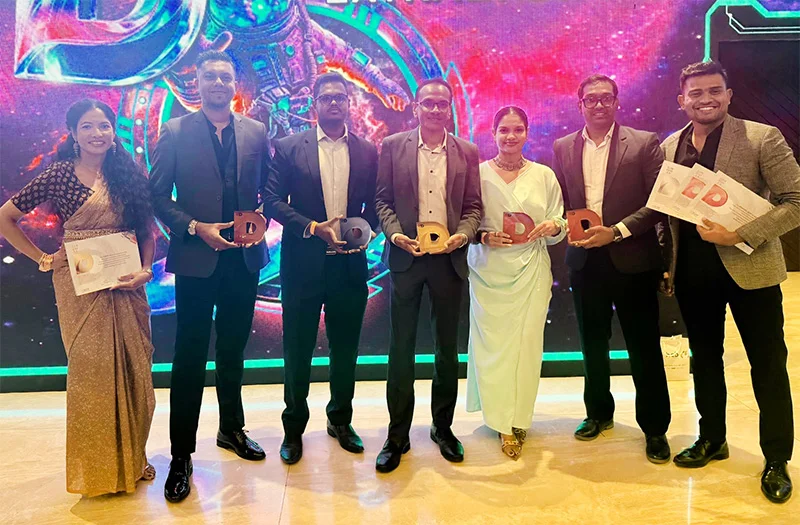
HUTCH Sri Lanka strengthened its position as a leader in digital engagement by securing five accolades at SLIM Digis 2.6, emerging as one of the most recognized brands at this year’s digital excellence awards. The achievement was further highlighted by HUTCH being the only telecom operator to be recognized at the event.
Organized by the Sri Lanka Institute of Marketing (SLIM), SLIM Digis is Sri Lanka’s premier platform celebrating excellence, innovation, and outstanding achievements in the digital marketing industry. The recognition highlights HUTCH’s growing strength in digital-first, agile, and creative marketing, and its ability to respond to everyday moments, engage audiences, and deliver impactful digital campaigns.
The Gold Award for Best Use of Agile and Moment Marketing, a Silver for Best Use of Digital in a Marketing Campaign, and a Bronze for Best Performance Marketing were all awarded for “Keeping Sri Lanka Connected Through Ditwah,” HUTCH’s response to the cyclone that struck Sri Lanka in November 2025, recognised for the speed and relevance with which HUTCH kept customers better connected and informed.
HUTCH Roaming also earned two further Bronze awards for Best Use of Digital in a Marketing Campaign and Best Use of Creative Content. Bringing together AI-led storytelling, the campaign was designed around distinct customer clusters, each characterized by unique travel behaviours, needs, and perceptions, delivering relevant content for different audiences within a single overarching campaign.
“These wins are a strong reflection of how HUTCH approaches marketing today, staying close to the moments that matter to our customers and responding with speed, relevance, and creativity. Being the only telco recognised at SLIM DIGIS 2.6, and across five categories, is proof that agility and thoughtful storytelling can go hand in hand. This recognition reflects the collective efforts with our strategic partners, whose collaboration, expertise, and shared commitment brought great campaigns to life,” said Hamdhy Hassen, Chief Marketing Officer, HUTCH Sri Lanka.
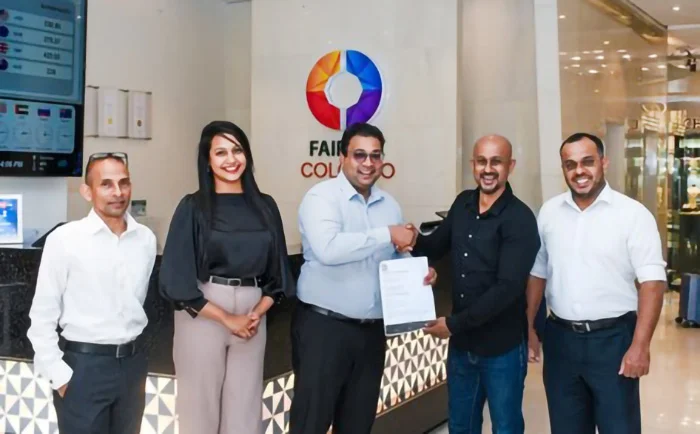
Sri Lanka’s Smart Luxury Business Hotel to Host Delegates and Contestants from Over 40 Countries as the Island Nation Hosts Its First-Ever Global Pageant of This Scale
Fairway Colombo, a subsidiary of Fairway Holdings (Pvt) Ltd, has been appointed as the Official Accommodation Partner for Manhunt International 2026, one of the world’s most prestigious male pageants, scheduled to take place in Sri Lanka.
The event marks a historic milestone for Sri Lanka, as the country prepares to host a global pageant of this scale for the very first time. More than 40 contestants representing countries from across the world will arrive in Colombo, bringing together diverse cultures, international media attention, and a global audience — further strengthening Sri Lanka’s position as a premier destination for tourism, culture, and hospitality.
As the official accommodation partner, Fairway Colombo will welcome and host international delegates and contestants throughout their stay in Colombo, delivering the exceptional hospitality experience and personalized service that the hotel is recognized for.
A Landmark Partnership for Sri Lankan Tourism
“We are truly honored to be selected as the Official Accommodation Partner for Manhunt International 2026. This partnership is a proud moment not only for Fairway Colombo but also for Sri Lanka as a whole. Hosting an event of this global stature provides us with an opportunity to showcase our commitment to smart luxury, innovation, and authentic Sri Lankan hospitality to an international audience. We look forward to creating a memorable and seamless experience for all delegates and guests,” said Avinga Wanigasekara, General Manager of Fairway Colombo.
Strategically located in the heart of Colombo’s historic Fort district, Fairway Colombo is recognized as a Smart Luxury Business Hotel, combining modern comfort, advanced technology, and exceptional service. As part of Fairway Holdings (Pvt) Ltd, the property represents the group’s vision of delivering innovative, world-class experiences across the hospitality and leisure sectors.

Delegation from Korean Volunteer Association meet Secretary to the President

Imran Khan’s PTI braces to fight federal takeover of Khyber Pakhtunkhwa

Nissanka’s return headlines Sri Lanka’s Test squad against Pakistan

HRCSL issues recommendation on seizure of four books by B. Piratheepan by Sri Lanka Customs

Former Zimbabwe player and umpire Sarah Dambanevana dies aged 36

Deflated Sri Lanka look to prevent whitewash against dominant Pakistan

‘Dates have the highest sugar content to fight Coronavirus’

Sunday Island 27 December – Headlines

#SundayIsland 17th December – Headlines

Sunday Island – 28th March

Sunday Island Headlines – 21 March

Sunday Island – 21st February – Headlines
-

 Features5 days ago
The Sri Lankan who made Scottish history
-

 Sports5 days ago
Nissanka absence opens door for Sri Lanka’s young guns
-

 News4 days ago
NDB fraud Rs 60mn more than reported
-

 News6 days ago
Gnansara Thera to be assigned to prison printing section: Officials
-

 News4 days ago
Removing monk’s robes matter for Sangha to decide: Mahanayake Theras
-

 Features5 days ago
Future of Sri Lanka’s state university system: Should it be shut down and reopened?
-

 News6 days ago
OIC of FCID summoned before Maligakanda Magistrate
-
 News5 days ago
Shiranthi R remanded until 13 Oct.