
News
Innovative water management techniques revolutionising paddy cultivation in Lanka

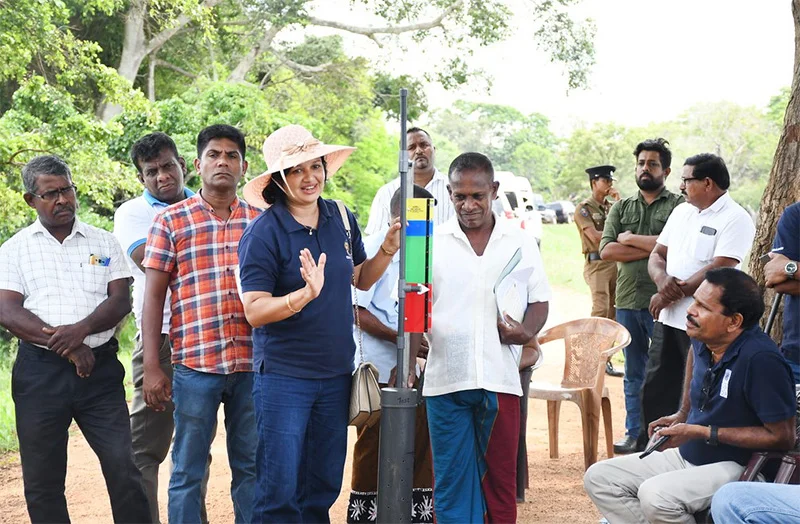
Around 2,500 liters of water are required to produce just one kilo of rice
Around 2,500 liters of water are required to produce just one kilogram of rice, putting immense pressure on Sri Lanka’s water resources, especially during droughts, according to a release from the United Nations Development Programme (UNDP). In response, the Green Climate Fund-financed Climate Resilient Integrated Water Management Project (CRIWMP) is tackling this challenge with an innovative solution: Alternate Wetting and Drying (AWD). This project, implemented by the Government of Sri Lanka with technical support from UNDP, is transforming agricultural productivity through integrated water management. Data shows that AWD reduces water usage by up to 27% and increases cropping intensity from 1.2 to 2.1, allowing farmers to cultivate more frequently, boosting harvests, income, and food security.
For centuries, rice has been the backbone of Sri Lankan agriculture, with over one million hectares of paddy fields cultivated annually, accounting for 37% of the country’s land. However, as climate change accelerates, managing water resources for paddy farming has become increasingly difficult.
The success of CRIWMP goes beyond technology; it empowers farmers with the knowledge to adopt these innovations. The project has worked closely with farming communities, providing training, tools, and climate advisories to help them implement AWD effectively.
Take, for example, the Palugaswewa Farmer Organization. President R.B.M. Anura Wasanththa shared that before the project, they could only fully cultivate their land during the Maha (major) season and a fraction during the Yala (minor) season. With AWD, however, farmers now use simple tools, like water pipes buried in the soil, to monitor water levels and irrigate only when needed. Agro-meteorological advisories help synchronize irrigation with rain, preserving tank water for critical times.
“Earlier, we used tank water for land preparation without understanding ‘on-farm and off-farm’ water management. We weren’t familiar with agro-meteorological advisories either. Now, thanks to the depth gauge, we can accurately calculate tank water levels and follow advisories to make better use of rainwater, conserving a large portion of the irrigation water in the tank,” says Wasanththa. “It’s like saving money in a bank for us.”
As AWD adoption grew, CRIWMP introduced advanced technologies like the Sensor Light System and the Water Level Arrow Marking System. The former uses solar-powered sensors to monitor water levels, signalling farmers when to irrigate, while the latter uses a floating arrow to indicate water levels, enabling farmers to check them from a distance without entering the field.
These innovations have made farmers, like Wasanththa, feel more confident in managing their water resources, with many referring to themselves as “smart” farmers.
Geethika Wijesundara, the Climate Smart Agriculture Programme Coordinator for CRIWMP, calls this shift a paradigm change for Sri Lanka’s paddy farming. “By adopting AWD, farmers now use just 2.9 to 3 acre-feet of water per acre, allowing water saved to be allocated to other field crops, boosting yields and income.”
Secretary of the Palugaswewa Farmer Organization, Susantha, shared that their adoption of AWD allowed them to fully cultivate their Yala land and use only the necessary amount of water. After the Maha season, they had 240 acre-feet of water left in their tank, and with additional rainfall, they were able to irrigate both paddy and green gram. “We still have 30 acre-feet of water left in the tank for our domestic use!” he says.
AWD’s impact extends beyond water conservation. Methane emissions, a major contributor to global warming, have been reduced by 40% in fields using the system. In Sri Lanka, studies show methane emissions in flooded paddy fields average 570 mg/ha, but with AWD, this has been reduced to 325 mg/ha. “This has shown us that integrated water management is crucial in paddy farming,” says Dr. Geethika. “If AWD is adopted across Sri Lanka’s paddy fields, we could cut methane emissions by 245,000 tons annually.”
As CRIWMP continues to roll out innovative technologies, the future of Sri Lankan paddy farming looks brighter, more sustainable, and more resilient. Susantha adds, “I never knew paddy fields emit methane. Thanks to CRIWMP, we’ve learned how to reduce our contributions to global warming.”
Taking AWD even further, the project plans to map soil drainage classes in two village irrigation systems to develop the most efficient crop plans for the Yala season. This will ensure paddy is cultivated according to water availability, while introducing higher-value off-season crops to increase smallholders’ resilience and profitability in a changing climate.






News
Landslide Early Warnings issued to the Districts of Colombo, Galle, Kalutara, Kandy, Kegalle, Matara, Nuwara Eliya and Ratnapura


The National Buliding Research Organization has issued Landslide Early Warnings to the Districts of Colombo, Galle, Kalutara, Kandy, Kegalle, Matara, Nuwara Eliya and Ratnapura from 10:00 hrs on 20.09.2026 To 10:00 hrs on 21.09.2026
Accordingly,
LEVEL II (AMBER) landslide early warnings have been issued to the Divisional Secretaries Divisions and surrounding areas of Nagoda and Neluwa in the Galle district, Pasbage Korale in the Kandy district, Dehiowita and Yatiyanthota in the Kegalle district, Pitabeddara in the Matara district, Kotmale, Ambagamuwa and Norwood in the Nuwara Eliya district and Ayagama, Pelmadulla, Ratnapura and Eheliyagoda in the Ratnapura district.
LEVEL I (YELLOW) landslide early warnings have been issued to the Divisional Secretaries Divisions and surrounding areas of Seethawaka in the Colombo district, Palinda Nuwara and Bulathsinhala in the Kalutara district, Ganga Ihala Korale in the Kandy district, Deraniyagala in the Kegalle district, Kotapola in the Matara district and Ratnapura, Kalawana, Kuruwita and
Elapatha in the Ratnapura district.

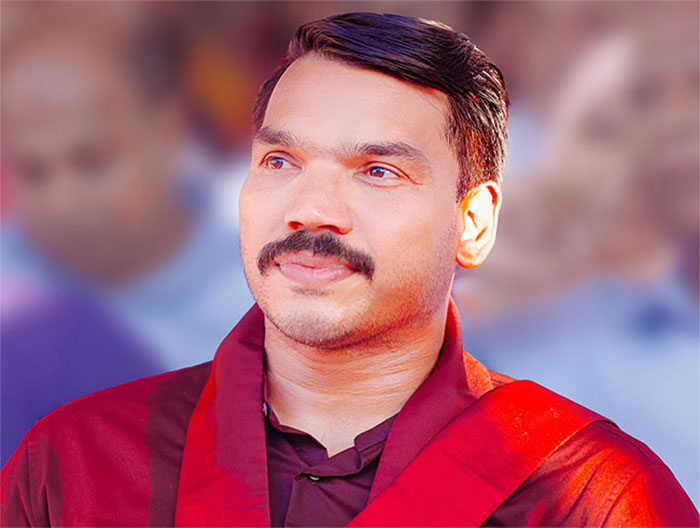
MONETABRIEF – Namal Rajapaksa, son of Sri Lanka’s former leader Mahinda Rajapaksa, was denied bail by the Colombo chief magistrate despite pleading that he needed to attend important Buddhist rituals and travel to India.
The 40-year-old opposition MP’s lawyer, Shavindra Fernando, told the court that Namal had been invited to take part in a pinnacle-capping ceremony at the Pothgul Vihara temple on September 26.
“If my client fails to attend this event, it should be regarded as a disrespect shown to the chief incumbent of the temple,” Fernando said.
He added that Namal had also received an invitation to visit India from 27 September to 1 October and therefore sought bail.
However, he was remanded until September 29 in connection with allegations that he received kickbacks of $800,000 from the $2.3 billion Airbus aircraft purchase deal his father – Mahinda Rajapaksa – approved as president in 2013.
Deputy Solicitor General Janaka Bandara invoked the Buddha’s teachings in response to Namal’s lawyer, Fernando, saying that a judicial matter was far more important than attending a religious ceremony.
“According to what is being said here, the accused himself should have considered this while conducting dealings with Nimal Perera,” Bandara said, referring to the businessman who allegedly routed the bribe money to Namal.
Bandara quoted at length from a recent Supreme Court decision that expanded on the Buddha’s teachings, noting that when a ruler is righteous, the people follow; but when the ruler is dishonest, the citizenry follows that example too.
The 40-year-old MP was arrested on 4 September under the new anti-graft legislation parliament adopted unanimously in 2023.
Namal is primarily accused of accepting $800,000 out of a 1.4 euro million bribe that the then SriLankan Airlines chief executive, Kapila Chandrasena, is alleged to have received from Airbus after finalising a $2.3 billion purchase of aircraft in 2013.
Magistrate Asanga S. Bodaragama told the previous court hearing that he did not have the power to grant Namal bail because the Director-General of the Commission to Investigate Allegations of Bribery or Corruption (CIABOC) had issued a certificate under section 149 of the Act.
The provision stipulates that a magistrate may not grant bail when the CIABOC DG presents a certificate confirming that an offence under the Act has been committed.
The magistrate noted that he could grant bail only in “exceptional circumstances”, but there was no acceptable argument from the defence for him to do so.
A Buddhist temple festival and an invitation from India could not be considered good enough reasons to grant bail.
The businessman who acted as a conduit for the bribe – Nimal Perera – had turned state witness, providing details of how the money was given to Namal through two bank transfers in 2014 and 2015, the court was told.
Under the provisions of the August 2023 Act, Namal Rajapaksa could be held in custody until the conclusion of the trial, even though the magistrate remanded him until September 18, the maximum he could be incarcerated at a time.
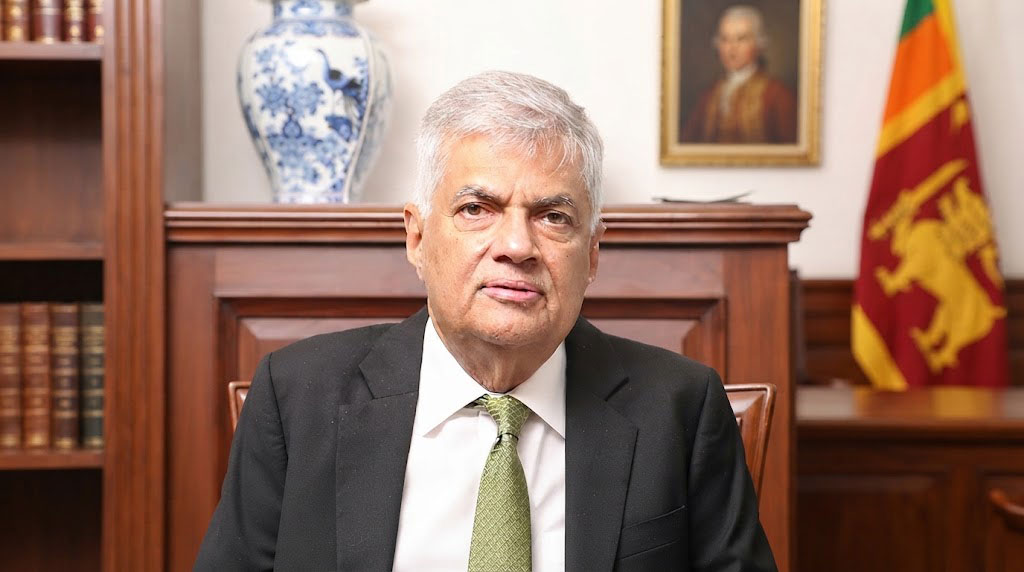
Former President and UNP Leader Ranil Wickremesinghe said Sri Lanka’s first Executive President, J. R. Jayewardene, launched a 17-year revolution that transformed the country’s economy, strengthened democracy and improved living standards.
Addressing a scholarly discussion organised by the D. S. Senanayake Political Chair at the National Library on Thursday to mark Jayewardene’s 120th birth anniversary, Wickremesinghe recalled how his predecessor’s policies expanded education, decentralised property ownership and improved access to housing and electricity.
He said school enrolment increased from 2.5 million to 4.1 million during Jayewardene’s tenure, while household electricity coverage rose from 10 per cent to 95 per cent.
Housing conditions also improved, with the proportion of homes with permanent roofs and cement walls increasing from 40 per cent to 80 per cent, Wickremesinghe said.
“Isn’t this a revolution?” he asked, stressing that the reforms had improved the quality of life of ordinary people.
Wickremesinghe also highlighted Jayewardene’s constitutional reforms, particularly Article 3 of the 1978 Constitution, which vested sovereignty, including fundamental rights and the franchise, in the people.
He said the Constitution provided for the direct election of the Executive President by the people and guaranteed judicial protection of fundamental rights through Article 126.
Paying tribute to former leaders Ranasinghe Premadasa, Gamini Dissanayake and Lalith Athulathmudali, Wickremesinghe said their contributions to housing, the Mahaweli Development Programme and the Mahapola scholarship scheme formed part of the broader transformation initiated under Jayewardene.
He said activities to mark the UNP’s 80th anniversary were now under way and invited SJB members to join in continuing Jayewardene’s legacy.

Landslide Early Warnings issued to the Districts of Colombo, Galle, Kalutara, Kandy, Kegalle, Matara, Nuwara Eliya and Ratnapura

Chamari Athapaththu’s unbeaten 83 leads Sri Lanka into final

Showers expected in the Western, Uva, Sabaragamuwa and North-western provinces and in Galle, Matara, Kandy and Nuwara-Eliya Districts.

Namal Rajapaksa Buddhist gambit fails, bail denied

JR’s 17-year revolution transformed Lanka, says Ranil

Vehicle prices drop by up to Rs. 1 mn, says importers’ body

‘Dates have the highest sugar content to fight Coronavirus’

Sunday Island 27 December – Headlines

#SundayIsland 17th December – Headlines

Sunday Island – 28th March

Sunday Island Headlines – 21 March

Sunday Island – 21st February – Headlines
-

 Opinion6 days ago
From Galkissa (Mount Lavinia) to Tambuttegama
-

 News3 days ago
US embassy won’t comment on IGP’s probe into joint drug raid
-

 Features5 days ago
The emptying university: why are academics leaving?
-

 Features6 days ago
Sri Lanka’s university crisis: Brain drain and union action demand urgent reform
-

 Business3 days ago
All-new Bolero MaXX unveiled in Sri Lanka
-

 Editorial6 days ago
Muscle flexing, astroturfing and dog-and-pony shows
-

 Opinion6 days ago
Ashraff: From the SLMC towards the National Unity Alliance
-

 News2 days ago
Bid for Basil’s extradition nears final stage: Police