
News
Industry leaders say ban on oil palm crop expansion has jeopardized Rs. 26bn investment

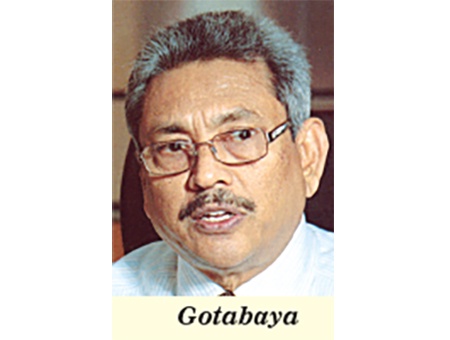
Representatives of the Palm Oil Industry Association (POIA) Association met with President Gotabaya Rajapaksa to present an appeal for a pragmatic solution to the impasse created by non-scientific opposition to the cultivation of oil palm, Dr. Rohan Fernando, president of the industry’s apex body, said.
The President’s announcement of a ban on further expansion of the crop has placed a Rs. 26 billion investment in jeopardy, he noted.
“We have presented the facts that respond to the environmental and other concerns expressed by critics, and elaborated on the economic potential of the industry in terms of supporting the government’s efforts to conserve foreign exchange through import substitution, and to generate better wages for plantation workers,” Dr. Fernando told the Association’s AGM last week.
He said that with the re-election of the founder office bearers and committee of the POIA for a second two-year term, business leaders pledged to continue their advocacy in the national interest on behalf of Sri Lanka’s beleaguered palm oil industry.
Palm oil is the most-widely used vegetable oil in the world, meeting 42 per cent of global demand from only 14.8 million hectares of land world-wide, while Soya Bean, the No. 2 crop, meets only 29.8 per cent of the global oil demand from 103.8 million hectares of land, he elaborated.
He said the current mean national yield of coconut oil is 0.8 MT per hectare in contrast to the global mean palm oil yield of 3.8 – 4.0 MT per hectare, which means that five times more land needs to be allocated to produce an equivalent volume of coconut oil.
A worker employed in an oil palm plantation earns an average of over Rs. 60,000 per month, which is more than twice the wages of a worker employed on a tea or rubber plantation, Dr Fernando said. “Therefore, cultivating oil palm is one strategy to address low worker wages within permissible limits and oil palm is also an economically-viable crop for smallholders.”
He added that the opportunity for import substitution is also immense in Sri Lanka as the country imports almost 220,000 MT of palm oil per year.
“We produce only around 25,000 MT of palm oil per year and coconut oil cannot meet the balance demand. An increase in local palm oil production could enable a foreign exchange saving in the region of approximately Rs 30 billion”, he further said.
The Association has repeatedly stressed that the campaign against oil palm cultivation in Sri Lanka is based on untruths, half-truths, misrepresentation and panic-mongering and that the country’s oil palm cultivation is a case study for guilt-free palm oil, Dr. Fernando continued.
Lessons learnt from the mistakes of other countries have been implemented in a slow and measured expansion of oil palm cultivation over the past 50 years, with no deforestation, no habitat loss and no adverse environmental or climate impacts scientifically attributable to the crop, he added.
Addressing the most common argument used against oil palm, he said: “Critics allege that cultivation of oil palm has affected rainfall in Galle, Kalutara and other districts. However, in the last several years rainfall in these districts has increased and caused flooding, which clearly shows that there has been no drop in rainfall in any of these districts. On the contrary, rainfall has drastically reduced in the last 10 years in the Nuwara Eliya and Kandy Districts, where there is no oil palm cultivated.”
“We remain hopeful that the President will favourably consider the Association’s request to permit the planting of saplings legitimately imported by plantation companies in response to the 2014 Cabinet decision during the Mahinda Rajapaksa presidency to expand the extent under oil palm cultivation up to 20,000 hectares”, he said.
The POIA represents cultivators as well as refiners, processors, manufacturers, marketers and sellers of palm oil and other products of the oil palm, who have cumulatively invested Rs 26 billion in the industry.
Sri Lanka has less than 11,000 hectares under oil palm – just over 1 per cent of the extents under tea, rubber and coconut – and plantation companies had been mandated by a government decision in 2014, to increase the total area under oil palm to 20,000 hectares under strictly-enforced guidelines that ensure the industry is environmentally non-invasive, before the government back-pedalled on the plan, leaving companies with oil palm saplings to the value of Rs. 500 million in nurseries.
The office bearers and executive committee re-elected at the POIA AGM for 2020-22 comprises Dr. Rohan Fernando (President), Vish Govindasamy and Sajjad Mawzoon (Vice Presidents), Mrs Oshadhi Kodisinghe (Secretary), Ravi Jayatilleke (Treasurer) and Messrs Gayan Samarakone, Bhathiya Bulumulla, Lalith Obeyesekere, Thishan Karunasena, Manjula Narayana, Manoj Udugampola and Binesh Pananwala.

News
Establishment of an Institutional Framework to Inagurate Upper Hydro Catchment Areas Management Authority


Policy approval of the Cabinet of Ministers was granted at their meeting held on 08.06.2026 to establish the Upper Hydro Catchment Areas Management Authority for identification and
execution of a formal and long – lasting remedy to secure the central hills including the upper hydro catchment areas enabling them to sustain amidst extreme weather conditions
due to natural calamities and human activities as well as to be used for the sustainable development of the country.
Accordingly, a concept paper has been prepared including
institutional structure, activities, powers, active subject area as well as administrative and coordination mechanism for the proposed authority by an expert technical committee appointed by the Secretary to the President.
Based on the said concept paper, the Cabinet of Ministers granted approval to the resolution furnished by the President to instruct the Legal Draftsman to prepare a draft bill including legal provisions required for the establishment of Upper Hydro Catchment Areas Management Authority.
News
Introduction of Flora and Fauna (Regulation of actions of the Indigenous Community within the nominated areas) Regulations
With the objective of securing the traditional livelihood and the eco system of the indigenous community, it has been recognized the necessity of introducing a formal regulation methodology to secure their engagement in livelihood activities by being more sensitive to the existing laws.
Thereby, the Fauna and Flora (regularizing) regulations under the Fauna and Flora Protection Ordinance (Authority 469) have been prepared so that nominated activities within the prescribed area to a member of the indigenous community
who has been registered for securing the rights acquired from law or custom or usage or traditional stance to execute an act within a certain state land that is fundamental to the survival of the indigenous community permission can be granted
Accordingly, the Cabinet of Ministers granted approval to the resolution furnished by the Minister of Environment to publish the said regulations in the government gazette notification and thereby submit to the Parliament for its concurrence.
Latest News
M. M. D. J. Senarathne, appointed Director General of the Department of National Botanical Gardens
The Cabinet of Ministers approved the resolution furnished by the Minister of Environment to appoint M. M. D. J. Senarathne, who is the senior most officer in Grade I of Sri Lanka Scientific Service se

Establishment of an Institutional Framework to Inagurate Upper Hydro Catchment Areas Management Authority
Introduction of Flora and Fauna (Regulation of actions of the Indigenous Community within the nominated areas) Regulations
M. M. D. J. Senarathne, appointed Director General of the Department of National Botanical Gardens

Harmanpreet Kaur steps down as India captain

Turkiye, Pakistan agree Saudi Arabia military deployment under Mecca pact

Rumesh Tharanga among nominees announced for World Athlete of the Year 2026

‘Dates have the highest sugar content to fight Coronavirus’

Sunday Island 27 December – Headlines

#SundayIsland 17th December – Headlines

Sunday Island – 28th March

Sunday Island Headlines – 21 March

Sunday Island – 21st February – Headlines
-

 Latest News7 days ago
Gold winner Tharanga gets brand-new Honda Vezel from SLAAJ
-

 News6 days ago
US-assisted ‘Ice’ detection: NPC to examine IGP’s move to transfer drug-busting team
-

 Features7 days ago
Why Sri Lanka needs an Inclusive Civic Nationalism – urgently
-

 Editorial5 days ago
Colombo Port drug bust: The plot thickens
-

 News7 days ago
Civil society activist accuses govt. of favouring Ven. Gnanasara
-

 Midweek Review7 days ago
Dappula’s Easter Sunday ‘grand conspiracy’ claim demolished
-

 Editorial7 days ago
When crime bosses rise above law and shrines
-
Editorial6 days ago
Drug busting, transfers and trust deficit