
Foreign News
Indigenous Australians call for ‘week of silence’ after referendum failure


Indigenous Australians have called for a “week of silence” and mourning after a referendum on giving them more political representation was rejected by the country’s white majority.
With more than 70 percent of ballots counted on Sunday, about 61 percent of Australians said “no” when asked if the country’s 1901 constitution should be changed to recognise the country’s original inhabitants. Less than 4 percent of Australia’s 26 million people are Indigenous.
By voting no, Australians also voted against creating a new consultative body – a “Voice” to Parliament – that could have had a say on issues related to Indigenous affairs in Australia.
Indigenous supporters of the Voice said it was “a bitter irony” that “people who have only been on this continent for 235 years would refuse to recognise those whose home this land has been for 60,000” years.
Prime Minister Anthony Albanese, whose centre-left Labor Party championed the referendum, said “sharing this continent with the oldest continuous culture” was a “source of pride” for Australians. But Albanese looked visibly distressed as he spoke to the nation on Saturday night and called for “a spirit of unity and healing”.
For many Indigenous people, the election was a source of additional distress.
Indigenous SenatorLinda Thorpe, who opposed the referendum and campaigned for people to vote no, said the nationwide election had “caused nothing but harm to First Peoples”.
The National Aboriginal Community Controlled Health Organisation (NACCHO), an Indigenous-run health organisation, shared information on mental health resources for people experiencing “increased anxiety and depression” in the wake of the “no” vote.
Mental health is one of many areas where Indigenous people in Australia experience disadvantage, adding to a more than seven-year difference in life expectancy between Indigenous and non-Indigenous Australians.
Supporters of the failed vote had highlighted the large number of Indigenous and non-Indigenous volunteers who supported the campaign.
Thomas Mayo, a prominent Indigenous supporter of the Voice, thanked the “many thousands” of volunteers who joined the campaign in the lead-up to the election.
“You were part of an unprecedented movement that will continue on towards justice for First Nations people,” he said.
The Greens, a minor party in Australian politics, said in a statement that “corrosive” disinformation spread during the election showed Australia needed to introduce a truth and justice commission.
“Many people across the country have no idea of the truth of what happened to First Nations people during colonisation,” Dorinda Cox, a Greens senator and Yamatji–Noongar woman, said in support of the proposal.
Thorpe has long called for a truth-telling process and split from the Greens as their positions on the referendum diverged.
Countries that have held truth-telling commissions include South Africa, Canada and New Zealand.
In 2021, the Australian state of Victoria created the Yoorrook Justice Commission, becoming the first and only Australian state so far to undergo the truth-telling process around colonisation and treatment of the country’s Indigenous communities.
(Aljazeera)



Foreign News
Zambia ex-president’s family wins latest legal battle over what should happen to his body
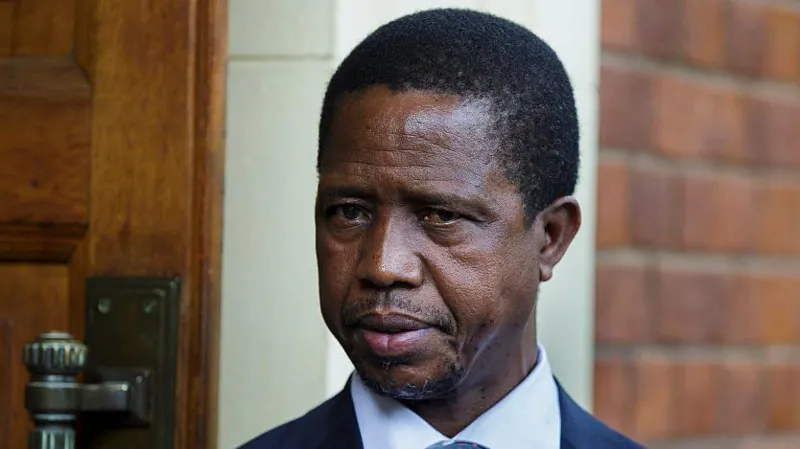
More than a year after the death of Zambia’s former President Edgar Lungu, his family have won their appeal to have his body buried in South Africa where he died – overturning a high court ruling that allowed the Zambian government to repatriate the corpse.
Tuesday’s Supreme Court of Appeal judgement finally puts to rest the legal battle over what should happen to his remains following a long-standing feud between Lungu and his successor, President Hakainde Hichilema.
The Zambian government has said while it disagrees with the ruling it will “not be taking the matter any further”.
It had long argued that, as a former head of state, Lungu should be honoured in the country.
The Zambian government wished to see him laid to rest alongside his predecessors in the special presidential burial ground in the capital, Lusaka.
But Lungu’s family wanted a private burial after negotiations with the government over the funeral arrangements broke down.
“The very ritual intended to bring closure has, instead, pitted family against the state in a hard-fought legal dispute far from the protagonists’ home,” said Justice Raylene May Keightley in Tuesday’s judgement.
Last August, the South African high court in Pretoria ruled that Zambia’s govrnment could repatrite the body and give him a state funeral – an outcome that left Lungu’s relatives visibly distraught in the courtroom.
The family appealed against the decision but, in a surprise announcement in April Zambia’s government said Lungu’s remains had been “formally transferred” to the state by the South African court.
But just a few hours later, the same South African court ordered the Zambian government to return the body until the matter went to court again.
The former president died of an undisclosed illness aged 68 at a clinic in Pretoria. Chaos ensued following his death, with mourners receiving conflicting information from the government and Lungu’s political party, the Patriotic Front (PF).
Two separate mourning periods were announced and at one point there were competing condolence books.
Lungu, who led Zambia from 2015 until 2021, had numerous rows with Hichilema, who was the opposition leader for many years before finally unseating his bitter rival.
After Lungu’s death, his family said the ex-president did not want Hichilema to be at his funeral or “anywhere near” his body.
In this latest ruling at the Supreme Court of Appeal, the judges said it was clear that the former president “viewed himself to be persona non grata in his own country” of Zambia and “felt that he would not be afforded a dignified send-off” if his successor was present.
[BBC]

More than 5,300 people remain trapped in online scam centres in Myanmar near the Thai border, despite a multinational crackdown in the region last year, a human rights group says.
The Thai-based Civil Society Network for Human Trafficking Victim Assistance (CSNHTV) sent a letter to Thai police urging them to take action. It said many of those trapped were foreign nationals held at four locations inside areas controlled by the Myanmar Democratic Karen Buddhist Army militia.
According to the CSNHTV, an estimated 1,600 people trapped are Chinese nationals, and about 200 are people of Myanmar, along with people from the Philippines, Taiwan, Malaysia, Brazil, Russia, Kenya, Uganda, Rwanda, and Zimbabwe.
“Many of these compounds have yet to be dismantled or subjected to rescue operations to free all remaining victims,” it said.
“As a result, these syndicates continue to engage in online fraud and human trafficking, causing harm to victims around the world, particularly in the United States and Europe.”
Scam centres in Southeast Asia, including those in Myanmar and Cambodia, run illegal online schemes that are designed to defraud people worldwide.
The centres grew significantly during the COVID-19 pandemic in the region, and were initially tied to poorly run casinos and online gambling. They have now become a multibillion-dollar industry, according to the United Nations.
A UN report in February said the facilities are mostly staffed by foreign nationals who have been trafficked by criminal gangs and subjected to abuse.
It found instances of “torture and other ill-treatment, sexual abuse and exploitation, forced abortions, food deprivation, solitary confinement, among other grave human rights abuses”.
“The litany of abuse is staggering and at the same time heart-breaking,” UN Human Rights chief Volker Turk said.
“Yet, rather than receiving protection, care and rehabilitation as well as the pathways to justice and redress to which they are entitled, victims too often face disbelief, stigmatisation and even further punishment.”
[Aljazeera]
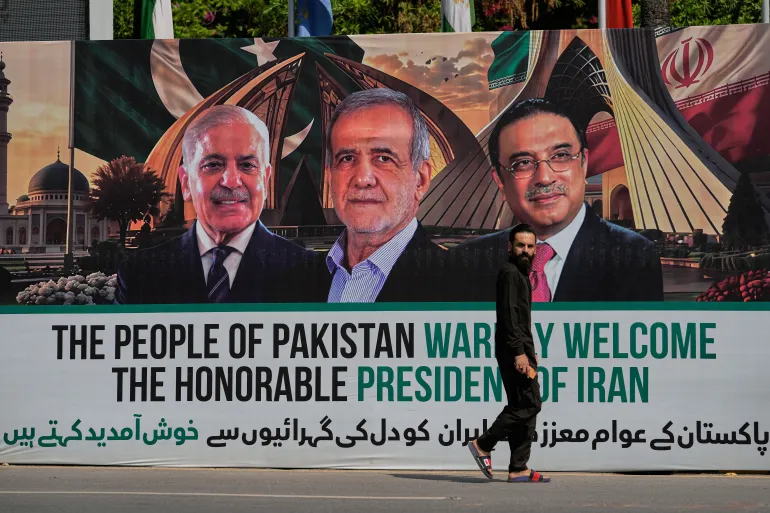
Iranian President Masoud Pezeshkian has landed in Pakistan for a state visit – his first overseas trip since the United States and Israel launched strikes on Iran on February 28.
His Pakistani counterpart Asif Ali Zardari, Prime Minister Shehbaz Sharif, and Deputy Prime Minister and Foreign Minister Ishaq Dar received the Iranian leader at a military base near capital Islamabad on Tuesday.
During his day long visit, Pezeshkian, who is accompanied by a high-level delegation that includes ministers and senior officials, will hold talks with Sharif, and is also expected to meet with Zardari.
Pezeshkian arrived aboard a special aircraft named Minab 168, a tribute to the 168 people killed in an attack on an Iranian girls’ school by US and Israeli forces in the Iranian city of Minab on the first day of the war in February.
Iranian Foreign Minister Abbas Araghchi, who had arrived separately earlier in the day from Oman, was also part of the delegation.
The Iranians are due to hold bilateral talks with premier Sharif, followed by a delegation-level meeting between the two sides.
According to Pakistan’s Ministry of Foreign Affairs, Senate Chairman Yousaf Raza Gilani, National Assembly Speaker Ayaz Sadiq, and Deputy Prime Minister and Foreign Minister Ishaq Dar will also call on the Iranian leader.
“During the visit, the two sides will review the full spectrum of bilateral relations and explore new avenues to further deepen cooperation across diverse sectors, including trade, energy, border security, people-to-people exchanges, and regional connectivity,” the ministry said in a statement on Monday.
Pezeshkian’s visit follows the crucial first round of talks between the United States and Iran, mediated by Pakistan and Qatar, in the Swiss city of Bürgenstock to end the war on Iran.
As part of the agreement, the US will release $12bn in frozen Iranian funds. The US has also announced a temporary easing of international sanctions on Iran, allowing it to sell its oil and petrochemicals until August 21. The talks concluded with a 60-day roadmap towards a final deal.
[Aljazeera]

Munoz sends Colombia into World Cup knockouts with 1-0 win over DR Congo

Animal Welfare Draft Bill to be Gazetted
Legal provisions on marking voters using indelible ink during elections removed

Showers will occur in the Western, Sabaragamuwa and North-western provinces and in Galle, Matara, Kandy and Nuwara-Eliya districts

Court vacancy row throws Parliament into turmoil; sittings disrupted

Climate, pollution, forest loss now hitting economy: BASL chief

‘Dates have the highest sugar content to fight Coronavirus’

Sunday Island 27 December – Headlines

#SundayIsland 17th December – Headlines

Sunday Island – 28th March

Sunday Island Headlines – 21 March

Sunday Island – 21st February – Headlines
-

 News5 days ago
Creditor receives USD 2.5 mn as Lankan public bears loss from theft of Treasury funds
-

 News4 days ago
Creditor not yet paid
-
 News4 days ago
Consumers bearing 22% tax burden despite 18% VAT claim: Dr. Harsha de Silva
-

 Opinion6 days ago
Beyond diagnosis: A strategic design for 7% growth by 2029 (Part I)
-

 Opinion5 days ago
SriLankan Airbus struck by lightning
-

 Features3 days ago
Nanda Pethiyagoda Wanasundara as three generations of family saw her
-

 Features2 days ago
Sri Lanka developing independent hydrographic capabilities
-

 Latest News3 days ago
Sooryavanshi thumps fastest List A fifty as India A win tri-series