
Business
Indian Ocean under fire: Parliament explodes over the sinking of ‘IRIS Dena’


A new crisis looms with a second Iranian vessel at the doorstep
Sri Lanka’s parliament became a secondary battleground yesterday as the sinking of the Iranian frigate IRIS Dena ignited a fierce debate over national sovereignty, regional maritime priciples, and the government’s perceived ‘strategic paralysis.’
While the Navy’s rescue of 32 sailors was initially painted in shades of heroism, Opposition MPs have now unfurled a narrative of missed warnings and geopolitical betrayal.
In a scathing address, Opposition firebrand Chamara Sampath Dissanayake challenged the circumstances of the vessel’s arrival in Sri Lankan waters. The IRIS Dena had been a guest of the Indian Navy during the MILAN-2026 exercises just days prior. Dissanayake alleged that at the conclusion of the fleet review, the vessel was effectively ‘put out’ of India, leaving the crew with no choice but to steer toward Sri Lanka.
“This was a deliberate attempt by the host to put a guest in harm’s way,” Dissanayake charged, stopping just short of naming India directly while making the implication undeniable. He argued that Sri Lanka had been ‘set up’ to deal with the fallout of a targeted strike that occurred only 11 nautical miles from Galle.
The debate took a darker turn when SJB MP Mujibur Rahman dropped a bombshell regarding the timing of the attack. Rahman alleged that the IRIS Dena had signalled for permission to enter Sri Lankan waters 11 hours before it was struck by U.S. torpedoes.
“Why did the authorities keep silent?” Rahman demanded. He blasted the government for failing to act on humanitarian grounds, suggesting that Colombo’s hesitation provided the necessary window for what U.S. Defense Secretary Pete Hegseth termed a ‘Quiet Death.’ Rahman’s critique painted a picture of a government ensnared in superpower machinations, unable to uphold the principles of the Indian Ocean as a ‘Zone of Peace.’
Responding to the barrage of questions, Cabinet Spokesman Dr. Nalinda Jayatissa confirmed a chilling new development: a second Iranian vessel is currently positioned in the Exclusive Economic Zone (EEZ) off Colombo.
While Jayatissa assured the House that the President and the Security Council are ‘fully aware’ and making ‘necessary interventions’ to protect those on board, the lack of specific details fueled further anxiety. Political analysts suggest that the government’s failure to announce a clear, proactive neutral policy has left it in a state of ‘vacillation,’ unable to decide whether to grant refuge to the second ship or risk another tragedy on its doorstep.
The parliamentary clash was punctuated by the visit of former president Ranil Wickremesinghe to the Iranian Embassy yesterday to offer condolences for the passing of Supreme Leader Ayatollah Ali Khamenei. Wickremesinghe had warned on March 2 – just 48 hours before the sinking – that the current ‘leadership eviction’ methodology in the Middle East could destabilise the Indian Ocean.
As the death toll from the IRIS Dena stands at 87 with 60 still missing, the ‘can of worms’ opened in parliament reveals a nation at a crossroads. The government’s silence during the Dena’s final hours and its current ‘intervention’ with the second vessel will likely define Sri Lanka’s standing in a rapidly fragmenting global order.
As the House adjourned, one question remained hanging in the air: In the face of a superpower conflict, does Sri Lanka have the ‘backbone’ to be truly neutral, or is it merely a spectator to its own maritime destiny?
by Sanath Nanayakkare


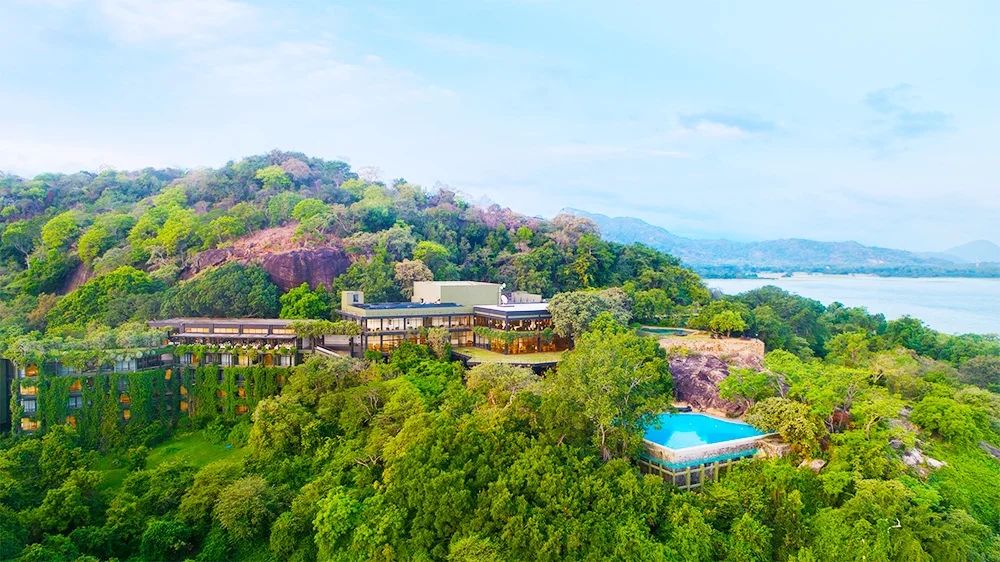
As April arrives, Sri Lanka moves into a season shaped by renewal, reflection, and shared moments. Across the island, the rhythms of Avurudu return, with the sound of the raban, festive tables filled with sweetmeats and families coming together.
This Avurudu, Heritance Hotels & Resorts brings the season to life through a collection of stays, experiences, and gift giving, designed for spontaneous breaks and meaningful New Year getaways. Across its distinctive destinations, guests can step away, reconnect, and celebrate the season.
A range of gift vouchers offers a simple way to share the spirit of Avurudu, whether through a restful stay, a dining experience, or a moment of indulgence to be enjoyed beyond the season.


The CSE saw a drop during midday trading yesterday but later recovered with an improvement in the market sentiment.
Initially the market indicated a downward trend mainly due to banking stocks sliding following the National Development Bank announcing a Rs 13.2 billion fraud within it that incurred a loss to the entity coupled with US President Donald Trump’s negative comments on the war situation.
Amid those developments both indices moved upwards. The All Share Price Index went up by 9.98 points while the S and P SL20 rose by 26.65 points.
Turnover stood at Rs 3 billion with three crossings. Those crossings were reported in Melstacorp, which crossed 4.76 million shares to the tune of Rs 809 million and its shares traded at Rs 170, Tokyo Cement 754,213 shares crossed to the tune of Rs 66.75 million; its shares traded at Rs 88.50 and JKH 3.35
million shares crossed tfor Rs 62.2 million; its shares sold at Rs 18.70.
In the retail market seven companies that mainly contributed to the turnover were; JKH Rs 245 million
(13.2 million shares traded), Sampath Bank Rs 132.6 million (914,000 shares traded), Tokyo Cement Rs 96.8 million (one million shares traded), LMF Rs 92 million (1.1 million shares traded), Prime Lands
Residencies Rs 92 million (1.8 million shares traded), Colombo Dockyard Rs 85.3 million (680,000 shares traded) and Commercial Bank Rs 79.8 million (400,000 shares traded). It is said that 82 million share volumes changed hands in 26226 transactions.
it is said that manufacturing sector counters, especially JKH, led the market while banking sector counters also performed well. Real estate sector and its related counters, especially Prime Lands Residencies and Tokyo Cement, performed well too.
The All Share Price Index was down 0.34 percent, or 70.94, at 21,046.48.
The S&P SL20 was down 0.30 percent, or 17.87, at 5,857.82.
Yesterday the rupee was quoted at Rs 315.35/55 to the US dollar in the spot market, from Rs 315.20/60 last Thursday before the long weekend, dealers said, while bond yields were broadly steady.
A bond maturing on 15.03.2028 was quoted at 9.45/55 percent.
A bond maturing on 15.12.2029 was quoted at 9.95/10.00 percent.
A bond maturing on 01.03.2030 was quoted flat at 10.00/05 percent.
A bond maturing on 15.03.2031 was quoted flat at 10.05/15 percent.
A bond maturing on 01.06.2033 was quoted flat at 11.00/10 percent.
By Hiran H Senewiratne
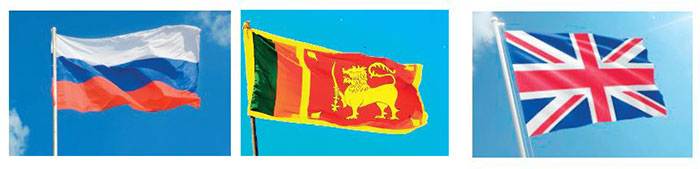
As geopolitical tensions in the Middle East continue to unsettle global energy and trade flows, Sri Lanka appears to be finding a degree of resilience by deepening economic engagement with partners such as Russia and the United Kingdom.
Recent diplomatic and trade developments suggest Colombo is positioning itself to benefit from both energy cooperation with Moscow and expanded export opportunities in the British market, potentially softening the impact of external shocks on its fragile economy.
During talks in Colombo last week, Foreign Minister Vijitha Herath met visiting Russian Deputy Foreign Minister Andrey Rudenko, with both sides reaffirming their commitment to strengthening bilateral ties.
Rudenko has described the island as a long-standing friend of Russia and pledged support in several key areas, including oil supplies, investment promotion, and tourism cooperation.
The assurance of energy support comes at a time when global oil markets remain volatile due to geopolitical tensions and shifting sanctions regimes. Russia indicated it was prepared to assist Sri Lanka with oil supplies if needed, though Rudenko earlier clarified at a policy discussion that Moscow prefers long-term contractual supply arrangements rather than short-term spot deals arising from temporary market disruptions.
For Sri Lanka, which has faced severe fuel shortages in the recent past, such arrangements could offer greater stability in energy procurement during periods of global uncertainty.
Russia also signalled interest in encouraging its investors to explore opportunities in Sri Lanka and increasing tourist arrivals, while expressing readiness to provide compensation for Sri Lankan war veterans who lost their lives while serving in Russia’s war against Ukraine.
Colombo, in turn, emphasized the historic nature of the relationship. Herath noted that the two countries share nearly seven decades of diplomatic ties, adding that the current moment presents an opportunity to expand cooperation through longer-term trade and economic agreements.
While Russia offers potential relief on the energy front, Sri Lanka is simultaneously gaining a competitive edge in exports through new trade arrangements with Britain.
Under the revised Developing Countries Trading Scheme (DCTS) introduced by the United Kingdom in January 2026, Sri Lanka’s apparel sector – the country’s largest export industry – stands to benefit significantly.
The scheme eases rules of origin requirements, allowing exporters greater flexibility in sourcing raw materials while still maintaining preferential access to the UK market. For Sri Lankan manufacturers, particularly small and medium-sized enterprises, this change addresses a longstanding constraint that had limited their ability to compete with larger regional producers.
Industry participants say the reform could improve pricing competitiveness, shorten production lead times, and allow exporters to respond more effectively to the fast-moving demands of global apparel buyers.
Apparel exporter Joe Jayawardena noted that while the scheme provides duty concessions for developing economies, its most valuable feature is the commercial flexibility it offers producers. With more freedom in sourcing fabrics and inputs, Sri Lankan exporters can negotiate more effectively on price, delivery schedules and product specifications – factors that often determine whether orders are secured in the global fashion supply chain.
For Sri Lanka’s economy, the convergence of these developments could provide a modest but important buffer against global turbulence.
Energy cooperation with Russia may help stabilise supply during volatile periods, while enhanced access to the British market could strengthen export momentum in one of Sri Lanka’s most important trading sectors.
An independent economic analyst told this reporter that the offers coming from both countries would be widely welcomed in Sri Lanka, as they are driven primarily by mutual trade interests rather than by deeper strategic or political considerations.
By Sanath Nanayakkare

Kusumabandu Samarawickrama passes away

Dialog Launches ‘GanuDenu QR’, Making Cashless Transfers Free for All with eZ Cash and Dialog Finance

Avurudu with Heritance Hotels & Resorts: Where tradition is alive

Mid-day improvement in market sentiment rescues bourse but NDB crisis takes a toll

Trump threatens ‘hell’ for Iran over Hormuz Strait as deadline approaches

Tim David, Rajat Patidar inflict bruising defeat on Chennai Super Kings

‘Dates have the highest sugar content to fight Coronavirus’

Sunday Island 27 December – Headlines

#SundayIsland 17th December – Headlines

Sunday Island – 28th March

Sunday Island Headlines – 21 March

Sunday Island – 21st February – Headlines
-

 News5 days ago
2025 GCE AL: 62% qualify for Uni entrance; results of 111 suspended
-

 Features2 days ago
Ranjith Siyambalapitiya turns custodian of a rare living collection
-

 News2 days ago
Global ‘Walk for Peace’ to be held in Lanka
-
 News7 days ago
Tariff shock from 01 April as power costs climb across the board
-
 Business6 days ago
Hour of reckoning comes for SL’s power sector
-

 Editorial5 days ago
Search for Easter Sunday terror mastermind
-

 Opinion7 days ago
Sri Lanka has policy, but where is the data?
-

 Features7 days ago
Seychelles … here we come