
News
Indian Navy surveys area around X-Press Pearl: debris identified to enable precautionary measures


INS Sarvekshak has identified 54 types of underwater debris following an 807-mile of survey around the ill-fated MV XPress Pearl, the Indian High Commission says in a statement issued over the weekend.
The following is the text of the IHC statement: “The Hydrographic Survey Ship of Indian Navy, ‘INS Sarvekshak’, entered Colombo after successful completion of surveys in three areas off Colombo. It was welcomed at the terminal by Colombo Commander of Western Naval Area R.Adm. Upul de Silva. INS Sarvekshak was immediately deployed on request of the Government of Sri Lanka on 23 June 2021 to conduct a survey in the vicinity of the ill-fated MV X-Press Pearl. The joint survey operation was coordinated among Indian Navy, Sri Lanka Navy and National Aquatic Resources Research and Development Agency (NARA).
A felicitation ceremony was organized recently to mark the completion of the survey. The chief guest at the ceremony was Minister of Fisheries Douglas Devananda. During the ceremony, High Commissioner of India Gopal Baglay handed over the survey report to the Minister.
Speaking at the ceremony, the Minister thanked the Government of India and the Indian Navy in particular for their prompt response and acknowledged India’s vision of Safety and Growth for All In the Region (SAGAR) through this gesture. High Commissioner Baglay highlighted that India and Sri Lanka have cooperated on many occasions for mitigation of maritime disasters. He expressed happiness that as part of Op Sagar Aaraksha 2, he had the opportunity to personally see off the Indian Coast Guard ships and participate in the event to felicitate the survey effort undertaken by INS Sarvekshak. He also expressed pride in India’s assistance in restoring the livelihood of the Sri Lankan fishermen along the western coast.
The ceremony was also attended by. State Minister of Fisheries Kanchana Wijesekara, Mrs. R.M.I. Rathnayaka Secretary of Ministry of Fisheries, Mr. Jayantha Chandrasoma –Secretary of State Ministry of Fisheries, Chairman Sri Lanka Port Control Capt. Nihal Keppetipola and Chairman NARA A. Navaratneraja, amongst other dignitaries from the Department of Fisheries and NARA.
INS Sarvekshak progressed 807 miles of Side Scan Sonar survey utilising integral sensors and two survey boats in adverse weather conditions, which could have otherwise been delayed to post Monsoon in October due to rough seas. The ship’s team worked overnight to process gigabytes of data collected during the day, to meet the timelines. Post the survey, the ship identified 54 underwater debris and also one ship-wreck. The survey data would be invaluable in issuing advisories to the mariners and fishermen which would later assist in the removal of debris by the Salvior to achieve safety of navigation.
The continued assistance to Sri Lanka in the recent maritime incidents has showcased India’s ‘Neighbourhood First’ policy through swift and timely support in mitigating various calamities in the Indian Ocean Region.”

News
GMOA warns of trade union action unless govt. urgently resolves critical issues in health sector

Influx of substandard drugs is of particular concern
The Government Medical Officers’ Association (GMOA) has warned of renewed and intensified trade union action if the government fails to fulfil its promise to resolve the ongoing crisis in the health sector within the next few days.
GMOA Executive Committee member Dr. Prasad Colombage said his association was hopeful that commitments made by the government, including those formally stated by the Minister of Health in Parliament and recorded in the Hansard, would be implemented.
He called for urgent remedial action in view of the influx of substandard medicines into the country, patient deaths linked to such drugs, difficulties faced by doctors in prescribing medicines, and disruptions to patient care services caused by the continued migration of medical professionals. These factors, he warned, had placed patients’ lives at serious risk.
Dr. Colombage said discussions had already been held with all relevant authorities, including the President and the Minister of Health. He expressed hope that swift solutions would be forthcoming based on agreements reached at discussions. However, he cautioned that the GMOA would not hesitate to resort to strong trade union action if tangible progress was not seen in the coming days.
Meanwhile, the Federation of Medical and Civil Rights Professional Associations yesterday (01) handed over a special memorandum to President Anura Kumara Dissanayake, calling for immediate action to resolve the deepening crisis in the health sector.
Federation President, Consultant Dr. Chamal Sanjeewa, said Sri Lanka’s health system was currently facing a severe crisis and had sought an opportunity to hold discussions with the President on the matter.
The memorandum calls for the President’s direct and immediate intervention on several key issues, including the Indo–Sri Lanka health agreement, shortages of essential medicines including cancer drugs, continued allegations surrounding the administration of the Ministry of Health, reported irregularities at the National Hospital, Colombo, and the absence of an internationally accredited quality control laboratory for the National Medicines Regulatory Authority to test medicines. The Federation has also requested a meeting with the President to discuss these concerns in detail.
By Sujeewa Thathsara ✍️

Sri Lanka’s latest elephant census must result in immediate policy action, not remain a paper exercise, Centre for Environmental Justice (CEJ) Managing Director Dilena Pathragoda warned, as nearly 400 wild elephants have already died in 2025 alone amid escalating human–elephant conflict.
With the national elephant population estimated at around 5,879, Pathragoda said the figures would be meaningless unless they shape land-use planning, habitat protection and enforcement.
“As of mid-December, close to 397 elephants have died in 2025, mostly due to shootings, electrocution, train collisions and other human-related causes,” he told The Island. “When deaths continue at this scale, census numbers alone offer little reassurance.”
Official data show that 388 elephants died in 2024, while 2023 recorded a staggering 488 deaths, one of the highest annual tolls on record. Conservationists warn that the trend reflects systemic failure to secure habitats and elephant corridors, despite repeated warnings.
“An elephant census should not end with a headline figure,” Pathragoda said. “If these statistics do not influence development approvals, infrastructure planning and land-use decisions, they fail both elephants and rural communities.”
Elephant populations remain unevenly distributed, with higher densities in the Mahaweli, Eastern and North Western regions, while other areas face sharp declines driven by habitat fragmentation and unplanned development.
Pathragoda said recurring fatalities from gunshots, illegal electric fences, improvised explosive devices along with poisonings and rail collisions expose the limits of short-term mitigation measures, including ad hoc fencing projects.
“The crisis is not a lack of data, but a lack of political will,” he said, calling for binding conservation policy, transparent environmental assessments and accountability at the highest level.
He urged authorities to treat elephant conservation as a national governance issue, warning that failure to act would only see future censuses record further decline of these majestic animals.
“Elephants are part of Sri Lanka’s natural heritage and economy,” Pathragoda said. “Ignoring these warning signs will come at an irreversible cost.”
By Ifham Nizam ✍️

The Ministry of Education has yet to clarify whether school hours will be extended by 30 minutes from next Monday (05) under the proposed new education reforms, Ceylon Teachers’ Union (CTU) General Secretary Joseph Stalin has said.
Stalin told The Island that the Ministry should reconsider the planned reforms, warning that decisions taken without adequate study and consultation could have serious repercussions for nearly four million schoolchildren.
He said the Education Ministry had announced that education reforms would be implemented in Grades from 1 to Grade 6, but it had not said anything about the Grades above 6. This lack of clarity, he said, had created confusion among teachers, parents and students.
Stalin also noted that although learning modules had been issued, students are required to obtain photocopies based on the codes introduced in these modules. However, the Ministry had not revealed who would bear the additional financial burden arising from those costs, raising further concerns over the practical implementation of the reforms.
by Chaminda Silva ✍️

Showery condition is expected to enhance in the Eastern, Northern and Uva provinces during the coming days, due to the development of a low-level atmospheric disturbance to the East of Sri Lanka

GMOA warns of trade union action unless govt. urgently resolves critical issues in health sector

Elephant census urged as death toll nears 400

CTU raises questions about education reforms

Navy lauds foreign warships that came to assist in disaster relief ops here

It’s PC polls, stupid

‘Dates have the highest sugar content to fight Coronavirus’

Sunday Island 27 December – Headlines

#SundayIsland 17th December – Headlines

Sunday Island – 28th March

Sunday Island Headlines – 21 March

Sunday Island – 21st February – Headlines
-

 Sports4 days ago
Gurusinha’s Boxing Day hundred celebrated in Melbourne
-
 News2 days ago
Leading the Nation’s Connectivity Recovery Amid Unprecedented Challenges
-

 Sports5 days ago
Time to close the Dickwella chapter
-

 Features3 days ago
It’s all over for Maxi Rozairo
-

 News5 days ago
Environmentalists warn Sri Lanka’s ecological safeguards are failing
-
 News3 days ago
Dr. Bellana: “I was removed as NHSL Deputy Director for exposing Rs. 900 mn fraud”
-
 Features5 days ago
Digambaram draws a broad brush canvas of SL’s existing political situation
-
 News2 days ago
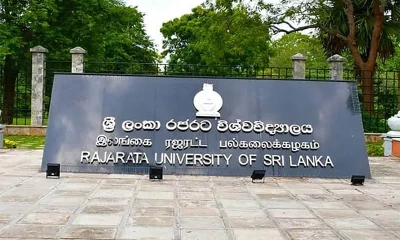
Dons on warpath over alleged undue interference in university governance