
News
Indian loan has no strings – Basil

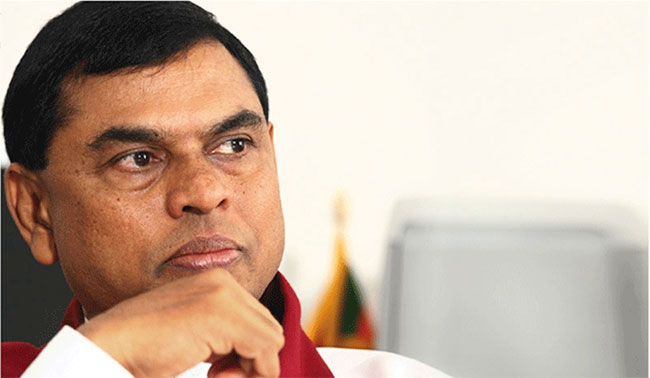
Finance Minister Basil Rajapaksa, who returned to Sri Lanka following a visit to India, said the one-billion USD credit facility given by India, did not come with hidden conditions.
The one billion dollars had to be paid back in installments after three years, the Finance Minister said.
Speaking to journalists after returning, Rajapaksa said President Rajapaksa had a long-term plan for the country.
In recent times, loans and relief facilities provided by India to Sri Lanka had exceeded USD 2.4 billion in total. In addition to USD 1 billion agreed upon a few days ago, India has provided a $ 400 million loan, a $ 500 million loan to purchase petroleum and another $ 500 million via the Asian Clearing Union.
The Finance Minister said India had again shown that it stood by Sri Lanka in difficult times. Indian PM Narendra Modi had told him that India would help Sri Lanka with its economic and social needs, Rajapaksa said.
The Finance Minister added that the Indian PM too was an organic farming enthusiast and he had been impressed by the interest shown by the President Rajapaksa in green agriculture. Thus, India would provide adequate quantities of nano fertiliser.
“India gave Sri Lanka a loan of USD 1 billion to purchase food and other essential items for the upcoming Sinhala Tanil New Year. Now the people, people’s representatives and the business community must come together to solve current issues.” the Finance Minister said.


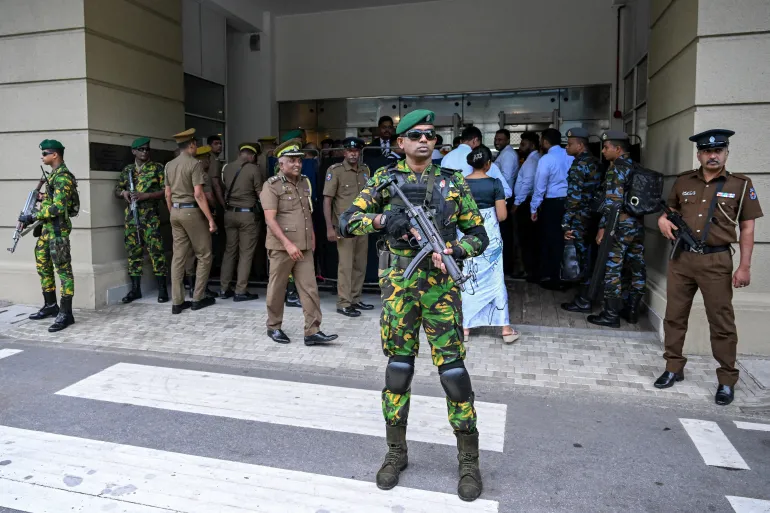
The High Court has convicted 14 of the 24 men accused of being directly involved in the 2019 Easter Sunday bombings, which killed 279 people.
The three-judge bench read out its decision on Tuesday after a five-year trial and said sentencing would take place later, the AFP news agency reported.
The charges included murder and conspiracy to commit terrorism.
Nine others were acquitted, while another defendant was found guilty of only some of the charges, the court said.
[Aljazeera]
By Shamindra Ferdinando
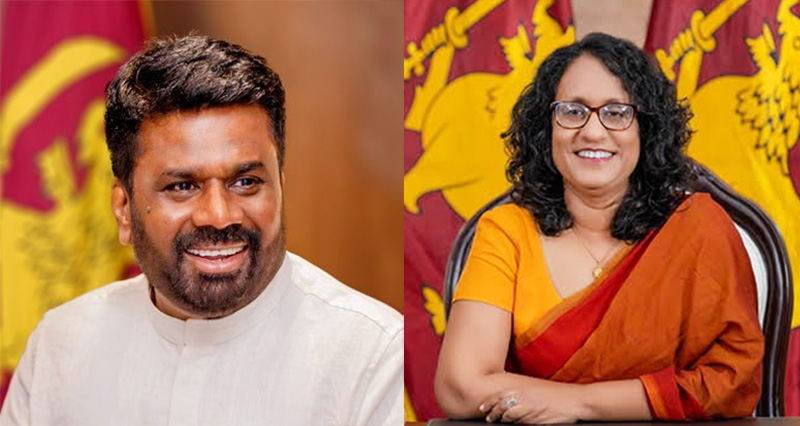
The ruling NPP yesterday (21) dismissed claims of a widening rift, within the government, over the proposed 22nd Amendment. Asked whether the NPP was concerned over a section of the Opposition alleging Prime Minister Dr. Harini Amarasuriya and two dozen MPs taking a view contrary to that of the party in this regard, authoritative party sources said some persons were propagating speculation for their own interest.
Declaring that there was absolutely no issue regarding the controversial Amendment, sources emphasised once it was tabled in Parliament, it would be passed with 2/3 majority.
Sources dismissed claims that out of its 159-member parliamentary group a section of NPPers was opposed to the government move. According to an influential Opposition activist, there are 57 JVPers and 66 NPPers in the government group and the rest contested the last parliamentary polls, having aligned with the JVP.
Ministerial sources told The Island that the government was confident of going ahead with the 22nd Amendment and Judicature (Amendment) Bills. Sources said that the NPP was not bothered about the Opposition protests in and outside Parliament.
Speaker Dr. Jagath Wickremaratne is expected to disclose the confidential ruling that he received from the Supreme Court in respect of more than 65 petitions for and against the 22nd Amendment and Judicial Amendment Bills. The enactment of the 22nd Amendment would pave the way for extending the retirement age of Supreme Court judges, from 65 to 67 years, and Court of Appeal judges, from 63 to 65 years.
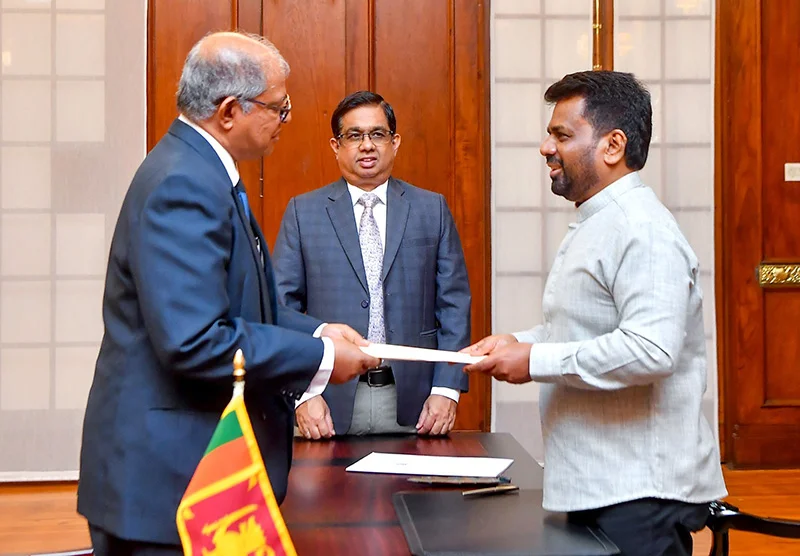
President Anura Kumara Dissanayake has appointed Court of Appeal Judge Mayadunna Sri Mevan Anthony Edirimannasuriya Corea as the Acting President of the Court of Appeal.
The appointment has been made as President’s Counsel Nalin Rohantha Abeysuriya, who currently serves as President of the Court of Appeal, will be overseas until the 24th.
Accordingly Justice Mayadunna Corea was sworn in as Acting President of the Court of Appeal before President Anura Kumara Dissanayake at the Presidential secretariat last morning (21).
Secretary to the President Dr Nandika Sanath Kumanayake was also present at the occasion.

High Court convicts 14 over deadly Easter bombings

Mandhana, Shafali and Ghosh lead dominant India to Asian Games gold

Fatima Sana and Umm-e-Hani secure bronze for Pakistan in Asian Games

India bat first in Asian games womens cricket final

Showers about 100mm will occur in the Western, Sabaragamuwa, Central and North-western provinces and in Galle and Matara Districts

Govt. confident of 2/3 majority despite NPP split speculation

‘Dates have the highest sugar content to fight Coronavirus’

Sunday Island 27 December – Headlines

#SundayIsland 17th December – Headlines

Sunday Island – 28th March

Sunday Island Headlines – 21 March

Sunday Island – 21st February – Headlines
-

 News6 days ago
US embassy won’t comment on IGP’s probe into joint drug raid
-

 News5 days ago
Bid for Basil’s extradition nears final stage: Police
-

 News4 days ago
Shanakiyan urges urgent action over reported death sentence for Lankan in Saudi Arabia
-

 Business6 days ago
All-new Bolero MaXX unveiled in Sri Lanka
-

 News3 days ago
Namal Rajapaksa Buddhist gambit fails, bail denied
-
 Opinion6 days ago
A journalist who wrote across the divide
-

 Editorial7 days ago
More fuel price shocks shrouded in secrecy
-

 Features3 days ago
Why the spelling Sri Lankan names in English vary