
Latest News
India vs Pakistan match is a godsend for T20 World Cup hosts Sri Lanka

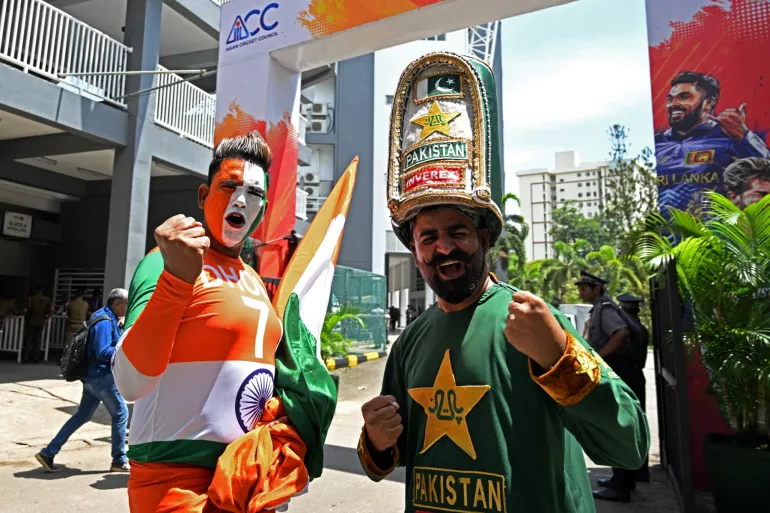
Almost 30 years ago today, India and Pakistan formed a combined cricket team to take on Sri Lanka ahead of the 1996 Cricket World Cup in an unprecedented moment of unity in the sport’s history.
The two age-old rivals put aside their differences and came together in an act of solidarity to support a fellow South Asian team, who faced the threat of match boycotts in a tournament they had battled hard to host.
India versus Pakistan is the most highly marketed fixture at every multination tournament – the World Cup, Asia Cup or Asian Games – whether it’s a men’s, women’s or Under-19 event.
Few sporting events globally carry the weight and anticipation of an India-Pakistan cricket match. So, when Pakistan’s government ordered its team not to face India at the ongoing T20 World Cup, the tournament was briefly pushed into a state of chaos.
It also left Sri Lanka, the designated host of the fixture, holding its collective breath.
A week of negotiations led to a dramatic late U-turn by the Pakistani government and the match will now take place as scheduled on Sunday at the R Premadasa International Cricket Stadium in Colombo.
But what if the boycott had gone ahead? The impact could have been catastrophic, not just for Pakistan, but also for the International Cricket Council (ICC), as well as Sri Lanka.
With the crisis seemingly averted, the island nation stands poised to reap the benefits in its financial landscape, diplomatic standing and community.
The tourism and hospitality industry was one of the hardest hit during Sri Lanka’s financial meltdown and this match will see an enormous influx of fans from India and Pakistan coming into the country.
Hotels in and around Colombo were fully booked out well ahead of the tournament but the industry braced itself for heavy losses after Pakistan threatened a boycott.
“There’s been a massive impact since the boycott was announced,” Sudarshana Pieris, who works in Sri Lanka’s hospitality sector, told Al Jazeera.
“All major hotels in Colombo were fully booked by Indian travel agencies well ahead of the match and once the boycott was announced, we lost almost all of those bookings,” he said.
“But after Pakistan reversed their decision, hotel room rates shot up by about 300-400 percent at five-star establishments in Colombo.”
It’s not just hotels but several other local businesses – from street vendors to high-end restaurants – who are hoping for an increased footfall and spending over the weekend.
These short trips and the experiences they offer could influence visitors to extend their stay or return to Sri Lanka on holiday, long after the game has ended, in a potential long-term benefit to the industry.
Another relatively underestimated impact of the game would be the employment opportunities it creates, albeit temporarily, in the media, event management, security and transportation industries.
Asanka Hadirampela, a freelance journalist and broadcaster currently working as a Sinhala language commentator for the World Cup, recognises the marquee match as a great opportunity from a personal standpoint.
“This is my first World Cup as a broadcaster,” Hadirampela said.
“The India-Pakistan fixture is the biggest and most-watched game of the tournament. So to get to work on such a match is exciting and I consider it a special achievement.”
The lines are always blurred between sport and politics in South Asia.
So while the financial gains are expected to be significant, the fixture’s impact on the region’s geopolitical environment cannot go amiss.
Pakistan’s boycott, too, was explicitly political, as confirmed by the country’s Prime Minister Shehbaz Sharif when he said that they were offering support to Bangladesh after the Tigers were kicked out of the tournament by the ICC.
The reversal of Pakistan’s decision, which they said came after requests to reconsider the boycott by several regional “friends”, was steeped in politics, too.
Sri Lanka’s President Anura Kumara Dissanayake reportedly had a phone conversation with PM Sharif, urging his government to rethink their decision to boycott the game as the successful staging of this encounter would not only position Sri Lanka as a capable host of global sporting events but also reinforce its standing as a neutral mediator in a region fraught with geopolitical complexities.
Sri Lanka and Pakistan have always maintained strong diplomatic relations, which have extended to the cricket field as well.
Sri Lanka were one of the first teams to travel to Pakistan following their 10-year ostracisation from international cricket, which came as a result of a terrorist attack targeting the Sri Lankan team in March 2009.
When Al Jazeera reached out to Sri Lanka Cricket (SLC), its vice president Ravin Wickramaratne confirmed that SLC did, indeed, reach out to the Pakistan Cricket Board (PCB) after the boycott was announced.
“We asked them to reconsider the decision,” Wickramaratne said.
“It [boycott] would have impacted Sri Lanka economically, whether directly or indirectly.
“We have always had a good relationship with the PCB and we have always supported them, so we’re happy with their decision.”
A little over 24 hours ahead of the match in Colombo, there is a sense of palpable excitement and a growing buzz around the fixture as it returns from the brink of cancellation.
As of Saturday morning, 28,000 tickets had been sold for the game but local organisers expect a capacity crowd of 40,000 to make it into the stands.
Come Sunday, thousands more will line the streets in and around Maligawatte, the bustling Colombo suburb that houses the famous Premadasa Stadium.



The Bahrain and Saudi Arabia Grands Prix that were scheduled for next month are set to be cancelled as a result of the war in the Middle East.
A formal decision to call off the races has not yet been made but is expected before the end of the weekend.
Freight would need to start being shipped to the Middle East in the coming days. With no sign of the conflict between the US/Israel and Iran coming to a conclusion, holding the races would put personnel at too great a risk.
Neither event will be replaced, with the season being cut to 22 grands prix and F1 taking a commercial hit of more than £100m, given Bahrain and Saudi Arabia pay two of the highest hosting fees.
The race in Bahrain was scheduled to be on 12 April with Jeddah the following weekend.
Consideration was given to holding events at Portimao in Portugal, Imola in Italy or Istanbul Park in Turkey.
But it was accepted that the time to organise a race at any of those locations was too short, and there was little chance of securing a hosting fee.
The decision will mean there is a five-week break between the Japanese Grand Prix on 29 March and Miami on 3 May.
(BBC)
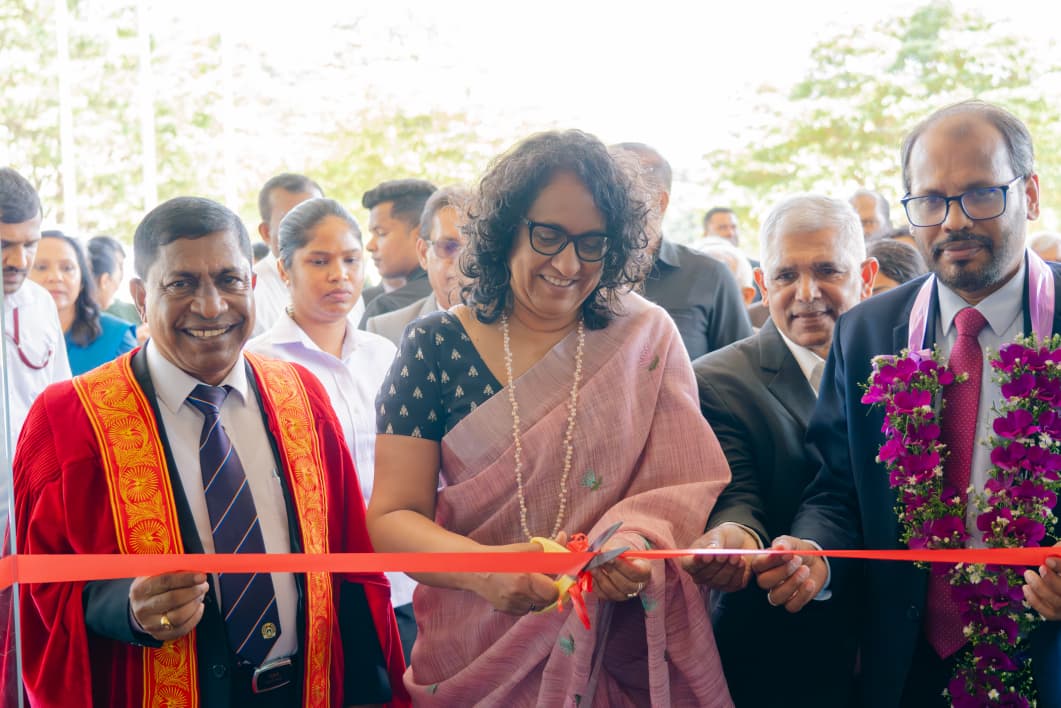
Prime Minister Dr. Harini Amarasuriya stated that promoting the local industrial sector is one of the key priorities of the Government.
The Prime Minister made these remarks while attending the official opening ceremony of the INCO 2026 Industrial Exhibition on 13 th of March, which is being held for the 20th consecutive year at the BMICH Exhibition Center.
The INCO 2026 Industrial Exhibition, organized by the Institution of Incorporated Engineers, Sri Lanka (IIESL), will be held from March 13 to 15.
Addressing at the event, Prime Minister stated:
“The engineering sector is a key driving force in addressing practical challenges faced by a country while enhancing efficiency and safety. In particular, the contribution extended by exhibitions of this nature encourages the student community to engage in innovation.
The Government has implemented several measures to accelerate the country’s industrial development. Notably, the National Industry Information System (NIIS) has established a centralized digital platform to collect data related to the country’s economic and industrial activities. The Government is also taking steps to provide necessary financial support to industrialists through Revolving Funds.
It is also noteworthy that this year’s exhibition has attracted international participation, creating opportunities for local entrepreneurs to explore new markets and gain exposure to international technologies. With the participation of engineers, students, and entrepreneurs, this exhibition marks an important step toward the country’s industrial future”.
The event was attended by the Chairman of the Export Development Board Mangala Wijesinghe, Chairman of the National Paper Company Limited Upali Rathnayake, President of the Institution of Incorporated Engineers, Sri Lanka Engineer Ananda Gunawardena, along with local and foreign investors, entrepreneurs, and industrialists.

(Prime Minister’s Media Division)
Latest News
Heat Index at caution level at some places in the Western, Sabaragamuwa, Southern, North-central and North-western provinces and in Monaragala, Mannar and Vavuniya districts
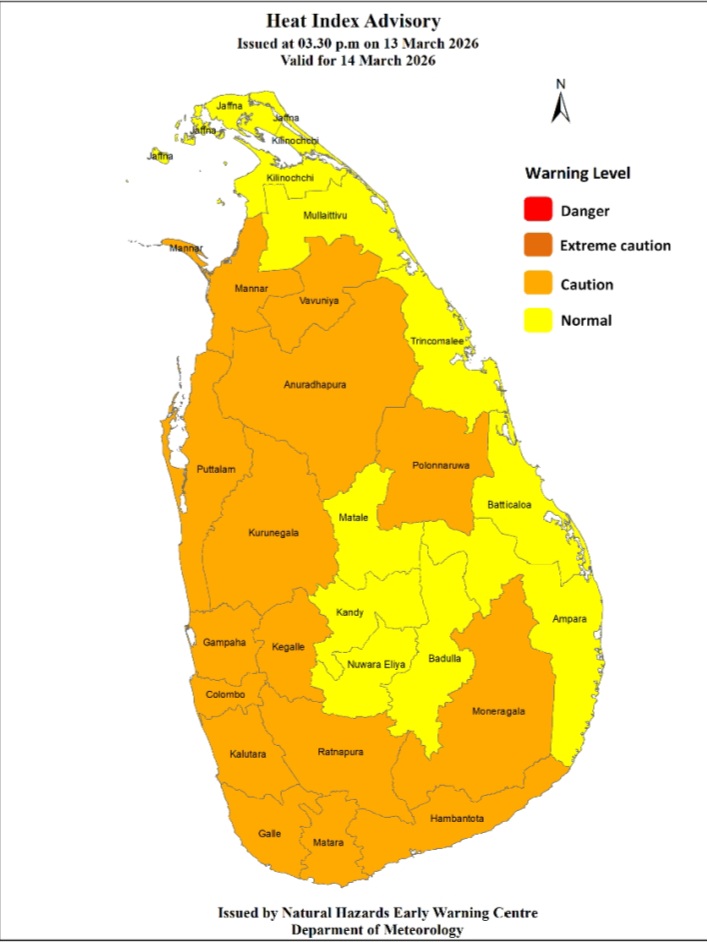
Warm Weather Advisory
Issued by the Natural Hazards Early Warning Centre of the Department of Meteorology at 3.30 p.m. on 13 March 2026, valid for 14 March 2026.
The public are warned that the Heat index, the temperature felt on human body is likely to increase up to ‘Caution level’ at
some places in the Western, Sabaragamuwa, Southern, North-central and North-western provinces and in Monaragala, Mannar and Vavuniya districts.
The Heat Index Forecast is calculated by using relative humidity and maximum temperature and this is the condition that is felt on your body. This is not the forecast of maximum
temperature. It is generated by the Department of Meteorology for the next day period and prepared by using global numerical weather prediction model data.

Effect of the heat index on human body is mentioned in the above table and it is prepared on the advice of the Ministry of Health and Indigenous Medical Services.
ACTION REQUIRED
Job sites: Stay hydrated and takes breaks in the shade as often as possible.
Indoors: Check up on the elderly and the sick.
Vehicles: Never leave children unattended.
Outdoors: Limit strenuous outdoor activities, find shade and stay hydrated.
Dress: Wear lightweight and white or light-colored clothing.
Note:
In addition, please refer to advisories issued by the Disaster Preparedness & Response Division, Ministry of Health in this regard . For further clarifications please contact 011-7446491.

Showers or thundershowers will occur at several places in the Western, Sabaragamuwa, Central, North-western and Uva provinces and in Galle, Matara, Mannar and Anuradhapura districts after 2.00 pm.

Bahrain & Saudi Arabia Grands Prix to be cancelled

Pink Floyd guitar sold for record-breaking $14.6m

Promoting Local Industries is a key priority of the Government – PM

Crypto loopholes funnel Lankan funds abroad

SLCERT urges Lankans not to get gypped by internet scams in run-up to festive period

‘Dates have the highest sugar content to fight Coronavirus’

Sunday Island 27 December – Headlines

#SundayIsland 17th December – Headlines

Sunday Island – 28th March

Sunday Island Headlines – 21 March

Sunday Island – 21st February – Headlines
-

 News5 days ago
Repatriation of Iranian naval personnel Sri Lanka’s call: Washington
-
 Features5 days ago
Winds of Change:Geopolitics at the crossroads of South and Southeast Asia
-

 News4 days ago
Prof. Dunusinghe warns Lanka at serious risk due to ME war
-

 Sports3 days ago
Royal start favourites in historic Battle of the Blues
-

 Sports2 days ago
The 147th Royal–Thomian and 175 Years of the School by the Sea
-

 News2 days ago
Historic address by BASL President at the Supreme Court of India
-

 News3 days ago
CEBEU warns of operational disruptions amid uncertainty over CEB restructuring
-

 Business6 days ago
Seven decades of sartorial excellence: The legacy of Linton Master Tailors in Kandy