
Foreign News
India shuts Kashmir medical college – after Muslims earned most admissions


India has shut down a medical college in Indian-administered Kashmir in an apparent capitulation to protests by right-wing Hindu groups over the admission of an overwhelming number of Muslim students into the prestigious course.
The National Medical Commission (NMC), a federal regulatory authority for medical education and practices, on January 6 revoked the recognition of Shri Mata Vaishno Devi Medical Institute (SMVDMI), located in Reasi, a mountainous district overlooking the Pir Panjal range in the Himalayas, which separates the plains of Jammu from the Kashmir valley.
Of the 50 pupils who joined the five-year bachelor’s in medicine (MBBS) programme in November, 42 were Muslims, most of them residents of Kashmir, while seven were Hindus and one was a Sikh. It was the first MBBS batch that the private college, founded by a Hindu religious charity and partly funded by the government, had launched.
Admissions to medical colleges across India, whether public or private, follow a centralised entrance examination, called the National Entrance Examination Test (NEET), conducted by the federal Ministry of Education’s National Testing Agency (NTA).
More than two million Indian students appear for NEET every year, hoping to secure one of approximately 120,000 MBBS seats. Aspirants usually prefer public colleges, where fees are lower but cutoffs for admission are high. Those who fail to meet the cutoff but meet a minimum NTA threshold join a private college.
Like Saniya Jan*, an 18-year-old resident of Kashmir’s Baramulla district, who recalls being overwhelmed with euphoria when she passed the NEET, making her eligible to study medicine. “It was a dream come true – to be a doctor,” Saniya told Al Jazeera.
When she joined a counselling session that determines which college a NEET qualifier joins, she chose SMVDMI since it was about 316km (196 miles) from her home – relatively close for students in Kashmir, who often otherwise have to travel much farther to go to college.
Saniya’s thrilled parents drove to Reasi to drop her off at the college when the academic session started in November. “My daughter has been a topper since childhood. I have three daughters, and she is the brightest. She really worked hard to get a medical seat,” Saniya’s father, Gazanfar Ahmad*, told Al Jazeera.
But things did not go as planned.

As soon as local Hindu groups found out about the religious composition of the college’s inaugural batch in November, they launched demonstrations demanding that the admission of Muslim students be scrapped. They argued that since the college was chiefly funded from the offerings of devotees at Mata Vaishno Devi Temple, a prominent Hindu shrine in Kashmir, Muslim students had “no business being there”.
The agitations continued for weeks, with demonstrators amassing every day outside the iron gates of the college and raising slogans.
Meanwhile, legislators belonging to Prime Minister Narendra Modi’s Bharatiya Janata Party (BJP) – which has been accused of pursuing anti-Muslim policies since coming to power in 2014 – even wrote petitions to Kashmir’s lieutenant governor, urging him to reserve admissions in SMVDMI only for Hindu students. The lieutenant governor is the federally appointed administrator of the disputed region.
In the days that followed, their demands escalated to seeking the closure of the college itself.
As the protests intensified, the National Medical Commission on January 6 announced that it had rescinded the college’s authorisation because it had failed to “meet the minimum standard requirements” specified by the government for medical education. The NMC claimed the college suffered from critical deficiencies in its teaching faculty, bed occupancy, patient flow in outpatient departments, libraries and operating theatres. The next day, a “letter of permission”, which authorised the college to function and run courses, was withdrawn.

But most students Al Jazeera talked to said they did not see any shortcomings in the college and that it was well-equipped to run the medical course. “I don’t think the college lacked resources,” Jahan*, a student who only gave her second name, said. “We have seen other colleges. Some of them only have one cadaver per batch, while this college has four of them. Every student got an opportunity to dissect that cadaver individually.”
Rafiq, a student who only gave his second name, said that he had cousins in sought-after government medical colleges in Srinagar, the biggest city in Indian-administered Kashmir. “Even they don’t have the kind of facilities that we had here,” he said.
Saniya’s father, Ahmad, also told Al Jazeera that when he dropped her off at the college, “everything seemed normal”.
“The college was good. The faculty was supportive. It looked like no one cared about religion inside the campus,” he said.
Zafar Choudhary, a political analyst based in Jammu, questioned how the medical regulatory body had sanctioned the college’s authorisation if there was an infrastructural deficit. “Logic dictates that their infrastructure would have only improved since the classes started. So we don’t know how these deficiencies arose all of a sudden,” he told Al Jazeera.
Choudhary said the demand of the Hindu groups was “absurd” given that selections into medical colleges in India are based on religion-neutral terms. “There is a system in place that determines it. A student is supposed to give preference, and a lot of parameters are factored in before the admission lists are announced. When students are asked for their choices, they give multiple selections rather than one. So how is it their fault?” he asked.
Al Jazeera reached out to SMVDMI’s executive head, Yashpal Sharma, via telephone for comments. He did not respond to calls or text messages. The college has issued no public statement since the revocation of its authorisation to offer medical courses.

Meanwhile, students at SMVDMI have packed their belongings and returned home.
Salim Manzoor*, another student, pointed out that Indian-administered Kashmir, a Muslim-majority region, also had a medical college where Hindu candidates are enrolled under a quota reserved for them and other communities that represent a minority in the region.
The BJP insists it never claimed that Muslim students were unwelcome at SMVDMI, but encouraged people to recognise the “legitimate sentiments” that millions of Hindu devotees felt towards the temple trust that founded it. “This college is named after Mata Vaishno Devi, and there are millions of devotees whose religious emotions are strongly attached to this shrine,” BJP’s spokesman in Kashmir, Altaf Thakur, told Al Jazeera. “The college recognition was withdrawn because NMC found several shortcomings. There’s no question of the issue being about Hindus and Muslims.”
Last week, Omar Abdullah, chief minister of Indian-administered Kashmir, announced that SMVDMI students would not be made to “suffer due to NMC’s decision” and they would be offered admissions in other colleges in the region. “These children cleared the National Entrance Examination Test, and it is our legal responsibility to adjust them. We will have supernumerary seats, so their education is not affected. It is not difficult for us to adjust all 50 students, and we will do it,” he said.
Abdullah condemned the BJP and its allied Hindu groups for their campaign against Muslims joining the college. “People generally fight for having a medical college in their midst. But here, the fight was put up to have the medical college shut. You have played with the future of the medical students of [Kashmir]. If ruining the future of students brings you happiness, then celebrate it.”
Tanvir Sadiq, a regional legislator belonging to Abdullah’s National Conference party, said that the university that the medical college is part of received more than $13m in government aid since 2017 – making all Kashmiris, and not donors to the Mata Vaishno Devi shrine – stakeholders. “This means that anyone who is lawfully domiciled in [Indian-administered Kashmir] can go and study there. In a few decades, the college would have churned out thousands of fresh medical graduates. If a lot of them are Muslims today, tomorrow they would have been Hindus as well,” he told Al Jazeera.
Nasir Khuehami, who heads the Jammu and Kashmir Students’ Association, told Al Jazeera the Hindu versus Muslim narrative threatened to “communalise” the region’s education sector. “The narrative that because the college is run by one particular community, only students from that community alone will study there, is dangerous,” he said.
He pointed out that Muslim-run universities, not just in Kashmir but across India, that were recognised as minority institutions did not “have an official policy of excluding Hindus”.
Back at her home in Baramulla, Saniya is worried about her future. “I appeared for a competitive exam, which is one of the hardest in India, and was able to get a seat at a medical college,” she told Al Jazeera.
“Now everything seems to have crashed. I came back home waiting for what decision the government will take for our future. All this happened because of our identity. They turned our merit into religion’
[Aljazeera]

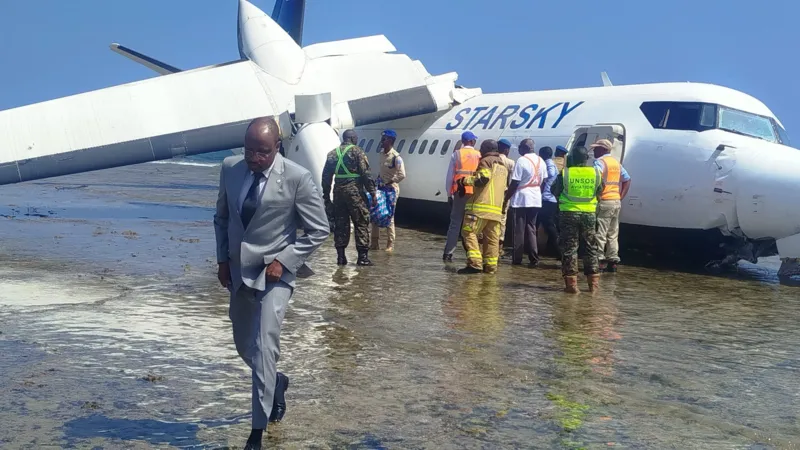
An airline in Somalia has praised one of its pilots after he crash-landed his passenger plane, which had suffered a technical fault, on the shoreline next to the capital’s international airport with all 55 on board surviving.
Starsky Aviation said the pilot’s quick thinking was crucial in saving the 50 passengers and five crew.
The crew of the aircraft, a Fokker 50, reported a problem shortly after take off from Mogadishu on Tuesday morning and requested that the plane return, Somalia’s Civil Aviation Authority (CAA) said.
It then touched down but failed to stop on the runway, overshooting the tarmac before coming to rest in shallow water, the CAA’s director Ahmed Macalin Hassan said.
It is not clear yet exactly what the issue was.
Footage posted on X appeared to show passengers leaving the aircraft and walking away from the wreckage on the shore of the Indian Ocean. No serious injuries have been reported.
The African Union’s mission in Somalia said UN and AU troops were “swiftly deployed” to help with rescue efforts. Somalia’s transport minister was also at the scene, its post on X added.
“We are relieved to confirm that all passengers and crew are safe. Investigations are under way to establish what caused the technical issue that led to the emergency landing,” Starsky spokesman Hassan Mohamed Aden said.
“The pilot’s swift and calm decision-making played a decisive role in ensuring the safety of everyone on board, and we commend him for how he handled the situation,” he added.
[BBC]
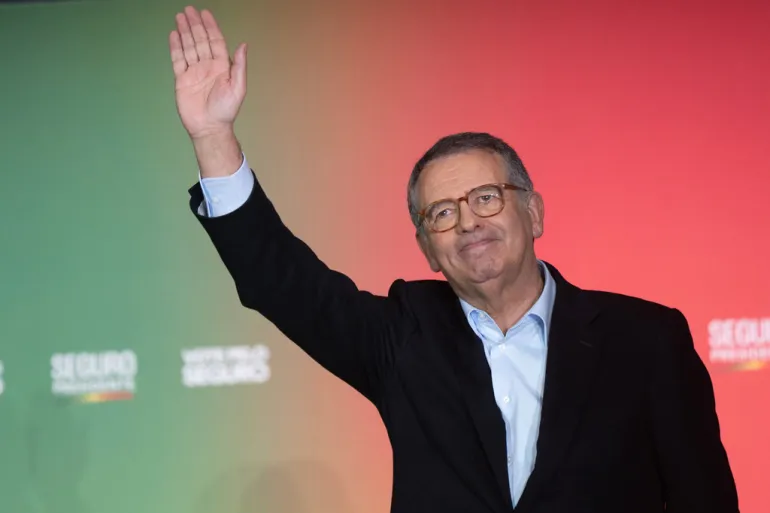
Antonio Jose Seguro of the centre-left Socialist Party has secured a landslide victory and a five-year term as Portugal’s president in a run-off vote, beating his far-right, anti-establishment rival, Andre Ventura, according to partial results.
With 95 percent of votes counted, 63-year-old Seguro has garnered 66 percent. Ventura trailed at 34 percent, still likely to secure a much stronger result than the 22.8 percent his anti-immigration Chega party achieved in last year’s general election. Ballots in large cities such as Lisbon and Porto are counted towards the end.
Two exit polls have placed Seguro in the 67-73 percent range, and Ventura at 27-33 percent.
A succession of storms in recent days has failed to deter voters, with turnout at about the same level as in the first round on January 18, even though three municipal councils in southern and central Portugal had to postpone voting by a week due to floods. The postponement affected some 37,000 registered voters, or about 0.3 percent of the total, and is unlikely to influence the overall result.
Portugal’s presidency is a largely ceremonial role, but it holds some key powers, including the ability to dissolve parliament under certain circumstances.
Ventura, 43, who had trailed Seguro in opinion polls, had argued that the government’s response to the fierce gales and floods was “useless” and called for the entire election to be postponed.
However, the authorities rejected the demand.
Seguro, during his last campaign rally on Friday, accused Ventura of “doing everything to keep the Portuguese from turning out to vote”.
Despite his loss on Sunday, Ventura, a charismatic former television sports commentator, can now boast increased support, reflecting the growing influence of the far right in Portugal and much of Europe. He is also the first extreme-right candidate to make it through to a run-off vote in Portugal.
Meanwhile, Seguro has cast himself as the candidate of a “modern and moderate” left, who can actively mediate to avert political crises and defend democratic values. He received backing from prominent conservatives after the first round amid concerns over what many see as Ventura’s populist, hardline tendencies.
But Prime Minister Luis Montenegro – whose minority centre-right government has to rely on support from either the Socialists or the far right to get legislation through parliament – declined to endorse either candidate in the second round.
While the role is largely ceremonial, the head of state has the power to dissolve parliament and call early elections.
The new president will succeed outgoing conservative Marcelo Rebelo de Sousa in early March.
[Aljazeera]
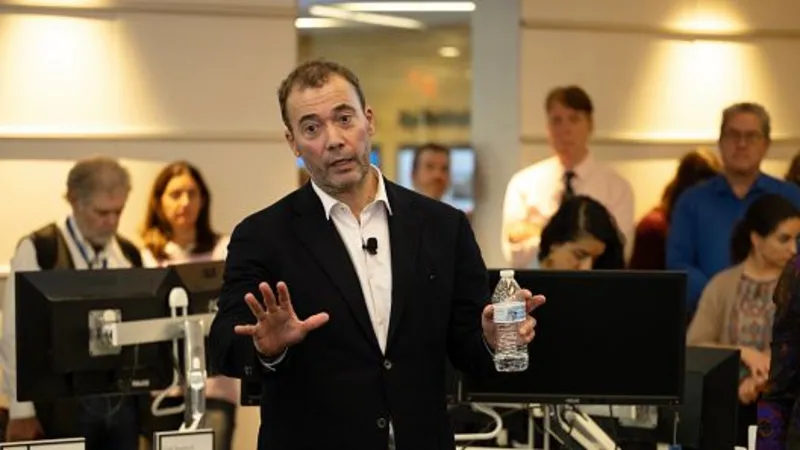
The chief executive of the Washington Post is stepping down, the newspaper has announced, days after overseeing mass lay-offs.
William Lewis said it was the right time to leave, saying in a message to staff that was shared online that “difficult decisions” had been made to ensure the paper’s future.
On Wednesday the newspaper announced it was cutting a third of its workforce, dramatically scaling back its coverage of sport and international news.
The decision was condemned by many journalists and prompted criticism of the Post’s billionaire owner, Jeff Bezos. Executive editor Matt Murray said the cuts would bring “stability”.
Jeff D’Onofrio, who joined as chief financial officer of the newspaper last year, will serve as acting publisher and CEO, the Post said as it announced Lewis’s departure.
A former Dow Jones chief executive and publisher of the Wall Street Journal, Lewis was appointed to the role at the Washington Post in 2023.
He has faced criticism from subscribers and employees as he tried to reverse financial losses at the daily.
Hundreds protested in front of the paper’s headquarters in Washington DC on Thursday after the mass lay offs, which included the paper’s entire Middle East staff and its Kyiv-based Ukraine correspondent.
Marty Baron, the Post’s executive editor until 2021, said the cuts ranked “among the darkest days in the history of one of the world’s greatest news organisations”.
The departure of Lewis marks the latest upheaval for the leading US newspaper, which has seen a series of staff cuts and controversial editorial decisions in recent years.
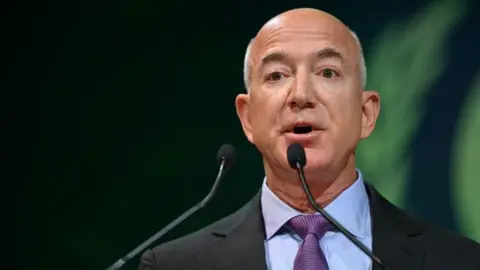
Shortly before the 2024 US presidential election, Bezos, the founder of Amazon, broke with decades of tradition by deciding the newspaper would not endorse a presidential candidate.
The newspaper had endorsed a candidate in most presidential elections since the 1970s – all of whom had been Democrats.
The move caused widespread criticism and led to the loss of tens of thousands of subscribers.
Meanwhile, the opinion editor resigned in February last year when Bezos decided to focus the paper’s comment section on “personal liberties and free markets”.
Bezos, who acquired the newspaper in 2013, said pieces opposing those views would not be published.
[BBC]

Pilot praised after crash-landing faulty Somali passenger plane on seashore

Except for a few showers in the Ampara, Batticaloa, Monaragala and Hambantota districts, mainly fair weather will prevail over the island.

Spinners, Farhan seal comfortable win for Pakistan

Police open fire on speeding van in Jaffna: 17-year-old driver killed

HRCSL employee protests demanding justice, takes swipe at Presidential Secretariat

SL-EU Jt. Commission meeting tomorrow

‘Dates have the highest sugar content to fight Coronavirus’

Sunday Island 27 December – Headlines

#SundayIsland 17th December – Headlines

Sunday Island – 28th March

Sunday Island Headlines – 21 March

Sunday Island – 21st February – Headlines
-
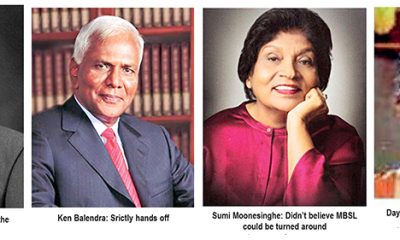
 Features3 days ago
My experience in turning around the Merchant Bank of Sri Lanka (MBSL) – Episode 3
-
 Business4 days ago
Zone24x7 enters 2026 with strong momentum, reinforcing its role as an enterprise AI and automation partner
-
 Business3 days ago
Remotely conducted Business Forum in Paris attracts reputed French companies
-
 Business3 days ago
Four runs, a thousand dreams: How a small-town school bowled its way into the record books
-
 Business3 days ago
ComBank and Hayleys Mobility redefine sustainable mobility with flexible leasing solutions
-
 Business4 days ago
HNB recognized among Top 10 Best Employers of 2025 at the EFC National Best Employer Awards
-

 Editorial6 days ago
All’s not well that ends well?
-

 Business4 days ago
GREAT 2025–2030: Sri Lanka’s Green ambition meets a grid reality check