
Foreign News
India launches space mission to study black holes

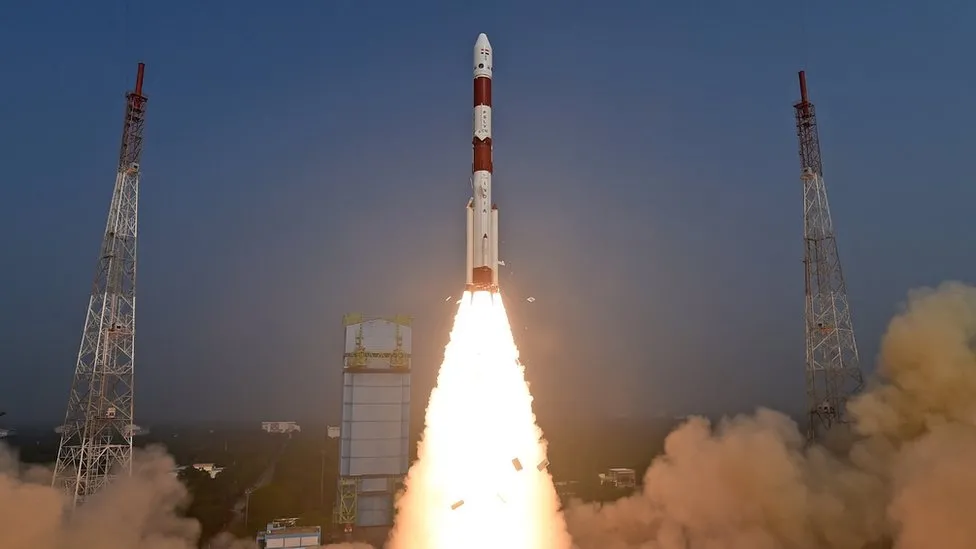
India’s space agency has successfully launched a rocket that is carrying an observatory which will study astronomical objects like black holes.
It was launched from Sriharikota spaceport at 09:10 local time (03:40GMT) on Monday.
This is only the second mission in the world of this nature after Nasa launched one in 2021. The space agency said it wanted to help scientists improve their “knowledge of black holes”. “We will have an exciting time ahead,” Indian Space Research Organisation (Isro) chairperson S Somanath said after the launch.
A black hole is a region of space where matter has collapsed in on itself. The gravitational pull is so strong that nothing, not even light, can escape.
Black holes emerge from the explosive demise of certain large stars, and some are truly huge – their size billions of times the mass of our Sun.
Isro’s satellite – X-ray Polarimeter Satellite (XPoSat) – will aim to conduct in-depth research on black holes.
Built at an approximate cost of 250m rupees ($30m; £23.5m), the XPoSat satellite is estimated to have a lifespan of five years.
The launch comes after a hugely successful year for Isro. In August, its Moon mission Chandrayaan-3 touched down near the lunar South Pole region, an area that no-one had reached before. Days later, it launched Aditya-L1 – its first observation mission to the Sun.
Monday’s launch is just one among several projects Isro has planned to carry out this year.
“2024 is going to be the year for Gaganyaan readiness,” Mr Somnath said, referring to the project which aims to send three astronauts into low-Earth orbit and bring them back after three days.
Isro carried out the first in a series of tests flights for the mission in October 2023 and aims to be ready for the manned mission by 2025.
(BBC)






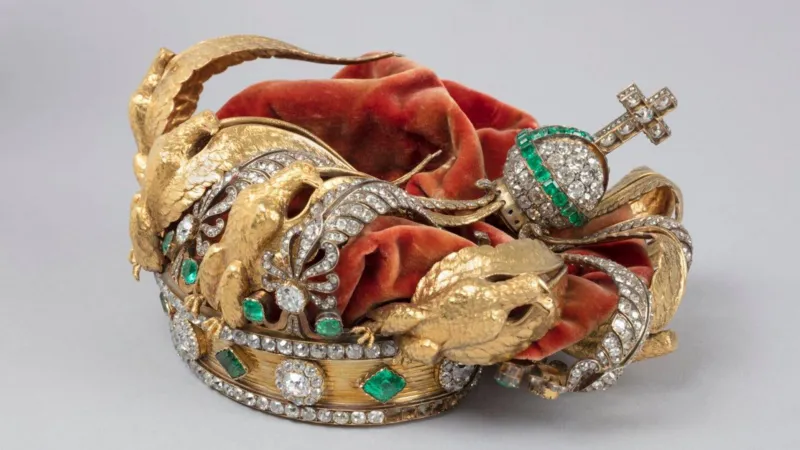
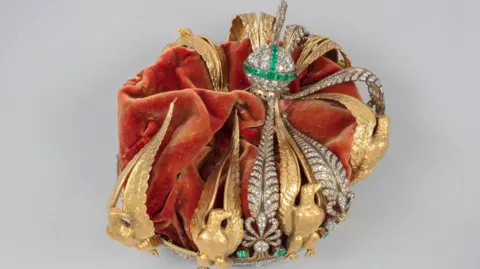
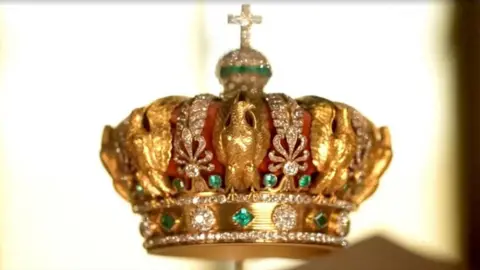
The crown of French Empress Eugenie was left crushed after being dropped by fleeing thieves during the raid at the Louvre last October – but is “nearly intact” and can be fully restored, the museum has said.
Raiders stole an estimated 88 million euros (£76m, $104m) in jewels, but left the diamond-studded headpiece belonging to the wife of Napoleon III on their escape route.
The museum has issued the first photographs of the crown since the theft, saying it had been left “badly deformed” after the thieves tried to remove it through a narrow hole they sawed in its glass display case.
The crown is missing one of eight golden eagles that adorned it but retains its 56 emeralds and all but 10 of its 1,354 diamonds.
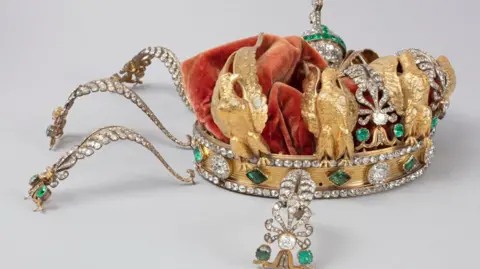
It added the 19th Century crown would be restored to its original state “without the need for reconstruction”.
An expert committee led by the museum’s president Laurence des Cars had been selected to supervise the restoration.
The heist took place on 19 October and saw the gang use a stolen vehicle-mounted mechanical lift to gain access to the Galerie d’Apollon (Gallery of Apollo) via a balcony close to the River Seine.
Two of the thieves got inside by cutting through the window with power tools. They then threatened the guards, who evacuated the area, and cut through the glass of two display cases housing jewellery that once belonged to French royalty or its imperial rulers.
Prosecutors said the thieves were inside for less than four minutes before making their escape on two scooters waiting outside.
Police have arrested four male suspects who prosecutors allege are the thieves – but the mastermind behind the raid has not been tracked down.
The seven other items of jewellery taken, including a diamond-studded tiara that belonged to Eugenie and necklaces, ear-rings and brooches remain missing.
[BBC]

Gunmen have killed nearly 200 people in western and northern Nigeria, officials and residents said, as survivors buried the dead and security forces hunted the attackers.
In western Kwara State, gunmen stormed the community of Woro on Tuesday evening, killing at least 170 people, according to a local lawmaker, while in northern Katsina State, at least 21 people were shot dead by attackers who moved from house to house, residents said.
The killings in Kwara marked the deadliest attack recorded in the region in recent months.
They come amid a complex security crisis in Nigeria, with violent groups linked to Boko Haram and the ISIL (ISIS) group in the northeast, alongside a surge in kidnappings for ransom by gunmen across the northwest and north-central regions over recent months.
No group has claimed responsibility for the assault in Kwara.
Saidu Baba Ahmed, the lawmaker for the area, told the Reuters news agency that the gunmen rounded up residents, bound their hands behind their backs and executed them.
Villagers fled into the surrounding bushland during the attack, while the attackers went on to torch homes and shops, he said.
“As I’m speaking to you now, I’m in the village along with military personnel, sorting dead bodies and combing the surrounding areas for more,” Ahmed said.
Several people were still missing on Wednesday morning, he said.
Police said “scores were killed”, without giving an exact figure.
Kwara police spokesperson Adetoun Ejire-Adeyemi said that the police and military have been mobilised to the area for a search-and-rescue operation.
Footage from Woro on local television shows bodies lying in blood on the ground, some with their hands tied, as well as burning houses.
Amnesty International said in a statement that the gunmen killed more than 170 people, razed homes and looted shops.
“The security lapses that enabled these attacks are unacceptable,” the rights group said, adding that the gunmen had been sending “warning” letters to the villagers for more than five months.
In Kwara, the Nigerian military recently carried out operations against what it called “terrorist elements”, while authorities also imposed curfews in some parts and closed schools for several weeks.
Kwara State Governor Abdul Rahman Abdul Razaq described the attack as a “cowardly expression of frustration by terrorist cells” in response to ongoing military operations against armed groups in the state.
The military said last month that it had launched “sustained coordinated offensive operations against terrorist elements” and achieved notable successes. According to local media, the military killed at least 150 fighters in the operation.
Al Jazeera’s Ahmed Idris, reporting from the Nigerian capital Abuja, said residents of Woro believe the attack was by groups linked to Boko Haram.
“We understand these gunmen stormed the village at 6pm local time on Tuesday [17:00 GMT] and circled these communities and started firing at random, killing – initially, the numbers we got were around 40.” he said.
“Then, as the day wore on, the number increased from 40 to 70. And now we are hearing that at least 170 people have been killed. It’s not clear how many people have been abducted yet,” he said.
Idris added that such killings take place in Nigeria “whenever there is increased military activity in areas where these armed groups are strong – either bandits, or Boko Haram or ISIL”.
In Katsina, meanwhile, residents and police said gunmen killed at least 21 people, moving from house to house to shoot their victims.
The attack broke a six-month peace pact between the community and the armed gang.
It also highlighted the dilemma faced by residents in Nigeria’s remote north, where some have sought peace with armed gangs that terrorise them. Residents typically pool money and food, which they give to bandits so they are not attacked.
Kabir Adamu, a security analyst at the Abuja-based Beacon Security and Intelligence Consulting, said the response from the Nigerian security forces has been insufficient to contain armed groups across the region.
“In simple terms, [the attacks] say more is required,” he told Al Jazeera.
“The operations have been effective in killing some of the bandit commanders. We also know some of their leaders have been arrested, and they are currently being prosecuted. But the law enforcement component that would dominate the environment and prevent this group from moving around and operating is missing,” he said.
Nigeria is also under pressure to restore security since United States President Donald Trump accused it last year of failing to protect Christians. Authorities, however, denied there is systematic persecution of Christians, while independent experts say Nigeria’s security crises claim the lives of both Christians and Muslims, often without distinction.
Nigeria’s government, meanwhile, has stepped up cooperation with Washington to improve security.
In late December, US forces struck what they described as “terrorist” targets in Nigeria, and on Tuesday, the American military said it sent a small team of officers to the country to assist in the response to the security crisis.
[Aljazeera]
A “notorious” Tanzanian drug-trafficking kingpin has been arrested in Zambia during a raid, the Zambian Drug Enforcement Commission (DEC) has announced.
Ahmed Muharram was among several suspects detained in Zambia’s capital, Lusaka, along with large quantities of marijuana and cough syrup containing codeine in several drug busts on Tuesday, the authorities said.
“The suspect is a known transnational drug trafficker,” the DEC said, adding that the 40-year-old had long been on the anti-drug agency’s watch-list.
The arrest of Muharram, who has not yet commented, was made possible thanks to a series of intelligence-led operations, the agency said.
Under Zambian law, marijuana is classed as a dangerous drug and is illegal to possess.
The trafficking, possession and use of illegal drugs such as cannabis is punishable by a fine or a prison sentence.
The southern Africa country struggles with drug abuse and trafficking, especially cannabis and heroin.
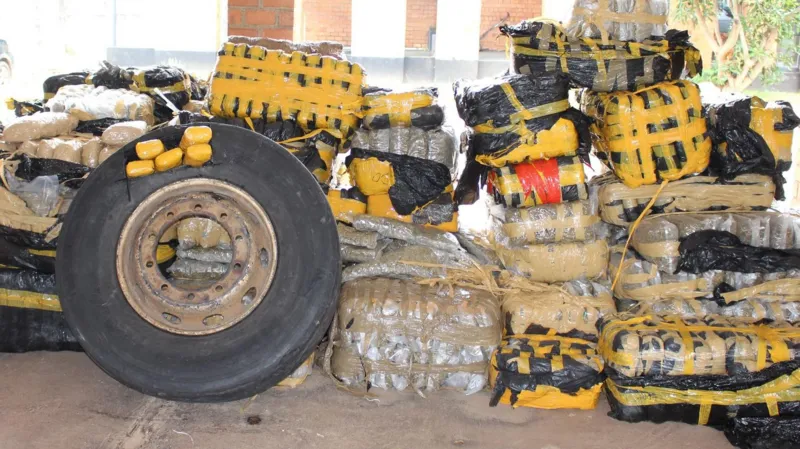
During Tuesday’s operations, the DEC said it had seized 221.2kg of cannabis hidden in a lorry in Lusaka’s Lilayi area.
The search was extended to Muharram’s residence in Lilayi, where officers discovered an additional 1,159.6kg of “high-grade” cannabis, bringing the total seizure to 1,380.8kg, the agency added.
A Zambian national who was also arrested is believed to be an accomplice in the organised drug-trafficking scheme.
The DEC said their operations also saw the arrests of:
- A Zambian national for trafficking 55 boxes of Benylin containing codeine in Lusaka
- Two other Zambians for trafficking cannabis concealed in their vehicle
- Two Burundian nationals in the southern district of Chirundu for trafficking cannabis in separate vehicles: some was hidden inside a spare lorry tyre, some in gas compressors and additional cannabis was mixed with sugar, salt and paint and concealed in tins and buckets of paint.
“All suspects have since been detained in lawful custody and will appear in court soon,” DEC said in a statement.
The agency said it was committed to ensuring that Zambia was neither used as a corridor nor a destination for drug trafficking.
[BBC]

The SSC finally steps out of the sunshine and into the floodlights

SAARC journalists meet in New Delhi

Governor of Gujarat met with Sri Lanka PM to discuss exposition of Devnimori Relics

India chase sixth Under-19 World Cup title, England their first since 1998

Meet the women protecting India’s snow leopards

Louvre Museum crown left crushed but ‘intact’ after raid

‘Dates have the highest sugar content to fight Coronavirus’

Sunday Island 27 December – Headlines

#SundayIsland 17th December – Headlines

Sunday Island – 28th March

Sunday Island Headlines – 21 March

Sunday Island – 21st February – Headlines
-

 Business6 days ago
Hayleys Mobility ushering in a new era of premium sustainable mobility
-

 Business3 days ago
SLIM-Kantar People’s Awards 2026 to recognise Sri Lanka’s most trusted brands and personalities
-

 Business6 days ago
Advice Lab unveils new 13,000+ sqft office, marking major expansion in financial services BPO to Australia
-

 Business6 days ago
Arpico NextGen Mattress gains recognition for innovation
-

 Business5 days ago
Altair issues over 100+ title deeds post ownership change
-

 Editorial6 days ago
Govt. provoking TUs
-

 Business5 days ago
Sri Lanka opens first country pavilion at London exhibition
-

 Business4 days ago
All set for Global Synergy Awards 2026 at Waters Edge