
Latest News
India in final after clinching high-scoring thriller


On a night of pulsating drama, studded with 499 runs in 40 overs, including 34 sixes, India sealed their progression to Sunday’s T20 World Cup final, thanks to Sanju Samson’s second defining knock in as many matches, and a display of targeted magnificence from the inevitable Jasprit Bumrah. But to do so, they had to withstand an innings from the ages from the precocious Jacob Bethell, whose 105 from 48 balls kept England swinging for the fences in a heroically thwarted chase in Mumbai.
Set an unearthly 254 to win, after Samson had backed up his crucial 97 not out against West Indies with another mighty innings of 89 from 42, England lost three wickets in the powerplay, and eventually drifted out of contention as India’s seamers held their nerves in the death overs to leave an improbable requirement of 30 from the final over.
In the final analysis, however, it was the fine margin of fielding that made the key difference. Where Harry Brook dropped an utter clanger in the third over of the match, to reprieve Samson on 15 and leave his hapless bowler, Jofra Archer, winded and mojo-less, India’s defence turned on two stunning pieces of work from Axar Patel in the deep.
The first, at deep cover, showed Brook how it’s done, as England’s likeliest matchwinner was extracted for just 7 from 6; the second, at deep backward point, was an incredible running relay effort to intercept an uppercut from England’s player of the tournament, Will Jacks, whose 77-run stand for the fifth wicket with Bethell had given England a strong chance as they approached the final six overs.
Suryakumar Yadav said he would have batted first had he won the toss, which sounded like a bluff, given how compellingly the stats warned against it. No team had batted first and won a floodlight knockout at the T20 World Cup for 13 consecutive matches, since Sri Lanka’s victory over West Indies in their 2014 semi-final.
By the end of a 67-run powerplay, however, the inevitable was already charging into view. Sanju Samson had come into the contest with an unfavourable match-up against Archer – three dismissals for 23 in 25 previous deliveries in T20Is – but he also had the momentum of his match-winning knock at the weekend. He scarcely needed a helping hand to send his innings into overdrive.
Brook offered it nonetheless. It is hard to conceive of a more costly drop than the one England’s captain put down at mid-on in Archer’s second over. Samson had already cashed in on his shorter length, with two fours and a six in his first six balls, when Archer aimed a yard fuller and induced a scuffed drive at throat height. It was a dolly by any measure, and Brook’s face was a picture of guilt – first as the ball burst through his fingers, and then when Samson bludgeoned Archer high over the leg side two balls later.
At least Abhishek Sharma’s fallow campaign had been extended by that point – with Will Jacks trading two thumped fours for a miscue to deep midwicket in his opening over. It meant that England were spared a direct re-run of their previous bowl-first ordeal at the Wankhede, 13 months earlier, though the lessons of that night scarcely seemed to have been heeded.
Archer retreated with figures of 0 for 26 in two overs, to be replaced by Jamie Overton, who strayed far too full throughout his night’s work, and then by Sam Curran, whose change-ups could not stem the tide either. Samson was too well set to be suckered by the moon-ball, which he duly plonked over the head of mid-off.
The second most culpable moment of England’s fielding effort, however, was still to come. With two run-hungry batters itching to hit the spin, Liam Dawson’s introduction for the eighth over felt like a plan with too many drawbacks. Ishan Kishan and Samson duly traded a six apiece in a 19-run demolition, and for the first time in his T20I career, Dawson was effectively rendered unusable.
The gloves were off from that point on. Curran returned for a change of ends but was subjected to a 20-run tag-teaming, and at 112 for 1 after nine overs, jeopardy had left the building for India’s batters. Kishan flogged one last boundary before miscuing Rashid to long-off for 39 from 18, but out strode Shivam Dube to exact revenge with two huge strikes over long-on in the legspinner’s third over.
Archer’s return for a rare mid-innings foray telegraphed England’s desperation. But Samson, similarly, had eyes only for the boundary, and none on impending milestones. He continued to accelerate into his night, marching into the 80s with two more sixes to take his personal haul to seven, before that man Jacks lobbed a wide length ball across his bows to induce a miscue to deep cover. Since the start of India’s must-win in Kolkata on Sunday night, Samson had battered the small matter of 186 runs from 92 balls.
The only moment of genuine traction for England came in the 18th over, as Curran closed out his tough night with an excellent array of yorkers. And yet, he still went for 12, as Dube clubbed his fourth six before being sold a dummy by Hardik Pandya… who then lost control of his bat in a slog through the line, only for Tom Banton to spill the resultant chance at long-on.
Archer’s final over wasn’t anything like the same quality. He retreated with gruesome figures of 1 for 61, as Tilak Varma slotted three sixes in four balls before inside-edging onto his stumps for the most pyrrhic wicket of the night. Thereafter, Hardik was able to farm the strike for his favourable match-up with Jacks, belting two last sixes over the leg side to romp India past 250.
The good news for England was that Phil Salt flicked their first ball of the chase through fine leg for four, and that Jos Buttler also found the boundary for the first time in six innings, with an emphatic thump over the covers two balls later.
The bad news for England was that the bowler on the receiving end was not Jasprit Bumrah, but Arshdeep Singh. India had given themselves license to keep their most deadly weapon in reserve, and see what lumps they could extract before his deployment. Pandya duly obliged with a first-ball outswinger that Salt could only skew to cover, to end his fallow campaign with 5 from three balls.
Bumrah’s eventual entry, for the fifth over, produced a moment of poetry. A first-ball cutter suckered Brook straight out of the hand as he skied the ball high out to extra cover, but if that was good, then the snapping of the trap was even better, as Axar tracked back from the edge of the ring and clung on with a full-length dive, looking over his shoulder.
Back he went, up Suryakumar’s sleeve, not to be seen again until the 11th over, and then hidden again until the 16th, by which point an eight-run over was gold-dust. His pinpoint dot-ball yorker to Sam Curran was greeted with one of the loudest cheers of an already raucous night.
Such was England’s refusal to buckle, however, that with 45 still needed from 18, Bumrah had to go again immediately. A barrage of perfect yorkers offered up just four singles and a two, to leave England needing back-to-back 20-run overs. That was the game, there and then.
Bumrah’s extraction of Brook for 7 from six had been a perfectly targeted strike, but Bethell strode out with a refusal to be overawed. He silenced the Wankhede’s “Boom Boom” chants with a second-ball swivel-pull for six over fine leg, then greeted Varun Chakravarthy with three more in a row, over long-on, long-off and deep third, as if to plant his 360-degree versatility like a flag.
In the same over, however, England lost their third powerplay wicket, and another of their kingpins. Buttler’s ugly campaign had flirted with resuscitation even as he kept losing his shape on a succession of heaves across the line. However, for the third Wankhede innings in a row, he reached the 20s at a 150 strike rate and then immediately gave it away, this time to a flat-footed waft across Varun’s googly.
Astonishingly, England still emerged from the powerplay one run to the good – 68 to 67 – but at three wickets down, it was already a clear race between runs required and wickets standing. Banton got the memo by drilling Axar’s first two deliveries down the ground for six before ruining the moment by slogging over the top of a more flighted follow-up, but Bethell took further lumps out of Varun’s figures with back-to-back fours to bring up England’s hundred in the ninth over.
His maiden Test century in Sydney had been an astonishing display of precocity and shot selection; this awesome effort was everything that he had forsaken to produce that innings and more. The self-sacrifice he had shown in his judgement outside off in January was translated into a full repertoire of 360-degree strokeplay. Until his ODI hundred against South Africa last summer, he had never previously made a professional century. Now, he has joined an exclusive club with three figures in all three formats. One thing is for sure, this won’t be the last the Wankhede crowd will see of him.
Brief scores:
India 253 for 7 in 20 overs (Sanju Samson 89, Ishan Kishan 39, Shivam Dube 43, Suryakumar Yadav 11, Hardik Pandya 27, Tilak Varma 21; Jofra Archer 1-61, Will Jacks 2-40, Adil Rashid 2-41) beat England 246 for 7 in 20 overs (Jos Buttler 25, Jacob Bethell 105, Tom Benton 17, Will Jacks 35, Sam Curran 18, Jofra Archer 19*; Arshdeep Singh 1-51, Hardik Pandya 2-38, Jasprit Bumrah 1-33, Varun Chakravarthy 1-64, Axar Patel 1-35) by seven runs
[Cricinfo]

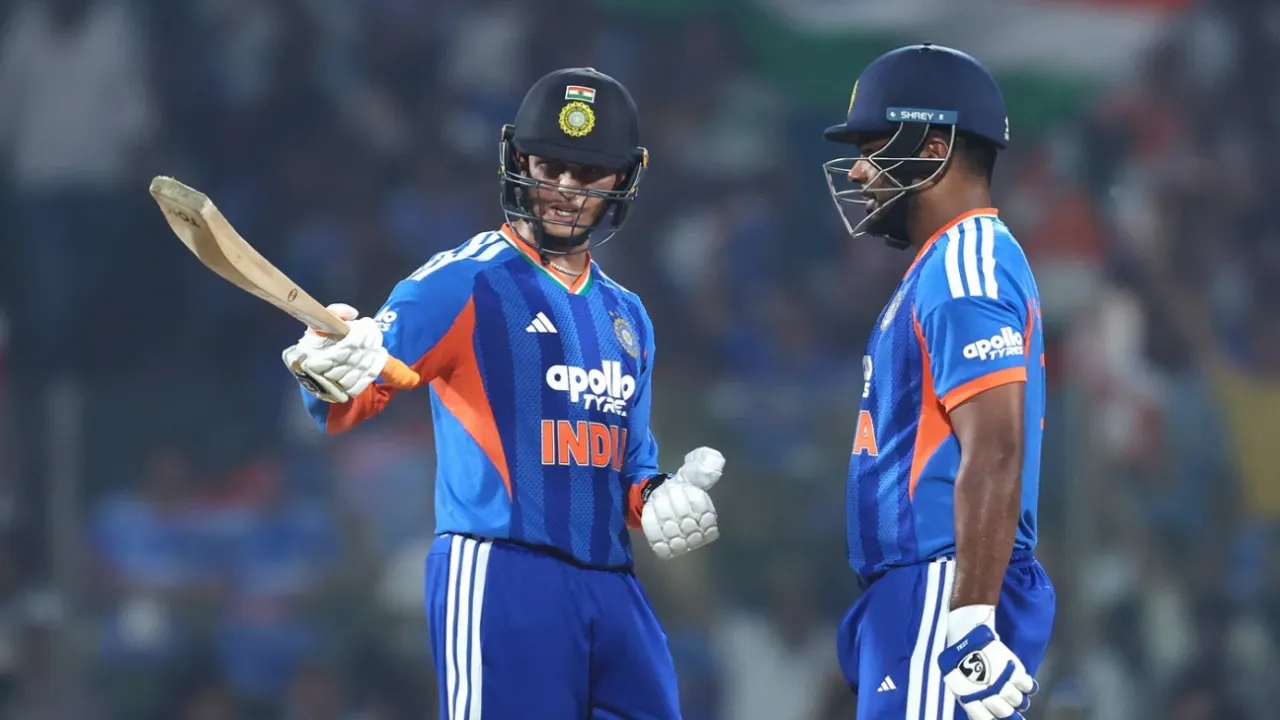
The gulf between India and Afghanistan during the recent bilateral T20I series – which India won 3-0 – was a further vindication of India’s dominance in the format and why they are world champions. It may not have reflected Afghanistan’s pedigree in the format, but it showed the gaps they still have to make up to match the top sides in the world, especially in terms of dot-ball percentage and their strike rate while batting.
Now Afghanistan, who have sent a second string side to the Asian Games, take on a full-strength India in the quarter-finals. Thirteen of the 15 players who toured India for the bilateral series are not in Afghanistan’s squad now, and the only two retained are Darwish Rasooli (the captain) and Abdollah Ahmadzai. Afghanistan’s squad of 15 is so raw that it features six uncapped players and five others who have fewer than ten international appearances. Their combined T20I experience of 262 matches is only a fraction (30%) of India’s 872 games.
There is no Rashid Khan, no Rahmanullah Gurbaz, no Mohammad Nabi, but Nabi’s genes are in the side, in his 20-year-old son Hassan Eisakhil.
India, despite a calendar clash with the home ODI’s against West Indies, which also start on Sunday, have sent their big guns to Japan in search of their second straight gold medal. If there is one team that can field multiple white-ball squads simultaneously, it is India, and they have done that. It is not officially known, however, why Afghanistan have sent such an inexperienced side when their next international fixture, a one-off Test against Bangladesh, only starts on October 9. Afghanistan aren’t alone in sending a second-string squad, perhaps to give their first-choice players some rest in an otherwise packed calendar.
The divide between the two sides is stark and even though they would want to take heart from the scare Japan handed India – even if in a rain-truncated game – recently, Afghanistan themselves lost to Nepal a couple of days ago. Now they have to compete against the world champions, a task they struggled with even at full strength earlier this month.
India have been plagued by injuries of late and one of the names on that list was of Washington Sundar, who returned to action in the Japan T20I last week. He didn’t get to bat and bowled two overs and took two wickets while playing his first game in two months. India would want to give him more game time before he heads back home for the West Indies T20Is that start on October 6 in Lucknow. Barring his niggles, Washington has otherwise had an impressive year across formats with an unbeaten 52in an ODI to give India their first win of their UK tour after he took a four-for in the Test against Afghanistan, during which he also scored 52*.
Pace-bowling allrounder Ismat Alam, 24, has played two Tests and one T20I so far, Afghanistan’s opening game against Japan. Alam was the Player of the Tournament in Afghanistan’s domestic T20s – Shpageeza Cricket League – for scoring 294 runs at a strike rate of 168, while also taking nine wickets. He had starred on his Test debut last year, scoring a century in the lower order that set up Afghanistan’s victory over Zimbabwe. Afghanistan may want to give him a game and hope he steps up again on the big stage.
India had rested Jasprit Bumrah in the one-off T20I against Japan and played Arshdeep Singh and Yash Thakur as their quick options apart from legspinner Ravi Bishnoi and spin-bowling allrounders Axar Patel and Washington Sundar. India will now have to decide whom to leave out for Bumrah. The other question will be if India want to give Vaibhav Sooryavanshi a game early in the tournament, although Abhishek Sharma and Sanju Samson look undroppable given the runs they scored in the series against Afghanistan.
India (probable): Abhishek Sharma, Sanju Samson (wk), Ishan Kishan, Shreyas Iyer (capt), Tilak Varma, Axar Patel, Shivam Dube, Washington Sundar, Ravi Bishnoi, Yash Thakur/Arshdeep Singh, Jasprit Bumrah.
Against Nepal, Afghanistan gave a T20I debut to Faisal Shinozada who top-scored along with the experienced Najibullah Zadran, the only batters who scored in double-digits in the game.
Afghanistan (probable): Mohammad Akram, Hassan Eisakhil, Karim Janat, Darwish Rasooli (capt), Najibullah Zadran, Mohammad Ishaq (wk), Ismat Alam, Nangeyalia Khan, Abdollah Ahmadzai, Faridoon Dawoodzai, Arab Gul.
[Cricinfo]
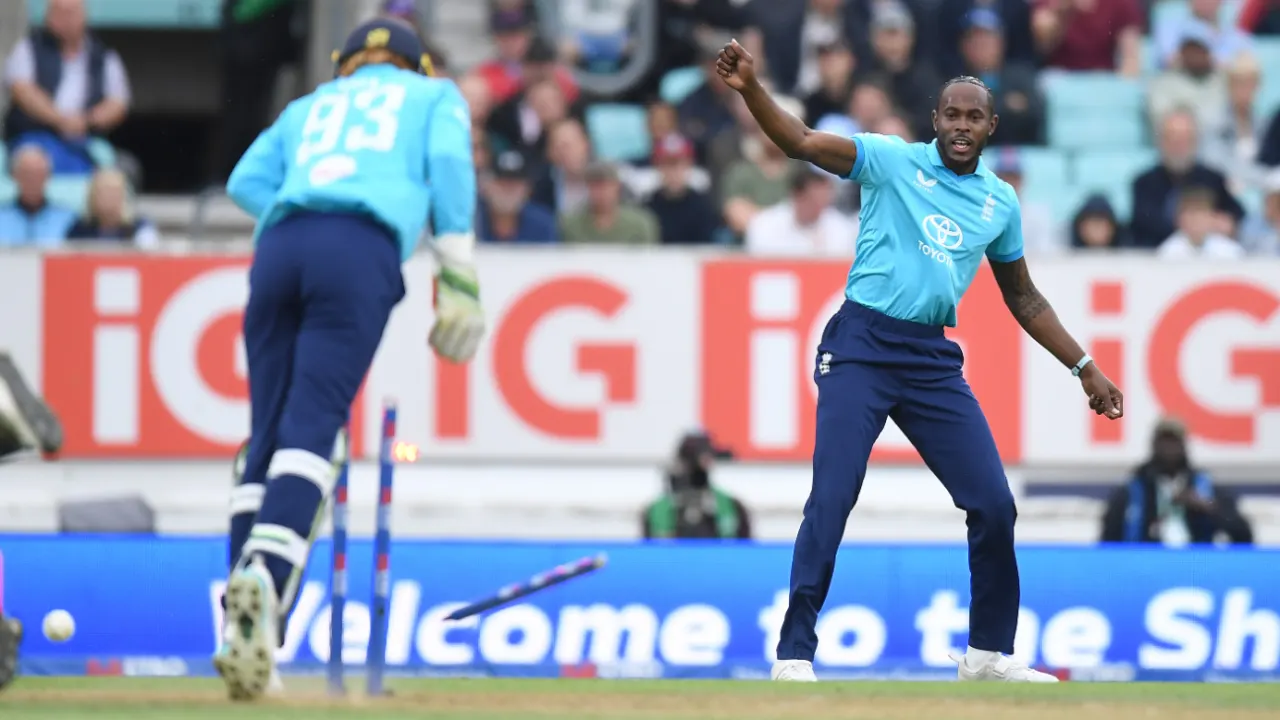
England were the beneficiaries of an unusual, but ultimately correct, umpiring decision during their series-clinching win against Sri Lanka in Sunday’s third ODI at the Oval as Pavan Rathnayake was given out, not out, and then out again.
The bizarre passage of play came in the 15th over of Sri Lanka’s run-chase, when Charith Asalanka steered Liam Dawson to short third man. Jofra Archer, the fielder, threw at the keeper’s end, and Rathnayake was a long way short of his ground as the LED lights on the stumps and the bails flashed.
Rob White, the square-leg umpire, initially gave him out on-field without deference to TV umpire Adrian Holdstock, but did refer the decision after consultation with standing umpire Wayne Knights. It became clear after a replay that Jordan Cox’s gloves had dislodged the bails just before the ball hit the stumps.
Holdstock appeared to overturn the initial decision after around two minutes of deliberation, with ‘not out’ flashing up on the big screen at The Oval, but continued to review his decision at the drinks break. After another 90 seconds of deliberation, he gave Rathnayake – who was clearly bemused – out for 18.
The decision took approximately four minutes to reach, but was ultimately correct. While Cox’s gloves had dislodged the bails, Archer’s throw uprooted the stump entirely and was thereby deemed to have broken the wicket.
The two relevant MCC Laws read as follows:
- 29.2.1.1: “The wicket is broken fairly if a bail is completely removed from the top of the stumps, or a stump is struck out of the ground by the ball.”
- 29.2.1.6: “The wicket is also broken fairly if a fielder strikes or pulls a stump out of the ground (as in 29.2.1.5).”
The circumstances were highly unusual, as the former England batter Mark Butcher outlined on Sky Sports. “What I find hard to believe is that in all the years I’ve either played or commentated on the game, I’ve never seen this before or heard that Law before,” Butcher said.
“Everybody knows that if you break the stumps and the bails come off, then you need to get the ball in your hand and take the stump out in order to affect the run-out. I’ve never heard the sub-Law about the throw knocking the stump out of the ground, and that counting as a dismissal.”
Tom Banton, Player of the Match after making his maiden international hundred during England’s innings, was similarly taken aback by the scenario. “I’ll be honest, I have never seen that before, so I actually don’t know,” he said afterwards. “But we take the mick out of Jamie Overton because he seems to know everything, and he said it was out straight away.”
MCC, who write and interpret the Laws of Cricket, are expected to clarify the decision in the coming days.
[Cricinfo]

Hours after US President Donald Trump rejected a diplomatic solution put forward by Iran to reopen the Strait of Hormuz, explosions were heard in the waterway, according to Iranian media.
Reports of blasts near southern Iran’s Qeshm Island in the Strait of Hormuz suggested that multiple antiship missiles and drones were fired at vessels transiting the waterway against Tehran’s wishes.
While Iranian authorities did not confirm any attacks in the Strait of Hormuz that day, shipping continues to be attacked in the waters, including an Indian cargo ship last week which killed a sailor.
The Islamic Revolutionary Guard Corps (IRGC) maintains that the strait is closed to any ship that does not coordinate with Iranian authorities. On Sunday afternoon, it released video of what it said was a second US underwater drone seizd this month.
Tehran has issued instructions to shipping companies transiting the Strait of Hormuz to use a temporary route approved by Iranian authorities and pay relevant fees. But it has also said the strait will not fully reopen until the US blockade on Iranian ports ends.
Iran’s Persian Gulf Strait Authority announced on Saturday that it would blacklist any shipping charterer company which orders crews to use routes it considers to be unauthorised.
It also published what it described as an apology from an unnamed shipowner blaming commercial pressure from its charterer for trying to pass through the strait.
(Aljazeera

Rain threat looms over lopsided India vs Afghanistan quarter-final

Out, not-out, out: England secure bizarre run-out in Oval victory

Strait of Hormuz tensions linger as Iran and US move further from a deal

Showers will occur in the Western, Eastern, Uva and Sabaragamuwa provinces and in Galle, Matara, Kandy, Nuwara-Eliya, Polonnaruwa and Mullativu districts

Sajith rejects Jt. Opp. protest sabotage claim; SJB TU chief demands remedial action

Police remove Thileepan statue in Jaffna

‘Dates have the highest sugar content to fight Coronavirus’

Sunday Island 27 December – Headlines

#SundayIsland 17th December – Headlines

Sunday Island – 28th March

Sunday Island Headlines – 21 March

Sunday Island – 21st February – Headlines
-

 News5 days ago
Mastermind Naufer Moulavi among 15 found guilty
-

 News6 days ago
Protest against setting up of cement factory in highly populated area near BIA
-

 Midweek Review5 days ago
Thileepan’s fast unto death: An authentic narrative that many missed
-
 Latest News4 days ago
Showers above 100 mm are likely at some places in the Western, Sabaragamuwa, Central and North-western provinces and in Galle and Matara Districts
-

 Editorial6 days ago
Trouble beginning in earnest
-
Editorial5 days ago
Big Bad Bills
-
 News6 days ago
Govt. confident of 2/3 majority despite NPP split speculation
-

 News6 days ago
Police may seek clarification from US