
News
India-gifted ambulance service in Sri Lanka in need of critical support

By Meera Sirinivasan
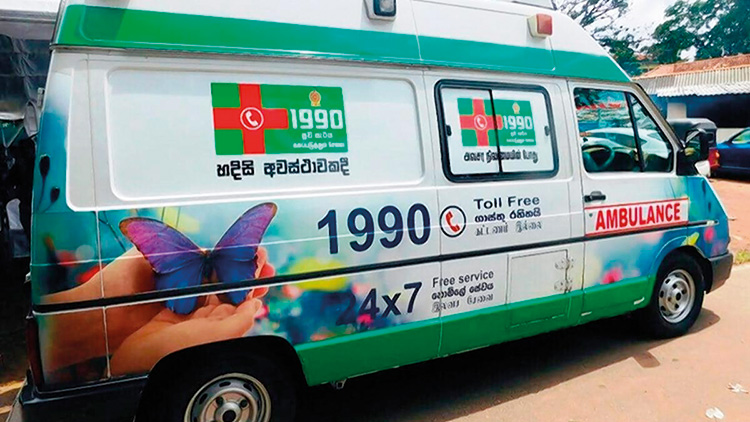
An India-gifted free ambulance service in Sri Lanka, providing vital pre-hospital emergency care across the island for eight years, appears to be in need of critical support, going by a recent social media post by a public health professional.
Yasuni Manikkage, a doctor working at a Colombo-based government hospital, on Tuesday took to ‘X’ to flag a 51-year-old man’s sudden death at his residence in Colombo. “Desperately called Suwaseriya, but they did not have any available ambulances nearby. We could not save him on time. Why is funding Suwaseriya 1990 & saving lives not a priority for Lankan government?” she asked in the post that has since drawn much attention.
The delay in response time — the nearest ambulance was 30 minutes away — is uncharacteristic of the ‘Suwaseriya 1990’ service. From the time it was launched in July 2016, with a $7.56-million Indian grant, and expanded in two years with an additional $15.09 million from India, it has made a mark with its promptness and efficiency. Arguably New Delhi’s most popular project in Sri Lanka, the ambulance network has attended to about 82 lakh calls and 19 lakh medical emergencies till date, including in remote areas.
After the initial Indian grant assistance to set up the service Sri Lanka took over and has since been running it with a team of professionals working in coordination with the Ministry of Health. Over 700 of the medical technicians were trained in India initially, but following the pandemic years Sri Lanka developed its own training programme at the University of Kelaniya.
Despite the service’s reach and wide acclaim — a World Bank report called it one of the world’s most digitally advanced and free ambulance services — sustaining it is proving a challenge after Sri Lanka’s crushing financial meltdown in 2022, according to Dumindra Ratnayaka, Chairman of the Suwaseriya Foundation.
The island nation’s unprecedented economic crisis brought with it hyperinflation and a drastic rise in living costs, pushing many Sri Lankans, including thousands of medical professionals and technicians, to seek opportunities abroad. Consequently, Sri Lanka’s public health system, and the ambulance service that is part of it, are impacted. “Of our nearly 1,500 staff, we have lost 400 since 2022,” Ratnayaka said, speaking of the difficulty in finding technicians and putting them through training before they can come on board. Staff salaries are currently in the range of LKR 50,000 (roughly ? 13,800), with which an individual, let alone a family, can hardly make ends meet in Sri Lanka.
The government cannot increase salaries for just one section of public service, and it cannot afford salary hikes across the board at the moment, Sri Lanka’s Health Minister Ramesh Pathirana said. “We have made the necessary budgetary allocation for the ambulance service. The country is stabilising, and things are improving in the health sector too,” he told The Hindu on Wednesday.
Despite the budgetary allocation, an apparent funding crunch prompted the ambulance service to seek adoption last year. Through private sector donations and corporate assistance, it has raised LKR 750 million since, but sustaining the service may need more than individual philanthropy, public health experts noted.
Of the ambulance service’s fleet of 322 vehicles, over 50 are currently offline owing to either staff shortages, or a delay in repairs. “Dimo, who are Tata’s agent here, have also lost many mechanics, they have migrated. That means the time taken to repair a vehicle has increased considerably,” Ratnayaka said, pointing to how the country’s enduring crisis manifests in many ways.
‘Suwaseriya’ is the “last thing” that should be underfunded, contended Colombo-based writer Andrew Fidel Fernando. He recalled how after an unexpected patellar dislocation last year, a call to 1990 brought swift and expert medical care to the spot. “It took barely 5 minutes for the ambulance to reach the park I was at, playing with my kids. The staff were very receptive, incredibly professional, and efficient. There aren’t too many things in Sri Lanka’s public service that I would call world class, but this ambulance service certainly is!” he said.
(The Hindu)


FSL assures legal backing for them
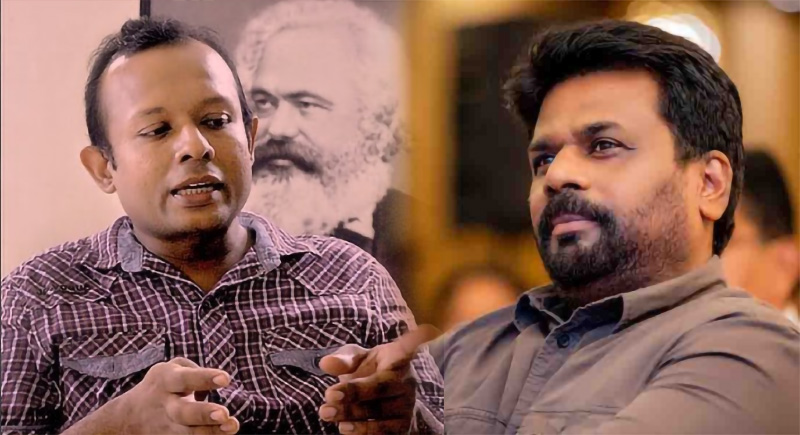
Families of those sentenced to death by the Three-member Gampaha High Trial-at-Bar, over the killing of SLPP MP Amarakeerthi Atukorale, and his police bodyguard, met a senior official of the Presidential Secretariat, yesterday (23), to seek backing for their move to appeal against the verdict.
Having made representations, they addressed the media, outside the Presidential Secretariat, where they declared their intention to move the higher court against the decision.
The SLPP MP and his security officer were killed by an Aragalaya mob on 09 May, 2022, at Nittambuwa. The same day Aragalaya mobs unleashed violence against the then government MPs across the country, torching dozens of their properties.
The Frontline Socialist Party (FSP) yesterday said that they would help the families of those sentenced to death to move court against the Gampaha High Court Trial-at-Bar decision. Responding to The Island queries, FSP spokesman Pubudu Jayagoda said that their representatives had already met the families and necessary work was being done to move the Supreme Court. Twenty three persons were acquitted and four handed six-month prison terms, suspended for five years
Jayagoda said that one of the HC judges differed in the ruling. Asked whether they received backing from any other political party and groups that had been involved in the 2022 protest campaign to defend those who had been found guilty, Jayagoda said such support was lacking.
The JVP/NPP played a significant role in the violent protest campaign that forced President Gotabaya Rajapaksa to step down. Pointing out that the Attorney General, too, was appealing against the court decision on the basis that the number of persons sentenced to death should be much higher, Jayagoda said that the Nittambuwa incident couldn’t be examined in isolation without taking into consideration the SLPP goon attack on Galle Face protesters on 09 May, 2022. (SF)
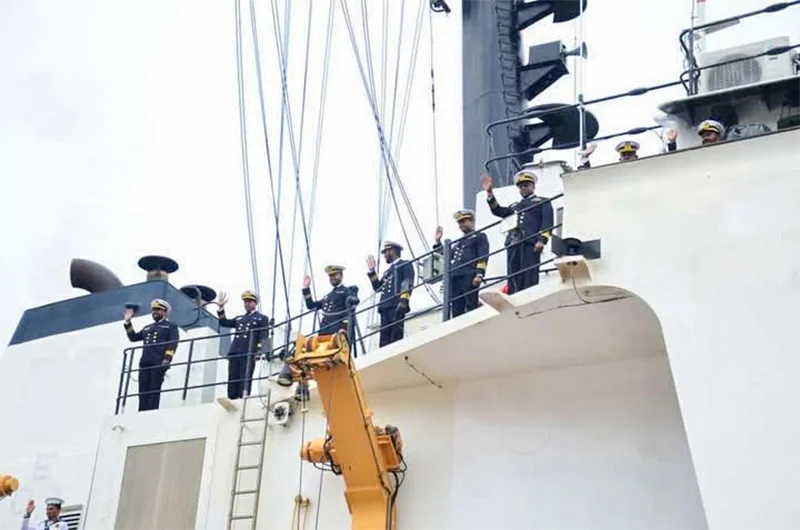
Offshore Patrol Vessel P 628 of the Sri Lanka Navy departed Baltimore, USA, for Colombo, on 20 February.
The ex-United States Coast Guard Cutter, USCGC Decisive was officially handed over to the SLN on 02 December, 2025, as the latest addition to the SLN fleet, under the Pennant Number P 628.
Measuring 64 metres in length, this ‘B-Type Reliance Class 210-foot Cutter’ is equipped with advanced technological systems and facilities, capable of conducting extensive surveillance operations spanning up to 6,000 nautical miles per patrol.
The vessel’s voyage to Colombo is historic, possibly marking the longest-ever passage undertaken by a Sri Lanka Navy ship. Covering approximately 14,775 nautical miles, the journey will see the P 628 navigate from Baltimore through the Atlantic Ocean, the Panama Canal (a first for a Sri Lankan naval vessel), the Pacific Ocean, and into the Indian Ocean, via the Straits of Malacca. The ship is expected to arrive in Sri Lanka during the first week of May, 2026.

Power sector is once again facing mounting turbulence, with trade unions alleging serious irregularities in coal procurement and warning that ongoing restructuring efforts could trigger far-reaching consequences for the country.
Kosala Abeysinghe, President of the Ceylon Electricity Board Technicians’ Union, said the energy sector is being pushed towards “a dangerous and avoidable crisis” at a time when the nation is still navigating a fragile economic recovery.
Abeysinghe alleged that a “coal scam” has created serious concerns within the sector.
“There are grave questions surrounding the coal procurement process,” Abeysinghe said. “If these irregularities are not immediately investigated and rectified, the financial burden will ultimately fall on the people of this country.”
Coal-fired generation remains a critical pillar of Sri Lanka’s electricity supply. Any disruption in procurement or pricing mismanagement has the potential to increase generation costs and impact consumer tariffs.
“This is not just about a tender or a contract,” he stressed. “It directly affects electricity tariffs, supply stability and the economic wellbeing of millions of citizens.”
Abeysinghe also voiced strong opposition to what he described as an “irregular and unstructured” restructuring of the power sector. According to him, reforms are being carried out without adequate technical consultation or stakeholder consensus.
“The restructuring process appears to be moving forward without a clear, transparent and technically sound framework,” he said. “Weakening the institutional strength of the power sector in this manner could create long-term vulnerabilities.”
He further emphasised that the unfolding situation goes beyond trade union interests.
“This is not merely a labour issue,” Abeysinghe said. “It is a national issue. The stability of the electricity supply underpins every household, every business and every industry in Sri Lanka.”
Warning of possible escalation, he noted that trade unions are prepared to consider further action if their concerns are not addressed.
“We do not wish to inconvenience the public,” he added. “However, we cannot remain silent if decisions are being taken that endanger the country’s energy security.”
With electricity supply forming the backbone of Sri Lanka’s economic activity, the allegations and warnings are likely to intensify scrutiny over the management and future direction of the energy sector in the coming days.
by Ifham Nizam

Families of those sentenced to death for killing MP Atukorale seek AKD’s intervention

OPV leaves Baltimore, expected in Colombo in May

Unions sound alarm over coal procurement and power sector restructuring

MAS Group moving to India: CP asks NPP govt. to act

Steps leading to the achievement of SL’s national interest in IOR

Why so unbuddhist?

‘Dates have the highest sugar content to fight Coronavirus’

Sunday Island 27 December – Headlines

#SundayIsland 17th December – Headlines

Sunday Island – 28th March

Sunday Island Headlines – 21 March

Sunday Island – 21st February – Headlines
-
 Features2 days ago
Why does the state threaten Its people with yet another anti-terror law?
-

 Features2 days ago
Victor Melder turns 90: Railwayman and bibliophile extraordinary
-

 Features2 days ago
Reconciliation, Mood of the Nation and the NPP Government
-

 Features1 day ago
LOVEABLE BUT LETHAL: When four-legged stars remind us of a silent killer
-
 Features2 days ago
Victor, the Friend of the Foreign Press
-

 Latest News3 days ago
New Zealand meet familiar opponents Pakistan at spin-friendly Premadasa
-

 Latest News3 days ago
Tariffs ruling is major blow to Trump’s second-term agenda
-

 Latest News3 days ago
ECB push back at Pakistan ‘shadow-ban’ reports ahead of Hundred auction