
Features
India forcibly sterilised 8m men: One village remembers, 50 years later

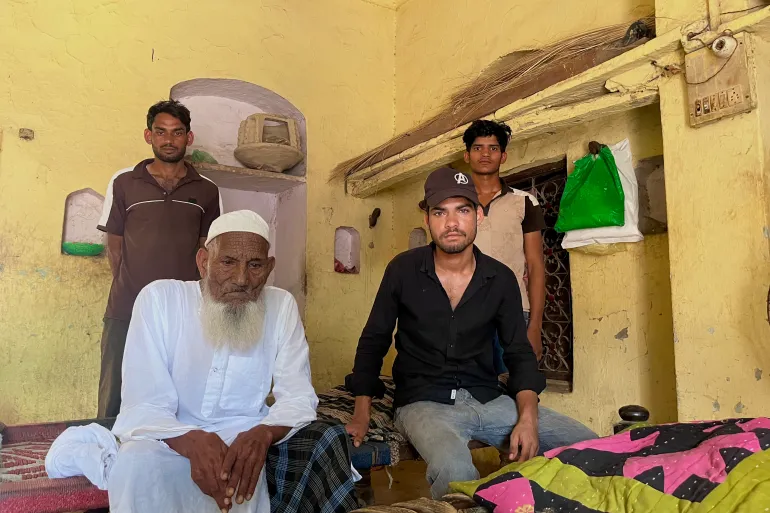
When everybody ran, towards the jungles and nearby villages, or dived into a well to hide from government officials, Mohammad Deenu stayed put.
His village, Uttawar, in the Mewat region of northern India’s Haryana state, about 90km (56 miles) from the capital, New Delhi, was surrounded by the police on that cold night in November 1976. Their ask: men of fertile age must assemble in the village ground.
India was 17 months into its closest brush with dictatorship – a state of national emergency imposed by then-Prime Minister Indira Gandhi, during which civil liberties were suspended. Thousands of political opponents were jailed without a trial, an otherwise rambunctious press was censored, and, backed by financial incentives from the World Bank and the United States, India embarked on a massive forced sterilisation programme.
Deenu and his 14 friends were among its targets. They were pushed into the forces’ vehicles and taken to ill-managed sterilisation camps. To Deenu, it was a “sacrifice” that saved the village and its future generations.
“When everyone was running to save themselves, some elders [of the village] realised that if no one is found, it would create even bigger, long-lasting troubles,” Deenu recalled, sitting on a torn wooden cot. “So, some men from the village were collected and given away.”
“We saved this village by our sacrifice. See around, the village is full of God’s children running around today,” he said, now in his late 90s.
As the world’s largest democracy marks 50 years since the imposition of the emergency on June 25, Deenu is the only man who had been targeted in Uttawar as part of the forced sterilisation project who is still alive.
More than 8 million men were forced to undergo a vasectomy during that period, which lasted until March 1977, when the state of emergency was lifted. This included 6 million men in just 1976. Nearly 2,000 people died in botched surgeries.
Five decades on, those scars live on in Uttawar.
![Mohammad Noor sitting with his childhood friend, Tajamul Mohammad, at his home in Uttawar, Haryana. [Yashraj Sharma/Al Jazeera]](https://www.aljazeera.com/wp-content/uploads/2025/06/Noor-Mohammad-with-Tajamul-1750790437.jpg?resize=770%2C578&quality=80)
‘A graveyard, just silence’
In 1952, just five years after securing its freedom from the British, India became the world’s first country to adopt a national family planning programme. At the time, the idea was to encourage families to have no more than two children.
By the 1960s, at a time when birth rates were close to six children per woman, the government of Indira Gandhi began adopting more aggressive measures. India’s booming population was seen as a burden on its economy, which grew at an average of 4 percent from the 1950s until the 1990s.
The West seemed to share that view: The World Bank loaned India $66m for sterilisation initiatives, and the US made food aid to a starving India contingent on its success at population control.
But it was during the emergency, with all the democratic checks and balances removed, that the Indira Gandhi government went into overdrive, using a mix of coercion and punishment to pressure government officials into implementing forced sterilisation, and communities into accepting it.
Government officials were given quotas of how many people they had to sterilise. Those who failed their targets had their salaries withheld or faced the threat of dismissal from their jobs. Meanwhile, irrigation water was cut off from villages that refused to cooperate.
Security forces were also unleashed on those who resisted – including in the village of Uttawar, which had a predominantly Muslim population, like many of the communities targeted. The Muslim birthrate in India at the time was significantly higher than that of other communities, making members of the religion a particular focus of the mass sterilisation initiative.
In the lane next to Deenu’s house, Mohammad Noor, then a 13-year-old, was sleeping in his father’s arms in a cot outside their house when policemen, some of them riding horses, raided their home. His father ran towards a nearby jungle, and Noor rushed inside.
“They broke the doors and everything that came in their way; they shattered everything they could see,” Noor recalled. “To make our lives worse, they mixed sand in flour. There was not even a single home in the village that could cook food for the next four days.”
Noor was picked up in the raid, taken to a local police station and beaten before he was let go. He said that because he was under 15, he was deemed too young for a vasectomy.
That night of scare, as the village calls it now, also gave birth to a local folklore: the words of Abdul Rehman, then the village head. “Outside our village, no one would remember this name, but we do,” said Tajamul Mohammad, Noor’s childhood friend. Both are now 63 years old.
Before raiding Uttawar, several officials had come to the village, asking Rehman to give away some men. “But he remained steadfast and denied them, saying, ‘I cannot put any family in this place’,” said Tajamul, with Noor nodding passionately. Rehman also did not agree to give away men from neighbouring areas either, who were sheltering in Uttawar.
According to a local Uttawar legend, Rehman told the officials: “I will not give away a dog from my area, and you are demanding humans from me. Never!”
But Rehman’s resolve could not save the village, which was left in a state of mourning after the raids, said Noor, sucking tobacco from a hookah.
“People who ran away, or those who were taken away by the police, did not return for weeks,” he said. “Uttawar was like a graveyard, just silence.”
In the years that followed, the impact became more visible and dreadful. Neighbouring villages would not allow marriages with men of Uttawar, even those who were not sterilised, while some broke their existing engagements.
“Some of the people [men in Uttawar] were never able to recover from that mental shock, and spent years of their lives anxious or disturbed,” said Kasim, a local social worker who goes by his first name. “The tension and the social taboo killed them and cut their lives short.”

Echoes in today’s India
Today, India no longer has a coercive population control programme, and the country’s fertility rate is now just more than two children per woman.
But the atmosphere of fear and intimidation that marked the emergency has returned in a new avatar, under Prime Minister Narendra Modi, believe some experts.
For 75-year-old Shiv Visvanathan, a renowned Indian social scientist, the emergency helped perpetuate authoritarianism.
In the face of a rising student movement and a resurgent political opposition, the Allahabad High Court on June 12, 1975, found Indira Gandhi guilty of misusing state machinery to win the 1971 elections. The verdict disqualified her from holding elected office for six years. Thirteen days later, Gandhi declared a state of emergency.
“It was the banalisation of authoritarianism that created the emergency, with no moment of regret,” Visvanathan told Al Jazeera. “In fact, the emergency has created the emergencies that have followed in today’s India. It was the foundation of post-modern India.”
Indira Gandhi’s loyalists compared her with Hindu goddess Durga, and, in a play with phonetics, to India, the country itself, much like Modi’s supporters have compared the current prime minister with the the Hindu god Vishnu.
As the culture of the personality cult grew under Indira Gandhi, “the country lost the sense of understanding”, said Visvanathan. “With the emergency, authoritarianism became an instrument of governance.”
Visvanathan believes that even though the state of emergency was lifted in 1977, India has since slid towards complete authoritarianism. “All the way from Indira Gandhi up to Narendra Modi, each one of them contributed and created an authoritarian society while pretending to be a democracy.”
Since Modi came to power in 2014, India’s rankings have fallen swiftly on democratic indices and press freedom charts, due to the jailing of political dissidents and journalists as well as the imposition of curbs on speech.
Geeta Seshu, the cofounder of Free Speech Collective, a group that advocates for freedom of expression in India, said a similarity between the emergency years and today’s India lies in “the manner that mainstream media has caved in”.
“Then and now, the impact is felt in the denial of information to people,” she said. “Then, civil liberties were suspended by law, but today, the law has been weaponised. The fear and self-censorship prevalent then is being experienced today, despite no formal declaration of emergency.”
For Asim Ali, a political analyst, the defining legacy of the emergency “is how easily institutional checks melted away in the face of a determined and powerful executive leadership”.
But another of the emergency’s legacies is the successful backlash that followed, he said. Indira Gandhi and her Congress party were voted out of power in a landslide in 1977, as the opposition highlighted the government’s excesses – including the mass sterilisation drives – in its campaign pitch.
“Like the 1970s, whether Indian democracy is able to move beyond this phase and regenerate again after Modi remains to be seen,” Ali said.
![An elderly in Uttawar, who lived through the emergency years. [Yashraj Sharma/Al Jazeera]](https://www.aljazeera.com/wp-content/uploads/2025/06/Local-in-Uttawar-1750790376.jpg?w=770&resize=770%2C578&quality=80)
‘Seven generations!’
Back in November 1976, Deenu said he only thought of his pregnant wife, Saleema, as he sat inside the police van while he was being taken away. Saleema was at home at the time.
“A lot of men, unmarried or childless, pleaded with the policemen to let them go,” Deenu recalled. None of Deenu’s 14 friends was let go. “Nasbandi ek aisa shrap hai jisne Uttawar ko tabse har raat pareshan kiya hai,” he said. (Sterilisation is a curse that has haunted Uttawar every night since.)
After eight days under police custody, Deenu was taken to a sterilisation camp in Palwal, the nearest town to Uttawar, where he was operated upon.
A month later, after he returned from the vasectomy, Saleema gave birth to their only child, a son.
Today, Deenu has three grandsons and several great-grandchildren.
“We are the ones who saved this village,” he said, grinning. “Otherwise, Indira would have lit this village on fire.”
In 2024, Saleema passed away after a prolonged illness. Deenu, meanwhile, revels in his longevity. He once used to play with his grandfather, and now plays with his great-grandchildren.
“Seven generations!” he said, sipping from his plastic cup of a bubbly cold drink. “How many people have you seen that enjoy this privilege?”
[Aljazeera]

Features
Research and Development in Crisis: Structural Failures and Economic Consequences in Sri Lanka – Part I


Research and Development (R&D) constitutes the intellectual and technological foundation upon which modern economies are built. Nations that invest strategically in R&D consistently outperform those that rely primarily on resource extraction, low-wage labour, or import-driven consumption. For Sri Lanka, a country with limited natural resources, a small domestic market, and high vulnerability to external shocks, knowledge-driven development is not merely desirable but indispensable. R&D underpins advances in agriculture, livestock production, healthcare, renewable energy, industrial manufacturing, and digital technologies sectors that directly affect national resilience and social wellbeing.
Despite this reality, Sri Lanka’s development trajectory has not sufficiently prioritised R&D as a central pillar of economic planning. Innovation is frequently invoked in policy speeches and national plans, yet it remains peripheral in budget allocations and institutional reform. Research is often treated as an academic exercise rather than a strategic national investment. This disconnect between rhetoric and reality has left the R&D ecosystem fragile, fragmented, and poorly integrated with industrial and development objectives.
The consequences of neglecting R&D extend far beyond universities and laboratories. Weak research capacity undermines food security by limiting local solutions to human health, animal health, crop productivity, and climate adaptation. It constrains industrial competitiveness by forcing dependence on imported technologies and inputs. It erodes foreign exchange stability through import substitution failure and export underperformance. Ultimately, the absence of a strong R&D foundation compromises Sri Lanka’s long-term sovereignty, economic independence, and capacity for inclusive growth.
Chronic Underfunding of Research in Sri Lanka
One of the most persistent and structurally damaging constraints on R&D in Sri Lanka is chronic underfunding. National expenditure on research remains far below global and regional benchmarks, even when compared with countries at similar income levels. While advanced economies invest between two and four percent of GDP in R&D, Sri Lanka’s allocation remains marginal, fragmented across ministries, and vulnerable to fiscal tightening during economic crises. This signals to researchers and investors alike that innovation is not a national priority.
The inadequacy of funding manifests in multiple ways at institutional level. Competitive research grants are few in number, small in scale, and often delayed in disbursement, disrupting research timelines and experimental continuity. Laboratories struggle to maintain even basic functionality due to shortages of reagents, consumables, spare parts, and technical staff. Capital-intensive research particularly in biotechnology, veterinary science, engineering, and medical sciences becomes nearly impossible without external funding.
Over time, chronic underinvestment has normalised low expectations within the research community. Researchers are compelled to design projects around what is financially feasible rather than what is scientifically necessary or nationally relevant. Ambitious, multidisciplinary, and long-term research agendas are abandoned in favour of modest, low-risk studies that fit within constrained budgets. This adaptation to scarcity, while understandable, ultimately limits innovation depth, global competitiveness, and societal impact.
Impact on Human Capital and Research Continuity
The funding crisis in R&D has had a profound and lasting impact on human capital development in Sri Lanka. Young academics, postdoctoral researchers, and early-career scientists find it extraordinarily difficult to establish sustainable research programmes. Without reliable funding, access to modern facilities, or institutional support, many abandon active research soon after completing postgraduate training. This results in a generation of academically qualified but research-inactive faculty.
This environment fuels a silent yet continuous brain drain. Talented researchers seek opportunities abroad where research ecosystems are stable, predictable, and adequately resourced. Unlike visible migration waves, this loss is gradual and often unnoticed, yet its cumulative effect is devastating. The departure of skilled researchers weakens mentorship capacity, disrupts research groups, and erodes institutional memory essential for long-term scientific advancement.
Even researchers who remain in the system operate under constant uncertainty. The inability to plan multi-year projects discourages international collaboration and deters high-quality postgraduate students. Doctoral and master’s research becomes fragmented, delayed, or abandoned altogether. Over time, this instability undermines the continuity of national research programmes and weakens Sri Lanka’s capacity to respond to emerging challenges such as climate change, disaster management, engineering breakthroughs zoonotic diseases, antimicrobial resistance, emerging diseases, and food system disruptions.
Patent Generation Without Commercialisation
Sri Lankan universities and public research institutes generate a steady stream of innovative ideas, prototypes, formulations, and process improvements. These innovations arise primarily from publicly funded research, postgraduate theses, and problem-driven investigations in agriculture, health, and industry. However, the overwhelming majority fail to progress beyond the laboratory or pilot scale, resulting in minimal societal or economic return on national research investment.
Patent filing itself remains limited due to high costs, weak institutional incentives, and inadequate access to intellectual property (IP) expertise. Many researchers have limited familiarity with patenting procedures, while most institutions lack dedicated, professionally staffed patent or technology transfer offices with a strong commercial orientation. Even when patent applications are submitted, the patent examination process is often excessively slow, with initial feedback from relevant authorities commonly taking several months to years or longer. For underfunded or time-bound research projects, this delay creates a critical disconnect between innovation and protection.
In several documented cases, pre-screening results, examiner comments, or requests for amendments are received only after the funded project period has ended. At this stage, research teams frequently lack financial resources to undertake additional experiments, refine claims, conduct validation studies, or engage legal support required to respond effectively to patent office feedback. Consequently, potentially valuable inventions are abandoned, allowed to lapse, or inadequately protected, not due to lack of scientific merit but because of procedural and funding misalignment.
Even when patents are granted, ongoing costs related to maintenance, prosecution, and enforcement quickly become prohibitive in the absence of sustained institutional or government support. Commercialisation pathways remain weak or fragmented. Technology transfer offices, where they exist, are typically understaffed and under-resourced, with limited expertise in licensing negotiations, IP valuation, market assessment, or venture creation. As a result, much intellectual property remains dormant, or is disclosed prematurely through academic publication, rendering it unprotectable. Collectively, these challenges represent a systemic failure to translate publicly funded research outputs into tangible economic and industrial value, undermining the role of R&D as a driver of national development.
Absence of a National Innovation-to-Market Strategy
Sri Lanka lacks a coherent and coordinated national strategy to translate research outputs into marketable products and services. Innovation policies remain fragmented across ministries, funding agencies, and institutions, with little alignment between research priorities and industrial needs. There is no integrated pipeline linking laboratory research, pilot production, regulatory approval, market entry, and scale-up. Early-stage commercialization support is particularly weak. Risk-sharing mechanisms that could encourage private sector participation such as matching grants, innovation vouchers, or public–private partnerships are largely absent or unsupported. Researchers are often expected to become entrepreneurs without training, capital, or institutional backing. This unrealistic expectation results in high failure rates and discourages future innovation attempts.
Without state-backed incubation and protection, new technologies are exposed prematurely to open-market competition. Imported alternatives, often subsidised and mass-produced, quickly displace local innovations before they reach maturity. This systemic exposure discourages both researchers and investors, reinforcing a cycle in which innovation is generated but never sustained.
Failure of Post-Commercialisation Sustainability
Even when locally developed R&D products successfully reach commercial production, sustainability remains elusive. Local innovators face structural disadvantages, including high input costs, limited access to affordable credit, and weak distribution networks. Brand recognition is minimal, and marketing resources are scarce, particularly for research-origin products emerging from universities or public institutes.
In contrast, imported products benefit from economies of scale, long-established supply chains, and often hidden subsidies from their countries of origin. These products can be sold at prices below local production costs, irrespective of quality differentials. The playing field is fundamentally unequal, yet local producers are expected to survive without transitional protection. Without temporary safeguards such as targeted tariffs, public procurement preferences, or time-bound subsidies, locally developed products rarely survive beyond their initial market entry. This repeated pattern of post-commercialisation failure sends a clear signal to researchers: even successful innovation does not guarantee viability. Over time, this discourages applied research and reinforces dependence on imports.
Furthermore, the absence of structured post-commercialisation support such as scale-up financing, market linkage facilitation, and regulatory fast-tracking means that innovators are effectively abandoned once initial production begins. Institutional responsibility for innovation often ends at “commercial launch,” with no agency accountable for ensuring market survival or competitive maturation. In such an environment, failure is systemic rather than entrepreneurial, reflecting policy neglect rather than product inadequacy.
Low-Cost Imports and Market Distortion
The Sri Lankan market has become increasingly saturated with low-cost imported goods, particularly from India and China. These imports span multiple sectors, including agriculture inputs, animal feed, pharmaceuticals, machinery, and consumer goods. While lower prices provide immediate relief to consumers facing declining purchasing power, they simultaneously distort the domestic market by undercutting locally produced alternatives that operate under higher compliance, labor, and production standards.
The dominance of low-cost imports discourages domestic investment in R&D-driven production. Local producers who attempt to innovate face a paradox: higher-quality, research-based products often cost more to produce, yet the market overwhelmingly rewards the cheapest option. In such an environment, innovation becomes a commercial liability rather than an advantage. Over time, this erodes incentives for quality improvement, standard compliance, and technological upgrading.
Market distortion is further aggravated by weak enforcement of quality standards. Imported products are rarely subjected to rigorous post-market surveillance, allowing inferior or inconsistent-quality goods to circulate freely. The long-term consequences ranging from reduced productivity to biosecurity risks are externalised, while local producers bear the full cost of compliance. This imbalance undermines the sustainability of domestic R&D and production ecosystems.
Government to Government Economic Cooperation and Producer Vulnerability
Recent government-to-government economic cooperation between Sri Lanka and neighbouring countries have been promoted as a mechanism to stabilise supply chains and reduce consumer prices. From a short-term macroeconomic perspective, such arrangements may alleviate inflationary pressures and ease foreign exchange constraints. However, their impact on domestic producers, particularly those dependent on R&D-driven value addition, has been profoundly adverse.
The animal feed sector illustrates this vulnerability clearly. Until a few years ago, Sri Lanka restricted the importation of certain feed ingredients from nearby countries due to legitimate concerns regarding disease transmission, contamination, and quality variability. These restrictions supported local feed manufacturers who invested in quality control, formulation research, and biosecurity. Today, liberalised imports have flooded the market with cheaper alternatives, rendering many local operations economically unviable.
This shift has transferred risk from the state to producers and farmers. While imports reduce immediate costs, they expose livestock systems to long-term vulnerabilities related to animal health, productivity, and disease outbreaks. The absence of compensatory support for local producers reflects a policy imbalance that prioritises short-term consumer benefit over long-term sectoral sustainability.
Quality Standards Versus Cost Obsession
Public policy in Sri Lanka has increasingly equated affordability with efficiency, often at the expense of quality and safety. This cost-obsessed approach fails to recognise that low upfront prices can mask substantial downstream costs. In sectors such as agriculture, livestock, and health, compromised quality can result in reduced productivity, increased disease burden, and higher long-term expenditures.
Cheaper inputs, particularly in animal production systems, may reduce feed or medication costs in the short term but can impair growth rates, fertility, immunity, and product quality. These hidden costs are rarely quantified in policy discussions. Farmers and producers, under economic pressure, often have little choice but to opt for cheaper inputs, even when aware of potential risks.
Without strict enforcement of quality standards and scientifically informed import controls, Sri Lanka risks institutionalizing a race to the bottom. R&D-based solutions, which inherently prioritise quality, consistency, and long-term performance, cannot survive in a policy environment that values cost alone. Sustainable development requires recalibrating policy frameworks to balance affordability with quality assurance.
Fiscal Policy Instability and Its Impact on Innovation
Frequent changes in fiscal policy have created a climate of uncertainty that is fundamentally incompatible with innovation-driven growth. Sudden adjustments to tax rates, import duties, subsidies, and procurement guidelines disrupt long-term planning and deter investment in research-based enterprises. Innovation requires predictability, yet Sri Lanka’s fiscal environment remains volatile and reactive.
For researchers and innovators, fiscal instability translates into heightened risk. Changes in import duties on research equipment, reagents, or raw materials can abruptly inflate project costs. Shifts in tax incentives may render business models unviable overnight. This uncertainty discourages private sector collaboration with research institutions and undermines confidence in long-term innovation investments.
At a systemic level, fiscal instability signals a lack of strategic commitment to R&D. When innovation-related policies change frequently, stakeholders perceive them as temporary or politically expedient rather than structural. This perception weakens institutional trust and reinforces a short-term survival mindset among researchers and entrepreneurs.
Need for Strategic Tariff Protection for Local Products
Strategic tariff protection is essential for nurturing domestically developed products during their formative years. This approach does not constitute economic isolationism but reflects a well-established principle of development economics: infant industries require temporary protection until they achieve scale, efficiency, and competitiveness. Sri Lanka’s failure to adopt such measures has repeatedly undermined R&D-based enterprises.
Imported goods that are locally producible through research-driven innovation should carry higher tariff margins, particularly when domestic alternatives meet acceptable quality standards. Such differentiation creates policy space for local producers to stabilize production, recover R&D investments, and refine processes. Without this buffer, domestic innovations are exposed to predatory competition before they mature.
History offers clear evidence that all successful industrial economies employed strategic protection at critical stages of development. Sri Lanka’s reluctance to do so reflects ideological inconsistency rather than economic necessity. A calibrated, time-bound tariff strategy would significantly enhance the survival prospects of locally developed technologies. (To be continued)
Prof. M. P. S. Magamage is a senior academic and former Dean of the Faculty of Agricultural Sciences at the Sabaragamuwa University of Sri Lanka. He has also served as Chairman of the National Livestock Development Board of Sri Lanka and is an accomplished scholar with extensive national and international experience. Prof. Magamage is a Fulbright Scholar, Indian Science Research Fellow, and Australian Endeavour Fellow, and has served as a Visiting Professor at the University of Nebraska–Lincoln, USA. He has published both locally and internationally reputed journals and has made significant contributions to research commercialisation, with patents registered under his name. His work spans agricultural sciences, livestock development, and innovation-led policy engagement. E-mail: magamage@agri.sab.ac.lk
by Prof. MPS Magamage
Sabaragamuwa University of Sri Lanka

 When the National People’s Power won elections in 2024, there was much hope that the country’s education sector could be made better. Besides the promise of good governance and system change that the NPP offered, this hope was fuelled in part by the appointment of an academic who was at the forefront of the struggle to strengthen free public education and actively involved in the campaign for 6% of GDP for education, as the Minister of Education.
Reforms in the education sector are underway including, a key encouraging move to mainstream vocational education as part of the school curriculum. There has been a marginal increase in budgetary allocations for education. New infrastructure facilities are to be introduced at some universities. The freeze on recruitment is slowly being lifted. However, there is much to be desired in the government’s performance for the past one year. Basic democratic values like rule of law, transparency and consultation, let alone far-reaching systemic changes, such as allocation of more funds for education, combating the neoliberal push towards privatisation and eradication of resource inequalities within the public university system, are not given due importance in the current approach to educational and institutional reforms. This edition of Kuppi Talk focuses on the general educational reforms and the institutional reforms required in the public university system.
General Educational Reforms
Any reform process – whether it is in education or any other area – needs to be shaped by public opinion. A country’s education sector should take into serious consideration the views of students, parents, teachers, educational administrators, associated unions, and the wider public in formulating the reforms. Especially after Aragalaya/Porattam, the country saw a significant political shift. Disillusionment with the traditional political elite mired in corruption, nepotism, racism and self-serving agendas, brought the NPP to power. In such a context, the expectation that any reforms should connect with the people, especially communities that have been systematically excluded from processes of policymaking and governance, is high.
Sadly, the general educational reforms, which are being implemented this year, emerged without much discussion on what recent political changes meant to the people and the education sector. Many felt that the new government should not have been hasty in introducing these reforms in 2026. The present state of affairs calls for self-introspection. As members affiliated to the National Institute of Education (NIE), we must acknowledge that we should have collectively insisted on more time for consultation, deliberations and review.
The government’s conflicts with the teachers’ unions over the extension of school hours, the History teachers’ opposition to the removal of History from the list of compulsory exam subjects for Grades 10 and 11, the discontent with regard to the increase in the number of subjects (now presented as modules) for Grade 6 classes could have been avoided, had there been adequate time spent on consultations.
Given the opposition to the current set of reforms, the government should keep engaging all concerned actors on changes that could be brought about in the coming years. Instead of adopting an intransigent position or ignoring mistakes made, the government and we, the members affiliated to NIE, need to keep the reform process alive, remain open to critique, and treat the latest policy framework, the exams and evaluation methods, and even the modules, as live documents that can be made better, based on constructive feedback and public opinion.
Philosophy and Content
As Ramya Kumar observed in the last edition of Kuppi Talk, there are many refreshing ideas included in the educational philosophy that appears in the latest version of the policy document on educational reforms. But, sadly, it was not possible for curriculum writers to reflect on how this policy could inform the actual content as many of the modules had been sent for printing even before the policy was released to the public. An extensive public discussion of the proposed educational vision would have helped those involved in designing the curriculum to prioritise subjects and disciplines that need to be given importance in a country that went through a protracted civil war and continue to face deep ethno-religious divisions.
While I appreciate the statement made by the Minister of Education, in Parliament, that the histories of minority communities will be included in the new curriculum, a wider public discussion might have pushed the government and NIE to allocate more time for subjects like the Second National Language and include History or a Social Science subject under the list of compulsory subjects. Now that a detailed policy document is in the public domain, there should be a serious conversation about how best the progressive aspects of its philosophy could be made to inform the actual content of the curriculum, its implementation and pedagogy in the future.
University Reforms
Another reform process where the government seems to be going headfirst is the amendments to the Universities Act. While laws need to be revisited and changes be made where required, the existent law should govern the way things are done until a new law comes into place. Recently, a circular was issued by the University Grants Commission (UGC) to halt the process of appointing Heads of Departments and Deans until the proposed amendments to the University Act come into effect. Such an intervention by the UGC is totalitarian and undermines the academic and institutional culture within the public university system and goes against the principle of rule of law.
There have been longstanding demands with regard to institutional reforms such as a transparent process in appointing council members to the public university system, reforms in the schemes of recruitment and selection processes for Vice Chancellor and academics, and the withdrawal of the circular banning teachers of law from practising, to name a few.
The need for a system where the evaluation of applicants for the post of Vice Chancellor cannot be manipulated by the Council members is strongly felt today, given the way some candidates have reportedly been marked up/down in an unfair manner for subjective criteria (e.g., leadership, integrity) in recent selection processes. Likewise, academic recruitment sometimes penalises scholars with inter-disciplinary backgrounds and compartmentalises knowledge within hermetically sealed boundaries. Rigid disciplinary specificities and ambiguities around terms such as ‘subject’ and ‘field’ in the recruitment scheme have been used to reject applicants with outstanding publications by those within the system who saw them as a threat to their positions. The government should work towards reforms in these areas, too, but through adequate deliberations and dialogue.
From Mindless Efficiency to Patient Deliberations
Given the seeming lack of interest on the part of the government to listen to public opinion, in 2026, academics, trade unions and students should be more active in their struggle for transparency and consultations. This struggle has to happen alongside our ongoing struggles for higher allocations for education, better infrastructure, increased recruitment and better work environment. Part of this struggle involves holding the NPP government, UGC, NIE, our universities and schools accountable.
The new year requires us to think about social justice and accountability in education in new ways, also in the light of the Ditwah catastrophe. The decision to cancel the third-term exams, delegating the authority to decide when to re-open affected schools to local educational bodies and Principals and not change the school hours in view of the difficulties caused by Ditwah are commendable moves. But there is much more that we have to do both in addressing the practical needs of the people affected by Ditwah and understanding the implications of this crisis to our framing of education as social justice.
To what extent is our educational policymaking aware of the special concerns of students, teachers and schools affected by Ditwah and other similar catastrophes? Do the authorities know enough about what these students, teachers and institutions expect via educational and institutional reforms? What steps have we taken to find out their priorities and their understanding of educational reforms at this critical juncture? What steps did we take in the past to consult communities that are prone to climate disasters? We should not shy away from decelerating the reform process, if that is what the present moment of climate crisis exacerbated by historical inequalities of class, gender, ethnicity and region in areas like Malaiyaham requires, especially in a situation where deliberations have been found lacking.
This piece calls for slowing-down as a counter practice, a decelerating move against mindless efficiency and speed demanded by neoliberal donor agencies during reform processes at the risk of public opinion, especially of those on the margins. Such framing can help us see openness, patience, accountability, humility and the will to self-introspect and self-correct as our guides in envisioning and implementing educational reforms in the new year and beyond.
(Mahendran Thiruvarangan is a Senior Lecturer attached to the Department of Linguistics & English at the University of Jaffna)
Kuppi is a politics and pedagogy happening on the margins of the lecture hall that parodies, subverts, and simultaneously reaffirms social hierarchies
by Mahendran Thiruvarangan

Looking back at the past year, the anxiety among influential sections of the population that the NPP government would destabilise the country has been dispelled. There was concern that the new government with its strong JVP leadership might not be respectful of private property in the Marxist tradition. These fears have not materialised. The government has made a smooth transition, with no upheavals and no breakdown of governance. This continuity deserves recognition. In general, smooth political transitions following decisive electoral change may be identified as early indicators of democratic consolidation rather than disruption.
Democratic legitimacy is strengthened when new governments respect inherited institutions rather than seek to dismantle them wholesale. On this score, the government’s first year has been positive. However, the challenges that the government faces are many. The government’s failure to appoint an Auditor General, coupled with its determination to push through nominees of its own choosing without accommodating objections from the opposition and civil society, reflects a deeper problem. The government’s position is that the Constitutional Council is making biased decisions when it rejects the president’s nominations to the position of Auditor General.
Many if not most of the government’s appointments to high positions of state have been drawn from a narrow base of ruling party members and associates. The government’s core entity, the JVP, has had a traditional voter base of no more than 5 percent. Limiting selection of top officials to its members or associates is a recipe for not getting the best. It leaves out a wide swathe of competent persons which is counterproductive to the national interest. Reliance on a narrow pool of party affiliated individuals for senior state appointments limits access to talent and expertise, though the government may have its own reasons.
The recent furor arising out of the Grade 6 children’s textbook having a weblink to a gay dating site appears to be an act of sabotage. Prime Minister (and Education Minister Harini Amarasuriya) has been unfairly and unreasonably targeted for attack by her political opponents. Governments that professionalise the civil service rather than politicise them have been more successful in sustaining reform in the longer term in keeping with the national interest. In Sri Lanka, officers of the state are not allowed to contest elections while in service (Establishment Code) which indicates that they cannot be linked to any party as they have to serve all.
Skilled Leadership
The government is also being subjected to criticism by the Opposition for promising much in its election manifesto and failing to deliver on those promises. In this regard, the NPP has been no different to the other political parties that contested those elections making extravagant promises. The problem is that the economic collapse of 2022 set the country back several years in terms of income and living standards. The economy regressed to the levels of 2018, which was not due to actions of the NPP. Even the most skilled leadership today cannot simply erase those lost years. The economy rebounded to around five percent growth in the past year, but this recovery now faces new problems following Cyclone Ditwah, which wiped out an estimated ten percent of national income.
In the aftermath of the cyclone, the country’s cause for shame lies with the political parties. Rather than coming together to support relief and recovery, many focused on assigning blame and scoring political points, as in the attacks on the prime minister, undermining public confidence in the state apparatus at a moment when trust was essential. Despite the politically motivated attacks by some, the government needs to stick to the path of inclusiveness in its approach to governance. The sustainability of policy change depends not only on electoral victory but on inclusive processes that are more likely to endure than those imposed by majorities.
Bipartisanship recognises that national rebuilding and reconciliation requires cooperation across political divides. It requires consultation with the opposition and with civil society. Opposition leader Sajith Premadasa has been generally reasonable and constructive in his approach. A broader view of bipartisanship is that it needs to extend beyond the mainstream opposition to include ethnic and religious minorities. The government’s commitment to equal rights and non-discrimination has had a positive impact. Visible racism has declined, and minorities report feeling physically safer than in the past. These gains should not be underestimated. However, deeper threats to ethnic harmony remain.
The government needs to do more to make national reconciliation practical and rooted in change on the ground rather than symbolic. Political power sharing is central to this task. Minority communities, particularly in the north and east, continue to feel excluded from national development. While they welcome visits and dialogue with national leaders, frustration grows when development promises remain confined to foundation stones and ceremonies. The construction of Buddhist temples in areas with no Buddhist population, justified on claims of historical precedent, is perceived as threatening rather than reconciliatory.
Wider Polity
The constitutionally mandated devolution framework provided by the Thirteenth Amendment remains the most viable mechanism for addressing minority grievances within a united country. It was mediated by India as a third party to the agreement. The long delayed provincial council elections need to be held without further postponement. Provincial council elections have not been held for seven years. This prolonged suspension undermines both democratic practice and minority confidence. International experience, whether in India and Switzerland, shows that decentralisation is most effective when regional institutions are electorally accountable and operational rather than dormant.
It is not sufficient to treat individuals as equal citizens in the abstract. Democratic equality also requires recognising communities as collective actors with legitimate interests. Power sharing allows communities to make decisions in areas where they form majorities, reducing alienation and strengthening national cohesion. The government’s first year in office saw it acknowledge many of these problems, but acknowledgment has not yet translated into action. Issues relating to missing persons, prolonged detention, land encroachment and the absence of provincial elections remain unresolved. Even in areas where reform has been attempted, such as the repeal of the Prevention of Terrorism Act, the proposed replacement legislation falls short of international human rights standards.
The New Year must be one in which these foundational issues are addressed decisively. If not, problems will fester, get worse and distract the government from engaging fully in the development process. Devolution through the Thirteenth Amendment and credible reconciliation mechanisms must move from rhetoric to implementation. It is reported that a resolution to appoint a select committee of parliament to look into and report on an electoral system under which the provincial council elections will be held will be taken up this week. Similarly, existing institutions such as the Office of Missing Persons and the Office of Reparations need to be empowered to function effectively, while a truth and reconciliation process must be established that commands public confidence.
Trust in institutions requires respect for constitutional processes, trust in society requires inclusive decision making, and trust across communities requires genuine power sharing and accountability. Economic recovery, disaster reconstruction, institutional integrity and ethnic reconciliation are not separate tasks but interlinked tests of democratic governance. The government needs to move beyond reliance on its core supporters and govern in a manner that draws in the wider polity. Its success here will determine not only the sustainability of its reforms but also the country’s prospects for long term stability and unity.
by Jehan Perera

Russia sends navy to guard oil tanker being pursued by US forces

Landslide Early Warnings issued to the Districts of Badulla, Kandy, Matale, Monaragala and Nuwara Eliya

Indian gang rape survivor back home after a week in hospital

Brilliant Bethell hundred pushes SCG Test to fifth day but Australia on target for 4-1

BCB: ICC willing to address concerns about playing T20 World Cup in India

Record prize money on offer at Australian Open

‘Dates have the highest sugar content to fight Coronavirus’

Sunday Island 27 December – Headlines

#SundayIsland 17th December – Headlines

Sunday Island – 28th March

Sunday Island Headlines – 21 March

Sunday Island – 21st February – Headlines
-
 News2 days ago
Broad support emerges for Faiszer’s sweeping proposals on long- delayed divorce and personal law reforms
-

 News2 days ago
Interception of SL fishing craft by Seychelles: Trawler owners demand international investigation
-

 News3 days ago
Private airline crew member nabbed with contraband gold
-

 News5 days ago
Health Minister sends letter of demand for one billion rupees in damages
-

 Opinion7 days ago
Remembering Douglas Devananda on New Year’s Day 2026
-

 News14 hours ago
Govt. exploring possibility of converting EPF benefits into private sector pensions
-

 Features3 days ago
Pharmaceuticals, deaths, and work ethics
-

 Features2 days ago
Educational reforms under the NPP government