
Latest News
India and Sri Lanka kick off a Women’s World Cup with a difference

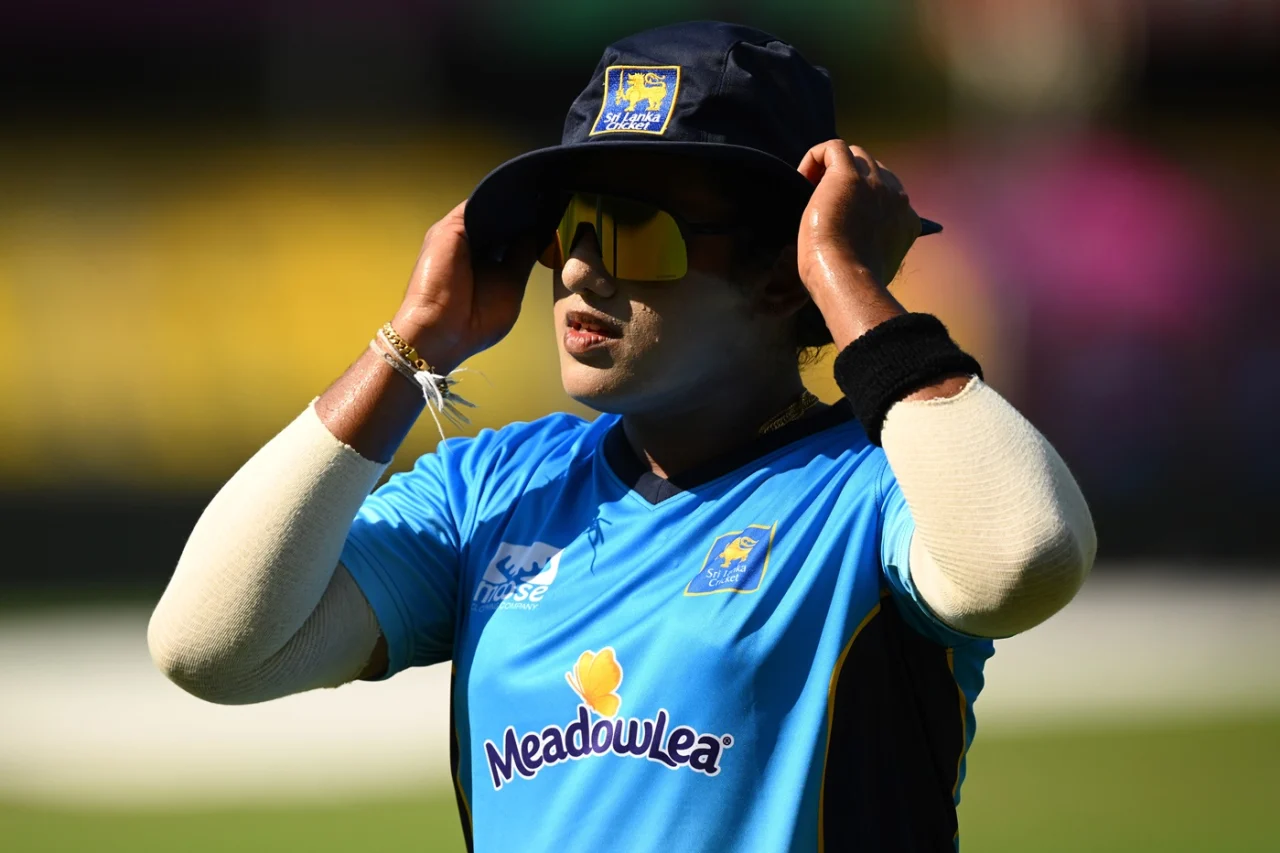
On the eve of the tournament opener, the contrasts were subtle but telling in Guwahati India’s training session was light, confident and precise. Avishkar Salvi, India’s bowling coach, tried Rana’s offspin grip before she showed him how it’s done. Kranti Goud charged in with rhythm and responded to match-specific challenges. It was a sight of a team that looked settled.
Earlier in the afternoon, Sri Lanka had gone through a more muted, methodical session. They started with catching drills before quickly shifting to the nets. It was not all work and no play, though. Left-arm spinner Inoka Ranaweera teased the young seamer Malki Madara about getting Hasini Perera lbw, and Sugandika Kumari joked with fellow offspinner Dewmi Vihanga about why her grip was better.
Two teams, two different rhythms. But the bigger picture was clear: this World Cup doesn’t begin with undercooked sides trying to find cohesion. This begins with teams well-prepared and clear on goals.
Since the 2022 edition – which saw pandemic-hit schedules and limited preparation in the lead-up – the change has been striking. Sri Lanka, who didn’t qualify then and hadn’t played an ODI in three years, arrive with 31 games under their belt. India have been the busiest, having played 38 since the last edition, including 14 this year.
“We’ve played more ODI cricket after the last T20 World Cup,” India captain Harmanpreet Kaur said. “We have won most of the games. That has definitely given us a lot of confidence to do well in ODI cricket. We now have a lot of experience. This group has played together for so many years. There is a lot more clarity.”
And that clarity is evident – not just in numbers, but in body language, in banter, in how batters walk into the nets, and bowlers finish their spells. This World Cup picks up where the teams left off, with momentum already building.
She has already played 51 ODIs, but the match against Sri Lanka will be Jemimah Rodrigues’ maiden appearance in a 50-over World Cup. A natural top-order batter, she has slotted seamlessly into India’s middle order. Rodrigues scored her first ODI hundred earlier this year and showcased her finishing ability during India’s last two series – the tri-series in Sri Lanka involving South Africa, and the tour of England. With the pitch at the ACA Stadium expected to be flat, Rodrigues will aim to make her World Cup debut a memorable one.
Veteran left-arm seamer Udeshika Prabodhani will be key for Sri Lanka with the new ball. Her ability to swing the ball and maintain control during the field restrictions has been invaluable. She could pose a challenge to India’s right-hand opener Pratika Rawal with her inswingers. However, match rustiness could be a factor – Prabodhani last played international cricket at the 2024 T20 World Cup, and hasn’t featured in an ODI since August 2024. But if her performance in the last warm-up game is any indication – 2 for 26 from six overs, including two maidens – Sri Lanka have little to worry about.
Harmanpreet confirmed that the entire squad is fit, which could pave the way for Amanjot Kaur’s return to the XI after recovering from a back injury. That would likely mean only one of Sneh Rana or Radha Yadav makes the final cut. While Amanjot did not bowl in either of the warm-up games, on the eve of the match, she bowled a short spell and then spent some time batting in the nets.
India (probable): Smriti Mandhana, Pratika Rawal, Harleen Deol, Harmanpreet Kaur (capt), Jemimah Rodrigues, Richa Ghosh (wk), Deepti Sharma, Amanjot Kaur/Radha Yadav, Sneh Rana, Kranti Goud, Renuka Singh
Based on the two warm-up matches, Sri Lanka are expected to have Hasini Perera opening with Chamari Athapaththu. Vishmi Gunaratne, usually an opener, is likely to bat at No. 4. With Prabodhani back, only one of Achini Kulasuriya and Madara will play.
Sri Lanka (probable): Hasini Perera, Chamari Athapaththu (capt), Harshitha Samarawickrama, Vishmi Gunaratne, Kavisha Dilhari, Anushka Sanjeewani (wk), Nilakshika Silva, Sugandika Kumari, Inoka Ranaweera, Malki Madara/Achini Kulasuriya, Udeshika Prabodhani
[Cricinfo]

Latest News
Heat Index likely to increase up to ‘Caution level’ at some places in the Western, Sabaragamuwa, Southern, Eastern, North-western, Northern and North-central provinces and in Monaragala district
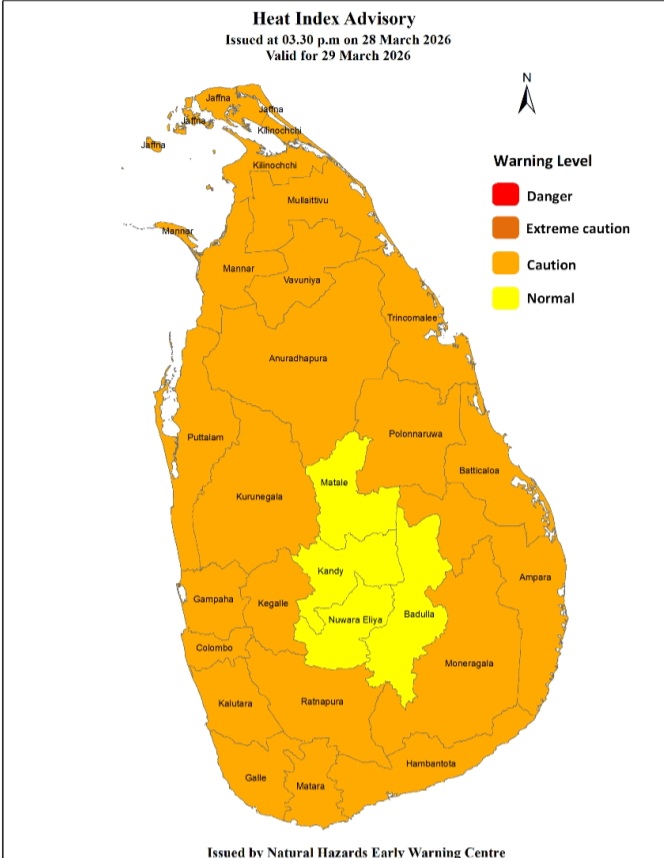
Warm Weather Advisory
Issued by the Natural Hazards Early Warning Centre of the Department of Meteorology
Issued at 3.30 p.m. on 28 March 2026, valid for 29March 2026.
Heat index, the temperature felt on the human body is likely to increase up to ‘Caution level’ at some places in the Western, Sabaragamuwa, Southern, Eastern, North-western, Northern and North-central provinces and in Monaragala district.
The Heat Index Forecast is calculated by using relative humidity and maximum temperature and this is the condition that is felt on your body. This is not the forecast of maximum temperature. It is generated by the Department of Meteorology for the next day period and prepared by using global numerical weather prediction model data.

Effect of the heat index on human body is mentioned in the above table and it is prepared on the advice of the Ministry of Health and Indigenous Medical Services.
ACTION REQUIRED
Job sites: Stay hydrated and takes breaks in the shade as often as possible.
Indoors: Check up on the elderly and the sick.
Vehicles: Never leave children unattended.
Outdoors: Limit strenuous outdoor activities, find shade and stay hydrated.
Dress: Wear lightweight and white or light-colored clothing.
Note:
In addition, please refer to advisories issued by the Disaster Preparedness & Response Division, Ministry of Health in this regard as well. For further clarifications please contact 011-7446491.
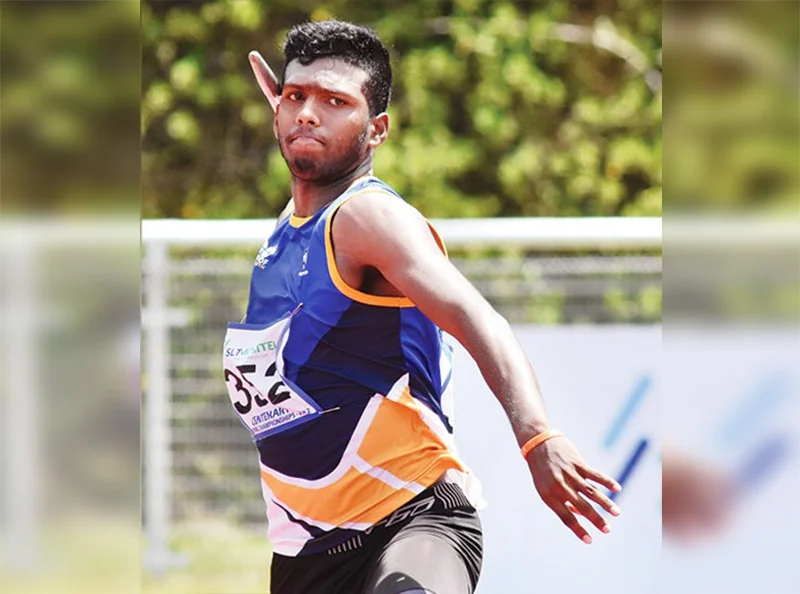
Rumesh Tharanga created history with yet another world leading throw that shattered his own national javelin record at the Champions Track and Field event at Diyagama on Saturday.
The massive 89.37 metres throw, when recognized by World Athletics is set to become the fourth furthest throw in the history of the Asian region.
Despite little competion from his rivals, Tharanga rose like a champion of an entirely different league when he delivered the record breaking feat in his final attempt.
Tharanga had a world leading mark of 83.07 metres for the year coming into this meet. His national record of 86.50 metres was from August 2025. (RF)

Three people have died after a helicopter crashed off the Hawaiian island of Kauai, police said.
The helicopter was carrying one pilot and four passengers, police said in a statement. Two survivors were taken to a hospital for treatment.
Police said the helicopter was operated by Airborne Aviation, a company whose website advertises “a doors-off thrill seekers adventure tour” of the picturesque island’s waterfalls, canyons, and beaches.
The US Coast Guard said the helicopter crash-landed about 100 yards off Kalalau beach. Authorities have not yet identified the victims.
Police said they responded to an alert of the crash at around 15:45 local time (01:45 GMT), along with the Coast Guard and fire department.
Kauai’s Mayor Derek Kawakami praised the recovery effort, telling local media: “Here on Kaua’i, whenever somebody puts their feet on our soil, they are one of ours.
“We treat them like one of ours, they are a part of our family, and our first responders respond with that spirit in mind.”
Andrew Williams, search and rescue mission co-ordinator for the Coast Guard in Honolulu, said: “We are greatly saddened by the loss of three lives in this helicopter crash and thinking of those individuals’ families and friends.”
Helicopter tours are a popular way for visitors to tour the island, which is where the blockbuster film Jurassic Park was shot.
Airborne Aviation’s 50-minute tour of the island offered a maximum of four passengers and costs $348 (£262) per passenger, according to its website.
BBC News has contacted Airborne Aviation for comment.
The incident is the latest fatal crash in Kauai involving a tour helicopter. Three people were killed when a helicopter operated by a different tour company crashed in July 2024.
The 2024 crash was caused by “an encounter with turbulence due to downdraft winds that resulted in mast bumping and an inflight breakup”, a report by the National Transportation Safety Board said.
[BBC]

Heat Index likely to increase up to ‘Caution level’ at some places in the Western, Sabaragamuwa, Southern, Eastern, North-western, Northern and North-central provinces and in Monaragala district

Tharanga shatters national javelin record again

Courtesy call by the Heads of Mission- Designate on Prime Minister

Three dead after helicopter crash in Hawaii

Woods charged with driving under influence after crash

Showers may occur at a few places in the Rathnapura, Kaluthara, Galle, and Matara districts during the evening or night

‘Dates have the highest sugar content to fight Coronavirus’

Sunday Island 27 December – Headlines

#SundayIsland 17th December – Headlines

Sunday Island – 28th March

Sunday Island Headlines – 21 March

Sunday Island – 21st February – Headlines
-

 News4 days ago
Senior citizens above 70 years to receive March allowances on Thursday (26)
-

 Features21 hours ago
A World Order in Crisis: War, Power, and Resistance
-

 Features6 days ago
Trincomalee oil tank farm: An engineering marvel
-

 News2 days ago
Energy Minister indicted on corruption charges ahead of no-faith motion against him
-

 News3 days ago
US dodges question on AKD’s claim SL denied permission for military aircraft to land
-

 Features6 days ago
The scientist who was finally heard
-

 Business3 days ago
Dialog Unveils Dialog Play Mini with Netflix and Apple TV
-

 Sports2 days ago
SLC to hold EGM in April