
News
In the wake of Cyclone Ditwah SLSTL, IESL call for high-capacity rail corridor to Kandy

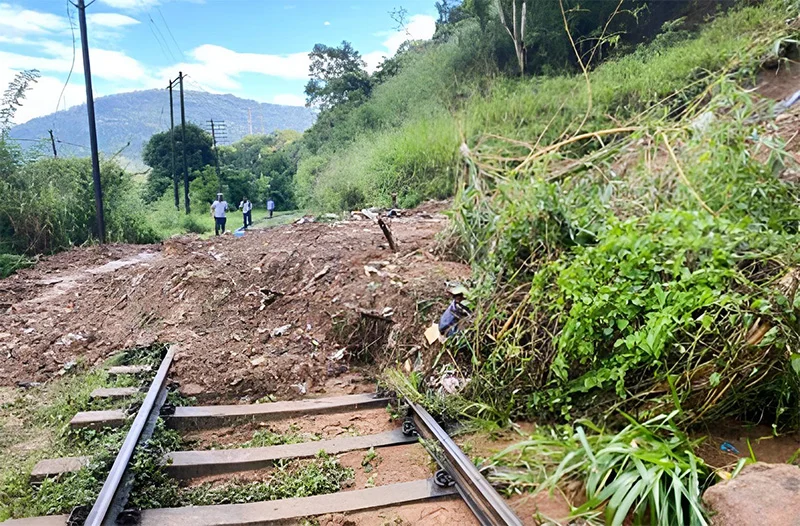
Sri Lanka Society of Logistics and Transport (SLSTL) has said that in the wake of the devastating damages caused to the main railway line, the government should consider a proposal made by the society along with the Institution of Engineers Sri Lanka (IESL), in 2017, for an alternative rail alignment to Kandy.
The following is the text of statement issued by SLSTL: “The recent Cyclone Ditwah has laid bare the longstanding vulnerability of Sri Lanka’s railway infrastructure, much like the devastating 2004 tsunami, which swept away sections of the Coastal Line, and sweeping away a train, killing over 1,000 passengers, in the world’s worst rail disaster. Ditwah has also caused extensive damage, particularly along the Main Line, rendering several sections impassable. The structural integrity of the key bridge near Peradeniya remains uncertain.
Sri Lanka’s railway network, mostly built over 150 years ago with limited consideration for environmental hazards, is now increasingly at risk from extreme weather events, cyclones, tsunamis, landslides, and floods. This is not just an infrastructure crisis, but a wake-up call to rethink our approach to railway planning and resilience.
In 2017, the SLSTL and the Institution of Engineers Sri Lanka (IESL) jointly proposed an alternative rail alignment to Kandy. Today, that proposal is more relevant than ever. As expressways now supplement Sri Lanka’s road network, the railway must also evolve towards safer, more resilient, and future-ready routes that are competitive with road transport.
Recent landslides at Pahala Kadugannawa underscore the fragility of this stretch. While urgent restoration is needed, long-term planning for an alternative route is equally essential.
Globally, countries are linking major cities with modern rail lines operating at 100–160 km/h. Known as Intercity Express (ICE) in Europe and Superfast in India, such services are now the norm. In contrast, the Colombo–Kandy Main Line takes over 2.5 hours, with serious capacity constraints between Rambukkana and Kadugannawa, precisely the area hardest hit by Ditwah.
Historically, alternative alignments were studied as early as 1846 by engineer Mr. Drane, including the Galagedera, Hingula (Gadessa), and Alagalla traces. In 1857, Capt. Moorsam favoured the Hingula trace. Yet in 1862, a new alignment, the Dekanda trace, was selected for cost reasons, despite its limitations. This is the alignment still in use today.
The SLSTL and IESL identified two viable alternatives in 2017, both of which can build on the proposed electrified double-track up to Rambukkana:
1 Galagedera Trace: Rambukkana to Katugastota and Kandy via Galagedera Pass
2 Pattiagedera Trace: Rambukkana to Kandy via the Yattewera Oya valley
These alternatives would enable:
* Faster travel times (under 90 minutes to Kandy)
* Electrification extensions from Polgahawela
* Safer alignments with reduced landslide risk
* Expanded access to Kandy and the hill country, supporting tourism
* Double-track capability, allowing up to 50 trains daily (versus the current 20)
* Avoid double tracking the existing railway which will be both environmentally unsound and extremely expensive.
Crucially, Kandy’s urban road network cannot absorb the traffic volume of a new four-lane expressway. A modern rail connection must be central to any sustainable transport solution.
In 2017, SLSTL and IESL also concluded that a new railway and two-lane road could be built at lower cost than the proposed Central Expressway. They urged a national policy shift prioritising intercity express rail as the 21st-century model for mobility. Many countries have already embraced this rail-first approach as a smart, sustainable alternative to road-heavy development.
The SLSTL now urges the Government to treat this proposal as a strategic infrastructure priority. We call for trace explorations to begin in 2026, laying the groundwork for a modern, disaster-resilient, high-capacity rail corridor to Kandy that would evolve to become a national network.
This is not just about repairing what was lost but about building something better. Let Cyclone Ditwah be the moment we choose to reimagine and rebuild smarter for a safer, faster, and more sustainable Sri Lanka.”

Latest News
Advisory for Severe Lightning issued to the Western and Sabaragamuwa provinces and Galle and Matara districts

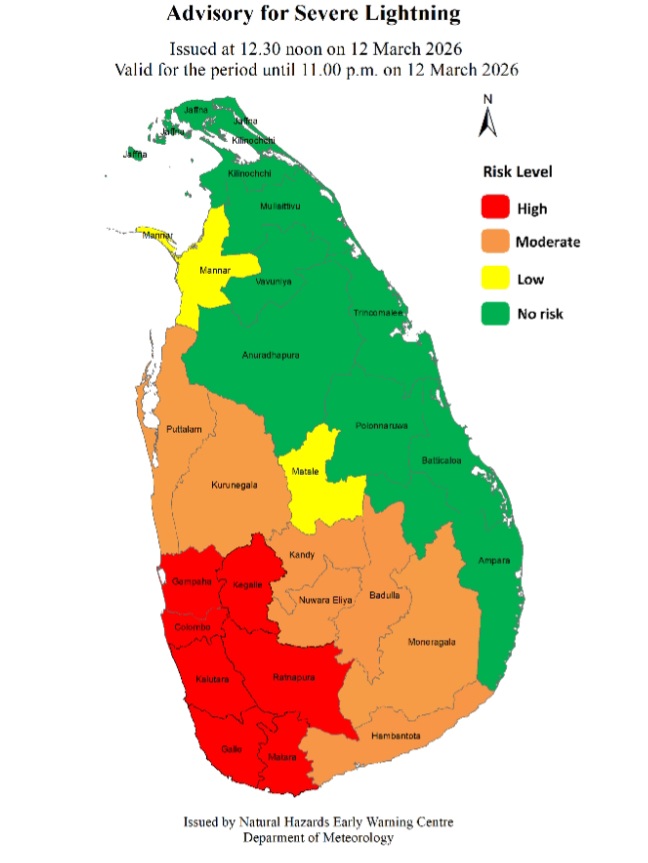
Advisory for Severe Lightning Issued by the Natural Hazards Early Warning Centre at 12.30 noon 12 March 2026 valid for the period until 11.00 p.m. 12 March 2026
Thundershowers accompanied with severe lightning are likely to occur at some places in the Western and Sabaragamuwa provinces and in Galle and Matara districts after 2.00 p.m.
There may be temporary localized strong winds during thundershowers. General public is kindly requested to take adequate precautions to minimize damages caused by lightning activity.
ACTION REQUIRED:
The Department of Meteorology advises that people should:
Seek shelter, preferably indoors and never under trees.
Avoid open areas such as paddy fields, tea plantations and open water bodies during thunderstorms.
Avoid using wired telephones and connected electric appliances during thunderstorms.
Avoid using open vehicles, such as bicycles, tractors and boats etc.
Beware of fallen trees and power lines.
For emergency assistance contact the local disaster management authorities.
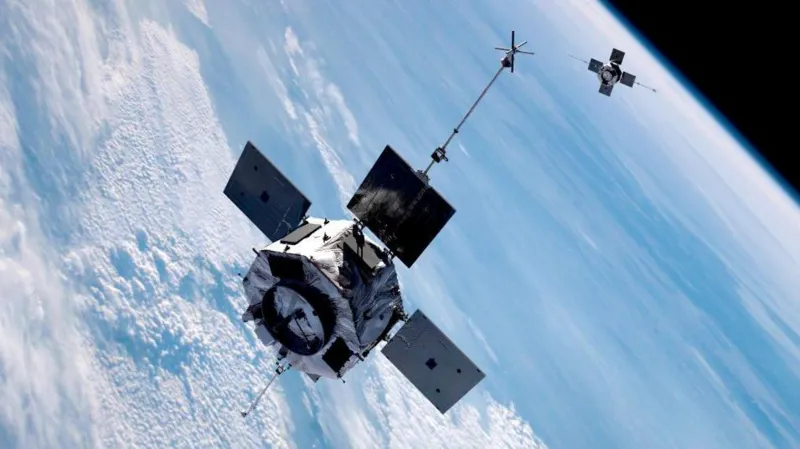
A Van Allen Probe spacecraft weighing more than 1,300lb (600kg) is expected to re-enter Earth’s atmosphere almost 14 years after its launch, Nasa says.
The spacecraft is projected to re-enter around 19:45 EDT (23:45 GMT) on Tuesday the US Space Force predicted, according to Nasa, though there is a 24-hour margin of “uncertainty” in the timing.
The Van Allen Probe A, which launched in 2012, is expected mostly to burn up as it travels through the atmosphere, though some components may survive.
The space agency said there is a one in 4,200 chance of being harmed by a piece of the probe, which it characterised as “low” risk.
The spacecraft and its twin, Van Allen Probe B, were on a mission to gather unprecedented data on Earth’s two permanent radiation belts.
It was not immediately clear where in Earth’s atmosphere the satellite is projected to re-enter. The BBC has contacted Nasa for further detail.
Nasa and the US Space Force have said they will monitor the re-entry and update any predictions.
The mission, which was originally designed to last two years, went on for almost seven. It ended after the spacecrafts ran out of fuel and were no longer able to orient themselves toward the Sun.
The probes flew through rings of charged particles trapped by Earth’s magnetic field from 2012 to 2019, in order to study how particles were gained and lost, per Nasa.
Those rings, called the Van Allen belts, shield Earth from cosmic radiation, solar storms and streaming solar wind, which are harmful to humans and can damage technology.
The mission made significant discoveries, including the first data that show the existence of a transient third radiation belt, which can form during times of intense solar activity, Nasa said.
Van Allen Probe B is not expected to re-enter the Earth’s atmosphere before 2030.
[BBC]

Prime Minister Dr. Harini Amarasuriya visited the International Rice Research Institute (IRRI) headquarters in Los Baños, Laguna, Philippines, on 11 March 2026, and held bilateral discussions with Yvonne Pinto, Director General of IRRI, focusing on strengthening cooperation in the field of rice research and sustainable agricultural development.
During the meeting, discussions centered on rice cultivation in Sri Lanka, including the key challenges faced by Sri Lankan paddy farmers. The Prime Minister highlighted issues affecting the sector such as productivity constraints, climate-related impacts, and the need to support farmers through improved agricultural practices and technological innovations.
Both sides also discussed the importance of introducing modern techniques and research-driven approaches to rice cultivation in order to enhance productivity and ensure long-term food security. In this regard, IRRI shared insights on ongoing global research initiatives aimed at improving rice varieties, strengthening climate resilience, and promoting sustainable farming practices.
The discussion further focused on the potential for expanded collaboration between Sri Lanka and IRRI, particularly in areas such as research partnerships, knowledge sharing, and capacity building for Sri Lankan agricultural institutions and farmers. The Prime Minister emphasized Sri Lanka’s interest in strengthening cooperation with IRRI to support the development of the country’s rice sector and to improve the livelihoods of paddy farmers.
The visit reaffirmed the importance of science-based agricultural innovation and international collaboration in addressing food security challenges and enhancing sustainable rice production in Sri Lanka.

(Prime Minister’s Media Division)

Advisory for Severe Lightning issued to the Western and Sabaragamuwa provinces and Galle and Matara districts

Jemimah Rodrigues, Harmanpreet Kaur, Mitchell Starc and Kuldeep Yadav among ESPNcricinfo award winners for 2025

China approves ‘ethnic unity’ law requiring minorities to learn Mandarin

Nasa spacecraft weighing 1,300lb due to re-enter Earth’s atmosphere

Chinese national arrested over attempt to smuggle 2,000 queen ants from Kenya

Attacks reported on three more cargo ships in Gulf, with oil price back near $100

‘Dates have the highest sugar content to fight Coronavirus’

Sunday Island 27 December – Headlines

#SundayIsland 17th December – Headlines

Sunday Island – 28th March

Sunday Island Headlines – 21 March

Sunday Island – 21st February – Headlines
-
 News7 days ago
University of Wolverhampton confirms Ranil was officially invited
-

 News6 days ago
Peradeniya Uni issues alert over leopards in its premises
-

 News7 days ago
Female lawyer given 12 years RI for preparing forged deeds for Borella land
-

 News4 days ago
Repatriation of Iranian naval personnel Sri Lanka’s call: Washington
-
 News7 days ago
Library crisis hits Pera university
-

 News6 days ago
Wife raises alarm over Sallay’s detention under PTA
-

 News7 days ago
‘IRIS Dena was Indian Navy guest, hit without warning’, Iran warns US of bitter regret
-
 Latest News7 days ago
Sri Lanka evacuates crew of second Iranian vessel after US sunk IRIS Dena