
Features
IN THE FOOTSTEPS OF ST. FRANCIS OF ASSISI

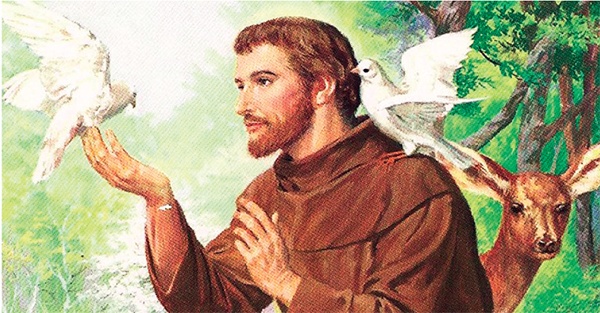
by Chandra Arulpragasm
As a disclaimer, I need to state that I am not a Catholic, although a Christian. Nor do I claim to have walked in the spiritual footsteps of this man of God. I seek only to narrate my own experiences when I tried to trace the physical footsteps of St. Francis during his peregrinations in Italy. I must also state that whereas St. Francis walked all the way up and down the Umbrian and Tuscan Apennines in the summer sun and the rainy cold of winter, I had the relative luxury of doing the same journeys by car. I had this opportunity only because I happened to live in Italy for many years. For readers who know little of St. Francis of Assisi, I provide a brief biography, but only as background to my personal story of following the physical footsteps of this remarkable saint.
St. Francis was born in 1811 to the family of a wealthy cloth merchant in Assisi in the province of Umbria, near the Tuscan border. He was named ‘Francesco’ (little Frenchman) because of his French mother. He grew up among the idle rich, spending his youth in carousing and rowdy partying. Although his father wanted him to follow in the footsteps of his successful cloth trade, Francis only wanted glory at that time, in pursuance of which, he set out for the Crusades. But he already seemed to be undergoing a spiritual transformation. For he had hardly gone a few miles from his home, when seeing a poorly clad beggar in Spoleto, he stripped off his expensive clothes to wrap them around the beggar. (There is a graphic painting of this scene in Assisi). He was thus compelled to return to his family in shame and dishonour, for which his father never forgave him.
Meanwhile, his spiritual proclivities increased and he spent more time in prayer and penance. One day, while praying before an old Byzantine crucifix in the abandoned church of San Damiano in the woods, he believed that he heard the voice of Christ speaking to him from the cross asking him ‘to repair my church’. (I still have a small copy of this crucifix in my room).Taking the words literally, St. Francis soon went to work to repair the decrepit old Church of San Damiano with his own hands, brick by brick. It was only later that he realized that the call was to repair the mission and fabric of the Catholic Church, which was fast losing its way through wealth and corruption.
Taking to heart Christ’s teaching, he embraced the vow of poverty, assuming the model of poverty and service to Christ by tending to the spiritual and physical needs of the poor. He was a happy man doing God’s work, singing all the while, even when derided in the early days as being ‘God’s Fool’. Despite untold hardships, he and his twelve early followers were able to attract 5,000 friars to their calling within a period of 10 years. Being a born leader, Francis even went to the Church in Rome where, through his sincerity and holiness, he was able to convince Pope Innocent III to initiate a Franciscan Order, pledged to the ideals of poverty and service to God. Francis was not a rebel against his own Church: he was only trying to restore it to its original values of Christ’s teaching. It is heartening to see that the new Pope, Francis I has not only taken the name of Francis, but is also trying to do the same for the ideals and direction of the church. St. Francis stressed God’s brotherhood with man, with all people, rich or poor. In fact, he widened this spiritual embrace to all creation, including the birds of the air, the beasts of the field and to the entire universe. It is for this wider vision that he is now acclaimed as the patron saint of animals, the environment and indeed of all nature itself.
I now try to paint a picture of his life, as revealed to me by following in his physical footsteps. I start with St. Francis in his little church of the Porziuncola, which is associated with the start of his ministry. The Porziuncola was the shell of a little old church dedicated to St. Mary of the Angels, which Francis restored with his own hands. It is here that he later gathered his followers to start his small Order of Friars Minor. It is also the place where he received Clare (later Santa Chiara) into the service of God. The Porziuncola itself is very small, measuring barely 11 x 7 metres. Although gracefully adorned with paintings and frescoes, it is its stunning spiritual vibration that takes one’s breath away. It has made an indelible impression on me, compelling me to return to its spiritual space (the Proziuncola) repeatedly. It was also the place closest to St. Francis’ heart. On his deathbed, he was brought here and actually died within yards of it. Today this unassuming little church is covered by the massive Basilica of Santa Maria degli Angeli (St. Mary of the Angels), which not only dwarfs but almost devours it. Nowadays one has to navigate this great and graceless Basilica to get to its vibrant spiritual heart, the Porziuncola. But it is still a visit worth making.
From there we go again to San Damiano, a church restored with Francis’ own hands. It was during these visits to the woods that he started communing with the birds and composed his famous canticle to the birds. He asked them to praise the Lord for their freedom to fly, for not having to sow or weave in order to feed and clothe themselves. Completely blind in his dying days, he composed his famous Canticle to the Sun in which he praises all God’s Creation, including Brothers Sun, Moon and Stars, Brothers Wind, Fire and Water, praising them all as part of God’s Creation. It is this universality of humankind and its bond with the rest of the universe that has made him the patron saint of nature and the environment.
Adjoining the Church of San Damiano is the nunnery where Santa Chiara (St. Clare) lived in a single-room dormitory with her sister-nuns for more than 30 years. In her last years, afflicted with tuberculosis, she moved to an adjoining room with a balcony. It is from this balcony that she is reputed to have stopped the invading armies of Frederick II and later of Muslim invaders by holding up the monstrance (the host) while praying for God’s intervention. (This scene is captured in a famous painting in Assisi). Most touching of all is the refectory table where the mark of St. Clare’s plate for 40 years has left a deep indent in the 700 hundred year old table! A bowl of fresh flowers marks the spot, as a poignant reminder of her dedicated life. The nuns’ quarters also possessed a picturesque cloister, around which the sisters walked in meditation. Their cloistered courtyard still holds the 13thcentury well from which they drew their water.
Much of St. Francis’ life is brought to life by the frescoes and paintings which adorn the walls of the Basilica in Assisi. No attempt is made here to describe this treasure trove of religious art, since the reader can access it in any travel book. Hence reference will only be made to a few which illustrate particular aspects of his saintly life. The Basilica of St. Francis is actually comprised of three parts: the Upper Basilica, the Lower Basilica and the Crypt, where the remains of the saint lie buried. The Lower Basilica contains a number of frescoes and paintings, including one by the 13th century master Cimabue, who lived closest to Francis’ time. Unfortunately these frescoes are fading away; but we do have a contemporary 13th century portrait of St. Francis by Cimabue (a copy of which I still retain in my room). The Lower Basilica also contains the painting by Pietro Lorenzetti known as the Madonna of the Sunset because a wayward ray of light from the setting sun finds its way into the dark interior to light up this picture in brilliant gold. (My wife and I retained a framed copy of this painting in our bedroom for over 30 years). The Upper Basilica has the famous frescoes of St. Francis, attributed to Giotto, including especially his communion with the birds. The frescoes go on to illustrate further events in St. Francis’ life, including his receipt of the stigmata, the wounds of Christ in his own body.
There is also a painting of St. Francis’ encounter with the fierce wolf of Gubbio. The latter is a picturesque medieval town near the border of Umbria with Abruzzo, quite far from St. Francis’ usual haunts. It is a completely walled-off town, with steep cobbled streets which it strives to keep alive in its medieval splendour. It is said that in St. Francis’ time, a savage wolf used to attack the villagers, even carrying off little children to feed itself. When St. Francis visited this village, the people beseeched him to save them from this ravenous wolf. Addressing the animal as ‘Brother Wolf’, Francis was able to pacify it. He is even said to have made a pact between the wolf and the village, whereby the wolf undertook not to harm the villagers, while they undertook to feed and look after it. The wolf ultimately died of old age, as the village pet! There is even a painting of St. Francis accosting the wolf at the entrance to the town. Today the town of Gubbio is touted to tourists as a medieval town that is frozen in time. Archery contests are held here in imitation of old times, with the men dressed in medieval costumes unfurling their different cantonal flags, while the women parade the streets in their medieval finery. Heralds with banners and trumpets issue the challenge of Gubbio to an archery contest (on parchment written in 15th century style) to other medieval towns such as Sienna and San Marino. Then the rival archers, armed with old-style crossbows (but jazzed up with high-tech telescopic sights) vie with each other in the highly decorated central piazza. It is a lot of fun – and attracts much tourism.
My main interest centered, however, around St. Francis’ activities in La Verna. The latter was hardly habited in St. Francis’ time, being set in woodland forests littered with mountains and caves. It is a long 123 km climb from Assisi, climbing high into the Apennines of Tuscany through many miles and mountains of slippery slopes in winter rains. St. Francis used to spend some months each year meditating and praying in these caves. There are many stories about those times, one of which is about a hawk that used to fly into his cave to wake him up at 3 o’clock every morning. Instead of upbraiding the hawk, St. Francis sang an ode thanking ‘Brother Hawk’ for waking him up in time to praise the Lord! There was also a rough robber named Rufino (Rufus) who came to rob Francis while he was praying. Francis spoke to Rufus in words to this effect: ‘Brother, I have no money to give you; but come pray with me, so that you will find even greater riches in the Lord’. So Rufino knelt and prayed with Francis, and thereafter became his staunchest follower. So much so that Brother Rufus is now buried opposite the Saint in the crypt of the Basilica of St. Francis in Assisi.
The whole area of La Verna is heavily wooded, adding to its sylvan beauty. Nearby is a Franciscan Sanctuary with its white-pillared arcade set into the side of a hill, while fluttering white turtle-doves provide a further peaceful picture. On the adjoining hill lies La Verna with its Basilica of the Sanctuary of La Verna. My wife and I have been visiting La Verna for 20 years (till we left Italy) when the place was unheard of and largely deserted. Now it has been built up with so many additional buildings, including tourist accommodation.
When we were reconnoitering around, we chanced upon a small cell in which St. Anthony, also of the Franciscan Order, used to meditate and pray during his stay at La Verna. It was a very small cell, hardly 8 ft x 8 ft, but with a wonderful view of the valley below. On walking farther on the hilltop, we stumbled upon an embedded rock whose writing proclaimed it to be the spot where St. Francis received the stigmata or wounds of the crucified Christ. The stigmata are wounds of nail-pierced hands and feet like those of Christ, with an added wound on the side. St. Francis was the first person to receive such a manifestation of his faith, but suffered greatly from these wounds.
Walking farther on the hill, we came across a quaint little chapel, seemingly frozen in time. Not knowing what it was, we nosed our way into its dim interior. It is now known as the Chapel of the Stigmata. We just had time to note the ornate choir stalls when we heard the sound of sonorous chanting in the distance, but coming ever closer to us. Soon a little old friar bustled in, fissy-fussing to tidy up before the oncoming procession. He almost died of shock to see us there: for no one was supposed to be there, least of all a woman (my wife). Although outraged, he could not chase us out into the path of the oncoming chanting procession. Not knowing what to do, he shoved us behind a narrow curtain and hushed us with fierce warning signs. Soon the procession entered. Not being a church man, I had never seen the likes of this before, and stood transfixed! The monks had apparently taken the vow of silence, coming out of their cells once a day to this chapel to sing praises to their Lord. They filed in two by two, heavily cowled so that one could not see their faces, looking rather sinister to me in the dimly lit church. There was pin-drop silence, except for their deep Gregorian chants. Entering the chapel, the monks peeled off to the left and to the right in well-known order, with each side taking its stand in the ornate choir stalls facing each other. Their faces could not be seen, nor was any word spoken: their leader only called out a line and the friars chanted their response. After about 20 minutes, they suddenly stopped without any word or sign, and peeled off in formation with cowled heads bowed, one following the heel of the other, with no word spoken! It left me breathless! It was not long, however, before the officious little friar descended upon us, berating us for our intrusion on this sacred ritual. It was an experience, however, that I will never forget.
And so we come to the death of this immortal saint. He was ailing for a long time, blind and suffering from his stigmatized wounds. In death, he wanted to be brought to his beloved Porziuncola, his spiritual home, where he was attended by his spiritual partner St. Clare (Santa Chiara). In his dying days he composed his wonderful Canticle to the Sun, which is a song of praise for God’s whole creation. He died in the year 1226 at the age of 44 and was canonized two years later. The government of Assisi had to send soldiers to guard his remains, for in the medieval superstition of those days, everyone wanted a piece of the saint! Thus ended the earthly life of this saintly man, whose physical footsteps I was privileged to follow. I can only conclude with the prayer attributed to St. Francis: a prayer relevant to all religions and one which I continue to keep by my bedside:
Lord, make me the instrument of your peace; Where there is hatred, let me sow love; Where there is injury, pardon; Where there is error, the truth; Where there is doubt, the faith; Where there is despair, hope; Where there is darkness, light; And where there is sadness, joy.
O Divine Master, Grant that I may not so much seek To be comforted as to comfort; To be understood, as to understand; To be loved as to love; For it is in giving that we receive; It is in pardoning that we are pardoned; And it is in dying that we are born to eternal life.
(The writer, a member of the former Ceylon Civil Service, lived in Italy working for the FAO in Rome for many years)





 ‘Adapt, shrink or die’ – thus runs the warning issued by the Trump administration to UN humanitarian agencies with brute insensitivity in the wake of its recent decision to drastically reduce to $2bn its humanitarian aid to the UN system. This is a substantial climb down from the $17bn the US usually provided to the UN for its humanitarian operations.
Considering that the US has hitherto been the UN’s biggest aid provider, it need hardly be said that the US decision would pose a daunting challenge to the UN’s humanitarian operations around the world. This would indeed mean that, among other things, people living in poverty and stifling material hardships, in particularly the Southern hemisphere, could dramatically increase. Coming on top of the US decision to bring to an end USAID operations, the poor of the world could be said to have been left to their devices as a consequence of these morally insensitive policy rethinks of the Trump administration.
Earlier, the UN had warned that it would be compelled to reduce its aid programs in the face of ‘the deepest funding cuts ever.’ In fact the UN is on record as requesting the world for $23bn for its 2026 aid operations.
If this UN appeal happens to go unheeded, the possibilities are that the UN would not be in a position to uphold the status it has hitherto held as the world’s foremost humanitarian aid provider. It would not be incorrect to state that a substantial part of the rationale for the UN’s existence could come in for questioning if its humanitarian identity is thus eroded.
Inherent in these developments is a challenge for those sections of the international community that wish to stand up and be counted as humanists and the ‘Conscience of the World.’ A responsibility is cast on them to not only keep the UN system going but to also ensure its increased efficiency as a humanitarian aid provider to particularly the poorest of the poor.
It is unfortunate that the US is increasingly opting for a position of international isolation. Such a policy position was adopted by it in the decades leading to World War Two and the consequences for the world as a result for this policy posture were most disquieting. For instance, it opened the door to the flourishing of dictatorial regimes in the West, such as that led by Adolph Hitler in Germany, which nearly paved the way for the subjugation of a good part of Europe by the Nazis.
If the US had not intervened militarily in the war on the side of the Allies, the West would have faced the distressing prospect of coming under the sway of the Nazis and as a result earned indefinite political and military repression. By entering World War Two the US helped to ward off these bleak outcomes and indeed helped the major democracies of Western Europe to hold their own and thrive against fascism and dictatorial rule.
Republican administrations in the US in particular have not proved the greatest defenders of democratic rule the world over, but by helping to keep the international power balance in favour of democracy and fundamental human rights they could keep under a tight leash fascism and linked anti-democratic forces even in contemporary times. Russia’s invasion and continued occupation of parts of Ukraine reminds us starkly that the democracy versus fascism battle is far from over.
Right now, the US needs to remain on the side of the rest of the West very firmly, lest fascism enjoys another unfettered lease of life through the absence of countervailing and substantial military and political power.
However, by reducing its financial support for the UN and backing away from sustaining its humanitarian programs the world over the US could be laying the ground work for an aggravation of poverty in the South in particular and its accompaniments, such as, political repression, runaway social discontent and anarchy.
What should not go unnoticed by the US is the fact that peace and social stability in the South and the flourishing of the same conditions in the global North are symbiotically linked, although not so apparent at first blush. For instance, if illegal migration from the South to the US is a major problem for the US today, it is because poor countries are not receiving development assistance from the UN system to the required degree. Such deprivation on the part of the South leads to aggravating social discontent in the latter and consequences such as illegal migratory movements from South to North.
Accordingly, it will be in the North’s best interests to ensure that the South is not deprived of sustained development assistance since the latter is an essential condition for social contentment and stable governance, which factors in turn would guard against the emergence of phenomena such as illegal migration.
Meanwhile, democratic sections of the rest of the world in particular need to consider it a matter of conscience to ensure the sustenance and flourishing of the UN system. To be sure, the UN system is considerably flawed but at present it could be called the most equitable and fair among international development organizations and the most far-flung one. Without it world poverty would have proved unmanageable along with the ills that come along with it.
Dehumanizing poverty is an indictment on humanity. It stands to reason that the world community should rally round the UN and ensure its survival lest the abomination which is poverty flourishes. In this undertaking the world needs to stand united. Ambiguities on this score could be self-defeating for the world community.
For example, all groupings of countries that could demonstrate economic muscle need to figure prominently in this initiative. One such grouping is BRICS. Inasmuch as the US and the West should shrug aside Realpolitik considerations in this enterprise, the same goes for organizations such as BRICS.
The arrival at the above international consensus would be greatly facilitated by stepped up dialogue among states on the continued importance of the UN system. Fresh efforts to speed-up UN reform would prove major catalysts in bringing about these positive changes as well. Also requiring to be shunned is the blind pursuit of narrow national interests.

 Hi! Great to be back after my Christmas break.
Thought of starting this week with egg white.
Yes, eggs are brimming with nutrients beneficial for your overall health and wellness, but did you know that eggs, especially the whites, are excellent for your complexion?
OK, if you have no idea about how to use egg whites for your face, read on.
Egg White, Lemon, Honey:
Separate the yolk from the egg white and add about a teaspoon of freshly squeezed lemon juice and about one and a half teaspoons of organic honey. Whisk all the ingredients together until they are mixed well.
Apply this mixture to your face and allow it to rest for about 15 minutes before cleansing your face with a gentle face wash.
Don’t forget to apply your favourite moisturiser, after using this face mask, to help seal in all the goodness.
Egg White, Avocado:
In a clean mixing bowl, start by mashing the avocado, until it turns into a soft, lump-free paste, and then add the whites of one egg, a teaspoon of yoghurt and mix everything together until it looks like a creamy paste.
Apply this mixture all over your face and neck area, and leave it on for about 20 to 30 minutes before washing it off with cold water and a gentle face wash.
Egg White, Cucumber, Yoghurt:
In a bowl, add one egg white, one teaspoon each of yoghurt, fresh cucumber juice and organic honey. Mix all the ingredients together until it forms a thick paste.
Apply this paste all over your face and neck area and leave it on for at least 20 minutes and then gently rinse off this face mask with lukewarm water and immediately follow it up with a gentle and nourishing moisturiser.
Egg White, Aloe Vera, Castor Oil:
To the egg white, add about a teaspoon each of aloe vera gel and castor oil and then mix all the ingredients together and apply it all over your face and neck area in a thin, even layer.
Leave it on for about 20 minutes and wash it off with a gentle face wash and some cold water. Follow it up with your favourite moisturiser.
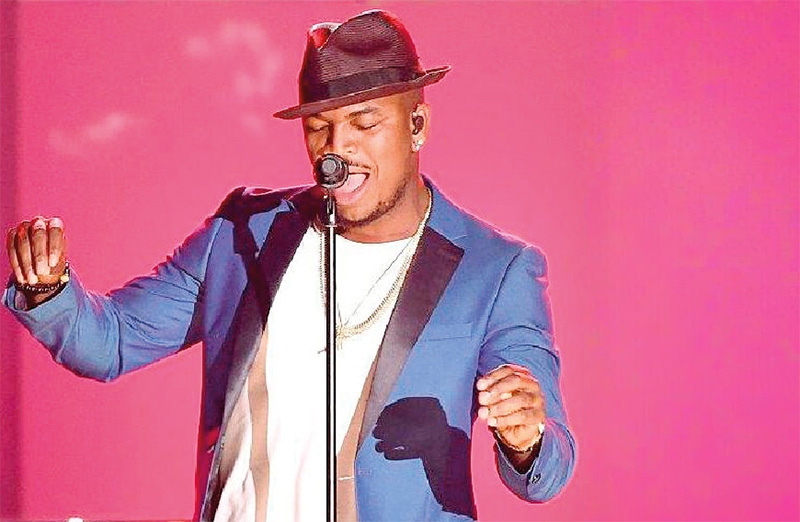
 Superlatives galore were used, especially on social media, to highlight R&B singer Ne-Yo’s trip to Sri Lanka: Global superstar Ne-Yo to perform live in Colombo this December; Ne-Yo concert puts Sri Lanka back on the global entertainment map; A global music sensation is coming to Sri Lanka … and there were lots more!
At an official press conference, held at a five-star venue, in Colombo, it was indicated that the gathering marked a defining moment for Sri Lanka’s entertainment industry as international R&B powerhouse and three-time Grammy Award winner Ne-Yo prepares to take the stage in Colombo this December.
What’s more, the occasion was graced by the presence of Sunil Kumara Gamage, Minister of Sports & Youth Affairs of Sri Lanka, and Professor Ruwan Ranasinghe, Deputy Minister of Tourism, alongside distinguished dignitaries, sponsors, and members of the media.
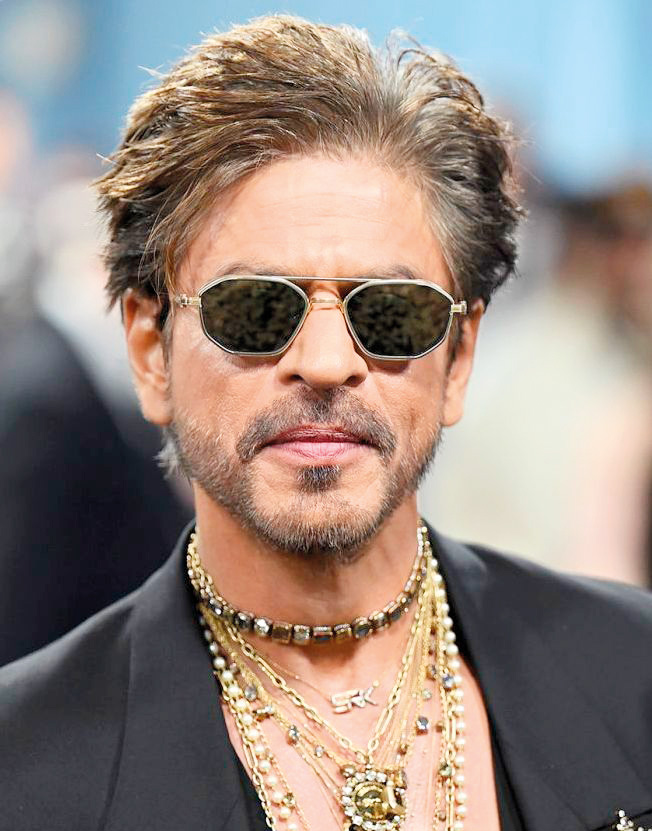
Shah Rukh Khan: Disappointed his fans in Sri Lanka
According to reports, the concert had received the official endorsement of the Sri Lanka Tourism Promotion Bureau, recognising it as a flagship initiative in developing the country’s concert economy by attracting fans, and media, from all over South Asia.
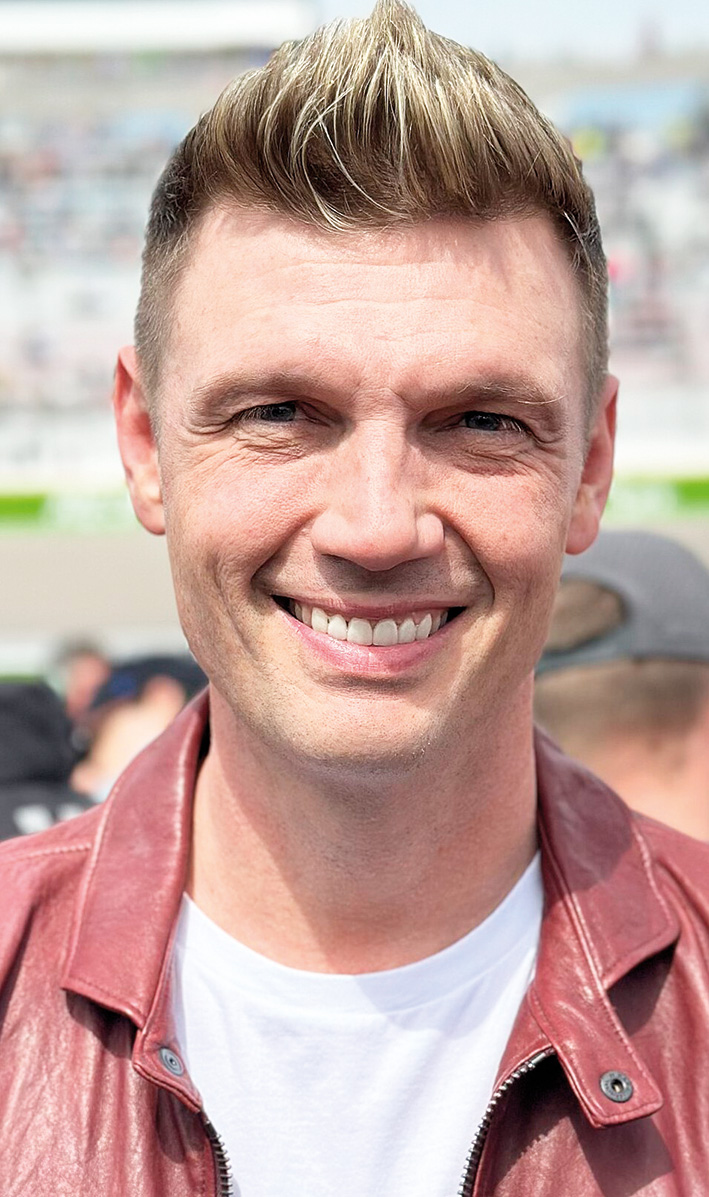
Nick Carter: His concert, too, was cancelled due to “Unforeseen circumstances
However, I had that strange feeling that this concert would not become a reality, keeping in mind what happened to Nick Carter’s Colombo concert – cancelled at the very last moment.
Carter issued a video message announcing he had to return to the USA due to “unforeseen circumstances” and a “family emergency”.
Though “unforeseen circumstances” was the official reason provided by Carter and the local organisers, there was speculation that low ticket sales may also have been a factor in the cancellation.
Well, “Unforeseen Circumstances” has cropped up again!
In a brief statement, via social media, the organisers of the Ne-Yo concert said the decision was taken due to “unforeseen circumstances and factors beyond their control.”
Ne-Yo, too, subsequently made an announcement, citing “Unforeseen circumstances.”
The public has a right to know what these “unforeseen circumstances” are, and who is to be blamed – the organisers or Ne-Yo!
Ne-Yo’s management certainly need to come out with the truth.
However, those who are aware of some of the happenings in the setup here put it down to poor ticket sales, mentioning that the tickets for the concert, and a meet-and-greet event, were exorbitantly high, considering that Ne-Yo is not a current mega star.
We also had a cancellation coming our way from Shah Rukh Khan, who was scheduled to visit Sri Lanka for the City of Dreams resort launch, and then this was received: “Unfortunately due to unforeseen personal reasons beyond his control, Mr. Khan is no longer able to attend.”
Referring to this kind of mess up, a leading showbiz personality said that it will only make people reluctant to buy their tickets, online.
“Tickets will go mostly at the gate and it will be very bad for the industry,” he added.

National Audit Office reveals NHSL lapses

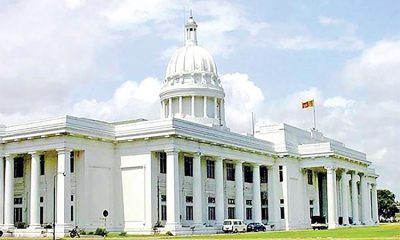
NPP’s CMC budget passed after four Opp. members switch allegiance

600MW hit to national grid as two Norochcholai units go offline

Health Secy. alleges death threats, seeks police protection

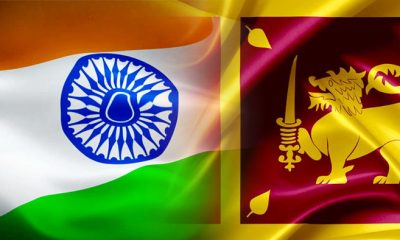
India doubles financial commitment to housing projects in Sri Lanka

BASL protests against NPP/JVP-style promotions to judicial officers

‘Dates have the highest sugar content to fight Coronavirus’

Sunday Island 27 December – Headlines

#SundayIsland 17th December – Headlines

Sunday Island – 28th March

Sunday Island Headlines – 21 March

Sunday Island – 21st February – Headlines
-
 News6 days ago
Street vendors banned from Kandy City
-

 Sports3 days ago
Gurusinha’s Boxing Day hundred celebrated in Melbourne
-

 News6 days ago
Lankan aircrew fly daring UN Medevac in hostile conditions in Africa
-
 News1 day ago
Leading the Nation’s Connectivity Recovery Amid Unprecedented Challenges
-

 Sports4 days ago
Time to close the Dickwella chapter
-

 Features6 days ago
Rethinking post-disaster urban planning: Lessons from Peradeniya
-

 Opinion6 days ago
Are we reading the sky wrong?
-

 Features2 days ago
It’s all over for Maxi Rozairo