
Business
In an era of unprecedented change, HR leaders call for a radically agile workforce


In a world grappling with what many now call a “polycrisis”—a convergence of economic instability, geopolitical tension, and relentless technological disruption—the old paradigms of workforce management are no longer simply outdated; they are liabilities. For businesses in Sri Lanka and across the globe, survival and growth now depend on a new, more dynamic asset: a workforce that can pivot, adapt, and innovate on the fly.
This urgent imperative was the central theme at the National HR Conference 2025, hosted by CIPM Sri Lanka on June 3rd at the Monarch Imperial. The event convened a panel of distinguished industry leaders, academics, and HR practitioners to grapple with a critical question: How do we build a workforce that is not just prepared for the future, but can actively shape it? The discussion that unfolded was not one of incremental adjustments, but a call for a fundamental reimagining of how we hire, train, manage, and lead people.
The panel, expertly moderated by Janaka Kumarasinghe, featured insights from Mayura Malagala, Chetana Liyanage, Pavithra Kailasapathy, and Rajitha Kariyawasam. Together, they mapped out the profound challenges and actionable strategies for cultivating the future-ready, agile workforce essential for navigating the complex, uncertain decades ahead.
Defining the ‘Future-Ready’ Workforce in an Age of Uncertainty
Moderator Janaka Kumarasinghe initiated the dialogue by posing a question that cuts to the heart of modern strategy: in a future that is largely unknowable, what does “readiness” truly mean?
Pavithra Kailasapathy of the University of Kalam’s Department of Human Resources offered a foundational definition, urging a move away from static planning. “When we talk about a future-ready workforce, we must first humbly accept that we cannot predict what the future holds,” she stated. “The only certainty is uncertainty itself. Crises and disruptions are no longer black swan events; they are becoming the regular rhythm of the global landscape. Therefore, organizations—and indeed, the nation—need a workforce that is inherently adaptable, flexible, and psychologically equipped for swift decision-making amidst constant change.”
She delved deeper, stressing that this capability goes far beyond a simple list of technical proficiencies. “It’s not just about skills; it’s about possessing a growth mindset—the core belief that abilities and intelligence can be developed through dedication and hard work. This contrasts sharply with a fixed mindset, which assumes talent is innate and unchangeable.”
In practice, an employee with a growth mindset sees a challenge as an opportunity to learn, whereas one with a fixed mindset sees it as a threat that might expose their limitations.
“Agility,” Kailasapathy concluded, “is the fusion of this learning ability with the adaptability to apply that knowledge in novel, often high-pressure, situations. It’s about learning, unlearning, and relearning as a continuous cycle.”
Navigating Exponential Change and Geopolitical Shockwaves
The conversation then shifted to the powerful external forces compelling this evolution. Rajitha Kariyawasam, a multidisciplinary executive with deep experience in global manufacturing and business, painted a stark picture of the operating environment.
“This isn’t ordinary, linear change; it’s dramatic, exponential transformation,” he warned. “The rate of change is vast and accelerating, primarily driven by a new wave of technology. We are seeing robotics, AI, and automation not just augmenting human work, but fundamentally redefining entire job categories.” He explained that this isn’t a distant future; AI is already handling complex analytics and diagnostics, while automation is reshaping supply chains. “The agility we have today, which might feel advanced, could very well be obsolete by tomorrow.”
Beyond technology, Kariyawasam highlighted the immense impact of geopolitical volatility. “Strategic plans can be shattered overnight by a single policy decision made thousands of miles away,” he noted. “When a major economic power, like the US, suddenly announces a 44% tariff, it can decimate a company’s core export market in an instant. A company’s ability to survive such a shock depends entirely on its agility.”
How can an organization respond? “It requires a collaborative, ecosystem-wide approach,” he argued. “You need to rapidly explore new markets, reskill your sales and logistics teams, re-engineer products to meet new price points, and potentially adopt new technologies to reduce costs. This is not a challenge for one department; it involves the entire workforce, suppliers, industry bodies, and even government support.”
He pointed to China’s remarkable economic transformation as a powerful, large-scale precedent. “Look at how Chinese companies and institutions fostered a national culture of agility. They invested massively in upskilling their workforce, from factory floors to research labs. They embraced cutting-edge technologies fearlessly and built an infrastructure that could pivot to meet global demand. They turned potential weaknesses into the very drivers of change, a lesson for any company looking to build a forward-thinking, adaptable organization.”
From Theory to Practice: Cultivating an Agile Culture
Understanding the need for agility is one thing; building it is another. Chetana Liyanage provided a practical framework, arguing that all HR practices must be intentionally re-engineered around three core pillars:
Instilling a Growth Mindset: This must be the cultural bedrock. It means leaders must actively model learning, celebrate “intelligent failures” as learning opportunities, and create an environment of psychological safety where employees feel secure enough to voice new ideas and experiment without fear of blame.
Developing Essential Skills and Competencies: The focus must be twofold. While technical skills remain vital, so-called “power skills”—critical thinking, creative problem-solving, communication, and collaboration—are what enable agility. These are the skills that allow technical knowledge to be applied effectively in new contexts.
Strengthening Enabling Systems: An agile culture cannot survive in a rigid, bureaucratic structure. “We cannot foster agility within traditional hierarchies,” Liyanage asserted. “We need to move toward a skills-based approach, empowering cross-functional teams to swarm on problems and opportunities. It’s about creating a ‘gig economy’ within our companies, where talent is deployed fluidly based on project needs, not static job descriptions.”
This requires a radical overhaul of legacy systems. Annual performance reviews become obsolete, replaced by continuous, real-time feedback conversations. Training evolves from monolithic, top-down programs to personalized “micro-learning.”

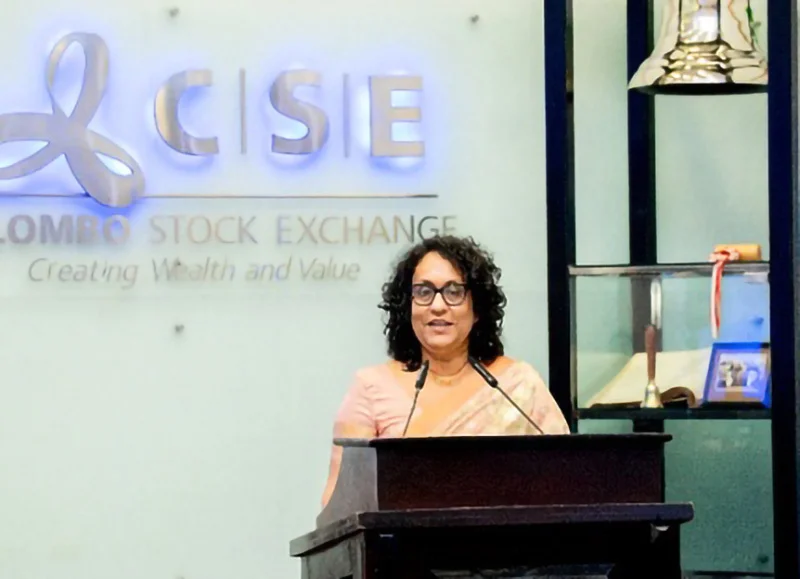
As part of World Investor Week (WIW) 2026, the Securities and Exchange Commission of Sri Lanka (SEC) and the Colombo Stock Exchange (CSE) joined stock exchanges around the world in ringing the market opening bell for financial literacy on 5 October 2026, under the patronage of Dr. Harini Amarasuriya, Prime Minister of the Democratic Socialist Republic of Sri Lanka.
World Investor Week is an annual global campaign led by the International Organization of Securities Commissions (IOSCO) to raise awareness of the importance of investor education and investor protection. The “Ring the Bell for Financial Literacy” initiative, pioneered by the World Federation of Exchanges (WFE), brings together stock exchanges and other stakeholders worldwide to promote greater financial literacy and encourage individuals to make informed financial decisions.
The ceremony also marked the 40th anniversary of the CSE and the joint launch by the SEC and the CSE of the Stock Market Game, an online stock market simulation based on the ATrad trading system.
The Stock Market Game enables participants to gain practical experience of how the stock market works, make investment decisions and construct portfolios of listed shares without using real money. The platform is accessible through the websites of the SEC and CSE and is expected to serve as an important practical tool for promoting financial education. It is envisaged that the Stock Market Game will also be used to conduct simulation competitions among universities and the 100 Capital Market Clubs established in schools across the country.
The ceremony also featured the commemorative issuance of a stamp and First Day Cover to mark the 40th anniversary of the CSE. Issued in collaboration with the Department of Posts and the Philatelic Bureau of Sri Lanka, the commemorative stamp and First Day Cover were presented to Prime Minister Dr. Harini Amarasuriya, by the SEC Chairman Snr. Prof. D.B.P.H. Dissabandara and Ray Abeywardena, Director CSE and Chairman of Central Depository Systems (CDS).
Welcoming the gathering, Rajeeva Bandaranaike, Chief Executive Officer of the CSE, highlighted the importance of obtaining reliable information when making investment decisions.
“We operate in a digital world where a vast amount of information and data is disseminated through social media. While some of this information is factual, some may be inaccurate or misleading. When investing in the stock market, it is essential to make informed and prudent investment decisions. Therefore, investors should obtain information and data from reliable and responsible sources and persons before making investment decisions.”
Addressing the gathering, SEC Chairman Snr. Prof. D.B.P.H. Dissabandara emphasised that the SEC’s role extends beyond regulation to facilitating the further development of the capital market.
“The SEC needs to determine how best to introduce the stock market to Generation Alpha, Generation Beta and generations beyond. When it comes to investors, we need to build confidence in the market, because people will invest only when they have confidence in the market.’’
Business
Rs. 5 million worth of prizes to be given at 8th edition of CSE Masterminds Quiz Competition

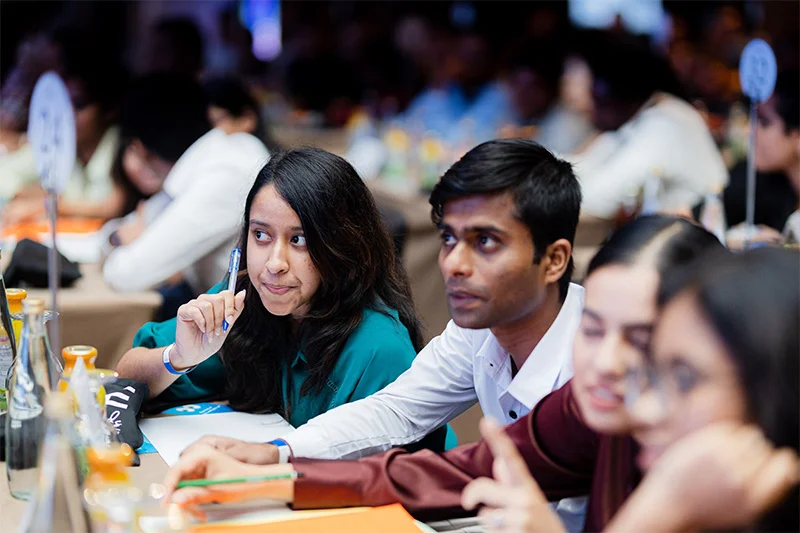
The Colombo Stock Exchange (CSE) has announced that the eighth edition of the CSE Masterminds Quiz will be held on 9th October 2026, from 3.00 p.m. onwards, at the Main Ballroom, Shangri-La Colombo.
Recognised as Sri Lanka’s premier capital market quiz competition, CSE Masterminds brings together teams from the public and private sectors. Participants will be tested across international business, global markets, current affairs, the Sri Lankan economy and business, the Sri Lankan stock market, and sports and entertainment, before a concluding rapid-fire round.
This year the winning team can win up to Rs. 2,000,000, the runners-up up to Rs. 1,000,000, and the second runners-up Rs. 750,000. Sector awards will also be presented to the highest-performing team from each participating sector. Guest participants will also be able to compete in rounds of Audience questions, and will have the opportunity to participate a raffle draw for three free return tickets provided by Fits Aviation (Pvt) Ltd.
The evening will also include an exclusive after-party with live music provided by the band ‘Doctor’ featuring guest performer Umara Sinhawansa, fine food and beverages, providing an opportunity for networking and celebration. Every participant will receive a premium goodie bag made possible by the support of the event’s sponsorship partners. Collectively, the event will feature over Rs. 5 million worth of prizes, rewards, and giveaways, encompassing championship prizes, sector awards, audience engagement prizes, raffle draw offerings, and goodie bags.
Sponsorship partners include:
Platinum Sponsors: Hatton National Bank PLC and Bartleet Religare Stockbrokers (Pvt) Ltd.
Gold Sponsors: Ex-Pack Corrugated Cartons PLC, Asha Securities Ltd., and Lanka Securities (Pvt) Ltd.
Silver Sponsors: Barista Coffee Lanka (Pvt) Ltd., Capital Trust Holdings (Pvt) Ltd., LOLC Holdings PLC, Arpico Ataraxia Asset Management (Pvt) Ltd., IronOne Technologies (Pvt) Ltd., and LankaPay (Pvt) Ltd.
Co-Sponsors: Access Engineering PLC, Bank of Ceylon, Commercial Bank of Ceylon PLC, CryptoGen (Pvt) Ltd., Deloitte Lanka (Private) Limited, Dialog Finance PLC, Efutures (Pvt) Ltd., People’s Leasing & Finance PLC, Senfin Asset Management (Pvt) Ltd., and Softlogic Stockbrokers (Pvt) Ltd.
Business
NCCSL to conduct practical workshop on food labelling and advertising regulations in Sri Lanka

The National Chamber of Commerce of Sri Lanka (NCCSL) is organizing a one-day practical workshop on “Food Labelling & Advertising Regulations in Sri Lanka” on Thursday, 8th October 2026 from 9.00 a.m. to 4.30 p.m. at the National Chamber of Commerce, Colombo 10. The workshop has been organised to provide a practical understanding of the latest regulatory requirements governing the food products labelling and advertising of food products in Sri Lanka, with particular attention to regulatory developments applicable in 2026, compliance requirements, and the potential legal and financial implications of non-compliance.
As food products increasingly compete not only with quality and price but also on packaging, labelling and promotional claims, businesses must ensure the information they communicate to consumers is accurate, transparent and consistent with applicable regulatory requirements. Understanding these requirements is therefore essential for businesses seeking to protect their brands, maintain consumer confidence, and minimize regulatory and legal risks.
The practical workshop will go beyond an overview of regulations and focus on how businesses can apply regulatory requirements in their day-to-day operations. Participants will be guided through key areas of food regulatory compliance, including the national food regulatory framework, recent food labelling regulations and key changes, mandatory approvals and prohibitions relating to food labelling, and the litigation process associated with regulatory violations. The programme will also cover several areas of growing importance to the food industry, including the EU EMPCO Directive, food colour coding regulations, regulations relating to food trans-fatty acids and the importance of compliance in the use of food additives. Practical exercises will further enable participants to apply their knowledge to real-world compliance situations and strengthen their ability to identify potential regulatory concerns.
For further information and registration, please contact the National Chamber of Commerce of Sri Lanka on 011 4741788 – Nethmi or Udula – 071 403 4775.

Ronaldo apologizes for Portugal walkout; says Jesus broke promise

Showers in the Western, Sabaragamuwa, Central, Uva, North-western and Southern provinces and in Anuradhapura and Mannar districts

Fuel crunch looms

Gnansara Thera to be assigned to prison printing section: Officials

Speaker rejects Ajith Perera’s privilege complaint

OIC of FCID summoned before Maligakanda Magistrate

‘Dates have the highest sugar content to fight Coronavirus’

Sunday Island 27 December – Headlines

#SundayIsland 17th December – Headlines

Sunday Island – 28th March

Sunday Island Headlines – 21 March

Sunday Island – 21st February – Headlines
-

 News6 days ago
US-assisted ‘Ice’ detection: NPC to examine IGP’s move to transfer drug-busting team
-

 Editorial5 days ago
Colombo Port drug bust: The plot thickens
-

 Editorial6 days ago
Drug busting, transfers and trust deficit
-

 Features3 days ago
The first woman in the foreign service or Ceylon Overseas Service it was then called
-

 Editorial4 days ago
Fuelling discontent and protest
-
 News6 days ago
Sri Lankan facing death penalty in Saudi Arabia: Mano G appeals to Crown Prince
-

 Latest News4 days ago
Tharindu Rathnayake, bowlers secure Asian Games Bronze for Sri Lanka
-

 News5 days ago
ADB-backed virtual net metering project faces policy contradiction