
Business
Impetus to Rotary and Ministry of Health partnership to eliminate cervical cancer


Launch of WHO global strategy
Seventeenth November 2020 marks a historic milestone, with the World Health Organization (WHO) officially launching its global strategy to accelerate the elimination of cervical cancer as a public health problem , targeting the period 2020-2030. This is the first time the world has committed to eliminate a cancer. As WHO has observed “Cervical Cancer is a preventable and curable disease as long as it is detected early and managed effectively”.
The Rotary Club of Colombo, in the second phase of its 15 year Cancer Prevention and Early Detection Project, launched its Cervical Cancer Elimination Project in 2019 in partnership with the Ministry of Health . Today, to commemorate the November 2020 WHO formal launch landmark, monuments in the capital, namely Colombo Town Hall and other prominent landmarks will be illuminated in the colour teal to depict cervical cancer awareness. This would be a display of solidarity by Sri Lanka with a historic global commitment to eliminate cervical cancer, and will be showcased globally as part of the WHO event , accompanied by the illumination of iconic monuments in various regions of the world. Today’s launch of the WHO strategy , gives impetus to the far reaching Rotary initiative in partnership with the Ministry of Health to fight cervical cancer, with the challenging goal of eliminating cervical cancer as a public health problem by 2030,
While local and global events , primarily the Covid-19 pandemic, delayed the launch of this life saving project , it is now targeted for early 2021 with the installation and commissioning of advanced technology HPV DNA screening equipment for early detection of cervical cancer , located regionally to reach out to areas with low coverage. This would be simultaneously accompanied by relevant capacity building of healthcare personnel focussing on behavioural change, and publicity campaign to build social awareness. Two buses for mobile screening would also be made available to facilitate greater reach to target high risk groups in the interior areas. This major project is funded with a global grant from The Rotary Foundation together with a number of Rotary Clubs across the world , and project partner Rotary Club of Birmingham ,Al, USA.
The strategy adopted by WHO in 2020 is reflected in the approach taken by the Ministry of Health Sri Lanka in partnership with Rotary, of targeting elimination of cervical cancer as a public health problem through 3 main pillars-Prevention through HPV vaccination , which will be taken on by the Ministry of Health, and which offers long term protection against cervical cancer. Rotary’s involvement would be in the facilitation of screening and early detection of cervical cancer in the 35 and 45 year old females, thus enabling early detection and treatment of pre-cancerous lesions which would prevent a pre cancer developing into a cancer. The third pillar would be the treatment for those diagnosed with invasive cancer , which could save those lives, while palliative care would address the pain and suffering and aim at mitigating this. Rotary’s ongoing partnership of over 15 years with National Cancer Control Programme of the Ministry of Health , focussing on screening and early detection and prevention of breast cancer and cervical cancer , motivated Rotary, with this long experience, to come forward, and focus on cervical cancer – being preventable , and curable if detected early and treated.
The WHO strategy targets 90% of girls to be fully vaccinated with the HPV vaccine before the age of 15 years, with a target of 70% of women being screened using a high performance test at 35 years and again at 45 years , and 90% of women identified with cervical cancer to receive treatment(both pre cancer and invasive cancer). In this respect Sri Lanka is on the right path with the HPV vaccination of 10 year old girls already close to the target. The well structured healthcare system in Sri Lanka effectively facilitates reaching the target group for screening and early detection of cervical cancer , which, with the support from Rotary, would address the present low coverage, and target an increase upto 70-80% coverage. With results being measurable and monitoring and evaluation systems being upgraded , including population based cancer registries , such a focussed strategy spearheaded by the Govt of Sri Lanka in partnership with Rotary, would make elimination of cervical cancer as a public health problem an achievable goal.
WHO states in its communique launching its strategy , ” Cervical cancer stands as one of the world’s greatest failures, but through strong action and aligned intervention, elimination is within reach for all countries. The technology and tools exist to prevent this disease , along with proven measures for early diagnosis and treatment”.
Rotary, in partnership with the Ministry of Health is focussed on this challenging and lifesaving goal which will be a historic milestone in disease prevention. In the words of WHO Director General, “We can eliminate cervical cancer and make it a disease of the past”.



As Sri Lanka’s economy charts a fragile path toward recovery in 2026, the latest corporate earnings data reveals a stark and widening divide. While households and most industries grapple with a slow and arduous healing process, the banking and financial sector is posting windfall profits – a dynamic deepening public concern that the financial system is benefiting disproportionately from an economy still causing widespread hardship.
The Purchasing Managers’ Index hints at tentative stabilisation, with slowing inflation offering some relief. Yet, as an independent analyst cautioned, “The road to recovery is long and full of potholes,” pointing to the enduring burdens of debt and challenging reforms.
“This slow, painful repair is reflected in an 11.9% year-on-year decline in cumulative corporate earnings, driven by sharp falls in the Food, Beverage and Tobacco and Capital Goods sectors. In stark contrast, the Banking and Diversified Financials sectors are not merely recovering; they are accelerating. The Banking sector’s earnings grew by a robust 38.9%, powered by loan book expansion and improved asset quality, with giants like Commercial Bank and Hatton National Bank leading the pack. Similarly, the Diversified Financials sector exploded with 112.6% growth, fueled by a lower interest rate environment and significant fair-value gains in the equity market,” he said.
“This dramatic outperformance underscores a persistent and contentious reality. The financial sector’s role as the economy’s essential intermediary appears to insulate it – and enable it to profit – amidst broader volatility. Its foundational strength is solidifying even as other sectors and the public at large still face grave difficulties,” he said.
“In this context, a growing strand of public opinion questions why the dividends of this pronounced financial resilience are not felt more broadly. The perception is clear: the hardships on the ground – the headwinds on the recovery road – are conspicuously absent from the banking bottom line. Instead, the sector emerges, yet again, as the unambiguous winner in an uneven landscape, leading many to ask when and how this financial success will translate into more tangible, shared gains for the nation at large,” he questioned.
“All in all, the data confirms the banking sector’s fortified foundation. Yet, its social license for such substantial profits may increasingly depend on demonstrating a clearer contribution to a more inclusive and equitable recovery for all Sri Lankans,” he warned.
By Sanath Nanayakkare ✍️

The recent suspension of ten Indian-manufactured injections by Sri Lanka’s medicines regulator has done more than ignite a fresh “substandard medicines” scare. It has laid bare a chronic, systemic failure in the nation’s pharmaceutical governance – a failure that transcends political parties and individual ministers.
According to Ravi Kumudesh, President of the Academy of Health Professionals (AHP), this episode is not an isolated scandal but the latest symptom of a regulatory regime that operates on personality and discretion rather than transparent, evidence-based science.
The public’s current anxiety, Kumudesh argues, stems from a dangerous confluence: an allegation of microbial contamination in an injectable, the blanket suspension of ten products from one manufacturer, and the opaque controversy surrounding an “Indian Pharmacopoeia” agreement. “When these three collide,” he states, “the outcome is predictable: not clarity, not confidence – but a national regulatory regime that the public is asked to ‘trust’ without being given the evidence required to trust.”
A problem rooted in system, not scapegoats
Kumudesh insists that framing this crisis around former Health Minister Keheliya Rambukwella or the current minister, Dr. Nalinda Jayatissa, misses the fundamental point. The core issue is a system that has remained stubbornly unchanged across administrations. “The public has watched governments change while the internal decision-making circle inside the regulatory system appears to remain remarkably stable,” he observes. This creates a perilous pattern where the same insiders sometimes act as public critics and at other times as ‘story managers’ within the system, leading to public perception of a credibility gap that no mere statement can bridge.
From hospital test to national edict: A question of protocol
The central controversy, Kumudesh explains, is not the precautionary suspension itself but the evidence pathway that led to it. “A hospital laboratory can detect signals. But national regulatory action requires national-level validation,” he emphasises. The critical, uncomfortable questions he raises are: If Sri Lanka’s own national medicine quality laboratory still lacks full public confidence, how can a hospital test justify a nationally consequential suspension? And if subsequent international or confirmatory tests contradict the initial finding, who repairs the shattered trust and clinical disruption?
He warns that Sri Lanka has seen this movie before – products removed amid public alarm only to be reintroduced later, creating clinical chaos and eroding faith. “Regulatory panic creates clinical chaos,” Kumudesh notes. The proper response to a contamination allegation, he outlines, is systematic: isolate temporarily, collect samples under strict chain-of-custody, and verify through recognised reference testing – not “suspend and shout.”
The unanswered questions: Procurement and agreements
Kumudesh points to glaring gaps in public accountability. One key question remains unanswered: were pre-shipment test reports for these injections reviewed? “If yes: where are the reports? If no: how did the system allow high-risk products in?” he asks, stressing that procurement is a patient-safety responsibility, not mere paperwork.
Furthermore, the shadow over the reported “Indian Pharmacopoeia” agreement exemplifies the systemic opacity. “If an agreement exists, the first duty is public disclosure,” he asserts. Without it, the public cannot assess whether Sri Lanka is strengthening its standards or inadvertently weakening its own scrutiny and liability pathways.
The path forward: Evidence over emotion
For Kumudesh, the solution lies in a radical shift from personality-based to evidence-based regulation. “Committees do not fix systems – systems fix systems,” he says, critiquing the cyclical political response of appointing committees after each crisis. His prescription is structural:
= Establish a stable, transparent regulatory protocol immune to political or personal influence.
= Build a credible, independent national medicine quality laboratory with recognised competency.
= Enforce a clear, legally sound evidence pathway for all regulatory decisions.
= Ensure routine publication of key regulatory outcomes and decisions.
“Without a credible national laboratory,” he warns, “Sri Lanka remains permanently dependent on foreign timelines and credibility, while its own decisions are perpetually questioned.”
The ultimate question Kumudesh leaves for policymakers and the public is stark: “Is the fear of substandard medicines being used to protect patients – or to hide the system’s inability to prove the truth quickly, transparently, and credibly?” Until the architecture of regulation is rebuilt on the bedrock of science and transparency, he concludes, this crisis will not be the last. It will simply be the latest in a long line of failures that place patients and professionals in the crossfire of a system they cannot trust.
By Sanath Nanayakkare ✍️
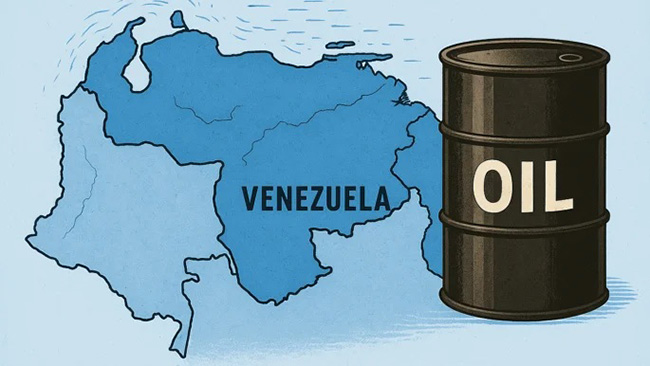
Venezuela has more oil than any other country, but it pumps very little of it. Its national oil company is broke, so the country now needs private investment to fix its broken industry. This could let big American oil companies like Chevron return.
For these companies, the advantage is huge oil fields and facilities that could be repaired fairly quickly. But their investment depends entirely on politics and getting a good deal. As one expert put it, “It’s about the politics.”
For everyday gas prices, not much will change right away. Venezuela currently produces so little that it won’t affect the global market much. The U.S. is also producing record amounts of its own oil and has large emergency stockpiles, which help keep prices stable.
In short, American companies see a major opportunity in Venezuela’s vast oil, but they are facing major political risks. The story isn’t about a lack of oil in the ground; it’s about whether the politics will ever be stable enough to safely get it out.
By Sanath Nanayakkare ✍️

Showers will occur at times in the Eastern and Uva provinces and in Nuwara-Eliya, Matale, Polonnaruwa, and Mullaittivu districts

Curran, bowlers lead Desert Vipers to maiden ILT20 title

PUCSL and Treasury under IMF spotlight as CEB seeks 11.5% power tariff hike

Bellana says Rs 900 mn fraud at NHSL cannot be suppressed by moving CID against him

First harvest of rice offered to Dalada Maligawa

Grade 6 module controversy: SLPP asks PM to resign

‘Dates have the highest sugar content to fight Coronavirus’

Sunday Island 27 December – Headlines

#SundayIsland 17th December – Headlines

Sunday Island – 28th March

Sunday Island Headlines – 21 March

Sunday Island – 21st February – Headlines
-

 News2 days ago
Health Minister sends letter of demand for one billion rupees in damages
-
 News5 days ago
Leading the Nation’s Connectivity Recovery Amid Unprecedented Challenges
-

 Features6 days ago
It’s all over for Maxi Rozairo
-

 Opinion4 days ago
Remembering Douglas Devananda on New Year’s Day 2026
-

 News6 days ago
Dr. Bellana: “I was removed as NHSL Deputy Director for exposing Rs. 900 mn fraud”
-
 News5 days ago
Dons on warpath over alleged undue interference in university governance
-

 Features6 days ago
Rebuilding Sri Lanka Through Inclusive Governance
-

 Business5 days ago
Sri Lanka Tourism surpasses historic milestone with record tourist arrivals in 2025