
Midweek Review
Impact of US policy shift on Sri Lanka

President Trump has unceremoniously overturned US foreign policy. His decision to deport illegal Indian migrants just ahead of a summit with Premier Narendra Modi, underscored the tough stance taken by the new US admiration. The much-touted US-India strategic partnership didn’t deter Trump from carrying out the much-publicized humiliating deportations of Indians. US Vice President J.D. Vance’s speech at the Munich Security Conference, recently, indicated that Trump has terminated his special relationship with Europe and is charting his own course. The upcoming Trump and Russian leader Putin’s meeting stressed that the US policy wouldn’t be shaped by European concerns over Russia. Against that background, the US is very much unlikely to pursue the Biden policy as regards bankrupt Sri Lanka. Actually, Sri Lanka’s political leadership will have to do some serious thinking and re-examining our position as Trump redraws US foreign policy.
By Shamindra Ferdinando
Since the successful conclusion of the war in mid-May 2009, despite all the naysayers, and even the likes of the then British Foreign Secretary David Milliband and French Foreign Minister Bernard Kouchner, rushing here at the eleventh hour with the hope of getting President Mahinda Rajapaksa to halt the offensive to enable them to evacuate the LTTE supremo, his family and their surviving fanatical terrorist band to safety abroad, the US appointed five Ambassadors to Colombo. Of them four were women, namely Patricia A. Butenis, Michele J. Sison, Alaina B. Teplitz and incumbent Julie J. Chung. Between the tenures of Sison and Teplitz, the only male Atul Keshap, of Indian origin, served here for a period of four years (Aug. 2015-July 2018) during the Yahapalana administration.
Ambassador Chung oversaw President Gotabaya Rajapaksa’s forced ouster in 2022. In spite of her denial, Amb. Chung’s role in President Rajapaksa’s removal is clear and cannot be disputed. Amb. Chung will soon be replaced by Elizabeth Kathryn Horst, currently the Principal Deputy Assistant Secretary and Deputy Assistant Secretary responsible for Pakistan, yet another country in which Washington is mired in regime change operations in the region.
Amb. Chung presented her credentials on Feb. 25, 2022, to President Rajapaksa, at the Janadhipathi Mandiraya. The President was flanked by State Foreign Minister Tharaka Balasuriya and Presidential Secretary Gamini Senarath. The new US envoy took office close on the heels of a major crisis within the government that compelled the President to ask for his Secretary Dr. P.B. Jayasundera’s resignation. Just five weeks after Amb. Chung took over the mission, the ‘GotaGoHome’ campaign got underway and a President, elected with over 6.9 mn votes on the SLPP ticket, was thrown out of office within four and half months by violent mobs armed with meticulous intelligence as to which politicians’ houses were to be ransacked and torched, along with those of their close supporters in a matter of a few hours, especially on May 09, 2022. Exactly two months later they completed their despicable mission by storming the Presidential palace.
The SLPP, both in and outside Parliament, accused Amb. Chung of staging the ouster of President Gotabaya Rajapaksa. Award-winning author Sena Thoradeniya (Galle Face Protest: System Change or Anarchy) and (Nine: The Hidden Story) by National Freedom Front (NFF) leader Wimal Weerawansa, MP, dealt with Amb. Chung’s sordid involvement.
However, the writer believes that the whole exercise should be examined as another arrogant US intrusion rather than Amb. Chung’s private agenda. Her job was to do the bidding of Washington. Let me stress that the US made a serious but an abortive attempt to bring President Mahinda Rajapaksa’s reign to an end in 2010. Thanks to Wikileaks we know how the US used a UNP-led coalition, that included the wartime LTTE ally the Tamil National Alliance (TNA), and the JVP, to back retired General Sarath Fonseka at the presidential election. That gamble failed. The war-winning Army Chief ended up with egg on his face with an unforgettable thrashing from the overwhelming southern electorate.
Eyebrows were raised when the outgoing American envoy recently expressed her desire to meet Sri Lanka Podujana Peramuna (SLPP) leaders at the Nelum Mawatha party office as she never bothered to do so since her arrival in early 2022.
Contrary to speculation, the outgoing US Ambassador had sought a meeting about two weeks ago before the unprecedented public exposure about the USAID’s (United States Agency for International Agency) sinister operations here and worldwide in the wake of the new US administration deciding to curtail drastically its operations for being a white elephant as America itself is being confronted with a fast developing and yet to be fully fathomed economic crisis, which might even exceed the worldwide Great Depression that came with the 1929 stock market crash. On her arrival at Nelum Mawatha last Friday (14) Amb. Chung was received by SLPP General Secretary and Attorney-at-Law Prasad Kariyawasam. The SLPP delegation was led by its National Organizer Namal Rajapaksa and one of the three lawmakers in the current Parliament. Having accused her of being in the thick of the regime change, the SLPP’s readiness to meet Amb. Chung, too, is a mystery.
It would be pertinent to briefly explain the USAID’s global objectives as the vast majority wrongly believed the agency is meant for humanitarian work. It is definitely not a charity. Its main objective is to strengthen capabilities of US agents, or assets, at local and regional levels regardless of the status of Washington’s relationship with the targeted country.
These agents, or assets, are available for the US at any time as Washington desired. Pentagon, the State Department or even the Central Intelligence Agency (CIA) used its resources under whatever circumstances. If we closely examine the pattern of USAID operations, as well as other related organizations that had been active here over a period of time, even our legislature is within the sphere of their influence. In other words, they obviously have direct access to politicians and officials who wield power over key institutions. The private sector, too, became part of the US operation carefully expanded countrywide.
By the time Amb. Chung arrived here. US assets were in place at different levels ready to carry out directives. Those who pointed a finger at Amb. Chung never bothered to examine the background and comprehend the gradual build-up that allowed the gathering of all elements, under the social media fuelled ‘GotaGohome’ campaign.
The US mission here had done a tremendous amount of work, especially beginning with the Amb, Keshap’s time, to enhance the capacities of their existing assets and identify and develop new assets.
What really prompted Amb. Chung to suddenly seek a meeting with the SLPP? Did National List MP Namal Rajapaksa’s call for the setting up of a Parliamentary Select Committee (PSC) to probe USAID funding, influence her decision? But that cannot be as the US Embassy made the request before the USAID controversy. Perhaps, SLPP General Secretary Kariyawasam expressed concern over Amb. Chung’s frequent visits to the JVP headquarters at Pelawatte, whereas she ignored the SLPP.
Appearing on a live television programme, Kariyawasam pointed out that Amb. Chung had plenty of time for the JVP, a party with just three MPs, while the SLPP, in spite of being represented by 145 MPs, never received the US envoy’s attention.
Perhaps Amb. Chung didn’t really feel the requirement to visit Nelum Mawatha as she maintained a close contact with the SLPP founder Basil Rajapaksa.
Ambiguity over objectives
It would be pertinent to ask both the sponsors and recipients whether various foreign-funded projects achieved their objectives.
The following are some of the USAID-funded projects launched, beginning 2017: [1] USD 19 mn social cohesion and reconciliation project implemented by Global Communities (July 2018-Dec, 2023) [2] Analysis of social cohesion and reconciliation implemented by US Institute of Peace at a cost of USD 700,000 (Aug. 2018-Feb. 2024) [3] USD 15 mn project implemented by Chemonics International Inc. to strengthen the justice sector, including the Justice Ministry and Office of Attorney General (Sept. 2021-Sept. 2026) [4] USD 17 mn project carried out by National Democratic Institute, International Republican Institute and International Foundation for Electoral System in support of Parliament and other government institutions, including the Election Commission (June 2020 – June 2024) [5] USD 14 mn worth project in support of civil society meant to achieve good governance reforms and strengthen accountability. Implemented by Management Systems International (Feb. 2018-Aug. 2024) [6] USD 7.9 mn scheme to strengthen media implemented by International Research and Exchanges Board Inc. (Aug. 2017-April 2023) [7] SAFE Foundation implemented a programme at a cost of USD 3.9 mn aimed at combating human trafficking (Oct. 2021-Sept. 2026) [8] USD 1.6 mn project to enhance protection for those threatened by gender-based violence (Oct. 2021-Sept. 2026). Implementing agency Women-in-Need [9] USD 3.6 mn project for the benefit of plantation community implemented by Institute of Social Development (June 2022-June 2027) and [10] a staggering USD 19 mn project meant to strengthen the civil society by unnamed private agencies (Sept. 2022-August 2027).
Interestingly, high profile USAID operations implemented in collaboration with successive governemnts covered the Justice sector (Justice Ministry and Office of Attorney General), Parliament as well as the Election Commission.
Over the years USAID with a massive budget that even exceeded the CIA’s and allied organizations have built up a system that served the interests of the US. That is the truth. Sri Lanka has cooperated not only with the US but other organizations, such as the UNDP, to allow them influence in Parliament. The USAID and UNDP have ‘secured’ Parliament by lavishly spending funds on various projects. In spite of spending millions in USD with the 2016 agreement between Parliament and USAID being the single largest project, what they have achieved here is nothing but a mystery.
Successive governments have encouraged USAID, UNDP and other interventions. They felt happy as external sources provided the funding. Let me give an example of how the UNDP stepped-in for want of sufficient public funding for vital government initiatives. Sometimes, they advanced their political project in the guise of helping the government of the day.
On May 13, 2021, the then Attorney General Dappula de Livera, PC, opened the USAID funded state-of-the-training facility that included a boardroom, auditorium, computer laboratory, and other facilities. The outspoken AG also launched an electronic system to track cases and legal files. The launch of the training facility, electronic diary and file management system, and the Attorney General’s Department website were also attended by Supreme Court Judge Justice Yasantha Kodagoda P.C., Acting Solicitor General Sanjay Rajaratnam P.C., the Secretary of the Ministry of Justice M.M.P.K. Mayadunne, and virtually by DCM Kelly and USAID Mission Director Reed Aeschliman.
The US Embassy, in a statement issued on that quoted AG Livera as having said: “This is another first in the 136-year history of the Attorney General’s Department. The opening of the training centre is a notable, salutary achievement that meets a long-felt need for continuous learning and professional development.” The AG was further quoted as having said these new tools would “drive the institution from strength to strength.”
If such facilities were so important why on earth the Attorney General’s Department failed to take tangible measures to meet that particular requirement.
Those who demand investigations into USAID must realize that their role is much more complicated than alleged and reported in some sections of the media. Among the beneficiaries were the Sri Lanka Judges’ Institute.
American Corner in Jaffna
The US Embassy established an American Corner in Jaffna with the collaboration of Jaffna Social Action Centre (JSAC), an NGO that particularly promoted women and children rights. Formed in 2003 in the North as the Liberation Tigers of Tamil Eelam (LTTE) was preparing to launch Eelam War IV, JSAC, over the years, developed into a recipient of US funding. JSAC is among the groups promoting LGBTQ in the Northern and Eastern Provinces. JSAC annually participates in the much-touted 16 Days of Activism Against Gender Based Violence campaign. The then US Ambassador Butenis attended the opening of the American Corner. JSAC, in its website, has revealed an impressive list of partners and donors.
Perhaps JSAC should explain how it served the interests of ordinary people, especially during the 2003-2009 period when the LTTE stepped up forcible recruitment of children, including girls. Forced conscription continued unabated as the military slowly but steadily rolled back the LTTE fighting formations, towards the east coast, until they were trapped in a sliver of land in the Mullaitivu district.
Sri Lanka should be grateful for US assistance over the past decades. The ordinary people benefited from such help but later Washington weaponized the setup as various interested parties queued up to secure lucrative contracts.
Amb, Chung, in late Sept. 2022, moved the American Centre in Colombo, that had been in existence for over seven decades, to the new US Embassy building. This was a couple of months after Aragalaya (March – July 2022) forced Gotabaya Rajapaksa out of office. The American Centre in Colombo had been first located at the Millers Building in Colombo, then at Galle Face Court, followed by Flower Road, before moving to the Sri Ramya at 44, Galle Road.
The American Corner in Kandy was established in 2004. In addition to Jaffna, Colombo and Kandy, there are similar facilities in Matara and Batticaloa.
The recent declaration by Bharatiya Janata Party MP Nishikant Dubey, in the Indian Parliament, that the USAID had been funding organisations with a view to creating unrest cannot be ignored. The BJP’s declaration underscored the gravity of the situation. Those who discarded repeated accusations by National Freedom Front (NFF) leader Wimal Weerawansa as regards US interventions here must take a fresh look at the developments taking place since Donald Trump’s return for a second term.
Dubey alleged the USAID funded organizations that carried out protests against the Agniveer initiative of the government, backed caste census, and supported Naxalism in India.
On behalf of the BJP, Dubey asked for a probe into whether Congress and the Gandhi family-controlled Rajiv Gandhi Foundation had received USAID funds through George Soros’ Open Society Foundations (OSF) for conducting activities, including the campaign for a caste census and against the Agniveer scheme introduced by the government. The MP claimed OSF received ₹5,000 crores from USAID to “break up India”. He raised the issue during zero hour.
The BJP MP’s accusations seemed somewhat surprising as India, under Narendra Modi’s leadership, established close relations with Washington and is a member of the four-country Quad, comprising the US, Australia, Japan and India meant to counter Chinese expansion.
Why subvert India? Is the question in everybody’s mind? President Trump, during a joint press conference with Premier Modi, speculated about the possibility of USAID role in the Lok Sabha elections last year. Perhaps Trump is playing politics even at the expense of the US as he sought to dismantle USAID.
The Trump administration has imposed a global stop-work directive on USAID, suspending most aid initiatives, except for critical food relief programmes.
However, India, too, had been blamed for interfering in internal affairs of other countries. Recently Canada alleged that India intervened in its electoral process. Canada named China as the other offender. India has strongly refuted the Canadian allegation. It would be pertinent to mention that Canada had been playing politics with Sri Lanka for many years as major political parties sought to exploit the post-war developments for their advantage. New Delhi also accuses Canada of encouraging Khalistan separatists operating from there.
Canadian Parliament, in May 2022, unanimously declared that Sri Lanka perpetrated genocide in a bid to appease Canadian voters of Sri Lanka origin.
The expansion of the USAID project here should be examined against the backdrop of Geneva adopting a US accountability resolution, co-sponsored by the treacherous Sirisena-Wickremesinghe government in 2015. The US backed Sirisena’s candidature at the 2015 presidential election. That was in line with their overall strategy to end the Rajapaksas rule, perceived to be China-friendly. The US funded the 2015 UNP-led campaign that involved the TNA and JVP as well. A group of civil society groups, led by the National Movement for Social Justice (NMSJ), backed Sirisena’s candidature, who switched sides at the last moment having been in the Rajapaksas camp throughout his political career and it was done after having a hopper feed with them the previous night.
Having betrayed his own party in 2014, Sirisena has ended up politically irrelevant. That is the price the one-time SLFP General Secretary had to pay for switching sides for personal gain. The former President is most unlikely to get an opportunity to re-enter Parliament ever again.
The NPP will have to be cautious how it handles the situation against the backdrop of developing political and economic upheaval in Washington as we may have never seen hitherto. The way the new administration addressed much more complicated issues, such as the Russia-Ukraine war in a manner seriously inimical to the European powers and pullout from the Geneva-based UNHRC and WHO meant that Trump has already turned US foreign policy upside down.


CC in dilemma over filling impending vacancies
Sajith Premadasa
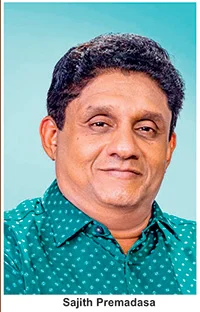
Amidst a simmering row over the controversial move to have Deshabandu Tennakoon as the IGP at the time of crucial presidential election, Opposition Leader Sajith Premadasa alleged: “The Speaker sent a letter to the President, recommending the appointment of Deshabandu Tennakoon as IGP. He distorted the Constitutional Council ruling by interpreting the two abstaining votes of civil society members as votes against Deshabandu and used his casting vote to recommend Deshabandu as the Constitutional Council decision. It is on the basis of the Speaker’s letter that the President made the appointment. The Speaker has blatantly violated the Constitution
.”
Speculation is rife about a possible attempt by the ruling National People’s Power (NPP) to take control of the 10-member Constitutional Council (CC). The only way to take command of the CC is to appoint those willing to pursue the NPP agenda as civil society representatives.
Against the backdrop of the NPP’s failure to obtain CC’s approval to finalise the appointment of the Auditor General, the government seems hell-bent on taking control of it. Civil society representatives, namely Dr. Prathap Ramanujam, Dr. (Mrs.) Dilkushi Anula Wijesundere and Dr. (Mrs.) Weligama Vidana Arachchige Dinesha Samararatne, whose tenure is coming to an end in January, blocked President Anura Kumara Dissanayake’s nominee receiving the AG’s position. They took a courageous stand in the greater interest of the nation.
Chulantha Wickramaratne, who served as AG for a period of six years, retired in April 2025. Following his retirement, President Anura Kumara Dissanayake first nominated H.T.P. Chandana, an audit officer at the Ceylon Petroleum Corporation. The CC rejected the nomination. Subsequently, President Dissanayake appointed the next senior-most official at the National Audit Office (NAO) Dharmapala Gammanpila, as Acting Auditor General for six months. Then, the President nominated Senior Deputy Auditor General L.S.I. Jayarathne to serve in an acting capacity, but her nomination, too, was also rejected.
Many an eyebrow was raised when the President nominated O.R. Rajasinghe, the Internal Audit Director of the Sri Lanka Army, for the top post. As a result, the vital position remains vacant since 07 December. Obviously the overzealous President does not take ‘No’ for an answer when filling key independent positions with his minions
The Bar Association of Sri Lanka (BASL) in a letter dated 22 December, addressed to President Dissanayake, who is the leader of the NPP and the JVP, Prime Minister Dr. Harini Amarasuriya, Speaker Dr. Jagath Wickremaratne and Opposition Leader Sajith Premadasa emphasised their collective responsibility in ensuring transparency in the appointment of civil society representatives.
Cabinet spokesperson and Health and Media Minister, Dr. Nalinda Jayatissa, is on record as having emphasised the urgent need to finalise the appointment. Minister Jayatissa alleged, at the post-Cabinet media briefing, that the President’s nominations had been rejected without giving explanation by certain members, including three representatives of civil society.
Parliament, on 18 January, 2023, approved the former Ministry Secretary Dr. Ramanujam, former Chairperson of the Sri Lanka Medical Association Dr. Wijesundere, and Dr. Samararatne of the University of Colombo as civil society representatives to the CC.
They were the first post-Aragalaya civil society members of the CC. The current CC was introduced by the 21 Amendment to the Constitution which was endorsed on 31st of October, 2022, during a time of grave uncertainty. UNP leader Ranil Wickremesinghe, who had been elected by the SLPP to complete the remainder of ousted President Gotabaya Rajapaksa’s five-year term, sought to manipulate the CC. Wickremesinghe received the SLPP’s backing though they fell out later.
During Wickremesinghe’s tenure as the President, civil society representatives earned the wrath of the then Rajapaksa-Wickremesinghe government by refusing to back Deshabandu Tennakoon’s appointment as the IGP. The then Speaker Mahinda Yapa Abeywardena was accused of manipulating CC’s ruling in respect of Deshabandu Tennakoon to suit Wickremesinghe’s agenda.
Amidst a simmering row over the controversial move to have Deshabandu Tennakoon as the IGP, at the time of crucial presidential election, Opposition Leader Sajith Premadasa alleged: “The Speaker sent a letter to the President, recommending the appointment of Deshabandu Tennakoon as IGP. He distorted the Constitutional Council ruling by interpreting the two abstaining votes of civil society members as votes against Deshabandu and used his casting vote to recommend Deshabandu as the Constitutional Council decision. It is on the basis of the Speaker’s letter that the President made the appointment. The Speaker has blatantly violated the Constitution.”
The NPP realises the urgent need to neutralise the CC. The composition of the CC does not give the Opposition an opportunity to challenge the government if the next three civil society representatives succumb to political pressure. The Speaker is the Chairman of the CC. The present composition of the Constitutional Council is as follows: Speaker (Dr) Jagath Wickramaratne, ex-officio, PM (Dr) Harini Amarasuriya, ex-officio, Leader of the Opposition Sajith Premadasa, ex-officio, Bimal Rathnayake, Aboobucker Athambawa, Ajith P. Perera, Sivagnanam Shritharan, Dr Prathap Ramanujam, Dr Dilkushi Anula Wijesundere and Dr Dinesha Samararatne.
In terms of Article 41E of the Constitution, the CC meets at least twice every month, and may meet as often as may be necessary.
The failure on the part of the NPP to take over Office of the AG must have compelled them to explore ways and means of somehow bringing CC under its influence. The end of the current civil society members’ term, has given the government a chance to fill the vacancies with henchmen.
BASL’s letters that dealt with the appointment of civil society representatives to the CC and the failure to appoint AG, both dated 22 December, paint a bleak picture of the NPP that throughout the presidential and parliamentary polls last year assured the country of a system change. The NPP’s strategy in respect of filling the AG’s vacancy and possible bid to manipulate the CC through the appointment of civil society representatives reminds us of the despicable manipulations undertaken by previous governments.
An appeal to goverment
BASL seems convinced that the NPP would make an attempt to appoint its own to the CC. BASL has urged the government to consult civil society and professional bodies, including them, regarding the forthcoming vacancies in the CC. It would be interesting to examine the NPP’s strategy as civil society, too, would face daunting challenges in choosing representatives.
Civil society representatives are nominated by the Speaker by agreement of the Prime Minister and the Leader of the Opposition.
If consensus cannot be reached swiftly, it would cause further political turmoil at a time the country is experiencing an unexpected burden of dealing with the post-Cyclone Ditwah recovery process.
The term of non-ex-officio members of the Council is three years from the date of appointment. In terms of the Constitution, the civil society representatives should be persons of eminence and integrity who have distinguished themselves in public or professional life and who are not members of any political party. Their nominations should be approved by Parliament.
In spite of the NPP having an absolute 2/3 majority in Parliament, the ruling party is under pressure. The composition of the CC is a big headache for NPP leaders struggling to cope up with rising dissent over a spate of wrongdoings and a plethora of broken promises. The furore over the inordinate delay in finalising AG’s appointment has made matters worse, particularly against the backdrop of the BASL, Transparency International Sri Lanka Chapter and Committee on Public Finance, taking a common stand.
Having been part of the clandestine regime change project in 2022; Western powers and India cannot turn a blind eye to what is going on. Some Colombo-based foreign envoys believe that there is no alternative to the NPP and the government should be given the opportunity to proceed with its action plan. The uncompromising stand taken by the NPP with regard to the appointment of permanent AG has exposed the ruling party.
In the wake of ongoing controversy over the appointment of the AG, the NPP’s integrity and its much-touted vow to tackle waste, corruption, irregularities and mismanagement seems hollow.
The government bigwigs must realise that appointment of those who campaigned for the party at the presidential and parliamentary polls caused deterioration of public confidence. The appointment of ex-top cops Sharnie Abeysekera and Ravi Seneviratne with black marks as Director, CID and Secretary to the Ministry of Public Security and Parliamentary Affairs, eroded public confidence in the NPP administration.
A vital role for CC
 The SLPP, reduced to just three lawmakers in the current Parliament, resented the CC. Having secured a near 2/3 majority in the House at the 2020 Parliamentary election, the SLPP made its move against the CC, in a strategy that was meant to strengthen President Gotabaya Rajapaksa’s hands at the expense of Parliament. Introduced in 2001 during Chandrika Bandaranaike Kumaratunga’s presidency, the 17th Amendment paved the way for the establishment of the CC. Those who wielded political power subjected the CC to critical changes through 18th, 19th and 20th amendments. Of them, perhaps, the 20th Amendment to the Constitution that had been passed in October 2020 is the worst. The SLPP replaced the CC with a Parliamentary Council. That project was meant to consolidate power in the Executive President, thereby allowing the appointment of key officials, like judges, the Attorney General, and heads of independent commissions.
People may have now forgotten the 20th Amendment removed civil society representatives from the so-called Parliamentary Council consisting of lawmakers who represented the interests of the government and the main Opposition. But such manipulations failed to neutralise the challenge (read Aragalaya) backed by external powers. The role played by the US and India in that project has been established and there cannot be any dispute over their intervention that forced Gotabaya Rajapaksa to flee the country.
Interestingly, Ranil Wickremesinghe, who had been picked by the SLPP to complete the remainder of Gotabaya Rajapaksa’s term, restored the CC through the passage of 21 Amendment on 31 October, 2022. Unfortunately, the NPP now wants to manipulate the CC by packing it with those willing to abide by its agenda.
It would be pertinent to mention that the 20th Amendment was aimed at neutralising dissent at any level. Those who formulated that piece of legislation went to the extent of proposing that the President could sack members appointed to the Parliamentary Council by the Prime Minister and the Opposition Leader without consulting anyone.
If not for the Aragalaya, the Parliamentary Council that didn’t serve any meaningful purpose could have paved the way for the President to fill all key positions with his nominees.
Recommendation of nominations to the President for the appointment of Chairpersons and Members of Commissions specified in the Schedule to Article 41B of the Constitution.
Commissions specified in the Schedule to Article 41B: The Election Commission, the Public Service Commission, the National Police Commission, the Audit Service Commission, the Human Rights Commission of Sri Lanka, the Commission to Investigate Allegations of Bribery or Corruption, the Finance Commission, the Delimitation Commission and the National Procurement Commission.
Approval/ Disapproval of recommendations by the President for the appointment to the Offices specified in the Schedule to Article 41C of the Constitution.
Offices specified in the Schedule to Article 41C: The Chief Justice and the Judges of the Supreme Court, the President and the Judges of the Court of Appeal, the Members of the Judicial Service Commission, other than the Chairman, the Attorney-General, the Governor of the Central Bank of Sri Lanka, the Auditor-General, the Inspector-General of Police, the Parliamentary Commissioner for Administration (Ombudsman) and the Secretary-General of Parliament.
NPP under pressure
In spite of having the executive presidency, a 2/3 majority in the legislature, and the bulk of Local Government authorities under its control, the NPP is under pressure. Their failure to muster sufficient support among the members of the Colombo Municipal Council (CMC) to pass its 2026 Budget underscored the gravity of the developing situation. The unexpected loss suffered at the CMC shook the ruling party.
But, the NPP faces a far bigger challenge in filling the AG’s vacancy as well as the new composition of the CC. If the NPP succeeds with its efforts to replace the current civil society representatives with rubber stamps, the ruling party may feel vindicated but such feelings are likely to be short-lived.
Having criticised the government over both contentious matters, the BASL may be forced to step up pressure on the government unless they can reach a consensus. It would be really interesting to know whether the government accepted the BASL’s request for consultations with the stakeholders. Unless consensus can be reached between the warring parties there is possibility of opening of a new front with the BASL and civil society being compelled to take a common stand against the government.
The developing scenario should be examined taking into consideration political parties and civil society confronting the government over the proposed Protection of the State from Terrorism Act (PSTA). Having promised to do away with the Prevention of Terrorism Act (PTA) in the run up to the presidential election, the NPP is trying to explain that it cannot do without anti-terrorism law. The civil society is deeply unhappy over the NPP’s change of heart.
The National Peace Council (NPP) that has been generally supportive and appreciative of the NPP’s efforts probably with the blessings of its benefactors in the West, too, has now found fault with the proposed PSTA. Dr. Jehan Perera, NPP’s Executive Director commented: “A preliminary review of the draft PSTA indicates that it retains core features of the PTA that have enabled serious abuse over decades. These include provisions permitting detention for up to two years without a person being charged before a court of law. In addition, the broad definition of terrorism under the draft law allows acts of dissent and civil disobedience to be labelled as terrorism, thereby permitting disproportionate and excessive responses by the state. Such provisions replicate the logic of the PTA rather than mark a clear break from it.”
Except the BASL, other professional bodies and political parties haven’t commented on the developing situation at the CC while taking into consideration the delay in appointing an AG. The issue at hand is whether the government intends to hold up AG’s appointment till the change of the CC’s composition in its favour. Whatever the specific reasons, a country that has suffered for want of accountability and transparency, enters 2026 without such an important person to guard against all types of financial shenanigans in the state.
All previous governments sought to influence the Office of the AG. The proposed establishment of NAO prompted the powers that be to undermine the effort. The Yahapalana administration diluted the National Audit Bill and what had been endorsed as National Audit Act, Nov. 19 of 2018 was definitely not the anti-corruption grouping originally proposed. That Act was amended this year but the Office of the AG remains vacant.
The NPP has caused itself immense harm by failing to reach consensus with the CC on filling the AG’s post. Unfortunately, the ruling party seems to be uninterested in addressing the issue expeditiously but is exploring the possibility of taking over control of the CC by stuffing it with civil society members favourable to the current ruling clique.
By Shamindra Ferdinando

‘Can Asians Think?’

I want to initiate this essay with several questions. That is, are we, in Sri Lanka and in our region, intellectually subservient to what is often referred to as the ‘West’? Specifically, can knowledge production in broad disciplinary areas such as social sciences and humanities be more creative, original and generated in response to local conditions and histories, particularly when it comes to practices such as formulating philosophy and theory as well as concepts and approaches? Why have we so far imported these from Western Europe and North America as has been the undisputed norm?
In exploring the responses and delving into this discussion, I will seek reference from the politics of the recently published book, Decolonial Keywords: South Asian Thoughts and Attitudes edited by Renny Thomas from the Department of Humanities and Social Sciences at the Indian Institute of Science Education and Research – Bhopal and me. The book was brought out by Delhi-based Tulika Publishers in December 2025.
Let me first unpack my anxiety over theory and philosophy, which I have talked about many times previously too. Any social science or humanities text we read here or elsewhere in South Asia invariably borrows concepts, theories and philosophical input generated mostly in Western Europe and North America. It almost appears as if our region is incapable of serious and abstract thinking. It is in this same context, but specifically with reference to India that Prathama Banerjee, Aditya Nigam and Rakesh Pandey have observed in their critical essay, ‘The Work of Theory Thinking across Traditions’ (2016), that for many “theory appears as a ready-made body of philosophical thought, produced in the West …” They argue, “the more theory-inclined among us simply pick the latest theory off-the-shelf and ‘apply’ it to our context, notwithstanding its provincial European origin, for we believe that ‘theory’ is by definition universal.”
Here, Banerjee et al make two important points. That is, there is an almost universal acceptability in the region that ‘theory’ is a kind of philosophical work that is exclusively produced in the West, followed by an almost blind and unreflective readiness among many of us to simply apply these ideas to local contexts. In doing so, they fail to take into serious consideration the initial temporal and historical contexts in which these bodies of knowledge were generated. However, theory or philosophy is not universal.
This knowledge is contextually linked to very specific social, political and historical conditions that allowed such knowledge to emanate in the first place. It therefore stands to reason that such knowledge cannot be applied haphazardly/ willy-nilly anywhere in the world without grave consequences. Of course, some ideas can be of universal validity as long as they are carefully placed in context. But to perceive theory or philosophy as all-weather universals is patently false even though this is the way they are often understood from universities to segments within society in general. This naiveté is part of the legacy of colonialism from which these disciplines as well as much of their theoretical and philosophical structures have been bequeathed to us.
It is in this context that I would like to discuss the politics our book, Decolonial Keywords: South Asian Thoughts and Attitudes entail. Here, thirty South Asian scholars from across disciplines in social sciences and humanities have come together to “discuss words and ideas from a variety of regional languages, ranging from Sinhala to Hebrew Malayalam” encapsulating “the region’s languages and its vast cultural landscape, crossing national borders.” To be more specific, these languages include Assamese, Arabic-Malayalam, Bengali, Hebrew Malayalam, Hindi, Nepali, Sanskrit, Sinhala, South Asian uses of English, Tamil-Arabic, Tamil, Urdu and concepts from indigenous languages of Nagaland and Arunachal Pradesh.
Each chapter, focuses on a selected word and “reiterates specific attitudes, ways of seeing and methods of doing that are embedded in the historical and contemporary experiences of the region” keeping in mind “the contexts of their production and how their meanings might have changed at different historical moments.”
In this exploration, the volume attempts to understand “if these words and concepts can infuse a certain intellectual rigour into reinventing social sciences and humanities in the region and beyond.” In short, what we have attempted is to offer a point of departure to a comprehensive and culturally, linguistically and politically inclusive effort at theory-building and conceptual fine-tuning based on South Asian experiences and histories. We assume these concepts from our region might be able to speak to the world in the same way schools of thought in politically dominant regions of the world have done so far to us. This is a matter of decolonizing our disciplines. But it is still not a claim for universality. After all, our main focus is to come up with a body of conceptual categories that might be useful in reading the region.
When Sri Lankan social sciences and humanities as well as the same disciplines elsewhere in the region thoughtlessly embrace knowledges imported in conditions of unequal power relations, it can never produce forums for discourse from which we can speak to the world with authority. In this book, Thomas and I have attempted, as an initial and self-conscious effort, to flip the script on theory-building and conceptualization in social sciences and humanities in South Asia in the region’s favour.
We are however mindful that this effort has its risks, intellectually speaking. That is, we are conscious this effort must be undertaken without succumbing to crude and parochial forms of nativism that are also politically powerful in the region including in Sri Lanka and India. This book presents an array of possibilities if we are serious about decolonizing our social sciences and humanities to infuse power into the discourses we generate and take them to the world instead of celebrating our parochiality like the proverbial frog in the well. Unfortunately, more often than not, we are trained to be intellectually subservient, and mere followers, not innovators and leaders bringing to mind the polemical title of Kishore Mahbubani’s 2002 book, Can Asians Think?
It is said that no man steps into the same river twice, for it is not the same river, and he is not the same man. These words came to mind upon reading Chandana Ruwan Jayanetti’s latest poetry collection, Poems from Galle, which inevitably invites comparison with his earlier work, particularly his first volume of poetry and prose, Reflections in Loneliness: A Collection of Poems and Prose (2015).
In this new collection, Jayanetti is demonstrably not the same poet he was a decade ago. His horizons have widened. his subject matter has diversified, and his thematic range has deepened. The earlier hallmarks of his work, including his empathetic attention to human experience, sensitivity to the natural world, and intimate, reflective tone, remain present. Yet they are now complemented by a stronger defiance, a more deliberate engagement with the political and the cosmic, and a broader mosaic of local and universal concerns. His poetic voice has evolved in scope, tonal range, and thematic ambition.
My own acquaintance with Jayanetti’s poetry dates back to our undergraduate days at Sabaragamuwa University of Sri Lanka, where we were classmates pursuing a BA in Languages (English Special). Even then, his work revealed precise observational skill coupled with profound sympathy for individuals. This early sensibility found fuller articulation in Reflections in Loneliness, a collection spanning nearly two decades of creative endeavor.
That inaugural volume traversed a wide thematic landscape: childhood memories; tender compassion toward humans and animals; tributes to the deserving; the joys and sorrows of young love; and reflections on Sri Lanka’s three-decade Northeast conflict, which concluded in 2009. Jayanetti’s verse, written with sincerity and empathy, moves fluidly from deeply personal to universally human. Moments of striking poignancy include the loss of his wife’s mother, the death of a young friend who marched unflinchingly to the warfront, and the bittersweet parting from a lover.
The prose section of Reflections in Loneliness offered a return to the rural simplicity of the 1970s and ’80s through the perspective of a schoolboy. Essays such as We Buy a Bicycle, Television Descends, The Village Goes to the Fair, Bathing Excursions and Hingurakanda evoke a bygone era with unvarnished authenticity. As literary critic Kamala Wijeratne noted, Jayanetti’s prose merited commendation for its perceptive and affectionate portrayal of rural life, written with the authority of lived experience. His meticulous attention to minute details revealed not only the flaws and frailties of human nature but also its loyalties and quiet virtues, articulated with unforced sympathy.
Consisting of 31 poems and five prose pieces, Reflections in Loneliness established Jayanetti as a writer of elegance, precision, and emotional depth. The current collection, however, confirms the Heraclitean and Buddhist insights: both the poet and his poetry have changed. The new work reflects an expansion from the personal to the cosmic, from the intimately local to the globally resonant, a testament to an artist in motion, carried forward by the ever-changing current of his creative life.
Jayanetti’s poetic corpus in the new book Poems from Galle, spanning thirty-five evocative works from They Heard the Cock Crow to A Birthday Celebration, reveals a profound and consistent artistic signature rooted in themes of humanity, nature, history, and social consciousness. Throughout these poems, Jayanetti demonstrates a distinctive voice that is simultaneously empathetic, contemplative, and alert to the complexities of his Sri Lankan heritage and the broader human condition. While maintaining a core of thematic and tonal consistency, each poem enriches this foundation by expanding into new dimensions of experience, whether personal, ecological, political, or historical.
A foundational element of Jayanetti’s poetry is the intimate relationship between humans and nature, frequently underscored by a deep ethical awareness. In poems like From a Herdman’s Life and My Neighbor, he gives voice to the quiet dignity of rural existence and animal companionship, portraying a symbiotic bond imbued with mutual care and respect. Similarly, Fallen Elephant and Inhumanity lament the cruelty inflicted upon majestic creatures, indicting human greed and violence. These poems articulate not only empathy for the natural world but also an implicit call for stewardship, threading a moral sensibility throughout the collection.
This concern extends to the socio-political sphere, as Jayanetti often situates his poems within the fraught realities of Sri Lanka’s history and struggles. Homage to Sir Henry Pedris honors a national martyr, while Confession of a Sri Lankan Cop exposes institutional corruption and personal integrity in tension. Hanuma Wannama and Gone Are They tackle political violence and social upheaval, reflecting the poet’s engagement with national trauma and collective memory. These works enrich the thematic landscape by connecting personal narrative to larger historical forces.

Jayanetti’s choice of subjects is remarkably diverse yet unified by a focus on lived experience—ranging from the intimate (To a Puppy That Departed, Benji) to the grand (Mekong, A Voyage). The poet’s attention to place, whether the Sri Lankan cityscape in City Morning and Evening from the College Terrace or the historic Ode to Galle Fort, anchors his work in locality while evoking universal themes of time, change, and belonging. Even poems centered on seemingly mundane moments, such as Staff Meeting or A Game, are elevated by the poet’s keen observational eye and capacity to find meaning in everyday rituals.
Moreover, Jayanetti often draws from historical and cultural memory, as seen in Ludowyk Remembered, Let Ho Chi Minh Guide You, and Rathna Sri Remembered, positioning his poetry as a dialogue between past and present. This choice expands his thematic range to include legacy, identity, and the power of remembrance, linking the individual to the collective consciousness.
Across the collection, Jayanetti’s tone is marked by a blend of gentle empathy and quiet strength. Poems such as A Companion Departed and To a Puppy That Departed convey tenderness and mourning with understated poignancy. His voice is intimate and accessible, inviting readers into personal reflections suffused with emotional depth.
Yet, this empathy is balanced by moments of stark realism and defiance.
In Corona and Hanuma Wannama, the tone shifts to urgent and accusatory, critiquing social injustice and political decay. A Ship Weeps mourns environmental devastation with an elegiac voice that is both sorrowful and admonitory. This tonal range reveals a poet capable of both consolation and confrontation, who embraces complexity rather than sentimentality.
While many poems explore specific moments or relationships, others invite contemplation on broader existential and cosmic themes. For instance, A Voyage and Mekong traverse spatial and temporal boundaries, evoking the interplay between human journeys and natural cycles. A Birthday Celebration reflects on legacy, learning, and the continuum of knowledge, blending personal homage with universal insight.
Even poems like A Bond and A Game gesture toward symbolic resonance, the former exploring interspecies loyalty as a metaphor for fidelity and duty, the latter invoking sport as a microcosm of life’s challenges and hopes. These works demonstrate Jayanetti’s ability to expand familiar motifs into metaphoric and philosophical territory, enriching his poetic landscape.
Jayanetti’s thirty-five poems in Poems from Galle collectively reveal a consistent and compelling artistic signature that intertwines compassionate engagement with nature and society, a profound sense of place, and an acute awareness of history and memory. His voice navigates seamlessly between moments of intimate reflection and urgent social commentary, creating a poetic landscape that resonates with both specificity and universality.
Each poem adds a distinct dimension to this mosaic. Historical and political awareness emerges strongly in poems like Let Ho Chi Minh Guide You and Homage to Sir Henry Pedris, where the sacrifices of national heroes and struggles for justice are evoked with reverence and clarity. Meanwhile, environmental consciousness is vividly articulated in works such as Abandoned Chena, Kottawa Forest, and Fallen Elephant, where the fragility of ecosystems and the human impact on nature are poignantly explored.
Jayanetti also delves deeply into themes of personal loss and companionship in poems like Benji, A Companion Departed, and In Memory of Brownie, tenderly capturing the bond between humans and animals. Poems like Confession of a Sri Lankan Cop and Hanuma Wannama offer raw social critique, revealing layers of political and moral complexity.
Through this interplay of historical, environmental, personal, and political themes, Jayanetti constructs a body of work that is distinctly Sri Lankan in its cultural and geographical grounding yet profoundly universal in its exploration of human experience. His poetry invites readers to reflect on the interconnected fates of humans, animals, and the natural world, urging a deeper awareness of our shared existence and responsibilities.
by Saman Indrajith

Over 400,000 Russians killed, wounded for 0.8 percent of Ukraine in 2025

SCG curator ‘really happy’ with pitch for final Ashes Test

Showery condition is expected to enhance in the Eastern, Northern and Uva provinces during the coming days, due to the development of a low-level atmospheric disturbance to the East of Sri Lanka

GMOA warns of trade union action unless govt. urgently resolves critical issues in health sector

Elephant census urged as death toll nears 400

CTU raises questions about education reforms

‘Dates have the highest sugar content to fight Coronavirus’

Sunday Island 27 December – Headlines

#SundayIsland 17th December – Headlines

Sunday Island – 28th March

Sunday Island Headlines – 21 March

Sunday Island – 21st February – Headlines
-

 Sports5 days ago
Gurusinha’s Boxing Day hundred celebrated in Melbourne
-
 News3 days ago
Leading the Nation’s Connectivity Recovery Amid Unprecedented Challenges
-

 Sports6 days ago
Time to close the Dickwella chapter
-

 Features4 days ago
It’s all over for Maxi Rozairo
-

 News6 days ago
Environmentalists warn Sri Lanka’s ecological safeguards are failing
-
 News4 days ago
Dr. Bellana: “I was removed as NHSL Deputy Director for exposing Rs. 900 mn fraud”
-
 News3 days ago
Dons on warpath over alleged undue interference in university governance
-
 Features6 days ago
Digambaram draws a broad brush canvas of SL’s existing political situation