
News
IMF diagnostic on Lanka damning verdict – Harsha

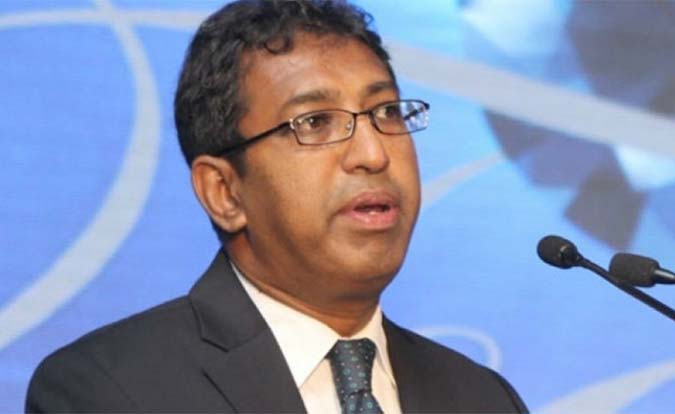
In a scathing indictment of Sri Lanka’s governance landscape, the International Monetary Fund (IMF) had handed down a damning verdict, Samagi Jana Balawegaya (SJB) MP Harsha de Silva told Parliament on Wednesday.
Discussing the contents of the IMF’s Governance Diagnostic Assessment report, he said that the IMF’s verdict was clear: corruption had eaten into all state institutions from top to bottom.
MP de Silva said that one of the main reasons for the delay in disbursing the second tranche of IMF funds was the shortfall in government revenue as well as the sluggish progress in foreign debt restructuring. However, perhaps the most significant roadblock to financial recovery lies in the government’s persistent failure to address its deep-rooted problem of corruption, he said.
The SJB MP urged the Sri Lankan government to swallow the bitter medicine it so desperately needs. With a history of approaching the IMF for assistance a staggering 16 times without lasting success, Sri Lanka now had to adopt comprehensive reforms. The government must seize the opportunity to eliminate corruption and pave the way for a meaningful change, Dr. de Silva said.
The IMF has laid out a rigorous 16-point plan, a blueprint for Sri Lanka’s revival. Those directives, while formidable in scope, were essential steps towards transparency and accountability, the MP said.
They include establishing an Advisory Committee by November 2023 to nominate commissioners for the Commission to Investigate Allegations of Bribery or Corruption (CIABOC).
Dr. de Silva said: “This committee will ensure that the nominations for key anti-corruption positions are not influenced by political interests, which is a critical step in tackling corruption.”
Another IMF recommendation is publishing asset declarations for senior officials by July 2024, an act that brings much-needed transparency, with only 12 out of 225 MPs having disclosed their assets.
“This move will shed light on potential conflicts of interest among top government officials, promoting accountability and integrity,” said Dr. de Silva.
The following are among the IMF recommendations: Enacting Crime legislation by April 2024 to align with international standards, combating money laundering and illicit financial activities, amending the National Audit Act to hold officials accountable for the use of public resources, finalising and implementing regulations for beneficial ownership information and creating a public registry by April 2024, publishing reports on increasing competitive tendered procurement contracts, targeting agencies with low levels of competition, requiring the publication of all public procurement contracts above LK 1 billion and other critical financial information on a designated website, implementing the State-Owned Enterprise Reform Policy to ensure ethical management, abolishing or suspending the Strategic Development Projects Office Act until a transparent process for evaluating proposals is established, and enacting a Public Procurement Law by December 2024, addressing the alarming procurement and corruption issues.
Harsha de Silva said: “It is quite evident the failure in procurement and corruption with the mess that’s going on in the Ministry of Health with emergency procurement but yet no action was taken. If one may recall what happened at COPF not too long ago, when a tax holiday was given to one company for 17 years, I asked only one question: What is the benefit or revenue generated to the government? But they were unable to answer that; they removed me as the Chair of the COPF. Now, the IMF has made it mandatory to reveal the cost of such tax holidays.”
MP de Silva said Sri Lankan citizens were struggling to make ends meet while corruption remained unchecked. Professionals were fleeing the country; public trust in the government was eroding and that the IMF’s intervention was not a burden but a blessing.
“The ball is now in the court of Ranil Wickremesinghe and his SLPP government. Opposition to these measures is not an option, as they represent the only viable path forward. The IMF’s directives are a lifeline, an opportunity for Sri Lanka to cleanse its system, regain trust, and pave the way for a brighter future,” Dr. de Silva said.










News
Establishment of an Institutional Framework to Inagurate Upper Hydro Catchment Areas Management Authority

Policy approval of the Cabinet of Ministers was granted at their meeting held on 08.06.2026 to establish the Upper Hydro Catchment Areas Management Authority for identification and
execution of a formal and long – lasting remedy to secure the central hills including the upper hydro catchment areas enabling them to sustain amidst extreme weather conditions
due to natural calamities and human activities as well as to be used for the sustainable development of the country.
Accordingly, a concept paper has been prepared including
institutional structure, activities, powers, active subject area as well as administrative and coordination mechanism for the proposed authority by an expert technical committee appointed by the Secretary to the President.
Based on the said concept paper, the Cabinet of Ministers granted approval to the resolution furnished by the President to instruct the Legal Draftsman to prepare a draft bill including legal provisions required for the establishment of Upper Hydro Catchment Areas Management Authority.
News
Introduction of Flora and Fauna (Regulation of actions of the Indigenous Community within the nominated areas) Regulations
With the objective of securing the traditional livelihood and the eco system of the indigenous community, it has been recognized the necessity of introducing a formal regulation methodology to secure their engagement in livelihood activities by being more sensitive to the existing laws.
Thereby, the Fauna and Flora (regularizing) regulations under the Fauna and Flora Protection Ordinance (Authority 469) have been prepared so that nominated activities within the prescribed area to a member of the indigenous community
who has been registered for securing the rights acquired from law or custom or usage or traditional stance to execute an act within a certain state land that is fundamental to the survival of the indigenous community permission can be granted
Accordingly, the Cabinet of Ministers granted approval to the resolution furnished by the Minister of Environment to publish the said regulations in the government gazette notification and thereby submit to the Parliament for its concurrence.
Latest News
M. M. D. J. Senarathne, appointed Director General of the Department of National Botanical Gardens
The Cabinet of Ministers approved the resolution furnished by the Minister of Environment to appoint M. M. D. J. Senarathne, who is the senior most officer in Grade I of Sri Lanka Scientific Service se

Establishment of an Institutional Framework to Inagurate Upper Hydro Catchment Areas Management Authority
Introduction of Flora and Fauna (Regulation of actions of the Indigenous Community within the nominated areas) Regulations
M. M. D. J. Senarathne, appointed Director General of the Department of National Botanical Gardens

Harmanpreet Kaur steps down as India captain

Turkiye, Pakistan agree Saudi Arabia military deployment under Mecca pact

Rumesh Tharanga among nominees announced for World Athlete of the Year 2026

‘Dates have the highest sugar content to fight Coronavirus’

Sunday Island 27 December – Headlines

#SundayIsland 17th December – Headlines

Sunday Island – 28th March

Sunday Island Headlines – 21 March

Sunday Island – 21st February – Headlines
-

 Latest News7 days ago
Gold winner Tharanga gets brand-new Honda Vezel from SLAAJ
-

 News6 days ago
US-assisted ‘Ice’ detection: NPC to examine IGP’s move to transfer drug-busting team
-

 Features7 days ago
Why Sri Lanka needs an Inclusive Civic Nationalism – urgently
-

 Editorial5 days ago
Colombo Port drug bust: The plot thickens
-

 News7 days ago
Civil society activist accuses govt. of favouring Ven. Gnanasara
-
 Midweek Review7 days ago
Dappula’s Easter Sunday ‘grand conspiracy’ claim demolished
-

 Editorial7 days ago
When crime bosses rise above law and shrines
-
Editorial6 days ago
Drug busting, transfers and trust deficit