
News
IMF deal clears path for $700M boost to Lanka’s recovery


Sri Lanka and the International Monetary Fund (IMF) have reached staff-level agreement on economic policies to conclude the combined Fifth and Sixth Reviews of Sri Lanka’s reform program supported by the IMF’s Extended Fund Facility.
Once the review is approved by the IMF Executive Board, Sri Lanka will have access to about US$700 million in financing, the IMF said yesterday in a statement.
Full text of the IMF statement: An International Monetary Fund (IMF) mission team led by Evan Papageorgiou visited Sri Lanka from March 26 to April 9, 2026, to discuss recent macroeconomic developments and progress in implementing economic and financial policies under the Extended Fund Facility (EFF) arrangement. At the end of the mission, Mr. Papageorgiou issued the following statement:
“IMF staff and the Sri Lankan authorities have reached staff-level agreement on the combined Fifth and Sixth Reviews under the 4-year Extended Fund Facility (EFF) arrangement. The arrangement was approved by the IMF Executive Board for a total amount of SDR 2.3 billion (about US$3 billion) on March 20, 2023.
“The staff-level agreement is subject to IMF Executive Board approval, contingent on: (i) the restoration of cost-recovery electricity and fuel pricing while protecting the vulnerable and (ii) the completion of the financing assurances review, to confirm multilateral partners’ financing contributions and assess adequate progress with debt restructuring.
“Upon completion of the Executive Board review, Sri Lanka would have access to SDR 508 million (about US$700 million), bringing the total IMF financial support disbursed under this arrangement to SDR 1,778 million (about US$2.4 billion).
“Sri Lanka’s ambitious reform agenda continues to deliver commendable outcomes. The economy grew by 5 percent y/y in 2025. Inflation has returned to positive territory and rebounded to 2.2 percent y/y in March, and gross official reserves reached US$7 billion in end-March 2026. Fiscal performance in 2025 was strong, primarily supported by taxes on motor vehicle imports. Debt restructuring is nearing completion, with the successful completion of Sri Lankan Airlines’ debt exchange and further progress in finalising remaining bilateral agreements.
“Sri Lanka is significantly exposed to the Middle East conflict, which has heightened energy prices, disrupted a key air hub for tourists, and affected Sri Lankans working in the region. Authorities have ameliorated disruptions to economic activity by securing sufficient fuel supplies for households and industries. At the same time, the country needs to address the infrastructure and spending needs caused by Cyclone Ditwah. Heightened downside risks to the economy from disaster risks,persistent trade policy uncertainty and the conflict in the Middle East emphasize the urgency to accelerate the reform momentum to safeguard macroeconomic stability, enhance Sri Lanka’s resilience to shocks, and maintain the economy on a path toward recovery and inclusive growth.
“On this front, it is important to continue building fiscal space through strong revenue measures and prudent spending execution. This requires sustained efforts to improve tax compliance, broaden the tax base, address revenue leakages, and enhance public financial management. It is instrumental to restore and maintain cost-recovery fuel and electricity pricing while assisting the most vulnerable. Continued vigilance is needed to minimize fiscal risks and safeguard fiscal discipline.
“As Sri Lanka starts building back better, projects should be prioritized judiciously and spending executed transparently and in compliance with the Public Financial Management Act. Any fiscal support in response to exogenous shocks should be well-targeted, carefully costed, and timebound. Protecting the poor and vulnerable, who are disproportionately affected, should remain a priority, and this calls for the steadfast strengthening of social safety nets by improving their targeting, adequacy, coverage, and shock-responsiveness.
“It is important for monetary policy to remain data-dependent and agile to safeguard price stability in the face of shocks. Central bank independence should continue to be upheld, including by continuing to prohibit monetary financing of the budget. Rebuilding foreign reserves while allowing for exchange rate flexibility is a necessity amid global uncertainty. Resolving non-performing loans, promoting sound credit growth, and addressing vulnerabilities in some small licensed finance companies will help safeguard financial stability.
“The publication of the 2026 government action plan on governance reforms is welcome; effective implementation will help advance the anti-corruption agenda and support growth. It will be key to uphold the independence of Sri Lanka’s anti-corruption body (CIABOC), support the reliability of the beneficial ownership registry, and strengthen fiscal governance through sound legislation on public-private partnerships, state-owned enterprises, public procurement, and public asset management. Unlocking strong and durable growth for all Sri Lankans requires staying the course on reforms, including by sustaining trade liberalization efforts, accelerating digitalization initiatives, streamlining business regulations, and modernizing labor legislation to reduce rigidities.
“The IMF team held meetings with President and Finance Minister Anura Kumara Dissanayake, Labor Minister and Deputy Minister of Finance and Planning Prof. Anil Jayantha Fernando, Deputy Minister of Economic Development Nishantha Jayaweera, Central Bank of Sri Lanka Governor Dr. P. Nandalal Weerasinghe, Secretary to the Treasury Dr. Harshana Suriyapperuma, Senior Economic Advisor to the President Duminda Hulangamuwa, Chief Advisor to the President on Digital Economy Dr. Hans Wijayasuriya, Governor of Southern Province Prof. Susiripala Manawadu, and other senior government and CBSL officials. The IMF team also met with parliamentarians, representatives from the private sector, civil society organizations, and development partners.
“We would like to thank the authorities for the excellent collaboration during the mission, including during our visit to Galle in the Southern Province. We reaffirm our commitment to support Sri Lanka at this uncertain time.”




Latest News
Sun directly overhead Madampe, Thorayaya, Thotagamuwa, Rattota and Kalavanchikudy about 12.09 noon today (03)


The sun is going to be directly over the latitudes of Sri Lanka from 28th of August to 07th of September due to its apparent southward relative motion.
The nearest places of Sri Lanka over which the sun is overhead today (03) are Madampe, Thorayaya, Thotagamuwa, Rattota and
Kalavanchikudy about 12.09 noon.

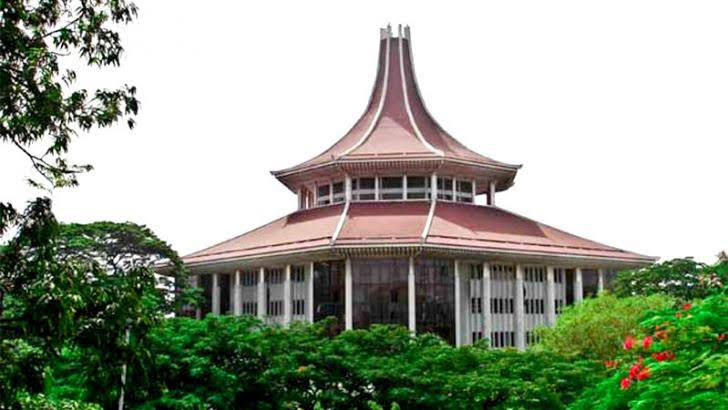
Attorney-at-Law Sugandhika Fernando, on behalf of the Vinivida Foundation, petitioned the Supreme Court yesterday (02), seeking a full bench, excluding Chief Justice Preethi Padman Surasena, to hear the petitions challenging the 22nd Amendment Bill. She also requested that the hearing be suspended immediately until the matter was fully heard and determined.
Among the respondents are Chief Justice Surasena, the first respondent, and Attorney General Parinda Ranasinghe. Justices Yasantha Kodagoda, Shiran Gooneratne, Achala Wengappuli and Priyantha Fernando have also been named as respondents.
The petitioner has sought to have quashed the decision of the first respondent to appoint a five-member bench, which she alleged was made in violation of the norms of public law. She also sought a bench comprising all Supreme Court judges, excluding those cited as respondents, to hear the special determination applications on the 22nd Amendment.
The petitioner further contended that Chief Justice Surasena, who is due to retire on December 1, 2026, would be the main beneficiary of the 22nd Amendment.
The hearing of the petitions continued for a second day yesterday (02) before a five-member Supreme Court bench comprising Chief Justice Preethi Padman Surasena and Justices Achala Wengappuli, Arjuna Obeyesekere, Sampath Abeykoon and Gihan Kulatunga.
The hearing, which commenced on Tuesday morning, continued for nearly 12 hours, until 10:30 p.m.
Solicitor General Viraj Dayaratne, appearing for the Attorney General, submitted yesterday that the Government had presented the 22nd Amendment Bill to the Constitution and the Judicature (Amendment) Bill with the objective of expanding and streamlining the country’s judicial system.
After the Solicitor General’s submissions concluded, counsel representing the petitioners requested an opportunity to respond to the Solicitor General and the intervening petitioners. However, the Chief Justice declined to allow the petitioners’ counsel to make further oral submissions, concluded the determination hearing and directed them to file written submissions instead.
Sri Lanka has formally requested assistance from the North Atlantic Treaty Organisation (NATO).
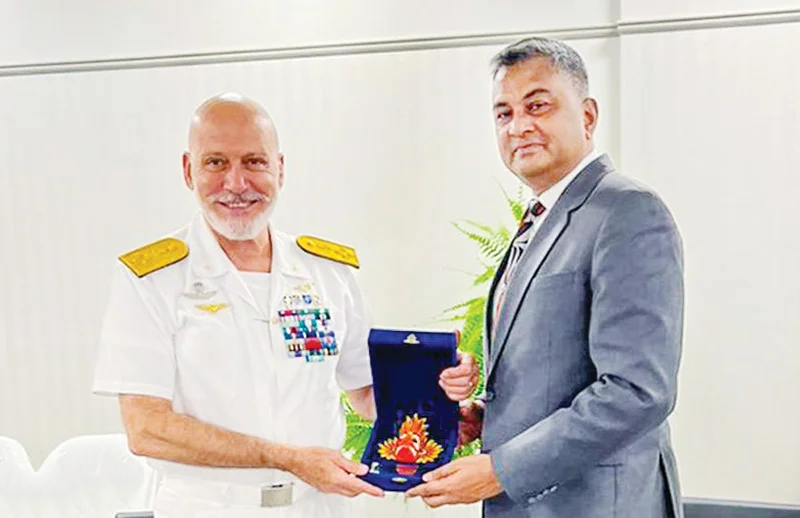
According to a press release issued by the Defence Ministry, Defence Secretary Air Vice Marshal (retd) Sampath Thuyakontha has discussed defence cooperation with NATO, with discussions focusing on military modernisation, advanced technology, cyber capabilities and disaster response.
This was during talks between AVM Thuyakontha and NATO Military Committee Chairman Admiral Giuseppe Cavo Dragone on the sidelines of the Chiefs of Defence Conference in Victoria, Canada.
During the meeting, Secretary Thuyacontha outlined Sri Lanka’s defence requirements and areas of interest, including the modernisation of military hardware, acquisition of advanced technologies, and strengthening cyber capabilities and surveillance platforms, the Ministry of Defence said in a statement.
The two sides also discussed opportunities for greater technical cooperation, including the exchange of military personnel, expanded education and training programmes, and increased sharing of expertise and information.
Humanitarian Assistance and Disaster Relief (HADR) was also identified as an area for potential cooperation. The discussions included the exchange of expertise and the effective use of unmanned aerial vehicles (UAVs) in disaster response and related operations.
Defence Secretary Thuyacontha invited NATO to further strengthen its engagement with Sri Lanka, emphasising sustained dialogue, information sharing and practical cooperation in areas of mutual interest.

India to host inaugural Women’s Champions Trophy in February

Sun directly overhead Madampe, Thorayaya, Thotagamuwa, Rattota and Kalavanchikudy about 12.09 noon today (03)

Afternoon thundershowers in the Northern, North-central, Eastern and Uva provinces in next few days, starting from today (03).

22A: SC urged to suspend hearing, appoint full bench

Govt. seeks NATO assistance

Recent ‘Ice’ detection at the Colombo Port made on US intelligence – Embassy

‘Dates have the highest sugar content to fight Coronavirus’

Sunday Island 27 December – Headlines

#SundayIsland 17th December – Headlines

Sunday Island – 28th March

Sunday Island Headlines – 21 March

Sunday Island – 21st February – Headlines
-

 News7 days ago
Eight politicians in drug kingpin probe
-

 Features5 days ago
“Wrap Me Up in My Blazer”— A Gentlemanly Bradby Reminiscence
-

 Business7 days ago
Sri Lanka opens up: A new season of direct connectivity
-

 Features4 days ago
When Sri Lankan stories find their own voice
-

 Features7 days ago
Redefining ageing in Sri Lanka
-

 Editorial7 days ago
The toxic legacy of two lakes
-
 Business7 days ago
Jaffna Teaching Hospital secures lifeline water supply via ADB-funded Thalaiyadi sea water desalination plant
-
 Features5 days ago
JVP/NPP government as seen from outside by Lionel Bopage now domiciled in Australia