
Foreign News
Huge ancient city found in the Amazon

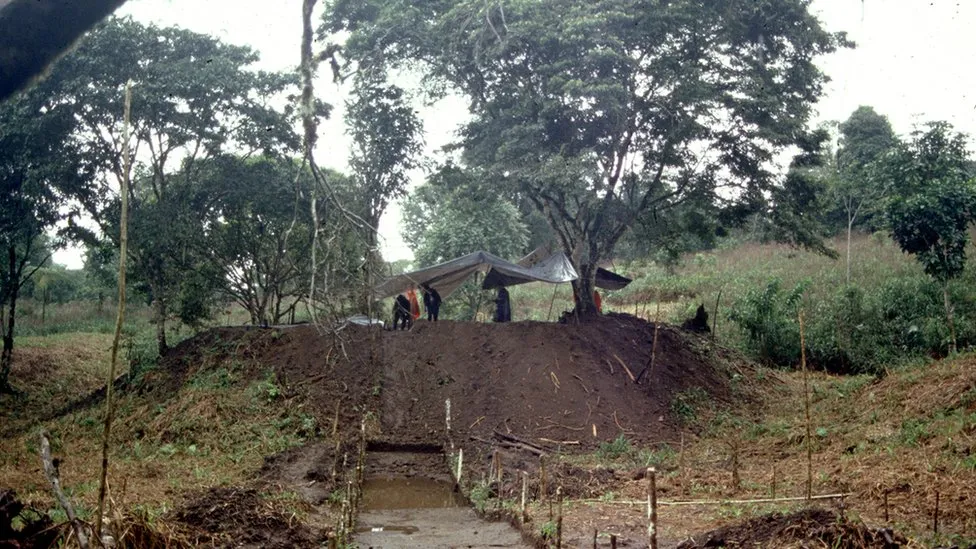
A huge ancient city has been found in the Amazon, hidden for thousands of years by lush vegetation.
The discovery changes what we know about the history of people living in the Amazon. The houses and plazas in the Upano area in eastern Ecuador were connected by an astounding network of roads and canals.
The area lies in the shadow of a volcano that created rich local soils but also may have led to the destruction of the society.
While we knew about cities in the highlands of South America, like Machu Picchu in Peru, it was believed that people only lived nomadically or in tiny settlements in the Amazon. “This is older than any other site we know in the Amazon. We have a Eurocentric view of civilisation, but this shows we have to change our idea about what is culture and civilisation,” says Prof Stephen Rostain, director of investigation at the National Centre for Scientific Research in France, who led the research.
“It changes the way we see Amazonian cultures. Most people picture small groups, probably naked, living in huts and clearing land – this shows ancient people lived in complicated urban societies,” says co-author Antoine Dorison. The city was built around 2,500 years ago, and people lived there for up to 1,000 years, according to archaeologists.
It is difficult to accurately estimate how many people lived there at any one time, but scientists say it is certainly in the 10,000s if not 100,000s.
The archaeologists combined ground excavations with a survey of a 300 sq km (116 sq mile) area using laser sensors flown on a plane that could identify remains of the city beneath the dense plants and trees.
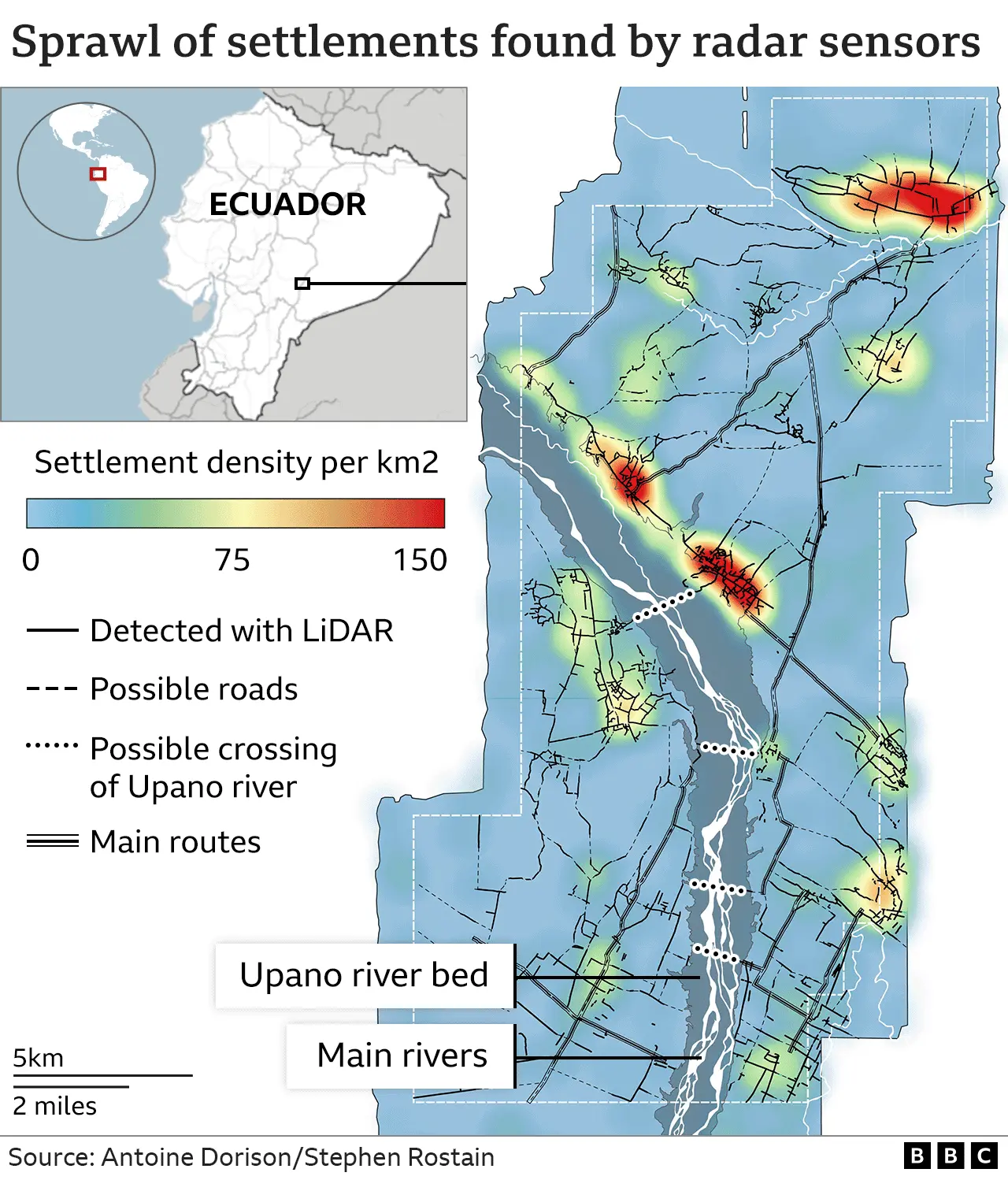
This LiDAR technology found 6,000 rectangular platforms measuring about 20m (66 ft) by 10m (33 ft) and 2-3m high. They were arranged in groups of three to six units around a plaza with a central platform.
The scientists believe many were homes, but some were for ceremonial purposes. One complex, at Kilamope, included a 140m (459 ft) by 40m (131 ft) platform.
They were built by cutting into hills and creating a platform of earth on top.
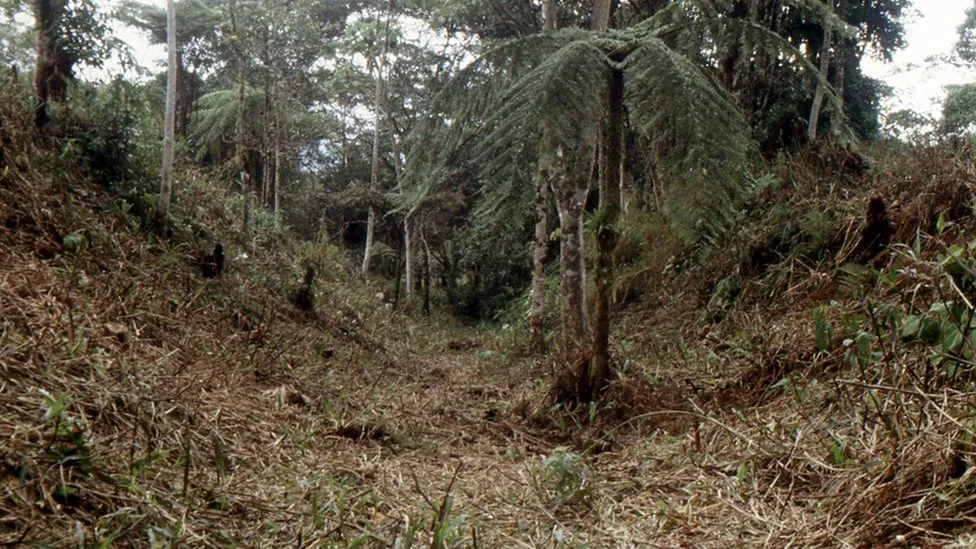
A network of straight roads and paths connected many of the platforms, including one that extended 25km (16 miles).
Dr Dorison said these roads were the most striking part of the research. “The road network is very sophisticated. It extends over a vast distance, everything is connected. And there are right angles, which is very impressive,” he says, explaining that it is much harder to build a straight road than one that fits in with the landscape.
He believes some had a “very powerful meaning”, perhaps linked to a ceremony or belief.
The scientists also identified causeways with ditches on either side which they believe were canals that helped manage the abundant water in the region.
There were signs of threats to the cities – some ditches blocked entrances to the settlements, and may be evidence of threats from nearby people.
Researchers first found evidence of a city in the 1970s, but this is the first time a comprehensive survey has been completed, after 25 years of research.
It reveals a large, complex society that appears to be even bigger than the well-known Mayan societies in Mexico and Central America. “Imagine that you discovered another civilisation like the Maya, but with completely different architecture, land use, ceramics,” says José Iriarte, a professor of archaeology at University of Exeter, who was not involved in this research.
Some of the findings are “unique” for South America, he explains, pointing to the octagonal and rectangular platforms arranged together. The societies were clearly well-organised and interconnected, he says, highlighting the long sunken roads between settlements.
Not a huge amount is known about the people who lived there and what their societies were like. Pits and hearths were found in the platforms, as well as jars, stones to grind plants and burnt seeds.
The Kilamope and Upano people living there probably mostly focussed on agriculture. People ate maize and sweet potato, and probably drank “chicha”, a type of sweet beer.
Prof Rostain says he was warned against this research at the start of his career because scientists believed no ancient groups had lived in the Amazon. “But I’m very stubborn, so I did it anyway. Now I must admit I am quite happy to have made such a big discovery,” he says.
The next step for the researchers is understanding what lies in an adjoining 300 sq km (116 sq mile) area not yet surveyed.
(BBC)



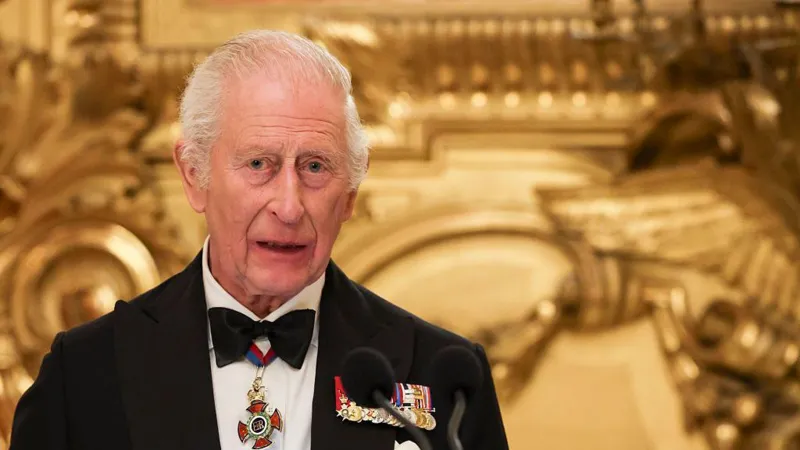
The United States declared independence from the British crown 250 years ago – but this week, it could not get enough of it.
From the minute King Charles and Queen Camilla stepped onto the White House South Lawn, US networks dumped their standard diet of political warfare and breaking news for something rare: pure pageantry.
In a country that seems to agree on almost nothing, the British royals managed something close to a clean sweep – drawing warm receptions from both sides of a political spectrum where neutral ground is rare.
The visit came at a fraught time in US-British relations, with the White House and Downing Street at odds over the war in Iran, straining a relationship both governments insist remains unshakeable.
The reviews following the King’s appearances at the White House, in Congress and in New York were warm across the political divide.
A commentator in the conservative Washington Examiner wrote that the UK needed more than conventional diplomacy – and that King Charles delivered.
“His Majesty’s Government under scandal-plagued Labour Prime Minister Keir Starmer needed the monarchy to do what only the king could do,” the editorial said.
The King’s comments in Congress and at the White House’s lavish banquet on Tuesday – mixing humour with history and a call for unity – also were widely praised.
Some saw them as a subtle rebuke of President Trump.
“Sometimes it takes an outside perspective to see what’s really going on,” an opinion writer wrote in the Arizona Republic. “It’s striking to have a king remind us of what democracy is all about.”
For months, Donald Trump – a committed Anglophile and avid fan of the Royals – repeatedly told reporters that he was excited for the King’s visit. That excitement was on full display throughout the King’s visit to Washington, in which the world saw a warmer version of a president not shy to make his feelings known.
Uncharacteristically, Trump largely stuck to a script, making no mention of policy disagreements with Downing Street and lauding the long ties between the US and Britain.
“Before we ever proclaimed our independence, Americans carried within us the rare gifts of moral courage,” he said. “And it came from a small but mighty kingdom from across the sea.”
On Capitol Hill, where the King became only the second British monarch to address a joint session of Congress, Charles received a standing ovation – though some in the room heard something more pointed in his words.
“As opposed to Keir Starmer, who is looked at…as a leftist weenie, we saw in King Charles – someone who is proud of Britain,” Washington Republican Representative Michael Baumgartner told the BBC. “I think that was good.”
The warm welcome on Capitol Hill was not lost on President Trump.
“He got the Democrats to stand, I’ve never been able to do that. I couldn’t believe it,” Trump said at the banquet a few hours later. “They liked him more than they’ve ever liked any Republican or Democrat, actually.”
Elizabeth Holmes, an expert on the Royal Family and author, told the BBC that many members of the American public are broadly interested in the family, even as that interest has ebbed and flowed over the years.
“I think the fascination is rooted in a combination of novelty and distance,” she said. “It’s not something we have here.”
The King and Queen traveled to New York City on Wednesday where they made a few stops, including one at the 9/11 Memorial. Jacob Knutton, who manages a British-themed restaurant and store in New York, says business has been “a lot busier” around the King’s visit.
“There’s definitely been a lot of people talking about it,” said Knutton, who grew up in London and Australia. “Americans are talking about it and trying to get our opinions on it.”
But not every American is as enthused.
While recent statistics are hard to come by, a YouGov poll conducted in 2024 found that only 42% of Americans held a favourable view of King Charles.
In comparison, his mother, Queen Elizabeth, garnered a 67% approval rating. Over three quarters of those polled – 76% – held a favourable view of the King’s ex-wife, Princess Diana, who died in 1997.
According to Holmes, in the eyes of some Americans, Charles had a “far less compelling” narrative than his mother, who became Queen at a young age.
US feelings about King Charles are further complicated by his complex relationship with son Prince Harry, Holmes added.
Data from Google Trends suggests that US-based searches for the King during the visit spiked by 20 to 25 times over normal, and by 50 times during his speech to Congress.
Others who haven’t followed the royal visit closely, still are excited. “I think it’s cool that he’s here,” said Harry James, 21, who works in a fish and chips shop in New York. “It’s cool we can keep these traditions going.”
Holmes believes the visit already has improved US perceptions of the King. “Trump is such a polarising figure, and I think people were very eager to see their interactions,” she said.
His dinner comments, in particular, have “really taken off”.
“I think people are delighted to see British wit on display,” she added.
Near the White House on Tuesday, some of those who turned out to watch the King’s motorcade pass said they felt hopeful.
“It’s natural for human beings to disagree,” said Maribeth Massie, of Maine, who watched the King’s motorcade near the White House on Monday. “Hopefully they’ll lay some common ground together and move forward.”
Knutton also hopes the visit helps – in part for his business’ sake. His store imports nearly all of its goods from the UK, and feels the pinch of Trump’s tariffs, he said.
“I’m sure it will have an effect,” he said. “But I’m not expecting magical wand-waving.”
[BBC]

A plane has crashed on the outskirts of South Sudan’s capital, Juba, killing all 13 passengers and the pilot.
The country’s civil aviation authority said on Monday that initial reports indicate the aircraft may have crashed due to bad weather conditions that caused low visibility.
The Cessna 208 Caravan, which was operated by CityLink Aviation, lost communication while flying from Yei to Juba International Airport, it added in a statement.
Among those onboard were two Kenyan nationals, while the rest were South Sudanese.
A team has been sent to the site to gather information and support emergency services, the aviation authority said.
Videos of the crash site, located some 20km (12 miles) outside of Juba, showed the remains of the aircraft in flames.

Gunmen have raided an orphanage and kidnapped at least 23 children, authorities in Nigeria report.
The gang took the children late on Sunday from an unregistered facility called the Dahallukitab Group of Schools, located in an “isolated area” in Kogi State’s capital, Lokoja, Kogi Information Commissioner Kingsley Fanwo said in a statement on Monday.
Mass kidnappings have become a common way for gangs and armed groups to make quick money in Africa’s most populous country, especially in rural areas with little government presence.
Fanwo said the “prompt and coordinated response” of security agencies led to the rescue of 15 children but eight are still missing.
The wife of the proprietor of the orphanage was also abducted, according to the statement.
“Intensive operations are ongoing to secure the safe return of the remaining eight victims and apprehend the perpetrators,” the official said.
[Aljazeera]

Explanation sought from AKD on ‘Russian energy supplies’

US reiterates its commitment to enhancing relations with Northern Sri Lanka

Rooftop Solar at Crossroads as Sri Lanka Shifts to Distributed Energy Future

Indonesia-SL agreement on Visa Exemption for Diplomatic and Official passports soon

Six-year prison term for Rs 15,000 bribe

The pointer who showed the moon: Professor Y. Karunadasa (1934–2026)

‘Dates have the highest sugar content to fight Coronavirus’

Sunday Island 27 December – Headlines

#SundayIsland 17th December – Headlines

Sunday Island – 28th March

Sunday Island Headlines – 21 March

Sunday Island – 21st February – Headlines
-
 News6 days ago
Whistleblowers ask Treasury Chief to resign over theft of USD 2.5 mn
-

 News6 days ago
No cyber hack: Fintech expert exposes shocking legacy flaws that led to $2.5 million theft
-

 News3 days ago
BIA drug bust: 25 monks including three masterminds arrested
-

 Business4 days ago
Nestlé Lanka Announces Change in Leadership
-

 News3 days ago
Banks alert customers to phishing attacks
-

 News1 day ago
Treasury chief’s citizenship details sought from Australia
-

 News4 days ago
Hackers steal $3.2 Mn from Finance Ministry
-

 Business6 days ago
Dialog Enterprise partners Star Garments: Pioneering 5G innovation in Sri Lanka’s apparel industry