
News
HRW demands moratorium on PTA


While Palestine is systematically reduced to dust with its hapless people using American bombs, the Human Rights Watch (HRW) in New York has demanded Sri Lanka to impose a full moratorium on the Prevention of Terrorism Act that helped to crush the LTTE terror network here and work to repeal it. The demand was made by HRW yesterday (18) in a statement that accused Sri Lanka of politically motivated detentions, surveillance and threats.
The following is the text of statement: “Sri Lankan authorities continue to use the notorious Prevention of Terrorism Act (PTA) to target perceived opponents and minority communities without credible evidence to support the allegations despite repeated pledges to end the practice, Human Rights Watch said today. While some victims have suffered years of arbitrary detention and torture, others are persecuted even after the case against them is dropped.
The law, widely known as the PTA, has provisions allowing for extended administrative detention, limited judicial oversight, and inadequate protections against torture. In a 2022 speech to the United Nations Human Rights Council, the then foreign minister pledged a moratorium on its use, but under President Ranil Wickremesinghe, detentions under the PTA have continued. Such is the chilling effect of the law that in September 2023 the International Monetary Fund found that “broad application of counter-terrorism rules” restricts civil society scrutiny of official corruption.
“Sri Lanka’s extensive domestic security apparatus routinely uses baseless accusations of terrorism to target innocent people, silencing critics and stigmatizing minority communities,” said Meenakshi Ganguly, deputy Asia director at Human Rights Watch. “Previous international pressure has led to modest improvements, and Sri Lanka’s foreign partners should renew their call to repeal of the Prevention of Terrorism Act.”
Following government promises to repeal the PTA since 2015, draft legislation to replace it, known as the Anti-Terrorism Bill (ATB), was published in March 2023. While the new bill contains some improvements, it includes provisions that could facilitate abuse.
Since it first came into force in 1979, the PTA has primarily been used to target members of the Tamil minority during a separatist war led by the Liberation Tigers of Tamil Eelam (LTTE), which was defeated in 2009. While many long-term PTA prisoners have been released in recent years, in part due to international pressure by the European Union and others, at least eight who were first detained between 1996 and 2011 remain in prison.
In November 2023, police in the eastern town of Batticaloa arrested nine people under the law for commemorating the war dead. They were released on bail a month later, but one of those detained told Human Rights Watch that he remains under intense surveillance and his family has lost its income because of the case.
A former LTTE child soldier said that she was arrested under the PTA in 2019 and held for three years. Because she was a minor at the end of the war, she had been placed in the care of the Red Cross instead of being sent to government “rehabilitation” with adult combatants. She believes that the ongoing surveillance and harassment is because security agencies regard her as “unrehabilitated.” She said: “I am afraid. I don’t know who is watching me.”
Human Rights Watch also interviewed a man who was among several arrested under the PTA in 2019 after receiving financial support from the Tamil diaspora, which the Sri Lankan authorities sometimes construe as “terrorist financing.” “We don’t know why we were arrested,” he said. “The PTA allows them to keep us without any reason.” He faced abuse in prison, including threats at gunpoint by a government minister. Following his release three years later, he still faces intense police harassment. “My freedom of movement is restricted. People are afraid to give me a job.”
Following the 2019 Easter Sunday attacks, when Islamist suicide bombers targeted churches and hotels, killing over 260 people, the authorities detained at least 125 Muslims in the eastern town of Kattankudy under the PTA. Little or no evidence was produced against most of them, a lawyer familiar with the situation told Human Rights Watch. Most spent between one and three years in detention and were then either discharged altogether or released on bail. Twenty-four are facing trial in a proceeding that is expected to continue for years.
Former detainees from this group told Human Rights Watch that they had experienced torture and ill treatment in custody, and that the police had made extortion demands on their families for their release.
Following their release due to lack of evidence, they said they had received frequent threatening home visits or phone calls and are under surveillance by security agencies. They have been unable to access banking services, obtain passports, or operate their businesses. “They can’t go abroad for work,” said an activist who works with the community. “They can’t live freely in peace with their families.” In many cases, children have been forced by hardship to drop out of school.
A man who had been held under the PTA for about a year, then discharged, said that while there is a tradition of charitable giving in the Muslim community, security officials warn others not to help affected families, and people are afraid to do so for fear that they may be accused of supporting terrorism.
Numerous human rights defenders in the Northern and Eastern provinces said that members of police and intelligence agencies routinely warn that they will be accused of terrorism because of their work. “If we talk of Tamil rights, they use the PTA to silence us, saying we are working to reorganise the LTTE,” said an activist in the Northern Province.
Another rights activist, who works on several PTA cases, said in May 2024, “Just yesterday a [police] CID person called me and said, ‘Where are you? What are you doing?’ They oppress us because they want to stop the information we can provide from reaching the international community.”
Like the PTA, the draft law to replace it appears designed to give the president, police, and military broad powers to detain people without evidence, to make vaguely defined forms of speech a criminal offense, and to arbitrarily ban gatherings and organisations without meaningful judicial oversight.
It would expand the definition of terrorism to include crimes such as property damage, and restrict rights to freedom of assembly and speech. It would give the police and military sweeping powers to stop, question, search, and arrest anyone without a warrant, and allow the attorney general to “impose” “voluntary” custodial “rehabilitation” on a person who has not been convicted of any crime.
Recommendations
The government should impose a full moratorium on the PTA and work to repeal it.
The authorities should draft rights respecting counterterrorism legislation in consultation with experts and civil society.
Foreign partners including the United States, EU, and UK should insist that Sri Lanka abides by commitments to repeal the law.
The UN Human Rights Council should renew the mandates of resolution 46/1 for reporting and investigating human rights violations in Sri Lanka.
“For many Sri Lankans, baseless allegations of terrorism and sweeping powers provided by the PTA remain the most frightening and unaccountable method of repression,” Ganguly said. “Foreign governments seeking to support improved governance and respect for human rights should prioritize action to end the Sri Lankan government’s misuse of counterterrorism powers.”

News
Karu argues against scrapping MPs’ pension as many less fortunate members entered Parliament after ’56
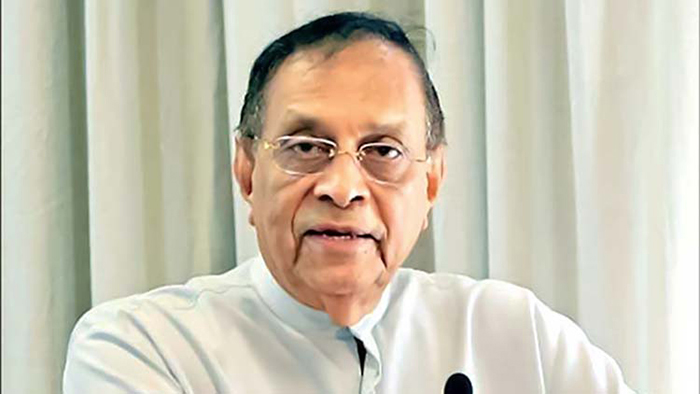
Former Speaker of Parliament Karu Jayasuriya has written to President Anura Kumara Dissanayake expressing concerns over the proposed abolition of MPs’ pensions.The letter was sent in his capacity as Patron of the Former Parliamentarians’ Caucus.
In his letter, Jayasuriya noted that at the time of Sri Lanka’s independence, political participation was largely limited to an educated, affluent land-owning elite. However, he said a significant social transformation took place after 1956, enabling ordinary citizens to enter politics.
He warned that under current conditions, removing parliamentary pensions would effectively confine politics to the wealthy, business interests, individuals engaged in illicit income-generating activities, and well-funded political parties. Such a move, he said, would discourage honest social workers and individuals of modest means from entering public life.
Jayasuriya also pointed out that while a small number of former MPs, including himself, use their pensions for social and charitable purposes, the majority rely on the pension as a primary source of income.
He urged the President to give due consideration to the matter and take appropriate action, particularly as the government prepares to draft a new constitution.The Bill seeking to abolish pensions for Members of Parliament was presented to Parliament on 07 January by Minister of Justice and National Integration Dr. Harshana Nanayakkara.
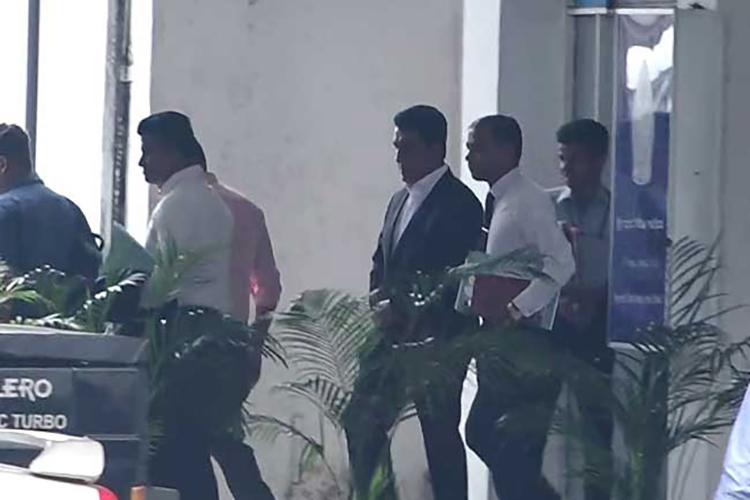
Five suspects, including former Minister Johnston Fernando and his two sons, who were arrested by the Financial Crimes Investigation Division (FCID), were further remanded until 30 January by the Wattala Magistrate’s Court yesterday.
The former Minister’s , sons Johan Fernando and Jerome Kenneth Fernando, and two others, were arrested in connection with the alleged misuse of a Sathosa vehicle during Fernando’s tenure as Minister.
Investigations are currently underway into the alleged misuse of state property, including a lorry belonging to Lanka Sathosa, which reportedly caused a significant financial loss to the state.
In connection with the same incident, Indika Ratnamalala, who served as the Transport Manager of Sathosa during
Fernando’s tenure as Minister of Co-operatives and Internal Trade, was arrested on 04 January.
After being produced before the Wattala Magistrate’s Court, he was ordered to be remanded in custody until 09 January.The former Sathosa Transport Manager was remanded on charges of falsifying documents.
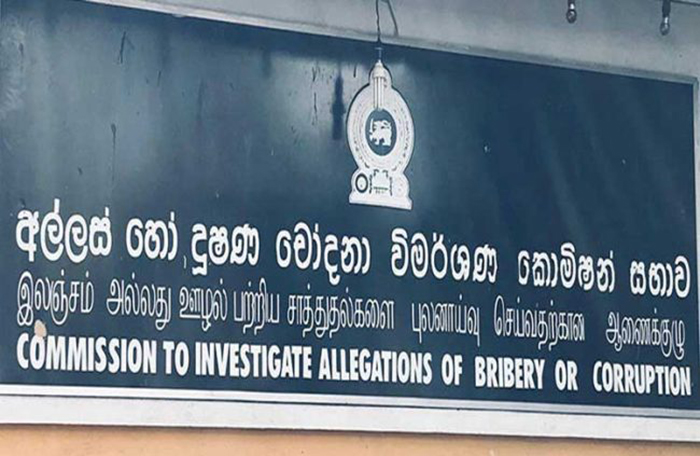
The Commission to Investigate Allegations of Bribery or Corruption (CIABOC) yesterday informed the Colombo Magistrate’s Court that indictments had been filed in the Colombo High Court against former Minister and NDF Badulla District MP Chamara Sampath Dassanayake over a corruption allegation.
The Bribery Commission notified the court when the case, in this regard, was taken up yesterday before Colombo Chief Magistrate Asanga S. Bodaragama.
At the hearing, the CIABOC notified the court that indictments had been presented before the Colombo High Court against the accused.
Accordingly, concluding the proceedings before the Magistrate’s Court, the Magistrate ordered MP Dassanayake to appear before the High Court once a notice was issued.

Showers above 50 mm are likely at some places in the Northern, North-central, and North-western provinces and in Trincomalee district

Karu argues against scrapping MPs’ pension as many less fortunate members entered Parliament after ’56

Johnston, two sons and two others further remanded over alleged misuse of vehicle

CIABOC indicts MP Chamara Sampath in HC on bribery allegation

High-level discussion held to enhance Sri Lanka Agricultural Productivity with Chinese assistance

Prasanna’s travel ban lifted temporarily under enhanced bail and restrictions on guarantors

‘Dates have the highest sugar content to fight Coronavirus’

Sunday Island 27 December – Headlines

#SundayIsland 17th December – Headlines

Sunday Island – 28th March

Sunday Island Headlines – 21 March

Sunday Island – 21st February – Headlines
-

 Editorial6 days ago
Illusory rule of law
-
 Features6 days ago
Daydreams on a winter’s day
-
 Features6 days ago
Surprise move of both the Minister and myself from Agriculture to Education
-

 Features5 days ago
Extended mind thesis:A Buddhist perspective
-
 Features6 days ago
The Story of Furniture in Sri Lanka
-

 Opinion4 days ago
American rulers’ hatred for Venezuela and its leaders
-
 Features6 days ago
Writing a Sunday Column for the Island in the Sun
-
 Business2 days ago
CORALL Conservation Trust Fund – a historic first for SL