
News
HRCSL: No prisoners were used in 09 May attacks on protesters

AG, CJ asked to take action against lawyer for triggering violence
The Human Rights Commission of Sri Lanka (HRCSL) has declared that a false allegation by President of the Committee for Protecting Rights of Prisoners (CPRP) Attorney-at-Law Senaka Perera that some prisoners were used to attack anti-government protesters outside Temple Trees and at Galle Face on 09 May triggered violence in many parts of the country.
The HRCSL also faulted Sudesh Nadimal Silva also of the same organisation for propagating unsubstantiated allegations.
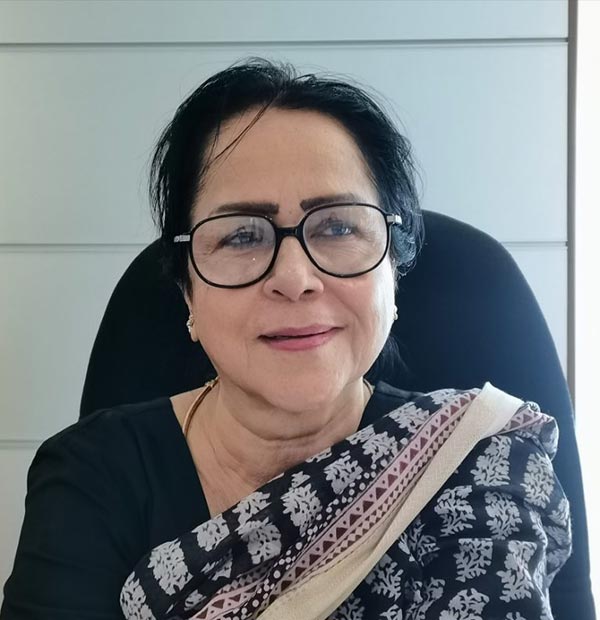
Justice (ret.) Rohini Marasinghe, in her capacity as the Chairperson of the HRCSL, said that both Senaka Perera and Sudesh Nandimal had failed to substantiate their allegations made at the Galle Face protest site on 10 May.
The HRCSL, in a statement issued yesterday (29) quoted Justice Marasinghe as having said: “False propaganda as well as misinformation of the alleged use of Prisoners to have attacked the innocent protesters is both a diabolical lie and a deceitful action.”
The HRCSL has recommended that Attorney General Sanjaya Rajaratnam conduct a further investigations into allegations made by Senaka Perera and take necessary action
The HRCSL has requested Chief Justice Jayantha Jayasuriya, PC, to take note of the detrimental statements made by Attorney-at-Law Senaka Perera and take due action.
The HRCSL consists of Ven. Kalupahana Piyarathana Thera, Dr. M.H. Nimal Karunasiri, Dr. Vijitha Nanayakkara and Ms. Anusuya Shanmuganathan.
The HRCSL dealt with the issue in a statement titled ‘The HRCSL condemns the false media broadcast made by the President of the Committee for Protecting Rights of Prisoners’.
The HRCSL issued the statement after the conclusion of a special investigation by an appointed committee of investigators (Col).
CoI consisted of Sanjeewa Weerawickrama, Attorney -at- Law, Miss. lmasha Senadeera, Attorney-at-Law and Dr. Dilshani Bogollagama.
Referring to allegation that prisoners had been used to attack protesters at protest sites at Galle Face and Temple Trees, the HRCSL said that the CoI determined that no prisoners had been used in perpetrating any attack on the peaceful protesters.
The HRCSL asserted that the unsubstantiated allegations caused an irreversible damage to the country.
The HRCSL said that a group of prisoners had been seriously assaulted and subjected to mental and physical torture by an unidentified group on 09 May.
The HRCSL stated: “The unprecedented ruthless nature of the attack on prisoners and officials resulted in injuries and hospitalization of many inmates.” Since the incidents, eight prisoners hadn’t been accounted for so far, it has said.
The prisoners had been made available to the private sector enterprises in terms of an agreement endorsed by the Cabinet of Ministers in Oct 2021. On the day of the incidents, a group of prisoners had been taken to a designated work place and were on their way back when gangs intercepted them.
“Attorney at Law Mr. Senaka Perera, the convener of the conference identified himself as a Human Rights Activist. The COI provided the CPRP president Mr. Senaka Perera with the opportunity to justify his statements that caused an outrage in both Sri Lanka and the World at large. For the purpose of submission of any evidence, in either oral statements or picture documentation in support of his statements, Mr. Perera was extended a justifiable time period. However, he expressly affirmed before the Committee that at the time of the statement or even thereafter he did not have any tangible evidence in favor of his expressed views in regard to the alleged incident. Mr. Sudesh Nadimal Silva was also summoned to give evidence before the COl. The Committee explaining the paramount importance of the maintenance of professional ethics provided Mr. Sudesh Nadimal Silva with the opportunity to provide a justifiable explanation for his expressed allegations. However, he was unable to provide any acceptable evidence in support of his statements.
The COI observed that the press conference which was chaired by M. Senaka Perera had dispensed totally false statements without any sustantive evidence.
“Following the above-mentioned facts, the COI has identified the grave consequences of the negligent attitude of making unfounded statements. Inciting agitation in the general public against state departments and personnel has inadvertently led to disruptions to the law and order of the Country.
“The COI further observed that these inaccurate declarations conveyed by the above speakers directly contributed to the series of violent activities and right violations, reported island wide. The combined result of the atrocities that occurred within a mere 48 hours resulted in the loss of 12 human lives with several hundred injured casualties. In addition, intentional damage and arson to both public and private properties surmount to the loss of billions of rupees.
“After a thorough and diligent inquiry, the COI has arrived at the following conclusions. The highly irresponsible misconduct by the Attorney-of-Law Senaka Perera, with his speculative allegations with no substantiated evidence, resulted in disastrous consequences.
“Hence, it is of paramount importance that members of professional bodies need to be guided by the code of conduct or the professional ethics as set out by the respective professional bodies for the due conduct of the members. These conditions of misconduct from individuals of representation and influence should be held accountable by the respective professional bodies.
It is the view of the COI that national media institutions must consciously adhere to responsible reporting and promote journalism with integrity, especially during this volatile period of both political and economic instability. This tantamount to avoidance of direct reporting of incidence without due assessment of this veracity and credibility. The Committee further advocates promotion of investigative journalist practices with the objective of strengthening the democratic fabric of the Country.”





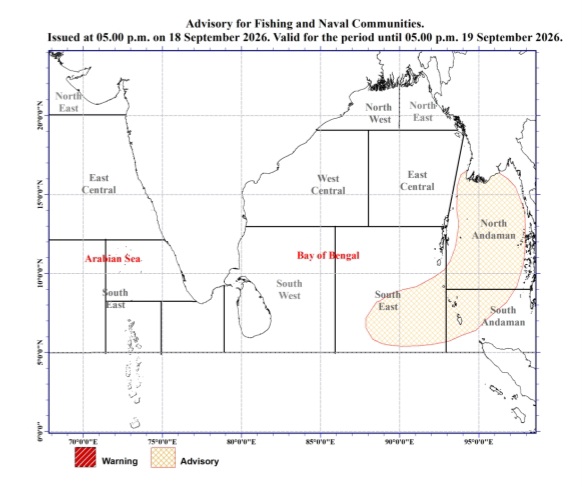
Advisory for strong winds and rough seas for Multi-day boats in the Bay of Bengal deep sea areas
Issued by the Natural Hazards Early Warning Centre
Issued at 05.00 p.m. 18 September 2026, valid for the next 24 hours.
PLEASE BE AWARE!
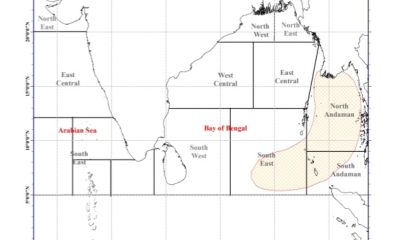
The atmospheric disturbance to the North of the Andaman Islands in the Bay of Bengal, is likely to develop into a low pressure area within the next 24 hours.
Due to its influence, wind speed over the Bay of Bengal sea areas will increase during the next few days starting from
tomorrow (19th).
The wind speed in the sea areas marked under the “Advisory” category on the map below will increase to 55-65 kmph at times and those sea areas will be rough or very rough at times.
Navel and fishing communities engaging the activities over this sea area are advised to be vigilant and be attentive to the future forecasts and bulletins issued by the department of Meteorology in this regards.


Text and Pic by Priyan de Silva
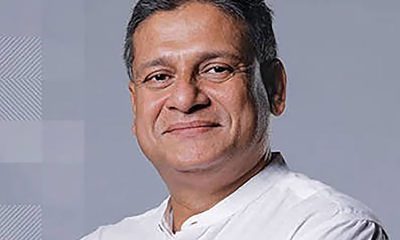
Director General of the Commission to Investigate Allegations of Bribery and Corruption (CIABOC) Ranga Dissanayake has questioned whether some promises contained in the National People’s Power (NPP) manifesto, A Thriving Nation – A Beautiful Life, could be fulfilled even if the government wanted to implement them.
Dissanayake raised the issue during a discussion following the release of the third biannual report on manifesto monitoring by the March 12 Movement, at the BMICH, on Wednesday.
He questioned whether the report had taken into account legal and institutional constraints affecting the implementation of certain pledges.
Citing the proposal to establish Anti-Corruption Investigation Offices in each district, Dissanayake said such offices could be established only with the agreement of CIABOC and that amendments to the Anti-Corruption Act would be necessary.
He also referred to the pledge to abolish the Executive Presidency, noting that successive governments had made similar commitments since 1994. He questioned whether there had been adequate consideration of where the powers vested in the Executive President would be transferred if the system were abolished.
On the proposal to establish a Public Prosecutor, Dissanayake questioned whether the Government intended to maintain the office alongside the Attorney General, who currently performs prosecution-related functions.
Executive Director of the Institute for Democratic Reforms and Electoral Studies (IRES) Manjula Gajanayake said Dissanayake’s remarks should be regarded as his personal views and not as Government policy.
Monitoring and Evaluation Consultants M. Thilakarajah and D.D. Mataharaarachchi presented the third-phase findings, covering January to June 2026.
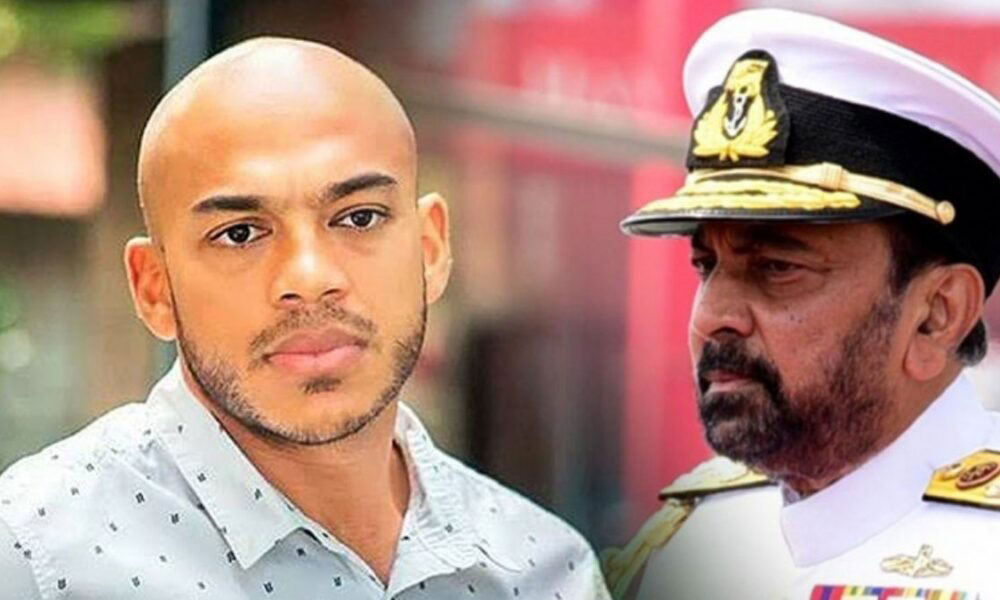
The corruption case filed by the Commission to Investigate Allegations of Bribery or Corruption (CIABOC) against former Navy Commander, Admiral of the Fleet Wasantha Karannagoda, and Yoshitha Rajapaksa was set for a pre-trial conference by the Colombo High Court.
The case was taken up before the Colombo High Court on Thursday (17), when the accused, who are currently out on bail, appeared before the court. After considering the submissions made, the court ordered that the case be called for a pre-trial conference.
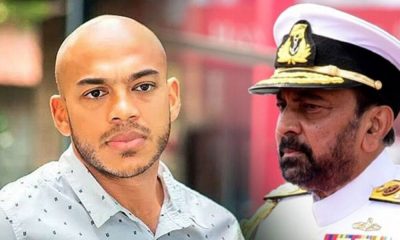
The CIABOC had filed the case against the accused, alleging that a corruption offence was committed by sending Yoshitha Rajapaksa, son of former President Mahinda Rajapaksa, for training at the Royal Naval College in the United Kingdom despite him not having the required qualifications.

Advisory for strong winds and rough seas for Multi-day boats in the Bay of Bengal

Showers in the Western, Sabaragamuwa and North-western provinces and in Galle, Matara, Kandy and Nuwara-Eliya Districts

Some NPP manifesto promises may be difficult to fulfil – CIABOC DG

Yoshitha and ex-Navy chief Karannagoda’s case fixed for PTC

Court orders probe into Wimal’s rally speech

Court to rule on Dilith’s writ petition on September 30

‘Dates have the highest sugar content to fight Coronavirus’

Sunday Island 27 December – Headlines

#SundayIsland 17th December – Headlines

Sunday Island – 28th March

Sunday Island Headlines – 21 March

Sunday Island – 21st February – Headlines
-

 News6 days ago
Gnanasara Thero absconding after SC ruling
-

 Opinion5 days ago
From Galkissa (Mount Lavinia) to Tambuttegama
-

 Business6 days ago
HNB Finance strengthens Board with four independent directors
-

 News2 days ago
US embassy won’t comment on IGP’s probe into joint drug raid
-
 Sports6 days ago
Culture within cricket team worrying authorities
-

 Features5 days ago
Sri Lanka’s university crisis: Brain drain and union action demand urgent reform
-

 Features4 days ago
The emptying university: why are academics leaving?
-

 News6 days ago
House to debate 22A, Judicature Bill next week