
Business
How the University of Peradeniya has weathered the politico-economic storms of the decades

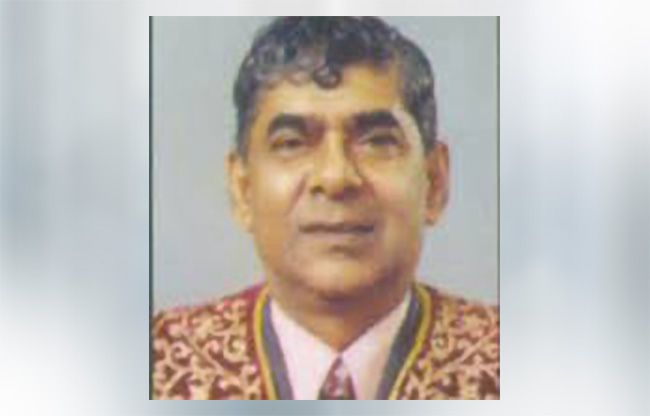
Extracts from the speech delivered by one of Sri Lanka’s most eminent historians, Emeritus Professor W.I. Siriweera, on being conferred the Degree of the Doctor of Letters by the University of Peradeniya at its convocation of August 22nd, 2024.
Peradeniya University began in 1952 when sections of the old University College in Colombo including the Faculties of Law, Arts, Oriental Studies, Agriculture and Veterinary Science were shifted there with around 1200 students. They were accommodated in five Halls of Residence: Jayatilake, Arunachalam, Marrs, James Peiris and Hilda Obeysekara. Halls of Residence have proliferated subsequently and according to the UGC statistics the internal student population at Peradeniya in 2022 was 15108. Student profile has also changed substantially. The sex ratio of the Arts Faculty in 1960 was 56.5 per cent males and 43.5 per cent females. This has changed over the years and in 2008/2009 the approximate percentage of females has increased to 79 per cent and by 2022 to 81 per cent. The percentage of girls in Agriculture, Dental Sciences, Veterinary Science and Allied Health Sciences is also relatively high.
In student politics, the traditional left was powerfully represented in the campus until late 1960’s. The Fourth International Trotskyites dominated the scene while there were quite a few Moscow wing or Peking wing communists. They agitated against and highlighted global events. For example, in June 1960, the untimely demise of the African leader Patrice Lumumba was sufficient reason for the anti-imperialist, anti bourgeois, socialist to the core intellectuals in training, to march to Kandy in a massive procession to let the people of Kandy know of the great injustices perpetrated by the imperialists on the people of Africa.
It was a long procession carrying placards and banners with strong anti-imperialist slogans. We were crying out slogans asking the Imperialists to go home. But we did not know who these Imperialists were or where they were. Those who did not know the slogans cried out whatever that came to their mind: even the titles of popular Indian films at the time.
By 1968/69 all other Marxist or leftist groups were overtaken by the Janatha Vimukthi Peramuna and also later by its offshoot: the Peratugami Samajavadi Pakshaya. These two groups have dominated student politics up to now. Unlike the earlier left-wing politicians, they have focused attention on local problems within a Marxist framework. Agitations against student suppression, against limited financial allocations, against efforts to privatize education have been their main concerns.
Food culture in Halls of Residence has also changed considerably since the beginning of the university. Professor Halpe, one of the first undergraduates has stated that “life was luxurious”. According to him food served in the Halls of Residence was better than home cooked ones.
Campus meals in 1950’s and 1960’s were of a high standard. For breakfast, toast and eggs or boiled chick peas were served. Those who did not like eggs, got a sizeable chunk of Kraft cheddar cheese. For lunch, rice and curry with beef or fish with several vegetables were served. Dinner was varied with fish or beef alternated with western food like vegetable soup, beef steaks with mashed potatoes and bread. Dessert followed both lunch and dinner.
However, as everything else, food situation too has gradually deteriorated over the years. By early 1970’s serving meals at the dining tables was discontinued and students had to queue up with their meal tickets to be served at the food counters. Even this practice was stopped in the early eighties and since then undergraduates, academic staff living in Halls of Residence and sub-wardens purchase meals from canteens or prepare their meals in rooms.
Drama activities were at their best in mid nineteen fifties and early nineteen sixties. Professor E.F.C. Ludowyk had played a key role in this development. He had persuaded the university authorities to hire Jubal, an East European, on contract basis to promote Western drama. About the same period, professor Sarathchandra was instrumental in establishing the Open Air Theatre with the surrounding terraces.
His dramas such as Maname and Sinhabahu mesmerized the crowds in that balmy atmosphere. In the case of reviving Tamil folk theatrical traditions, professor Vidyanandan played a key role.
After mid nineteen sixties, Golden era of Peradeniya university came to an end. Cultural as well as academic activities declined. But the university has been resilient in trying circumstances and has faced up to challenges and realities of the time. Amidst changes, the university has survived with some of its spirit intact.
It is up to the academic staff, students and administrators to retain its spirit irrespective of the vicissitudes of the campus environment and campus life.


SLT‑MOBITEL Mobile, in collaboration with Fintelex (Pvt) Ltd, has launched ‘Yaya Agro’, an exclusive all‑in‑one smart agriculture app designed to empower Sri Lankan farmers with the tools they need to grow smarter, safer, and more sustainably.
Yaya Agro represents a new era of digital farming in Sri Lanka combining technology, expert knowledge, and community empowerment to provide farmers the confidence to make smarter decisions, improve productivity, and build a sustainable future.
Developed with support from GIZ and Hatch and validated by leading academic and professional institutions including the University of Colombo, Institute for Agrotechnology and Rural Sciences, and the Sri Lanka Red Cross Society, Yaya Agro combines agricultural expertise, real‑time weather updates, first aid support, and AI‑powered assistance into a single, easy‑to‑use platform.
The launch of Yaya Agro positions SLT‑MOBITEL as an innovative, inclusive, and collaborative technology leader. Partnering technology and academic institutions, the company extends its role outside the sector into agriculture, empowering farmers with AI‑driven tools, multilingual access, and market connectivity. The initiative also strengthens SLT‑MOBITEL’s image as a champion of digital empowerment and sustainable development in Sri Lanka.
Functioning as a comprehensive digital companion, Yaya Agro is positioned as a digital farming companion, bringing precision agriculture, real‑time support, and market access to the fingertips of every Sri Lankan farmer.
Whether managing a small home garden or a large commercial farm, the app equips farmers with vital insights to improve crop yield, reduce risks, and connect directly with buyers through the integrated online marketplace.
Yaya Agro offers farmers daily crop information with expert tips on management, pest control, and best practices, all validated by the University of Colombo. It provides accurate, location‑based weather forecasts to help plan farming activities more effectively. The app also delivers life‑saving first aid tutorials and safety information verified by the Sri Lanka Red Cross Society, ensuring farmers are prepared for emergencies. With the AI chatbot assistant, farmers can access instant, personalized advice around the clock, with smart notifications delivering timely alerts and reminders tailored to crop cycles.
To make learning inclusive and accessible, Yaya Agro is available in Sinhala, Tamil, and English, offering interactive educational content such as videos, voice guides, and infographics. The app also integrates an online marketplace, developed in partnership with GIZ and Hatch, enabling farmers to connect directly with buyers and expand their reach. (SLT‑MOBITEL )
Business
Kegalle sets up District Planning Committee to rein-in development spending under IMF-backed reforms

As Sri Lanka presses ahead with IMF-backed fiscal and governance reforms, the Kegalle District Planning Committee (DPC) was formally established yesterday as a standing sub-committee of the District Coordinating Committee (DCC), in a move aimed at tightening control over public investment, reducing duplication and strengthening monitoring at district level.
The committee was constituted under Home Affairs Circular No. 03/2025 issued by the Ministry of Public Administration, Provincial Councils and Local Government, and was inaugurated at the Kegalle District Secretariat auditorium under the leadership of Environment Minister and DCC Co-Chair Dr. Dhammika Patabendi and District Secretary H.M.J.M. Herath.
Addressing officials, Dr. Patabendi said the new structure directly responds to long-standing weaknesses in public investment management that have come under scrutiny during Sri Lanka’s engagement with the International Monetary Fund.
“Under the IMF programme, we cannot afford fragmented planning, overlapping projects or weak monitoring. This committee is about discipline—ensuring that limited public funds are allocated according to national priorities and deliver measurable outcomes,” Dr. Patabendi said.
He stressed that district-level planning must now align with national fiscal consolidation goals, with a stronger emphasis on value-for-money, results-based implementation and accountability.
The District Planning Committee will function as a permanent sub-committee of the DCC, chaired by the district’s Cabinet Minister, with the District Secretary serving as Secretary and the Director of Planning as Convener. Members include officials from district-level price and food committees and heads of government institutions or their nominees.
A central mandate of the committee is the preparation of an Annual Integrated District Development Plan, covering all funding sources—including foreign-funded and donor-supported projects—for approval by the District Coordinating Committee.
Officials said this would help rationalise project selection, prioritise urgent district needs and prevent the duplication of monitoring and evaluation systems, a key concern raised in public investment reviews under the IMF programme.
Dr. Patabendi noted that better coordination of state, private and non-state sector investments at district level would also support macro-level reform objectives by improving spending efficiency without increasing fiscal pressure.
“Fiscal adjustment does not mean stopping development. It means doing development better—through planning, coordination and proper evaluation,” he said.
The committee will oversee the operational rollout of DCC-approved projects, provide advisory support to implementing agencies, and monitor whether projects are delivered within approved timeframes and achieve stated targets.
Progress reports will be submitted to the Presidential Secretariat, Ministry of Public Administration, Ministry of Finance and the District Coordinating Committee, strengthening upward accountability.
At yesterday’s meeting, officials reviewed development proposals linked to the 2026 Budget, with focus on education, health, agriculture, infrastructure, industry, environment and tourism—sectors seen as critical for growth and social protection during the reform period.
Implementation challenges faced by projects carried out in 2025 across several Divisional Secretariat areas were also examined, with discussions centred on resolving bottlenecks early in 2026 and aligning future investments with the district’s five-year development plan.
Senior provincial and district officials, Members of Parliament from Kegalle, local authority heads and divisional secretaries attended the meeting.
Dr. Patabendi said the establishment of the District Planning Committee marked an important step towards embedding IMF-aligned public financial management reforms at the grassroots level, ensuring that development spending contributes to economic recovery while safeguarding fiscal sustainability.
By Ifham Nizam
Business
Allianz commits €200,000 for post flood recovery in Sri Lanka, part of €600,000 regional relief for Southeast Asia

Allianz SE (Headquartered in Munich, Germany) announced that it is donating €200,000 to support disaster relief efforts in Sri Lanka. In addition, Allianz SE is also extending its support to Thailand and Indonesia, contributing a further €400,000 to aid disaster relief across Southeast Asia. Torrential rainfalls have triggered severe flooding and landslides across Southeast Asia, leaving more than 1,100 people dead in a week of devastation and complicating rescue efforts for hundreds still missing. Allianz is deeply rooted with local entities in the three countries and serving millions of customers across Asia. By supporting the affected people and communities, Allianz acts on its promise to secure the future of its stakeholders in times of need.
Allianz SE will allocate €100,000 to the Sri Lanka Red Cross Society (SLRCS) to deliver immediate assistance to those most affected and €100,000 will also be provided for post-disaster support, implemented in collaboration with Allianz Insurance Lanka Limited and selected local partners, focusing on disaster prevention and climate resilience, helping communities rebuild and strengthen their preparedness against future events.
Renate Wagner, Member of the Board of Management of Allianz SE, responsible for Asia Pacific, Mergers & Acquisitions, People and Cultures says:
“At Allianz, we stand with the people and communities affected by the severe floods and landslides across Southeast Asia. Through immediate relief and long-term resilience support, we aim to help families recover, strengthen local communities, and better prepare for future climate-related events.”
Anusha Thavarajah, Regional Chief Executive Officer, Allianz Asia Pacific adds:
“Across Indonesia, Thailand and Sri Lanka, many families and communities are facing significant loss and disruption. In moments like these, Allianz stands alongside them. Asia Pacific is home to our people, our customers, and the communities we serve, and we remain deeply committed to the region. Our immediate focus is on providing relief where it is most needed, while also supporting communities to rebuild and strengthen resilience, so those most affected can move forward with confidence.”
Allianz is fully dedicated to Asia and its people. It represents a strategic growth region for Allianz Group, which already has established strong market positions throughout Southeast Asia. Besides Indonesia, Thailand and Sri Lanka, Allianz is present with various business segments in China, India, Malaysia and Singapore, among others.

Let’s build a new Sri Lanka upholding harmony, mutual respect by protecting the religious and cultural rights of others- PM

Ambassador of the United States of America to Sri Lanka pays farewell call on PM

Bangladesh cricketers threaten boycott unless BCB director Nazmul Islam resigns

Mitchell upstages Rahul as New Zealand level series

Shafali Verma, Lizelle Lee hand Delhi Capitals first win in thriller

Fair weather will prevail except for evening showers in the Kaluthara, Galle, Matara and Rathnapura districts

‘Dates have the highest sugar content to fight Coronavirus’

Sunday Island 27 December – Headlines

#SundayIsland 17th December – Headlines

Sunday Island – 28th March

Sunday Island Headlines – 21 March

Sunday Island – 21st February – Headlines
-

 Business4 days ago
Dialog and UnionPay International Join Forces to Elevate Sri Lanka’s Digital Payment Landscape
-

 News4 days ago
Sajith: Ashoka Chakra replaces Dharmachakra in Buddhism textbook
-

 Features4 days ago
The Paradox of Trump Power: Contested Authoritarian at Home, Uncontested Bully Abroad
-

 Features4 days ago
Subject:Whatever happened to (my) three million dollars?
-

 News4 days ago
Level I landslide early warnings issued to the Districts of Badulla, Kandy, Matale and Nuwara-Eliya extended
-

 Business1 day ago
New policy framework for stock market deposits seen as a boon for companies
-

 Opinion6 days ago
The minstrel monk and Rafiki, the old mandrill in The Lion King – II
-

 News4 days ago
65 withdrawn cases re-filed by Govt, PM tells Parliament