
Sports
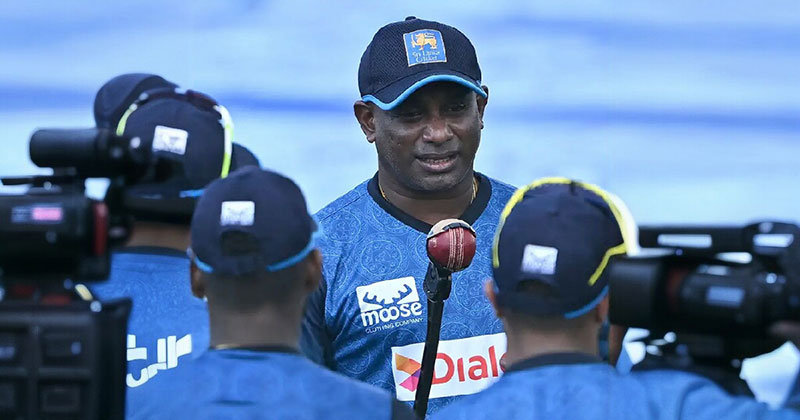
How Jayasuriya transformed Sri Lanka into a winning machine

Rex Clementine in Kandy
On a balmy Thursday night in Dambulla, a sell-out crowd witnessed Sri Lanka clinch a historic first-ever series win over the West Indies. Despite the Caribbean side’s reputation as a T20 powerhouse, ranked third in the world, they were outclassed by an eighth-ranked Sri Lankan team that stuck to the basics. No brute-force power hitting. Instead, they backed their strengths, smart running between the wickets, and reintroduced the disciplined cricket that seemed lost not long ago. Behind this revival stands one man—Sanath Jayasuriya.
In just three months, Jayasuriya has reshaped this team by drilling down on four key pillars: sharp fielding, quick running between the wickets, commitment, and fitness. Under his leadership, optional training has become a thing of the past, and the team is honing their skills with a clear focus on getting better every day.
Yet, like any team in transition, Sri Lanka is far from the finished product. There are areas that still need attention: power hitting, greater accuracy from the spinners, and an end to those sudden batting collapses. But the strides they’ve made suggest that in 12 months’ time, we may once again see the kind of dynamic, aggressive cricket that Sri Lanka is famous for.
One of Jayasuriya’s greatest successes has been unlocking the potential of Kusal Mendis. Talented but inconsistent, Mendis has long been a source of frustration—brimming with ability but frequently throwing his wicket away or finding trouble off the field. Much like how Pep Guardiola transformed Raheem Sterling into one of football’s most reliable forwards, Jayasuriya has quietly re-engineered Mendis’ mindset. He took Mendis aside and made it clear: follow the program or face the consequences. The turning point came when Mendis was dropped for the Lord’s Test in August, a wake-up call he desperately needed. Since then, the player who once seemed destined for a career of wasted potential has been a revelation.
Mendis has shown his class not just in one-off performances but in key moments. He played a pivotal role in Sri Lanka’s victory at The Oval, notched a crucial century against New Zealand in Galle, and delivered a match-winning knock in the series-deciding third T20 against the West Indies. From a player who seemed unreliable, like a tennis player double-faulting on match point, Mendis has evolved into a calm, strategic leader—offering advice to the captain on reviews, constantly talking to the bowlers, and mentoring younger players like Pathum Nissanka. It’s a transformation akin to Virat Kohli’s journey from a hot-headed rookie to a composed, world-class performer who takes responsibility for his team’s fortunes.
However, Jayasuriya’s revival hasn’t been without its challenges. Power hitting, for instance, remains a work in progress. Bhanuka Rajapaksa, a naturally gifted batsman, has been tasked with this role, but his fitness issues and slow movement in the field make him a liability. It’s a situation reminiscent of how Diego Maradona handled Ariel Ortega during his coaching stint—brilliant on his day, but inconsistent due to personal shortcomings. One suspects that Jayasuriya has laid down an ultimatum for Bhanuka: improve your fitness and focus, or risk being dropped. In such a results-driven environment, both Bhanuka and the trainers know that time is ticking.
What Jayasuriya’s tenure proves is that Sri Lanka doesn’t need a foreign coach to clean up the mess. A homegrown leader, one who understands the culture and the players, can do wonders. Much like how Bob Woolmer built the South African team around focusing on discipline, teamwork and fielding rather than big-name stars, Jayasuriya has taken a no-nonsense approach with this young side. He knows when to hand out praise and when to demand more, keeping everyone on a tight leash but ensuring they feel supported.
The results are already speaking for themselves. Sri Lanka ended a 27-year drought by beating India in a series, won a Test match in England after ten long years, claimed their first Test series victory over New Zealand in 15 years, and now a first-ever T20 series triumph over the West Indies. In the span of three months, this team has made significant progress across all three formats.
It’s clear that a hands-on coach like Jayasuriya can do wonders for a team still finding its feet. Like any great coach, he’s not just focused on short-term wins but on building a sustainable model for success. The path ahead may have its challenges, but Sri Lanka’s resurgence under Jayasuriya has already begun, and the future looks bright.





Sri Lanka won the toss and chose to bat first in the first T20I against Pakistan being played in Rawalpindi.
Sri Lanka XI: Kusal Mendis (capt & wk), Lahiru Udara (wk), Kamil Mishara, Kamindu Mendis, Sahan Arachchige, Dasun Shanaka, Dunith Wellalage, Maheesh Theekshana, Dushmantha Chameera, Eshan Malinga, Nuwan Thushara
Pakistan XI: Sahibzada Farhan (capt), Saim Ayub, Maaz Sadaqat, Fakhar Zaman, Hasan Nawaz, Khawaja Nafay (wk), Shadab Khan, Muhammed Imran, Razaullah, Naseem Shah, Abrar Ahmed
Latest News
Sutherland and Litchfield lead Australia to quick and convincing win in ODI series opener

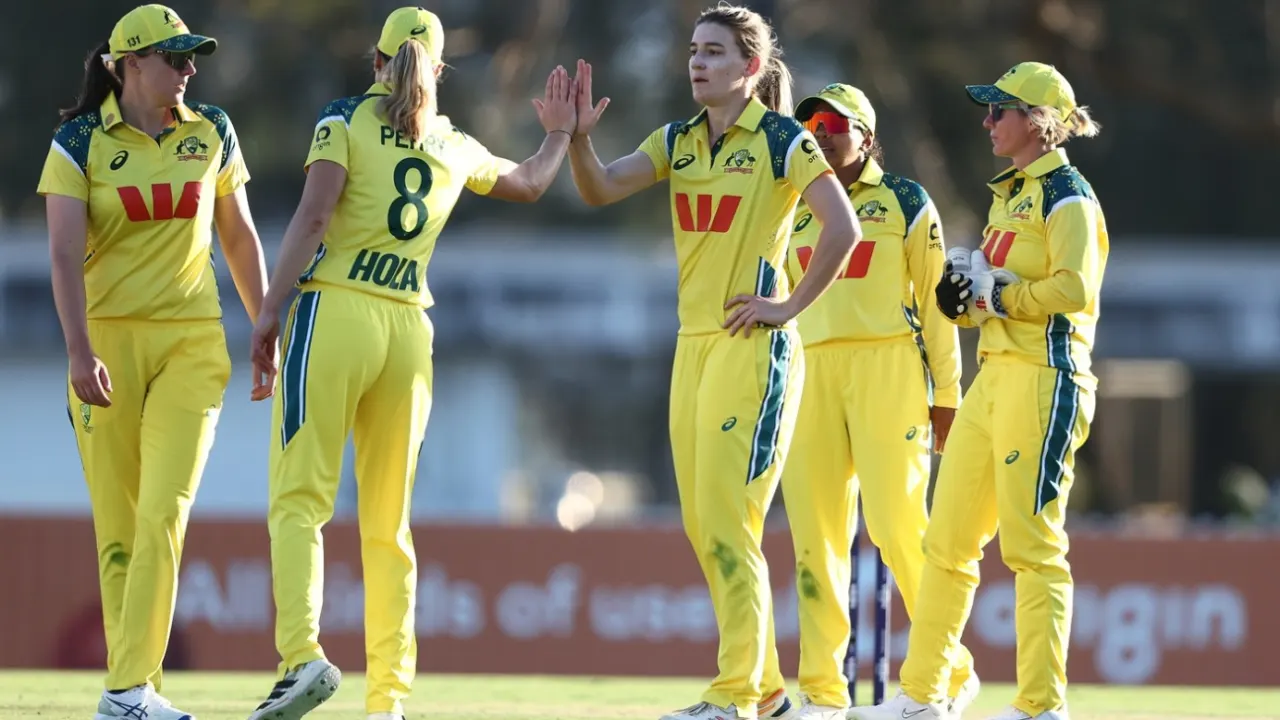
Bangladesh’s second visit to Australia and their first women’s ODI in the country began on a disappointing note as Australia ran out quick and convincing victors.
Annabel Sutherland showed why she is regarded as one of the most versatile fast-bowling allrounders in the world by taking 4 for 30. She kept the batters on their toes by varying the lengths and speeds as Bangladesh were bowled out for 166. Phoebe Litchfield’s swift 77 helped Australia canter home with 24.2 overs and seven wickets to spare to take a 1-0 lead in the three-match series.
The win meant Australia extended their unbeaten record in ODIs at the Allan Border Field in Brisbane to 22 games.
Bangladesh might have put up an even lower total if not for an intent-filled innings from Ritu Moni. Batting at No. 7, she hit two fours in her first four balls following a phase where Bangladesh scored only 35 in about 15 overs.
Asked to bat first, Bangladesh were stung first ball when Megan Schutt got one off a length to hoop in big to have Fargana Hoque caught at slip. In her next over, Schutt trapped the other opener Sarmin Sultana lbw to become only the third Australia woman to 150 ODI wickets.
When Sutherland’s bouncer cramped Sharmin Akhter for room, leaving her unable to get any control on the pull, Bangladesh were truly under the cosh, having lost three wickets inside the first powerplay.
That soon became 48 for 4, which prompted captain Nigar Sultana, perhaps Bangladesh’s best batter, to go into a shell. She hardly looked to score from that point and was happy to defend and merely prevent further wickets from falling.
The ploy was evident from the fact that Nigar didn’t put Sutherland under pressure when she bowled three successive no-balls in the 12th over. What’s more, unaware of the free hit on offer, she ducked under a short ball as well. Shorna Akter, too, curtailed her aggressive instincts to support her captain.
Bangladesh crawled at three runs per over through the middle phase before Tahlia McGrath had Nigar caught behind for 29 off 83 balls. Nigar perhaps half-referred to her own innings when, after the game, she said that Bangladesh “need to be cautious against the new ball and get the intent right”.
As soon as she fell, Moni and Shorna started to put back the pressure on Australia’s spinners. Moni fetched a couple of sweeps from outside off to hit them through midwicket. Shorna also used her feet more frequently.
Moni looked good to score her second half-century in ODIs but was hampered by cramps. That hindered her running, and eventually she was run-out for 45 off 63 balls. Sutherland was generous with her use of the back-of-the-hand slower ones from then on to keep the rest of the batters on a leash.
Australia were never going to be challenged in a paltry chase of 167, and Georgia Voll and Litchfield hit five fours in the first five overs of the chase to get them going.
That is when Bangladesh found another performer of note. Seventeen-year-old Habiba Islam, on ODI debut, bowled a sharp bouncer which got rid of Voll. Habiba, who made her T20I debut against India in 2024 as a 15-year-old, got the ball to nibble around at high pace. While her first spell was expensive, she returned in the middle overs to get Beth Mooney caught brilliantly at midwicket. She bowled the length ball outside leg and got it to move in late, and Mooney could only spoon it to Fargana, who ran in from the circle and completed a diving catch.
But between these two bits of celebration for Habiba and Bangladesh, Litchfield had almost killed the chase. She moved around the crease to hit Marufa Aklter for three successive fours in the seventh over of the chase, and then muscled Habiba over mid-on for the only six in the match.
She played her trademark reverse sweep off Nahida Akter and soon got to fifty off just 35 balls. Her second-wicket stand with Ellyse Perry was worth 89 off 67 balls with Perry contributing only 15 off 23. Until the time Litchfield stepped out and drove Rabeya Khan straight to cover, it looked as if she would complete a century even with so few runs to get.
Scores:
Australia Women 168 for 3 in 25.4 overs (Phoebe Litchfield 77, Ellyse Perry 26*, Annabel Sutherland 25*; Habiba Islam 2-36) beat Bangladesh Women 166 in 49.4 overs (Sharmin Akhter 24, Nigar Sultana 29, Shorna Akter 21, Ritu Moni 45; Megan Schutt 2-19, Ammabel Sutherland 4-30) by seven wickets
[Cricinfo]
by Rex Clementine
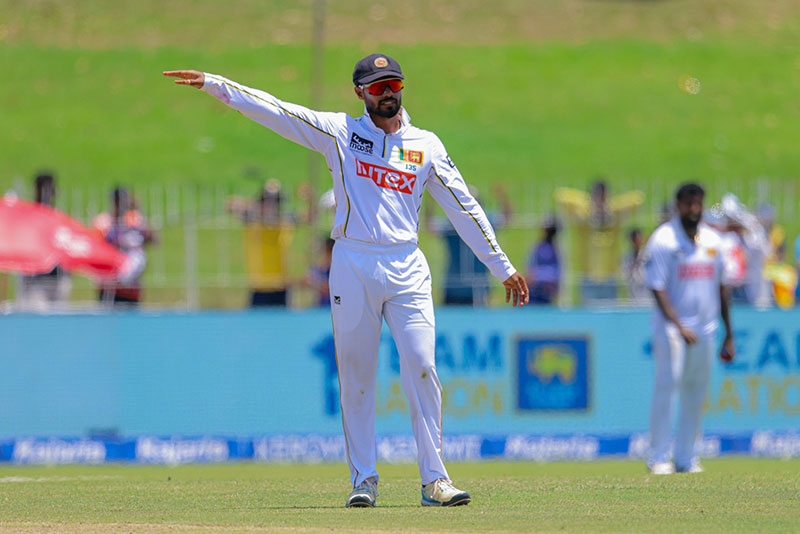
Sri Lanka’s Test captain Dhananjaya de Silva has done an Ian Botham. No, not by pulling off a miraculous victory against Australia at Headingley, but by resigning a minute before he was sacked.
The writing had been on the wall for DDS after he got his sums horribly wrong during the recent home Test series against India. His defensive approach from day one left Sri Lanka chasing the game rather than dictating terms and the hosts eventually surrendered the series.
There had also been growing criticism of DDS’s inability to lift the side when the chips were down. His laid back attitude, particularly the sight of him cracking jokes with team mates in the SSC dressing room balcony while Sri Lanka were following on, did not go down well with the cricket establishment.
Not that DDS was doing anything out of character. By nature, he is a relaxed, easy going individual who loves his video games and rarely seems to have a worry in the world. The mistake was made by those who handed such a character the Test captaincy and then expected him to turn into a fire breathing leader overnight.
DDS was so chilled out that even SLC’s photographers had reason to complain during the India Test series when the official team photograph was being taken.
Sri Lanka have been guilty of failing to groom leaders and in recent years the captaincy has too often fallen into someone’s lap by default rather than through careful planning. The result has been a revolving door of captains, with little thought given to succession.
DDS’s successor, Kusal Mendis, is no Mike Brearley or Ian Chappell when it comes to tactical nous, but to his credit, he has worked hard in recent years to shed his bad boy image and become a more responsible cricketer.
More than anything, Mendis has discovered consistency with the bat. Equally impressive in the eyes of the authorities has been his willingness to shoulder responsibility. He has never been one to duck a challenge, even when the workload has threatened to become overwhelming.
Currently, Mendis keeps wicket in both white ball formats while batting at the top of the order. With the additional burden of becoming Sri Lanka’s all format captain, he is set to be relieved of wicketkeeping duties in Test cricket.
The selectors are now on the lookout for a replacement ahead of the Pakistan assignment, although they are unlikely to turn to Niroshan Dickwella again. That particular chapter, it seems, has been closed.
Meanwhile, Chairman of Selectors Kapila Wijegunawardene has broken his silence over Wanindu Hasaranga’s omission, confirming that the star leg-spinner had indeed been dropped rather than sidelined through injury.
Wijegunawardene made little attempt to sugar coat the selectors’ disappointment with a player whose immense talent has not always translated into performances befitting his reputation.
“Hasaranga has not lived up to expectations, to be frank,” Wijegunawardene said.
“The player understands that too. We had expected a lot of him. His knowledge of the game is immense and he has much more to offer, and we are confident he will stage a comeback,” Wijegunawardene added.

Sri Lanka chose to bat first in Rawalpindi

Sutherland and Litchfield lead Australia to quick and convincing win in ODI series opener

USS Tulsa departs Colombo

Appointments for 1,540 Grama Niladhari Officers

Trump says US will not strike Iran before midterm elections

2026 Nobel Peace Prize awarded to Navi Pillay

‘Dates have the highest sugar content to fight Coronavirus’

Sunday Island 27 December – Headlines

#SundayIsland 17th December – Headlines

Sunday Island – 28th March

Sunday Island Headlines – 21 March

Sunday Island – 21st February – Headlines
-

 Features6 days ago
The first woman in the foreign service or Ceylon Overseas Service it was then called
-

 News5 days ago
Geneva takes up Sallay’s case and govt. ignores opportunity to answer accusations
-

 Editorial7 days ago
Fuelling discontent and protest
-

 Foreign News6 days ago
Ten injured after car crashes into rugby supporters in Australia
-

 News6 days ago
Nearly 20 Iranian tankers stranded off Lanka amid US sanctions
-

 Latest News6 days ago
Tharindu Rathnayake, bowlers secure Asian Games Bronze for Sri Lanka
-

 Features5 days ago
Sri Lanka Cricket Bill: Governance reform is not yet a cricket strategy
-

 Features4 days ago
Preventing grievances from becoming communal