
Business
HNB Group records Rs. 9.8 bn PAT in 1H 2023


Hatton National Bank PLC continued its steady performance in Q2 2023, posting a 1H 2023 PBT of Rs 13.6 Bn, while 1H 2023 PAT stood at Rs 8.6 Bn, growing 56% YoY. Meanwhile, the Group made a consolidated PBT and PAT of Rs 15.2 Bn and Rs 9.8 Bn respectively.
Comme-nting on the performance, Nihal Jayawardene, Chairman of Hatton National Bank PLC, stated that “This quarter underscored the Sri Lankan economy displaying signs of normalisation, with inflation moderating, interest rates gradually pulling down, and the Rupee appreciating. Moreover, the announcement of the much-awaited Domestic Debt Optimisation (DDO) plan and the resulting clarity, marked a significant step towards settling the qualms surrounding the debt restructuring programme and its potential impact on the banking sector.”
Although interest rates tapered off towards the latter part of Q2 2023, 1H 2023 rates still remained relatively higher when compared with the corresponding period in 2022, enabling the Bank to report a net interest income of Rs 59.3 Bn in 1H 2023, up 48% YoY. Additionally, net fee and commission income grew by 12% YoY to Rs 8.0 Bn, driven by increased activity in cards, remittances, trade and digital platforms.
On the back of improved foreign inflows and the consequent rising dollars in circulation, the Rupee appreciated by approx. 15% YoY in the first six months of 2023. Currency volatility caused the Bank to record a net exchange loss of Rs 3.8 Bn for 1H 2023, primarily stemming from revaluation losses of FCBU retained earnings.
Despite the challenges, the Bank continued to prioritise asset quality, with the net stage III loan ratio at 4.77% and stage III provision cover at 51.4% as at end June 2023. In terms of impairment provisions, the Bank recorded a cumulative impairment of Rs 28.3 Bn in 1H 2023 which included impairment on loans and advances as well as on investments in foreign currency denominated government securities.
The Bank’s 1H 2023 operating expenses increased by 19% YoY, to Rs 17.6 Bn driven largely by inflation. Nevertheless, the Bank maintained an efficient cost-to-income ratio of 27% for the first half of 2023.
Jonathan Alles, Managing Director and Chief Executive Officer of Hatton National Bank PLC stated that, “We are pleased to see the positive developments on the country’s macroeconomic front and HNB’s solid performance in the first six months of this year. We commend the government’s DDO plan – which insulated the banking sector from any reprofiling of Treasury Bills or Bonds. This in turn enables banks, inundated with mounting credit impairment and higher taxes, to use much needed capacity in supporting the revival of key sectors and the broader economy.”

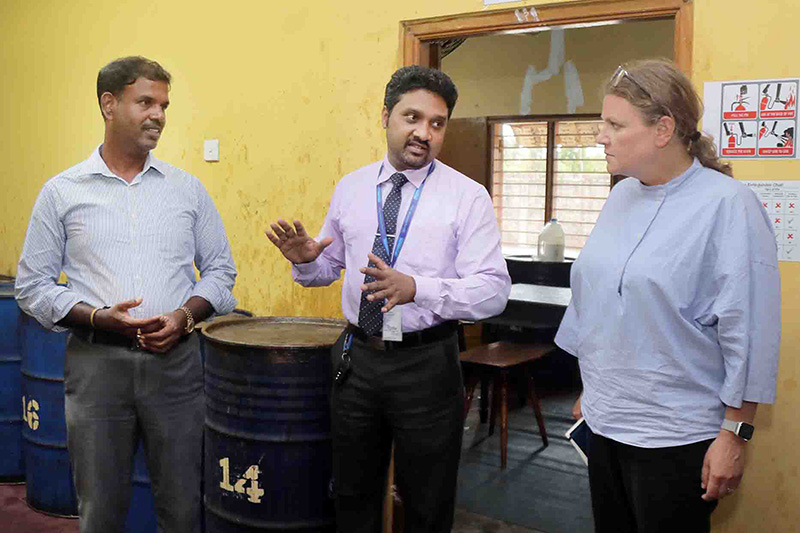
By Sanath Nanayakkare
Continuing its mission to drive inclusive economic recovery and empower Sri Lanka’s grassroots business sector, the Commercial Bank of Ceylon PLC has actively accelerated the disbursement of the Asian Development Bank’s (ADB) Enhancing Small and Medium-Sized Enterprises Finance Project line of credit.
As Sri Lanka’s premier private sector lender, Commercial Bank drives regional development by bridging financial gaps outside the Western Province. Jaffna and the broader Northern Province remain pivotal focus areas due to their immense potential for industrial regeneration, vibrant agricultural output, and entrepreneurial resilience in the post-crisis economic landscape.
Directing targeted, affordable financing enables local enterprises to overcome historical financing barriers, expand production capacity, and stimulate employment across regional supply chains.
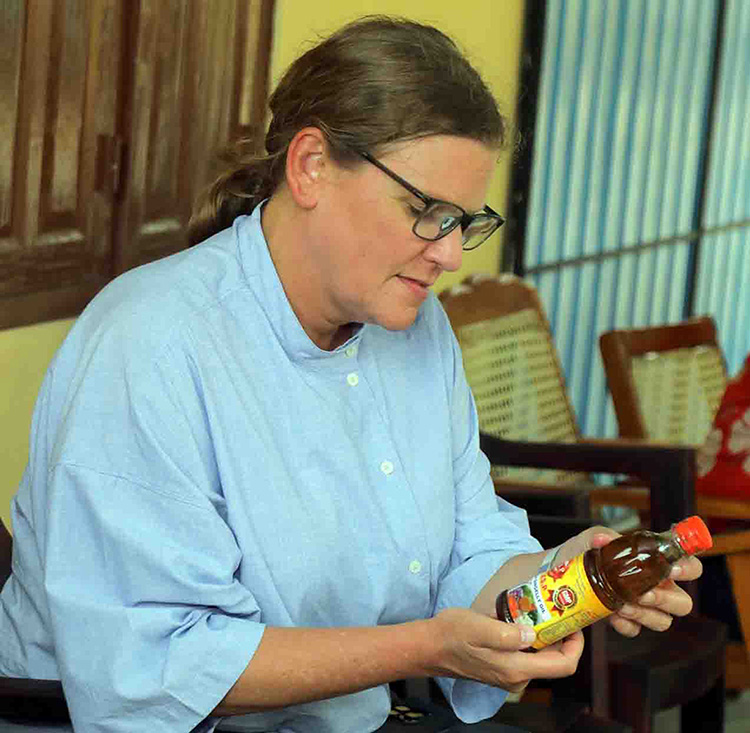
Quality at the Source: ADB Country Director Shannon Cowlin inspects a bottle of premium sesame oil at the New V.S.P. Gingelly Oil factory floor in Jaffna. Working capital facilities extended through Commercial Bank under the ADB line of credit enable manufacturers like Harish Industries to meet growing wholesale and retail demand across Sri Lanka while securing long-term economic resilience.
The dedicated credit scheme offers affordable interest rates to help small and medium-sized enterprises (SMEs) rebound from recent macroeconomic shocks, maintain employment stability, and build long-term sustainability. Designed to target underserved segments, the funding line prioritizes viable enterprises located outside the Colombo district, women-owned and women-led businesses, and ventures incorporating strong climate finance components. Eligible sectors span manufacturing, agriculture, animal husbandry, technology, tourism, and direct export industries.
A standout beneficiary showcasing the transformative impact of this regional focus is Harish Industries, a flourishing manufacturing firm located within the purview of Commercial Bank’s Manipay branch in Jaffna. Owned and operated by proprietor Ponnuchamy Prabakaran, Harish Industries manufactures premium sesame oil under the popular brand name “New VSP Gingelly Oil”.
The working capital facility extended by the line of credit to Harish Industries helped to cater to short-term liquidity needs, ease out cash flow pressure, and operate the business in a sustainable manner.
Additionally, this financial backing helped create more employment opportunities, strengthen its supply chain, and expand business operations to meet growing wholesale and retail demand across Sri Lanka.
by Sanath Nanayakkare
True corporate leadership extends far beyond financial metrics and market dominance. For the Commercial Bank of Ceylon – recognised as Sri Lanka’s top-ranked bank in the 2026 edition of The Banker’s Top 1000 World Banks and the country’s first 100% carbon-neutral bank—true progress means investing directly in the nation’s ecological health.
On 19 September, the Bank demonstrated how a massive institutional infrastructure can be mobilised for the greater good.
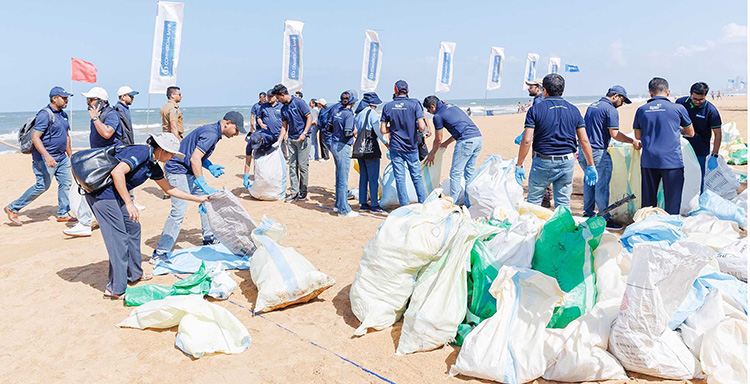
Marking International Coastal Cleanup Day 2026 under its “Forward Together for a Cleaner Future” platform, the Bank brought together employees, corporate management, customers, and volunteers for a coordinated national conservation initiative spanning 20 locations.
What sets this effort apart is its deliberate breadth. The campaign moved far beyond a conventional beach cleanup by integrating 16 coastal sites – including prominent Colombo locations like Mount Lavinia, Wellawatte, and Galle Face, alongside regional spots from Point Pedro to Dondra – with four vital inland waterways, such as the Mahaweli River at Polgolla Dam and Parakrama Samudraya. This structural reach ensured that even inland communities could actively participate in a unified national environmental mission.
This massive undertaking was anchored by robust partnerships, working alongside the Marine Environment Protection Authority (MEPA) as the technical partner and the United Nations Global Compact (UNGC) Network Sri Lanka. By translating its formal 2025 adoption of Sustainable Development Goal 6 (Clean Water and Sanitation) and its role as a UNGC Patron into boots-on-the-ground volunteerism, the Bank bridged high-level environmental policy with grassroots action.
Ultimately, Commercial Bank’s nationwide mobilisation proves that when a premier financial institution harnesses its expansive network, corporate responsibility stops being a theoretical framework and becomes a tangible, community-driven force for a cleaner future.
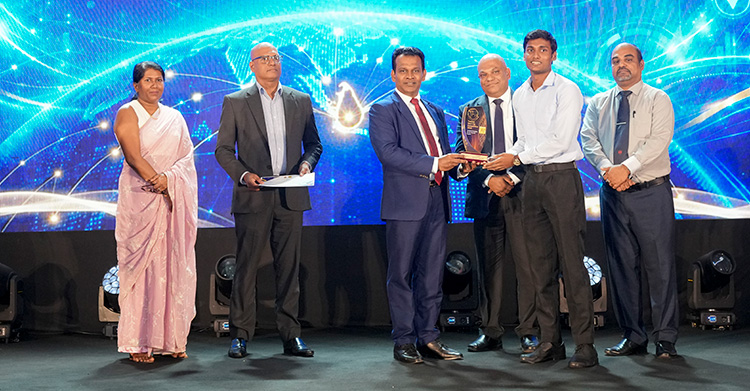
The grand halls of the Taj Samudra in Colombo buzzed with a distinct energy on the morning of September 25, 2026, as leaders gathered for the National Celebration of World Tourism Day.
Yet, beneath the formal discussions on digital agendas and artificial intelligence, a deeper, more vibrant narrative was quietly unfolding. This was not merely a story of algorithms and automated efficiency; it was a human story – a tale of Sri Lanka’s youth stepping forward to redesign the future of hospitality.
For generations, Sri Lanka’s allure has been rooted in its timeless landscapes, golden shores, and the legendary warmth of its people. But as global travel evolves, a new generation of tech-savvy local innovators is finding ways to weave cutting-edge technology into the rich tapestry of Sri Lankan culture. This shift took center stage during the Tourism Start-Up Competition 2026, held under the theme “AI-Driven Innovation for the Future of Tourism”.
Out of 52 competitive applications spanning tertiary and commercial levels, young minds proved that technology and tradition can go hand in hand.
The twenty-five shortlisted teams stood before expert panels to defend visions that bridge the gap between ancient heritage and modern data intelligence.
Behind every submitted AI solution was a young entrepreneur eager to protect local destinations, enhance visitor experiences, and elevate service delivery.
When the twelve winners were finally honoured, the celebration transformed into something much greater than an awards ceremony.
It served as a powerful reminder that the true engine of Sri Lanka’s digital transformation is its youth. Armed with code, creativity, and a profound love for their country, these young visionaries are ensuring that when travelers explore Sri Lanka, they do not just witness the future – they feel the heartbeat of a new, digitally empowered era of hospitality.

Rain threat looms over lopsided India vs Afghanistan quarter-final

Out, not-out, out: England secure bizarre run-out in Oval victory

Strait of Hormuz tensions linger as Iran and US move further from a deal

Showers will occur in the Western, Eastern, Uva and Sabaragamuwa provinces and in Galle, Matara, Kandy, Nuwara-Eliya, Polonnaruwa and Mullativu districts

Sajith rejects Jt. Opp. protest sabotage claim; SJB TU chief demands remedial action

Police remove Thileepan statue in Jaffna

‘Dates have the highest sugar content to fight Coronavirus’

Sunday Island 27 December – Headlines

#SundayIsland 17th December – Headlines

Sunday Island – 28th March

Sunday Island Headlines – 21 March

Sunday Island – 21st February – Headlines
-

 News5 days ago
Mastermind Naufer Moulavi among 15 found guilty
-

 Midweek Review5 days ago
Thileepan’s fast unto death: An authentic narrative that many missed
-
 News6 days ago
Protest against setting up of cement factory in highly populated area near BIA
-

 Editorial6 days ago
Trouble beginning in earnest
-
 Latest News4 days ago
Showers above 100 mm are likely at some places in the Western, Sabaragamuwa, Central and North-western provinces and in Galle and Matara Districts
-
Editorial5 days ago
Big Bad Bills
-
 News6 days ago
Police may seek clarification from US
-

 News6 days ago
Govt. confident of 2/3 majority despite NPP split speculation