
Features
Hindu Ladies College and Peninsula idyll

Excerpted from Chosen Ground: The Clara Motwani saga
by Goolbai Gunasekera
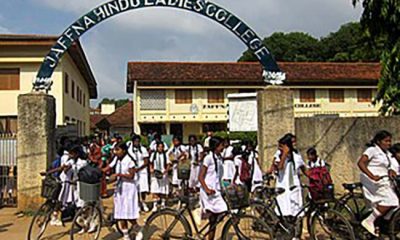
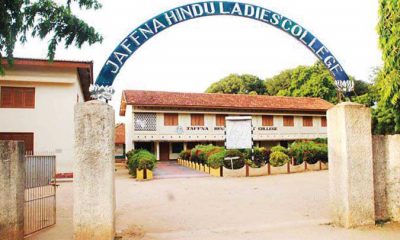
Mrs. Visaladhy Sivagurunathan, a philanthropic Hindu lady, had gifted the property of Hindu Ladies’ College to the school in 1943. Mother was the school’s fifth Principal. Under her, the first Past Pupils’ Association was formed, with Mrs. Jeevaratnam Rasiah as its first President. Miss Thambu (Mother’s long suffering Tamil tutor) was its Secretary. Just recently, I was invited to speak to the Colombo branch of the HLC alumni.
I met a former HLC teacher there – Mrs Navaratna, formerly Leela Ponniah – along with many old friends. The reverence in which Mother was held was very heart- warming, and it was a moving experience to hear the stories they related of instances in which Mother had touched – and sometimes directed – their lives.
A glamour figure on the HLC campus was a Miss Shantha from India. She wore the most gorgeous saris and influenced my love of cotton saris in years to come. It is strange indeed that one’s perceptions can be so acutely honed when one is still so young. To this day I can recall most of Miss Shantha’s wardrobe.
Another fantastically good teacher was Vijayalakshmi Pathy. She was also one of the most attractive. She absorbed all Mother’s teaching methods; and her family in Britain, where she now lives, is a testimony to her fine guidance as a mother and grandmother, and not only as a teacher.
Picnics in Jaffna were given top priority. Mother liked to combine education with pleasure, so every picnic had some place of interest on the day’s agenda. We visited the Rosarian monks’ vineyards and place of retreat. We went to Keerimalai, which is a fresh water tank lying a few yards away from the sea. Bathing suits were not a part of our school wardrobes, but even in sarongs and bathing cloths we essayed a swimming stroke or two.
Visits to other schools were another distraction. Mother arranged netball matches with many Jaffna schools and colleges, and I particularly remember one with Vembadi Girls’ School, for I made a friend, Kiruba Moses, whom I remember to this day.
Mother was quickly drawn into the educational world of Jaffna. Miss Barker of Vembadi was a dose friend and Principals’ meetings were many. Being somewhat young at the time, many illustrious names have now escaped me. I do recall having tea with Lady Ramanathan, the British wife of the founder of Ramanathan College. Her daughter, Mrs. Nadesan, was the nominal Head of that school but it was the senior Lady Ramanathan who pretty much ran things. Transport was occasionally in cars – often in buggy carts.
Athough Mother did not keep diaries that recorded her personal experiences, she was a great one to keep detailed notes of the educational aspects of her life. That she would keep notes on my progress was to be expected, but they were not the sort of notes one expects of a mother: they were the notes of an educationist. In years to come I was not enchanted to read: ‘Goolbai would do better in Mathematics if she were not so over confident. This carries over into other subjects too, I find’.
Whatever Mother thought of my shortcomings as a student, she positively glowed at my accomplishments in Jaffna. Her notes took on a lyrical quality. She rhapsodized: ‘My experiments seemed to have worked at last, and Goolbai is really doing so well I can hardly credit it’. Never could it be said that dilly-dallying was one of Mother’s failings. Taking the tide at its flood she arranged for all the new academic interest I was showing to be further enhanced by a little advanced private tuition in Science.
My classmate Thilaka Karunanandan had a brother who had just finished his degree and was reputedly a brilliant scholar. Mother asked him if he would kindly tutor me in his spare time. He did.
When I was not studying on my own I was being tutored regularly. Along with my classmates, I played netball, studied, sang Tamil songs (which I quickly picked up) in the evenings, studied, had long icily refreshing well baths, studied, saw a movie once a month, studied and then studied some more.
My mind was soon becoming as razor-sharp as those of the brilliant Tamil girls with whom I was now competing although, truth to tell, I was never in their league. The students of HLC had the tenacity of Bruce’s spider. They were always on an upward track.
“But what did you do in Jaffna?” Colombo friends would ask Mother later.
“We were always doing something,” Mother would answer, and we were.
Socially, a lot went on behind those cadjan walls that screened the houses and gardens of Jaffna residences from the road. Right opposite our home and almost next to the school lived Dr. and Mrs. Canagasabai and their family. Dr. Canagasabai – a Malaya returned doctor, whose youngest daughter Dharma, had just left school –quickly struck up a friendship with us.
Dr. Canagasabai had a very large garden with a badminton court and every evening we would play strenuous matches with the Canagasabai nieces, nephews and friends. It was a sort of informal club. On moonlit nights picnics would be arranged to beaches and similar places, with no thought of danger in anyone’s mind. It was a time of peace. It was a time of friendship. These were the last few years before politics and politicians divided the island as surely as if they had taken a metaphorical knife and cut this lovely land and its people in half.
Sincerity, simplicity and affection were
what Mother found in Jaffna. She had expected immovable bastions of conservatism. She found instead pliable minds and flexible brains. Jaffna has always remained a special place to the Motwanis. Before the 1983 tragedy stopped travel to the North, I took my husband and daughter to revisit my old school. It was a nostalgic time.
The school was on vacation but I had the permission of the Principal to wander through it. Buildings had quadrupled in size but the familiar classrooms still stood. I recalled with a shudder the time I opened my desk and found that a little snake had got in through the inkwell. Could this have been the very desk perhaps? There was still an inkwell in it.
Mother had begun the study of Tamil a week after she got to Jaffna. Our brand-new house had a broad veranda running right around it. An enormous desk occupied the shady side of it, and it was here that Mother had her lessons. She could never rid herself of that very American trait which had every waking moment gainfully utilized. Despite a heavy work schedule, Mother seriously tried to learn the language.
“Did she ever pick it up?” I asked her teacher, Thailnayagi Thambu (now Karunanandan) recently.
“She was not in Jaffna long enough to really get into it,” was the tactful reply. Mother’s flair for languages did not translate well into the Oriental variety. She was considered the class wizard in Latin, French and Spanish but somehow her ear was not attuned to Sinhala and Tamil. Neither was it vital to learn either language when she first came to this island as the British still ruled and everything was in English. Father, on the other hand, picked up Sinhala in three months and was soon well able to berate our long suffering cook-amme in an understandable lingo.
I drifted into Mother’s old office. It was still the same office but very modernized. It was here Mother had drilled her teachers in the requirements of the Dalton Plan.
This plan was a system she had greatly admired when visiting the Dalton School in New York. It required that teachers made detailed plans of their subject, and students were given these plans in the form of six-weekly advance schedules. A gifted student could then even proceed on her own, while a weak one could get help before the subject was taken up in class. At the Dalton School in New York, which I attended for a short time, I never got beyond History and English — but I did complete those syllabuses to Mother’s satisfaction.
“Your Mother motivated us instantly,” said Miss Leela Navaratne (nee Ponniah). “We understood the Plan, and it was brilliant from the start.” Of course it worked well. The teachers of Jaffna were born with that same workaholic gene that Mother was finding in her pupils.
As I left the familiar grounds I took one long last look around. I somehow knew I would never see HLC again. Visits to Jaffna take a long time, and were not planned too easily even at that time. The memory of the picture my tall, lovely and gracious Mother made as she said her goodbye to the girls and Staff at Assembly that last day, is still fresh in my heart. And in my own heart the remembrance of Jaffna will always be green.
Our lovely days of quietness and harmony in Jaffna had drawn to a close and Mother returned to Colombo to head Musaeus College. One footnote that bears telling is that thanks to Mother’s recommendation, Dharma Canagasabai became an air hostess on the newly fledged Air Ceylon soon after Mother returned to Colombo.
Peninsula idyll
It cannot be said that I am one of those persons who look at the past through a rose-tinted veil. I do not think that my school days were the happiest times of my life. During my childhood, and even during the teen years, life was restrictive. It was often pleasant, but that was more the luck of the draw. Parents did not lay themselves out to entertain their children or keep them happy. They saw to it that we were reasonably well disciplined and well fed. Our ongoing happiness was not their problem. They had no reason to assume we were anything but totally contented. Today’s collective genuflecting at the shrine of teenage whims and fancies was simply not on.
Mother and Father did not expect either Su or me to feel depressed, insecure, uncertain or unsure. What cause did we have, parents would ask each other in honest bewilderment, to be any of the above? They saw to it that we were told all they felt we needed to know. We went straight from girlhood to adulthood with no dithering along the way. One day we looked like nothing on earth in sober uniforms, tightly braided hair and bright shiny faces, and the very next day we were in a sari (of Mother’s choice or else the choice of Mr. Chandiram, proprietor of the ‘in’ sari shop of the time and the arbiter of teen fashions), looking very grown up and quite glamorous. There was no in-between time.
If I was happy anywhere during my school years, it was in Jaffna. Perhaps it -was the laid-back lifestyle of the Peninsula that caused me to have Mother’s company for much of the time. This is what made it so pleasurable. We were always exceptionally close. For years we were pretty much alone together, while Father was traipsing round the world on lecture tours, and Su was in the USA with our grandparents or else at St. Bridget’s Convent which she loved.
As a result, Mother and I bonded more closely than we would have done if we had had a normal family life. It was a closeness that Su always resented. Sometimes Father did so too. I was more attuned than they were to Mother’s moods — such as they were, for she was not a moody person. She had a happy outlook, an optimistic one. Her occasional worries became my worries, and as I grew older, I could always sense if she were ill.
I worried about her health. Mother had rather brittle bones, and a fall could mean a fracture. She had a low tolerance of pain, and I hated to see her suffer. Her joys, likewise, were shared with me. I understood her. We loved being together. Her gentleness, imposed on my more aggressive personality, has benefited me all my life.
Mother feared and disliked cats intensely. This aversion extended to anything furry, even a fur coat.
“Would you rather have a snake curled round you or have a cat on your lap?” we would ask her.
“A snake any day,” she’d reply, shuddering. “I would hyperventilate if a cat sat on my lap.”
This fear caused her much grief When she was a teenager my grandmother had taken her to hear the great pianist Paderewski play. (He was later the Prime Minister of Poland). The lady seated next to Mother had slung her fur coat over the arm of her chair, and poor Mother sat rigidly through what should have been one of the most wonderful experiences of her life.




 ‘Adapt, shrink or die’ – thus runs the warning issued by the Trump administration to UN humanitarian agencies with brute insensitivity in the wake of its recent decision to drastically reduce to $2bn its humanitarian aid to the UN system. This is a substantial climb down from the $17bn the US usually provided to the UN for its humanitarian operations.
Considering that the US has hitherto been the UN’s biggest aid provider, it need hardly be said that the US decision would pose a daunting challenge to the UN’s humanitarian operations around the world. This would indeed mean that, among other things, people living in poverty and stifling material hardships, in particularly the Southern hemisphere, could dramatically increase. Coming on top of the US decision to bring to an end USAID operations, the poor of the world could be said to have been left to their devices as a consequence of these morally insensitive policy rethinks of the Trump administration.
Earlier, the UN had warned that it would be compelled to reduce its aid programs in the face of ‘the deepest funding cuts ever.’ In fact the UN is on record as requesting the world for $23bn for its 2026 aid operations.
If this UN appeal happens to go unheeded, the possibilities are that the UN would not be in a position to uphold the status it has hitherto held as the world’s foremost humanitarian aid provider. It would not be incorrect to state that a substantial part of the rationale for the UN’s existence could come in for questioning if its humanitarian identity is thus eroded.
Inherent in these developments is a challenge for those sections of the international community that wish to stand up and be counted as humanists and the ‘Conscience of the World.’ A responsibility is cast on them to not only keep the UN system going but to also ensure its increased efficiency as a humanitarian aid provider to particularly the poorest of the poor.
It is unfortunate that the US is increasingly opting for a position of international isolation. Such a policy position was adopted by it in the decades leading to World War Two and the consequences for the world as a result for this policy posture were most disquieting. For instance, it opened the door to the flourishing of dictatorial regimes in the West, such as that led by Adolph Hitler in Germany, which nearly paved the way for the subjugation of a good part of Europe by the Nazis.
If the US had not intervened militarily in the war on the side of the Allies, the West would have faced the distressing prospect of coming under the sway of the Nazis and as a result earned indefinite political and military repression. By entering World War Two the US helped to ward off these bleak outcomes and indeed helped the major democracies of Western Europe to hold their own and thrive against fascism and dictatorial rule.
Republican administrations in the US in particular have not proved the greatest defenders of democratic rule the world over, but by helping to keep the international power balance in favour of democracy and fundamental human rights they could keep under a tight leash fascism and linked anti-democratic forces even in contemporary times. Russia’s invasion and continued occupation of parts of Ukraine reminds us starkly that the democracy versus fascism battle is far from over.
Right now, the US needs to remain on the side of the rest of the West very firmly, lest fascism enjoys another unfettered lease of life through the absence of countervailing and substantial military and political power.
However, by reducing its financial support for the UN and backing away from sustaining its humanitarian programs the world over the US could be laying the ground work for an aggravation of poverty in the South in particular and its accompaniments, such as, political repression, runaway social discontent and anarchy.
What should not go unnoticed by the US is the fact that peace and social stability in the South and the flourishing of the same conditions in the global North are symbiotically linked, although not so apparent at first blush. For instance, if illegal migration from the South to the US is a major problem for the US today, it is because poor countries are not receiving development assistance from the UN system to the required degree. Such deprivation on the part of the South leads to aggravating social discontent in the latter and consequences such as illegal migratory movements from South to North.
Accordingly, it will be in the North’s best interests to ensure that the South is not deprived of sustained development assistance since the latter is an essential condition for social contentment and stable governance, which factors in turn would guard against the emergence of phenomena such as illegal migration.
Meanwhile, democratic sections of the rest of the world in particular need to consider it a matter of conscience to ensure the sustenance and flourishing of the UN system. To be sure, the UN system is considerably flawed but at present it could be called the most equitable and fair among international development organizations and the most far-flung one. Without it world poverty would have proved unmanageable along with the ills that come along with it.
Dehumanizing poverty is an indictment on humanity. It stands to reason that the world community should rally round the UN and ensure its survival lest the abomination which is poverty flourishes. In this undertaking the world needs to stand united. Ambiguities on this score could be self-defeating for the world community.
For example, all groupings of countries that could demonstrate economic muscle need to figure prominently in this initiative. One such grouping is BRICS. Inasmuch as the US and the West should shrug aside Realpolitik considerations in this enterprise, the same goes for organizations such as BRICS.
The arrival at the above international consensus would be greatly facilitated by stepped up dialogue among states on the continued importance of the UN system. Fresh efforts to speed-up UN reform would prove major catalysts in bringing about these positive changes as well. Also requiring to be shunned is the blind pursuit of narrow national interests.

 Hi! Great to be back after my Christmas break.
Thought of starting this week with egg white.
Yes, eggs are brimming with nutrients beneficial for your overall health and wellness, but did you know that eggs, especially the whites, are excellent for your complexion?
OK, if you have no idea about how to use egg whites for your face, read on.
Egg White, Lemon, Honey:
Separate the yolk from the egg white and add about a teaspoon of freshly squeezed lemon juice and about one and a half teaspoons of organic honey. Whisk all the ingredients together until they are mixed well.
Apply this mixture to your face and allow it to rest for about 15 minutes before cleansing your face with a gentle face wash.
Don’t forget to apply your favourite moisturiser, after using this face mask, to help seal in all the goodness.
Egg White, Avocado:
In a clean mixing bowl, start by mashing the avocado, until it turns into a soft, lump-free paste, and then add the whites of one egg, a teaspoon of yoghurt and mix everything together until it looks like a creamy paste.
Apply this mixture all over your face and neck area, and leave it on for about 20 to 30 minutes before washing it off with cold water and a gentle face wash.
Egg White, Cucumber, Yoghurt:
In a bowl, add one egg white, one teaspoon each of yoghurt, fresh cucumber juice and organic honey. Mix all the ingredients together until it forms a thick paste.
Apply this paste all over your face and neck area and leave it on for at least 20 minutes and then gently rinse off this face mask with lukewarm water and immediately follow it up with a gentle and nourishing moisturiser.
Egg White, Aloe Vera, Castor Oil:
To the egg white, add about a teaspoon each of aloe vera gel and castor oil and then mix all the ingredients together and apply it all over your face and neck area in a thin, even layer.
Leave it on for about 20 minutes and wash it off with a gentle face wash and some cold water. Follow it up with your favourite moisturiser.

 Superlatives galore were used, especially on social media, to highlight R&B singer Ne-Yo’s trip to Sri Lanka: Global superstar Ne-Yo to perform live in Colombo this December; Ne-Yo concert puts Sri Lanka back on the global entertainment map; A global music sensation is coming to Sri Lanka … and there were lots more!
At an official press conference, held at a five-star venue, in Colombo, it was indicated that the gathering marked a defining moment for Sri Lanka’s entertainment industry as international R&B powerhouse and three-time Grammy Award winner Ne-Yo prepares to take the stage in Colombo this December.
What’s more, the occasion was graced by the presence of Sunil Kumara Gamage, Minister of Sports & Youth Affairs of Sri Lanka, and Professor Ruwan Ranasinghe, Deputy Minister of Tourism, alongside distinguished dignitaries, sponsors, and members of the media.
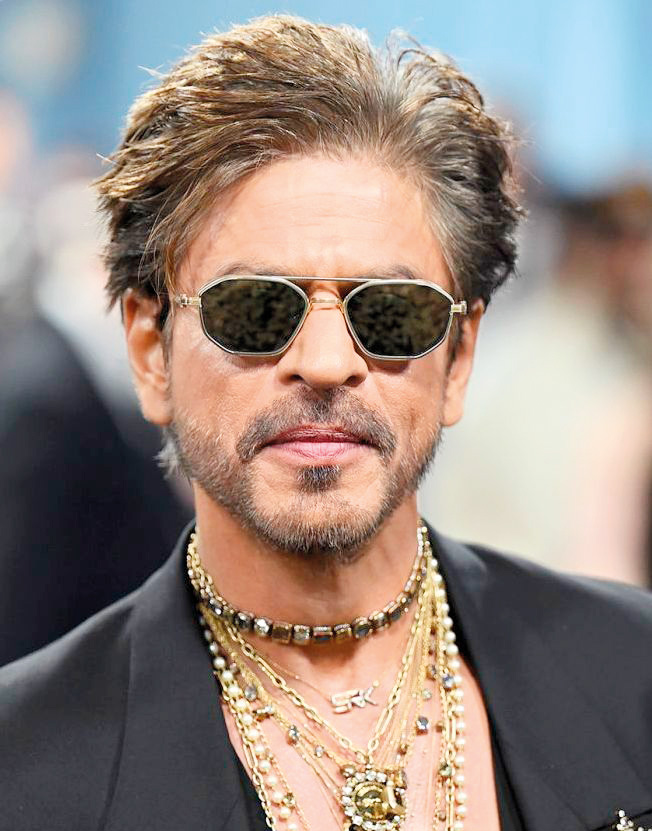
Shah Rukh Khan: Disappointed his fans in Sri Lanka
According to reports, the concert had received the official endorsement of the Sri Lanka Tourism Promotion Bureau, recognising it as a flagship initiative in developing the country’s concert economy by attracting fans, and media, from all over South Asia.
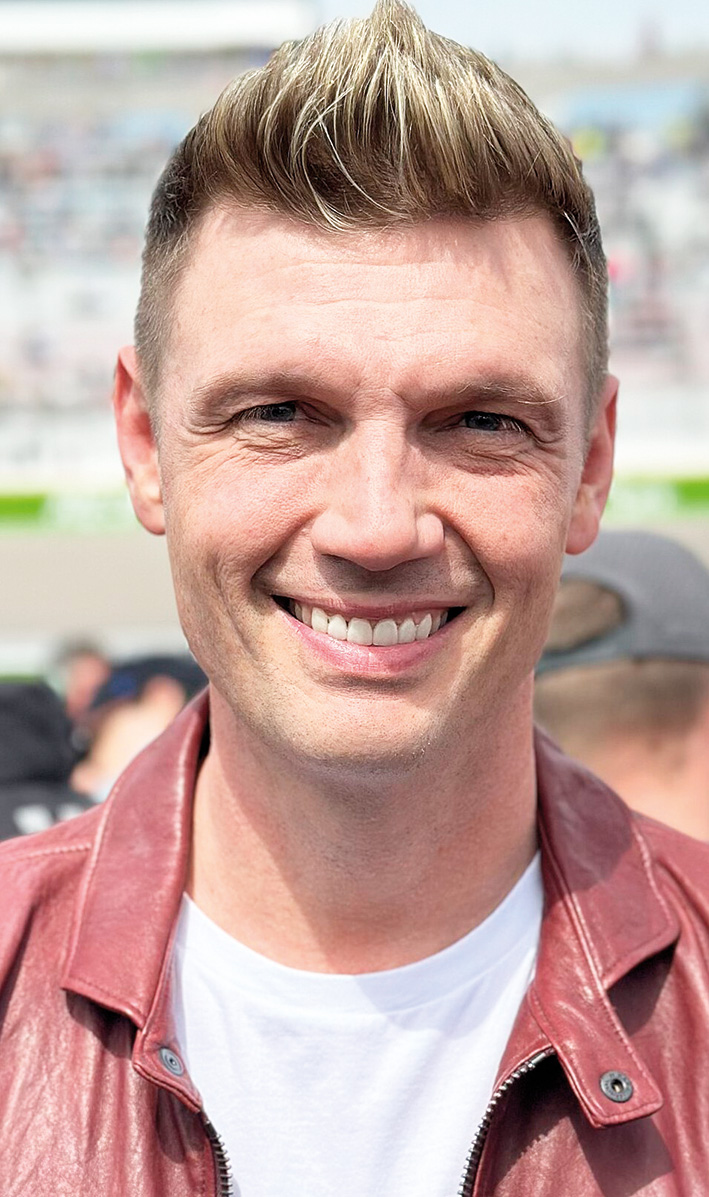
Nick Carter: His concert, too, was cancelled due to “Unforeseen circumstances
However, I had that strange feeling that this concert would not become a reality, keeping in mind what happened to Nick Carter’s Colombo concert – cancelled at the very last moment.
Carter issued a video message announcing he had to return to the USA due to “unforeseen circumstances” and a “family emergency”.
Though “unforeseen circumstances” was the official reason provided by Carter and the local organisers, there was speculation that low ticket sales may also have been a factor in the cancellation.
Well, “Unforeseen Circumstances” has cropped up again!
In a brief statement, via social media, the organisers of the Ne-Yo concert said the decision was taken due to “unforeseen circumstances and factors beyond their control.”
Ne-Yo, too, subsequently made an announcement, citing “Unforeseen circumstances.”
The public has a right to know what these “unforeseen circumstances” are, and who is to be blamed – the organisers or Ne-Yo!
Ne-Yo’s management certainly need to come out with the truth.
However, those who are aware of some of the happenings in the setup here put it down to poor ticket sales, mentioning that the tickets for the concert, and a meet-and-greet event, were exorbitantly high, considering that Ne-Yo is not a current mega star.
We also had a cancellation coming our way from Shah Rukh Khan, who was scheduled to visit Sri Lanka for the City of Dreams resort launch, and then this was received: “Unfortunately due to unforeseen personal reasons beyond his control, Mr. Khan is no longer able to attend.”
Referring to this kind of mess up, a leading showbiz personality said that it will only make people reluctant to buy their tickets, online.
“Tickets will go mostly at the gate and it will be very bad for the industry,” he added.

Zohran Mamdani sworn in as New York City mayor

In pictures: New Year welcomed around the world

Foreign warships commended for their assistance during weather disaster in Sri Lanka

Machu Picchu train crash leaves one dead and dozens injured

I invite you to step into 2026 with renewed energy, hope, and determination – PM

Fairly heavy showers about 75 mm are likely at some places in the Central and Uva provinces and in Batticaloa and Ampara districts

‘Dates have the highest sugar content to fight Coronavirus’

Sunday Island 27 December – Headlines

#SundayIsland 17th December – Headlines

Sunday Island – 28th March

Sunday Island Headlines – 21 March

Sunday Island – 21st February – Headlines
-
 News7 days ago
Street vendors banned from Kandy City
-

 Sports4 days ago
Gurusinha’s Boxing Day hundred celebrated in Melbourne
-
 News2 days ago
Leading the Nation’s Connectivity Recovery Amid Unprecedented Challenges
-

 News7 days ago
Lankan aircrew fly daring UN Medevac in hostile conditions in Africa
-

 Sports5 days ago
Time to close the Dickwella chapter
-

 Features3 days ago
It’s all over for Maxi Rozairo
-

 Features7 days ago
Rethinking post-disaster urban planning: Lessons from Peradeniya
-

 Opinion7 days ago
Are we reading the sky wrong?