
Editorial
Heroes’ impotence

Friday 25th June, 2021
One of the main reasons for the collapse of the yahapalana government was the impotence of its leaders, who earned notoriety for chickening out, and bungling almost everything they undertook to do. Their rivals, who are in power at present, made fun of them and branded them as a bunch of wimps, and promised to defeat all social evils plaguing the country. But those heroes have now been found to be no better than their lily-livered predecessors, some of whom have become their allies. There have been numerous instances where the swashbuckling heroes too wimped out. Their lack of courage to do what needs to be done to make rice freely available and, thereby, maintain its prices at affordable levels, in these troubled times, is a case in point.
The government is determined to import 100,000 MT of rice, purportedly to meet a shortfall in the supply of the staple. It is being claimed in some quarters that governments usually make such announcements to scare the big-time millers into releasing their stocks. But these stone-hearted, cunning businessmen do not fall for such ruses; they are capable of separating false threats from the real ones, which they neutralise immediately. On the other hand, they know that no government will ever resort to anything that jeopardises their business interests, for they look after almost all influential politicians.
It is obvious that the government will go ahead with rice imports, which will not cause any losses to the rice Mafia or be a solution to the ‘rice shortage’; it will only help the government deflect adverse criticism, and some politicians and bureaucrats will be able to line their pockets, as we have seen all these years.
The country has enough paddy stocks. There is a surplus of about 1.7 million metric tons of paddy. This figure has been confirmed by the All Ceylon Farmers Federation (ACFF). The Ministry of Agriculture says the expected rice production in 2021 is 3,000,000 MT while the annual rice consumption is only 2,340,000, the expected surplus rice production for the current year being 660,000 MT. The ACFF insists that there will be enough rice stocks for not only 2021 but also 2022 even if this year’s Yala harvest is not taken into account. So, the government must find a solution to hoarding, instead of importing rice.
The leaders of the current government boast of having defeated one of the world’s deadliest terrorist groups. But the writ of the state still does not run in some parts of the country; they are the places where the sprawling warehouse complexes of the big-time millers stand. Most of the paddy the country produces finds its way into them. The only way to tackle artificially created rice shortages is to take action against hoarders, as we argued yesterday. No rice miller must be allowed to hold the public to ransom, especially during a pandemic. The SLPP knights-errant now have the power to liberate the public from the clutches of evil forces including the rice Mafia. After all, they said the 20th Amendment to the Constitution, which enhanced the President’s executive powers, was for the benefit of the public.
The impotence of the current leaders vis-à-vis the rice Mafia became evident last year following the Consumer Affairs Authority (CAA) raids on the warehouses of some big-time millers in the North Central Province. The CAA officials suffered humiliation at the hands of the millers concerned, and were let down by the government leaders. The owner of Araliya Mills, Dudley Sirisena, a sibling of former President MP Maithripala Sirisena, confronted the CAA officials, and declared that he would not sell rice at the maximum retail prices (MRPs) stipulated by the government. Subsequently, the millers had a meeting with the government leaders, who agreed to an upward revision of the MRPs for rice. The millers had the last laugh. So much for the heroics of the SLPP leaders who came into power, promising to safeguard the interests of the general public! If they cannot take on the rice Mafia, and prevent the latter from hoarding paddy, they must at least stop boasting of their power and pretending to be saviours of the people.
They must not waste public funds on rice imports owing to their impotence. Let that be the bottom line.


Wednesday 7th January, 2026
The lessons of history often go unlearnt in Sri Lankan politics, defined by policy contradictions and about-turns. The NPP government is planning to relaunch a risky mission that a powerful regime once had to abandon for fear of a backlash. Yesterday, Deputy Minister Mahinda Jayasinghe told Parliament that the NPP government had given thought to introducing a pension scheme for the private sector workers because the current lump-sum Employees’ Provident Fund (EPF) payments did not help achieve the desired social security goals. The government apparently had him send a trial balloon in the House. Going by what he outlined, the NPP government’s private sector pension plan is similar to the one that President Mahinda Rajapaksa unveiled in Budget 2011 and made an abortive attempt to implement.
Presenting Budget 2011, President Rajapaksa revealed his intention to set up what he described as an Employees’ Pension Fund, which curiously had the same initialism—EPF—as the Employees’ Provident Fund. He proposed contributions from employees and employers to the fund to be set up.
Every employer would be required to transfer gratuity payments to the proposed pension fund, President Rajapaksa said, noting that employees too would have to contribute two percent of their pension fund balance to be withdrawn; a private sector worker would have to contribute to the pension fund for a minimum of 10 years to qualify for a pension, and the fund would be managed by the Monetary Board of the Central Bank.
The Rajapaksa government was planning to steamroller the Private Sector Pension Bill through Parliament in June 2011 to provide post-retirement monthly pension benefits to employees in the private and corporate sectors. A major point of contention was a provision that would have helped convert a portion of the Employees’ Provident Fund savings, paid as a lump sum upon retirement, into a monthly pension, effectively eliminating a significant part of the lump-sum payment option.
In an editorial comment on Budget 2011, we argued that the Rajapaksa government was playing with fire, and any attempt to implement the private sector pension scheme at the expense of the EPF or part of it would run into stiff resistance from workers. Intoxicated with power and impervious to reason, that regime tried to bulldoze its way through. Trade unions opposed the Bill tooth and nail, claiming that it aimed to end EPF lump-sum payments in respect of a portion of the accumulated funds, and replace it with a monthly pension starting at age 60, irrespective of the actual retirement age. An employee retiring at the age of 55 would have to wait five years to receive any benefits from that portion of his or her savings, the warring trade unionists argued, expressing concerns about those disadvantages and a lack of transparency about how the funds would be managed. The JVP was among the opponents of that controversial Bill. It was widely feared that the Rajapaksa government intended to use the large EPF asset base for other purposes.
The Rajapaksa government used force in a bid to overcome resistance, but in vain. In June 2011, mass protests erupted and a violent clash at the Katunayake Free Trade Zone, resulted in the death of a worker and forced the Rajapaksa government to suspend and eventually withdraw the ill-conceived Bill. The Rajapaksa regime accused the JVP of instigating violent protests against the Bill to advance a sinister political agenda. The withdrawal of the Bill helped bring the situation under control.
Ironically, the incumbent NPP government is trying to do what its main constituent, the JVP, together with workers, other Opposition parties and trade unions vehemently condemned the Rajapaksa administration for, about 15 years ago. Those who fail to learn from history are said to be doomed to repeat it.
Tuesday 6th January, 2026
The scourge of narcotics has eaten into the vitals of many institutions. Among those arrested and prosecuted for drug-related offences are some state employees including police officers. The proliferation of dangerous drugs has therefore come as no surprise. Juvenal’s famous rhetorical question comes to mind: “Who guards the guards?”
Thankfully, the police officers involved in the drug trade run the risk of having to face the full force of the law in case of being found out. The Police Department is considered one of the most corrupt state institutions in this country, but it makes a serious effort to rid itself of drug dealers among its members.
About 500 police officers are facing disciplinary action over drug-related offences, according to IGP Priyantha Weerasooriya. It is a matter of relief that the Police Department takes action against its own members. The Police Chief is reported to have said at a recent passing-out ceremony at the Sri Lanka Police College grounds in Anuradhapura that a considerable number of police officers have been dismissed for drug offences. This kind of self-correcting culture is rare in state institutions and should therefore be appreciated.
However, it is not only bad cops in the pay of drug dealers and other criminals who are suspended; good cops who courageously carry out their duties and functions and rile the politicians in power in the process also face disciplinary action or even termination instead of commendations and promotions.
The deplorable manner in which the police bigwigs throw their subordinates under the bus to appease their political masters has had a crippling impact on the morale of the police. One may recall the predicament of three police officers who took part in a raid on a cannabis plantation recently in Suriyakanda. The land where cannabis plants were found reportedly belongs to a family member of a ruling party MP, who together with a group of his party supporters set upon one of the police officers. The victim was hospitalised. The other officers were transferred. The police at the behest of their top brass unashamedly went so far as to arrest the assault victim and not the MP and his goons! Worse, the victim was suspended from service.
It has been reported that addressing the newly commissioned police officers at the aforementioned ceremony, Minister of Public Security Ananda Wijepala and IGP Weerasooriya emphasised the importance of professionalism, integrity and dedication for building a successful career in the police service. But in reality, these attributes alone do not help state officials achieve their career goals. The Acting Auditor General was overlooked when President Anura Kumara Dissanayake submitted nominees for the post of Auditor General to the Constitutional Council. He is the most eligible officer to head the National Audit Office, but he lacks what state officials need to secure top posts—political backing, which takes precedence over educational and professional qualifications and seniority in the public service.
A minister has come under a social media piranha attack, as it were, for referring to what may be described as an anti-effort workplace maxim: “More work, more trouble; less work, less trouble, and no work, no trouble.” What ails the state service is encapsulated in this one-liner, which is popular among shirkers in the public sector. It is only natural that ‘quiet quitting’ has become the norm in the highly-politicised state service where pleasing politicians is the way to climb the career ladder, as is public knowledge.
Many police officers have chosen to follow the aforesaid shirkers’ motto to avoid trouble. This may explain why a group of police officers just looked on while the JVP/NPP members were parking their buses in undesignated sections of the southern expressway on their way to the JVP’s May Day rally last year. If they had taken any action against the transgressors, they would have been transferred to faraway places.
It is only wishful thinking that a country without an independent state service can achieve progress.


Monday 5th January, 2026
The US was once known as the self-proclaimed global policeman. It has since graduated from that role and appointed itself as an international prosecutor, judge and executioner. On Friday night, it carried out a daring operation in Caracas, captured Venezuelan President Nicolás Maduro, 63, and his wife and took them to New York, where they are to be tried for narco-terrorism among other things. The US reportedly deployed 150 aircraft, including bombers, helicopter gunships, fighter jets and reconnaissance planes, warships and a large number of crack commandos in its operation codenamed “Absolute Resolve”. US President Donald Trump made himself out to be a dove during his first term and has been eyeing the Nobel Peace Prize. But he has laid bare his true face as a hawk during his second term.
Trump has condemned Maduro as a dictator involved in drug smuggling narco-terrorism and sought to justify his military action purportedly to make the latter face the ‘full force of the US law’. But while the US was cranking up offensive action against Venezuela, claiming to defend itself against drug smugglers, Trump pardoned former President of Honduras Juan Orlando Hernandez and released him from a 45-year jail term in the US for gun running and drug trafficking offences! Moreover, Washington had no qualms about bankrolling the right-wing Contras, who fought the Sandinista government in Nicaragua despite their involvement in smuggling narcotics into the US. It also backed the Mujahideen guerrillas, who were using opium smuggling to fund their war against the Russian-backed government in Kabul. Media reports, quoting the United Nations Office on Drugs and Crime, have pointed out that most cocaine routes to the US run through Peru, Ecuador and Colombia, and Venezuela is only a minor transit corridor. Most of all, on Thursday, President Maduro declared that he was open to talks with the US on drug trafficking and oil, but the US did not heed his offer and resorted to military action.
There is reason to believe that President Trump’s campaign against narcotics was not the real reason for the US invasion of Venezuela. Washington’s ulterior motive came to light when Trump told the media on Saturday that the US would run Venezuela “until such time as we can do a safe, proper, and judicious transition”. What’s up his sleeve is not difficult to guess; he wants the US to take control of the Venezuelan oil fields. He has said the US oil companies will move in to fix Venezuela’s “broken infrastructure” and “start making money for the country”. Having removed Maduro from its path, Washington will now do everything in its power to install a puppet government in Caracas so that the US will have unbridled access to Venezuela’s oil and mineral wealth. Plunder is not considered as such when big powers engage in it for their enrichment!
President Trump has made a mockery of his much-advertised aversion to regime change operations conducted by the US as an extension of its foreign policy. He has warned Iran against using force against protesters trying to topple the incumbent government in Teheran. Will he stop there, or will he target other countries that he does not consider American allies, as part of his ambitious MAGA (Make America Great Again) mission?
Speculation was rife on Saturday that the unsuccessful presidential candidate Edmundo Gonzalez, would secure the presidency with US help. The Constitutional Chamber of Venezuela’s Supreme Court has ordered that Vice President Delcy Rodríguez immediately assume the role of acting president of the country in the absence of Maduro.
Operation Absolute Resolve
was not without a touch of self-interest. The Dems Oversight Committee has flayed Trump, saying that Maduro was captured on the day the Department of Justice was set to explain its redactions in the Epstein files, which has the potential to be his undoing.
Russia and China have vehemently condemned the capture of Maduro and his wife. Most European leaders have unashamedly resorted to prevarication over the US military action against Venezuela. Among them are British Prime Minister Keir Starmer, French President Emmanuel Macron, German Chancellor Friedrich Merz, and Italian Prime Minister Giorgia Meloni. Only Prime Minister of Spain Pedro Sanchez has had the courage to take exception to the US military action. “Spain did not recognize the Maduro regime. But neither will it recognize an intervention that violates international law and pushes the region toward a horizon of uncertainty and belligerence”, Sanchez has written on X, calling for respect for the UN Charter. His is a voice of sanity, worthy of emulation. This is the position the civilised world must adopt to safeguard international law and promote global democracy and peace. Unfortunately, the so-called big powers have undermined the UN Charter to such an extent that one wonders whether it is now worth the paper it is written on.
Interestingly, the incumbent Sri Lankan government is led by a political party that unequivocally pledged solidarity with Venezuela and condemned the US, during its opposition days. JVP leaders would thunder at political rallies and protests, asking the US not to meddle with Venezuela. It will be interesting to see the JVP-led Sri Lankan government’s official reaction to Operation Absolute Resolve. Will it be able to pluck up the courage to emulate PM Sanchez or New York City Mayor Zohran Mamdani, who has strongly criticised the capture of Maduro and his wife and called the US military action at issue an “act of war” and a “violation of international law.”
Meanwhile, the UN Security Council (SC) has announced its decision to hold an emergency meeting on Monday on the US military operation in Venezuela and its fallout. Colombia’s request for the SC special meeting has reportedly been backed by two permanent members, Russia and China. But it is highly unlikely that anything worthwhile will come of today’s UN SC meeting.

Record prize money on offer at Australian Open

ICC to Bangladesh: play in India or forfeit points

Showers will occur at times in the Uva province and in Batticaloa, Ampara, Polonnaruwa, Matale and Hambantota districts

UK and France to send troops to Ukraine if peace deal agreed

Six dead and hundreds of flights cancelled as snow causes chaos across Europe

Prez seeks Harsha’s help to address CC’s concerns over appointment of AG

‘Dates have the highest sugar content to fight Coronavirus’

Sunday Island 27 December – Headlines

#SundayIsland 17th December – Headlines

Sunday Island – 28th March

Sunday Island Headlines – 21 March

Sunday Island – 21st February – Headlines
-
 News1 day ago
Broad support emerges for Faiszer’s sweeping proposals on long- delayed divorce and personal law reforms
-

 News1 day ago
Interception of SL fishing craft by Seychelles: Trawler owners demand international investigation
-
 News2 days ago
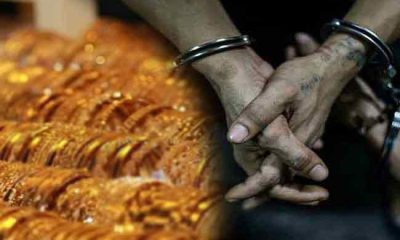
Private airline crew member nabbed with contraband gold
-

 News4 days ago
Health Minister sends letter of demand for one billion rupees in damages
-

 Opinion6 days ago
Remembering Douglas Devananda on New Year’s Day 2026
-
 Features2 days ago
Pharmaceuticals, deaths, and work ethics
-

 Features1 day ago
Educational reforms under the NPP government
-
 News1 day ago
US raid on Venezuela violation of UN Charter and intl. law: Govt.