
Latest News
Henry takes five again as returning Taylor can’t inspire insipid Zimbabwe


Matt Henry’s sixth Test five-for eclipsed Brendan Taylor’s international comeback, and entrenched questions over Zimbzbwe’s batting in the longest format. Zimbabwe were bowled out for their lowest total in nine innings, and second-lowest since 2023, with Taylor’s 44 and Tafadzwa Tsiga’s 33 the only individual scores over 11. That Taylor and Tsiga never batted together further underlines the issue, as Zimbabwe mustered a best partnership of only 29 on a surface where they chose to bat first.
There was some early movement but with less bounce on offer than last week, and the quality of New Zealand’s seamers shone through. Henry led the attack, but debutants Zakary Foulkes, Jacob Duffy and Matthew Fisher were also impressive. They varied lengths well, and bowled tight lines to a plan to give New Zealand’s line-up the best of the batting conditions.
In response, Devon Conway and Will Young put on New Zealand’s third highest opening partnership against Zimbabwe, and New Zealand’s first opening stand of over 150 in almost three years. It was their fourth century stand together, and first for the opening wicket. Though separated late in the day, Conway and Young put New Zealand ahead, and memories of Taylor’s slog earlier in the day already far from mind.
Taylor was called into action immediately on his comeback after a three-and-a-half-year ban when he was elevated to open the batting – something he had only done six times before – in place of Ben Curran. The reason for that became obvious as Taylor looked, by a distance, the most aware of his off stump, left well, and defended solidly.
With all those qualities on display in the morning, he will be livid with the manner of his dismissal shortly after lunch. Taylor became Henry’s third wicket when he popped a tame catch to stand-in captain Mitchell Santner at extra cover to end a two-hour-and-23 minute stay at the crease.
By then, Zimbabwe were in all sorts of trouble. They had already lost the rest of their top order thanks to poor shot selection in the face of excellent bowling. Brian Bennett, who partnered Taylor, was out as early as the ninth ball when he chased a delivery that shaped away and edged Henry to second slip, and will have to address his technique going forward.
Henry should have had Nick Welch off the next ball when he edged a good-length delivery. But Will Young, who took the catch that dismissed Bennett, could not hold on. Welch was beaten on the outside edge at least twice more by Henry, who then beat his inside edge and had him out lbw.
Zimbabwe would have hoped an experienced middle order would stabilise them, but Sean Williams and Craig Ervine went cheaply. Williams was worked over by Foulkes, who moved the ball away late, and edged to third slip, where Young took a diving catch to his right. Then, on the stroke of lunch, Ervine reached for a full, wide ball, and handed Young a third catch. Zimbabwe went to the break on 67 for 4, with Taylor on 33 and well set. His shot of the session was an upper cut off Duffy that was struck powerfully and placed well.
The same could not be said of the shot Taylor played in the afternoon, when Henry bowled on a good length outside off, and Taylor tried to drive off the back foot but chipped the ball to Santner. At the start of the next over, Foulkes set a leg-side trap for Sikandar Raza, and banged it in short and Raza walked straight in. He moved to the off side, and guided the ball into Rachin Ravindra’s hands. That was the third time in as many innings in this series that Raza was dismissed by the short ball.
Foulkes had Trevor Gwandu lbw three balls later, and Zimbabwe had crashed to 83 for 7. The end of the innings was only a matter of time. Henry picked up his fourth when Vincent Masekesa played down the wrong line and the ball hit the top of off stump, and his fifth when Blessing Muzarabani backed away and was bowled. Foulkes also chased a fifth, but Tsiga and Tanaka Chivanga resisted with a 25-run last wicket-stand.
Tsiga played a couple of well-timed shots through deep third and midwicket, and offered a rare glimmer of hope for Zimbabwe’s batting. But he ran out of partners when Chivanga failed to use his feet and drove Fisher to mid-off to give him a wicket on debut. Zimbabwe were bowled out inside 49 overs.
In response, New Zealand raced to 57 without loss after ten overs, and 40 of their runs came in boundaries. Conway got hold of fuller deliveries from Chivanga, while Young, who was struck on the glove, took on Muzarabani’s short ball. Zimbabwe’s new-ball pair then adjusted their lengths, but when Muzarabani and Chivanga went full, it was too full, and Conway cashed in. Chivanga’s fourth over cost 14 runs as Young cut him twice and then edged a back-of-a-length ball over the slips to bring up New Zealand’s fifty.
Gwandu’s introduction quietened things down, but only a touch, as New Zealand accumulated with ease. Chivanga changed ends, and it was off him that Young brought up his 11th Test fifty and New Zealand’s hundred with a flick through midwicket.
Zimbabwe’s best chance came shortly after the day’s final drinks break when Muzarabani drew Conway’s edge, but the chance died on Ervine at slip. Muzarabani also found the inside edge, but the ball raced away for four. Conway rode his luck, and then brought up his 13th Test fifty. New Zealand were in the lead with 14.4 overs left to play on the opening day.
They were 33 runs ahead when Masekesa thought he had the breakthrough. He hit Conway, on 72, in front of middle and leg, and appealed for lbw but it was turned down. Zimbabwe finally had some joy when Young tried to pull Gwandu but chopped on. Young remains without a century one inning into his 22nd Test. Conway finished the day on 79 not out alongside nightwatcher Duffy.
Brief scores:
New Zealand 174 for 1 (Devon Conway 79*, Will Young 74; Trevor Gwandu 1-31) lead Zimbabwe 125 in 48.5 overs (Brendan Taylor 44, Tafadzwa Tsiga 33*; Matt Henry 5-40, Zakary Foulkes 4-38) by 49 runs
[Cricinfo]


Polls have opened in Myanmar’s first general election since the country’s military toppled Nobel laureate Aung San Suu Kyi’s democratically elected government in a 2021 coup.
The heavily restricted election on Sunday is taking place in about a third of the Southeast Asian nation’s 330 townships, with large areas inaccessible amid a raging civil war between the military and an array of opposition forces.
Following the initial phase, two rounds of voting will be held on January 11 and January 25, while voting has been cancelled in 65 townships altogether.
“This means that at least 20 percent of the country is disenfranchised at this stage,” said Al Jazeera’s Tony Cheng, reporting from Myanmar’s largest city, Yangon. “The big question is going to be here in the cities, what is the turnout going to be like?”
In Yangon, polling stations opened at 6am on Sunday (23:30 GMT, Saturday), and once the sun was up, “we’ve seen a relatively regular flow of voters come in,” said Cheng.
“But the voters are generally middle aged, and we haven’t seen many young people. When you look at the ballot, there are only few choices. The vast majority of those choices are military parties,” he said.
The election has been derided by critics – including the United Nations, some Western countries and human rights groups – as an exercise that is not free, fair or credible, with anti-military political parties not competing.
Aung San Suu Kyi, who was deposed by the military months after her National League for Democracy (NLD) won the last general election by a landslide in 2020, remains in detention, and her party has been dissolved.
The pro-military Union Solidarity and Development Party (USDP) is widely expected to emerge as the largest party.
The military, which has governed Myanmar since 2021, said the vote is a chance for a new start, politically and economically, for the nation of 55 million people, with Senior General Min Aung Hlaing consistently framing the polls as a path to reconciliation.
Dressed in civilian clothes, the military chief cast his ballot shortly after polling stations opened in Naypyidaw, the country’s capital. He then held up an ink-soaked figure and smiled widely.
Voters must dip a finger into indelible ink after casting a ballot to ensure they do not vote more than once.
He told reporters afterwards that the elections are free and fair, and the vote was not tarnished because it is being held by the military.
The state-run Global New Light of Myanmar, in an opinion piece on Sunday, said the poll would open a new chapter and “serve as bridge for the people of Myanmar to reach a prosperous future”.
Earlier, it reported that election observers from Russia, China, Belarus, Kazakhstan, Cambodia, Vietnam, Nicaragua and India have flown into the country ahead of the polls.
But with fighting still raging in many areas of the country, the UN’s Special Rapporteur on Myanmar, Tom Andrews called on the international community to reject the military-run poll.
“An election organised by a junta that continues to bomb civilians, jail political leaders and criminalise all forms of dissent is not an election – it is a theatre of the absurd performed at gunpoint,” Andrews said in a statement.
“This is not a pathway out of Myanmar’s crisis. It is a ploy that will perpetuate repression, division and conflict,” he said.
The civil war, which was triggered by the 2021 coup, has killed an estimated 90,000 people, displaced 3.5 million and left some 22 million people in need of humanitarian assistance.
According to the Assistance Association for Political Prisoners, more than 22,000 people are currently detained for political offences.
In downtown Yangon, stations were cordoned off overnight, with security staff posted outside, while armed officers guarded traffic intersections. Election officials set up equipment and installed electronic voting machines, which are being used for the first time in Myanmar.
The machines will not allow write-in candidates or spoiled ballots.
Among a trickle of early voters in the city was 45-year-old Swe Maw, who dismissed international criticism.
“It’s not an important matter,” he told the AFP news agency. “There are always people who like and dislike.”
In the central Mandalay region, 40-year-old Moe Moe Myint said it was “impossible for this election to be free and fair”.
“How can we support a junta-run election when this military has destroyed our lives?” she told AFP. “We are homeless, hiding in jungles, and living between life and death,” she added.
The second round of polling will take place in two weeks’ time, before the third and final round on January 25.
Dates for counting votes and announcing election results have not been declared.
Analysts say the military’s attempt to establish a stable administration in the midst of an expansive conflict is fraught with risk, and that significant international recognition is unlikely for any military-controlled government.
“The outcome is hardly in doubt: a resounding USDP victory and a continuation of army rule with a thin civilian veneer,” wrote Richard Horsey, an analyst at the International Crisis Group in a briefing earlier this month.
“But it will in no way ease Myanmar’s political crisis or weaken the resolve of a determined armed resistance. Instead, it will likely harden political divisions and prolong Myanmar’s state failure. The new administration, which will take power in April 2026, will have few better options, little credibility and likely no feasible strategy for moving the country in a positive direction,” he added.

[Aljazeera]
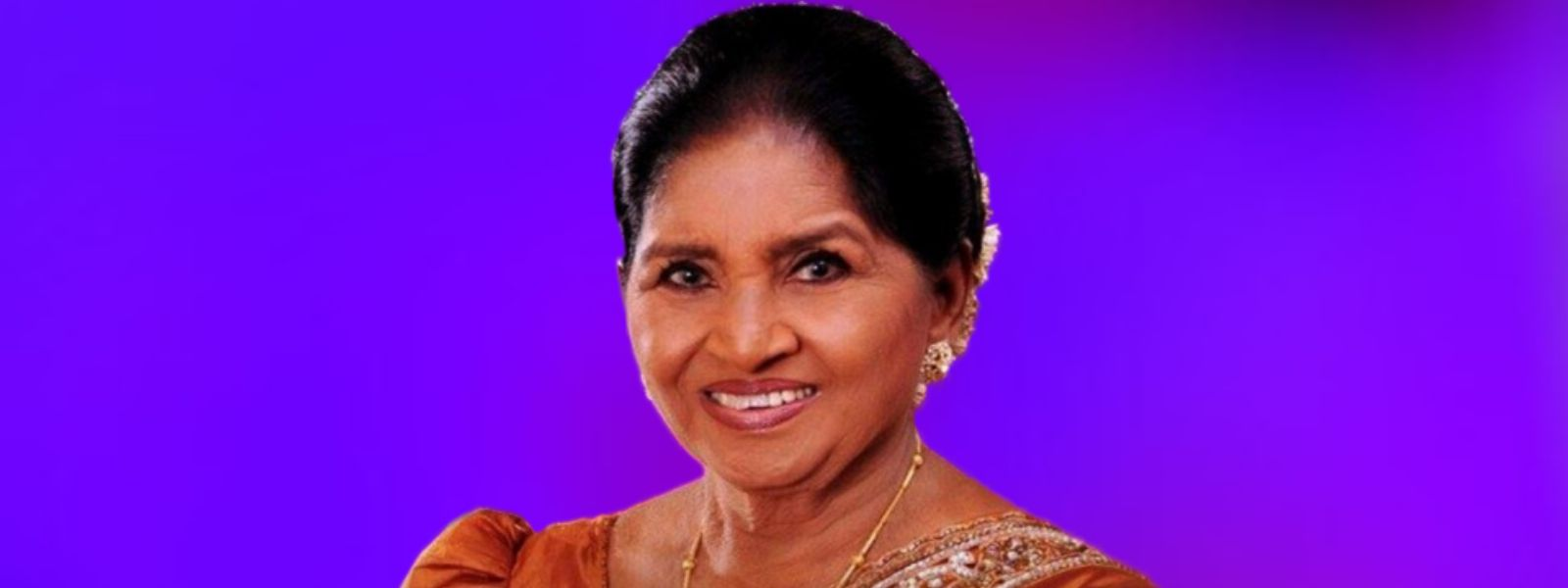
Family sources have confirmed that the interment of singer Latha Walpola will be performed at the General Cemetery Borella on Wednesday (31 December).

Former Malaysian Prime Minister Najib Razak has been jailed for 15 years for abuse of power and money laundering, in his second major trial for a multi-billion-dollar state funds scandal.
Najib, 72, was accused of misappropriating nearly 2.3 billion Malaysian ringgit ($569m; £422m) from the nation’s sovereign wealth fund 1Malaysia Development Berhad (1MDB).
On Friday afternoon a judge found him guilty in four charges of abuse of power and 21 charges of money laundering.
The former PM is already in jail after he was convicted years ago in another case related to 1MDB.
Friday’s verdict comes after seven years of legal proceedings, which saw 76 witnesses called to the stand.
The verdict, delivered in Malaysia’s administrative capital Putrajaya, is the second blow in the same week to the embattled former leader, who has been imprisoned since 2022.
He was handed four 15-year sentences on abuse of power charges, as well as five years each on 21 money laundering charges. The jail terms run concurrently under Malaysian law.
On Monday, the court rejected his application to serve the remainder of his sentence under house arrest.
But the former prime minister retains a loyal base of supporters, who claim that he’s a victim of unfair rulings and who have showed up at his trials calling for his release.
On Friday, dozens of people gathered outside the court in Putrajaya in support of Najib.
The 1MDB scandal made headlines across the world when it came to light a decade ago, embroiling prominent figures from Malaysia to Goldman Sachs and Hollywood.
Investigators estimated that $4.5bn was siphoned from the state-owned wealth fund into private pockets, including Najib’s.
Najib’s lawyers claim that he had been misled by his advisers – in particular the financier Jho Low, who has maintained his innocence but remains at large.
But the argument has not convinced Malaysia’s courts, which previously found Najib guilty of embezzlement in 2020.
That year, Najib was convicted of abuse of power, money laundering and breach of trust over 42 million ringgit ($10m; £7.7m) transferred from SRC International – a former unit of 1MDB – into his private accounts.
He was sentenced to 12 years in prison, but saw his jail term halved last year.
The latest case concerns a larger sum of money, also tied to 1MDB, received by his personal bank account in 2013. Najib said he had believed the money was a donation from the late Saudi King Abdullah – a claim rejected by the judge on Friday.
Separately Najib’s wife, Rosmah Mansor, was sentenced to ten years in jail in 2022 for bribery. She is free on bail pending an appeal against her conviction.
The scandal has had profound repercussions on Malaysian politics. In 2018 it led to a historic election loss for Najib’s Barisan Nasional coalition, which had governed the country since its independence in 1957.
Now, the recent verdicts has highlighted fissures in Malaysia’s ruling coalition, which includes Najib’s party United Malays National Organisation (UMNO).
Najib’s failed house arrest bid on Monday was met with disappointment from his allies but celebrated by his critics within the same coalition.
Malaysia’s Prime Minister Anwar Ibrahim called for politicians on all sides to respect the court’s decisions.
Former Malaysian lawmaker Tony Pua told the BBC’s Newsday programme that the verdict would “send a message” to the country’s leaders, that “you can get caught for corruption even if you’re number one in the country like the prime minister”.
But Cynthia Gabriel, founding director of Malaysia’s Center to Combat Corruption and Cronyism, argued that the country has made little headway in anti-corruption efforts despite the years of reckoning after the 1MDB scandal.
Public institutions have not been strengthened enough to reassure Malaysians that “the politicians they put into power would actually serve their interests” instead of “their own pockets”, she told Newsday.
“Grand corruption continues in different forms”, she added. “We don’t know at all if another 1MDB could occur, or may have already occurred.”
(BBC)

Myanmar votes as military holds first election since 2021 coup

Interment of singer Latha Walpola at Borella on Wednesday [31st]

Western Naval Command conducts beach cleanup to mark Navy’s 75th anniversary

Ex-Malaysia PM Najib Razak given 15-year jail term over state funds scandal

Two dead in 50-vehicle pile up on Japan highway

New York blanketed in snow, sparking travel chaos

‘Dates have the highest sugar content to fight Coronavirus’

Sunday Island 27 December – Headlines

#SundayIsland 17th December – Headlines

Sunday Island – 28th March

Sunday Island Headlines – 21 March

Sunday Island – 21st February – Headlines
-

 News6 days ago
Members of Lankan Community in Washington D.C. donates to ‘Rebuilding Sri Lanka’ Flood Relief Fund
-

 News4 days ago
British MP calls on Foreign Secretary to expand sanction package against ‘Sri Lankan war criminals’
-

 News7 days ago
Air quality deteriorating in Sri Lanka
-

 News7 days ago
Cardinal urges govt. not to weaken key socio-cultural institutions
-

 Features6 days ago
General education reforms: What about language and ethnicity?
-

 Opinion7 days ago
Ranwala crash: Govt. lays bare its true face
-
 News6 days ago
Suspension of Indian drug part of cover-up by NMRA: Academy of Health Professionals
-

 News7 days ago
CID probes unauthorised access to PNB’s vessel monitoring system