
Sports
Hello Madras, ‘ai api kaluda?’


by Rex Clementine
Young fast bowling sensation Mathesha Pathirana is rocking India. His deadly death over bowling efforts for Chennai Super Kings had made him an overnight sensation last season. Madras fans are beginning to love him even more this season after he blew away arch-rivals Mumbai Indians with a four-wicket haul during Sunday’s double header.
Such was his impact at Wankhede on Sunday that it felt unreal. Coming on to bowl the eighth over of the innings, he had a wicket off the first ball when Ishan Kishan hit it straight to mid-wicket. Then he picked up the dangerous Suryakumar Yadav, who was dismissed for a second ball duck. The pace was too much that he couldn’t clear third man.
Then as a partnership was building he came back to dismiss Tilak Varma and finally he cleaned up West Indies marvel Romario Shepherd. Wankhede was silenced. In recent times, not often Sri Lankans have gone to Mumbai and covered themselves in glory.
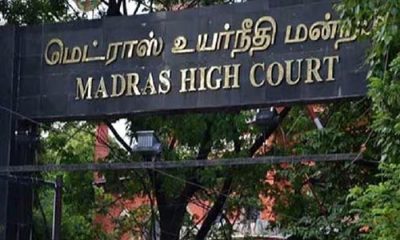
Pathirana no doubt has become a household name in Madras. It is funny. The Sri Lankan cricket team is considered persona non grata in the south Indian city, but they don’t mind Sri Lankan players winning matches for their franchise – Chennai Super Kings.
It is a fact that the Sri Lankan team hasn’t played a game in Madras for 20 years now.
Time was when Sri Lankan teams made regular visits to Madras. Obviously in the good old days there was the Gopalan Trophy.
After being granted Test status in 1981, every time Sri Lanka went to India, a game in Madras was a must. The team was well received and old timers still talk about the batting feats of Roy Dias and Duleep Mendis. Rumesh Ratnayake and Ashantha de Mel with their fast-bowling exploits are quite popular too.
Mendis obviously is best remembered for his hundreds in each innings in the Madras Test of 1982.
The sub-continent has put up a grand show in hosting World Cups. The 1987, 1996 and 2011 showpiece events of the sport were jointly hosted by the Asian neighbours. But in the last World Cup, India wanted to go solo. With Sri Lanka scheduled to play nine games in the competition, many thought that Madras will get a game.
But not to be so. The organizers felt trouble for the Sri Lankan team in Madras and were happy to slot two games each for them in Bangalore, Lucknow and Delhi. Pune, Hyderabad and Bombay hosted a game each.
Some people who are aware of how things work believe that the Sri Lankan boycott has got nothing to do with the fans of Madras. It is a few politicians who are trying to create trouble. They always do. Much ado about nothing is their pass time. Look at the hue and cry they made about Kachchatheevu recently.
As for Pathirana, not just Madras, the entire cricketing world will celebrate his match winning feats come the World Cup. It is one thing to play bowlers with that kind of awkward actions. It is quite another to counter that kind of pace. He is going to get noticed in the Caribbean and United States when the World Cup comes.



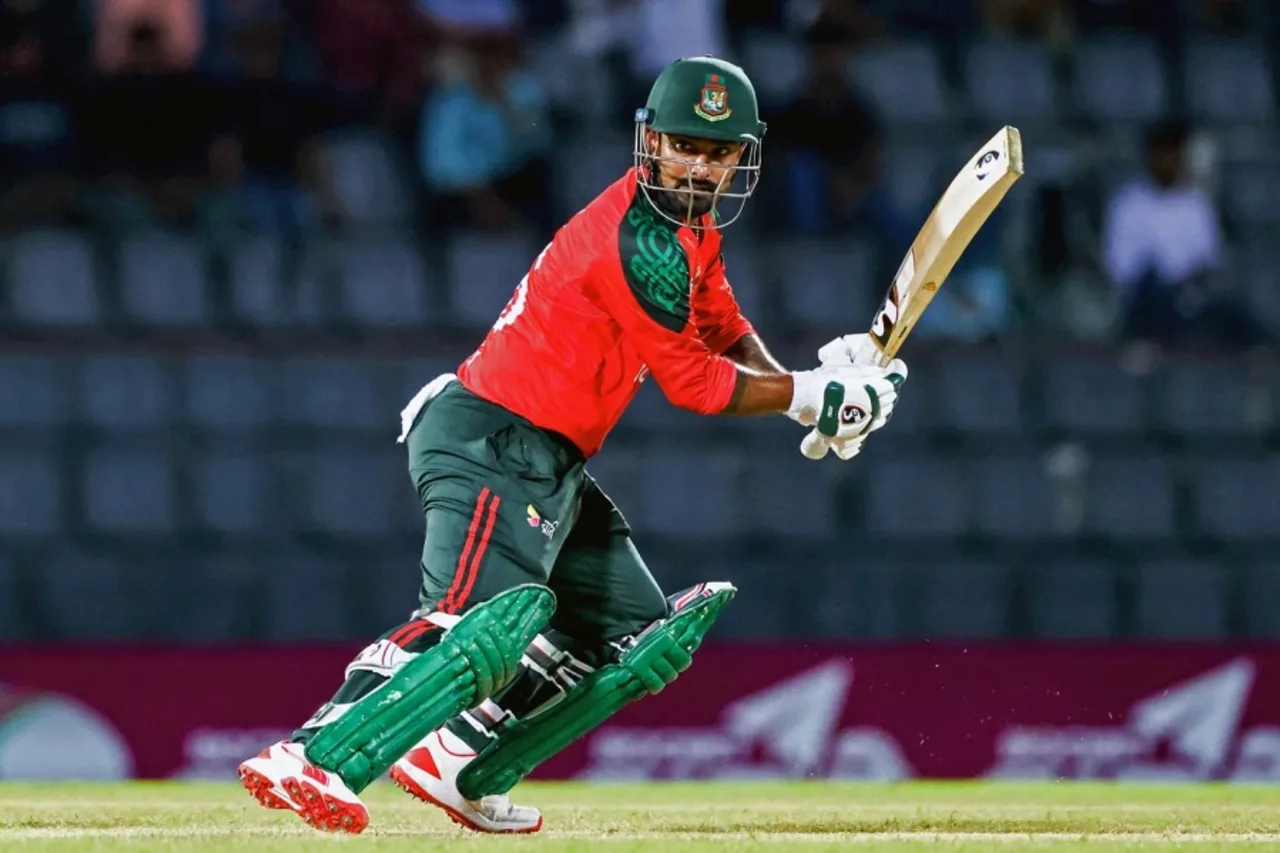
At the end of a wretched week in Nisshin, Bangladesh and Sri Lanka have something real to play for: an Asian Games bronze.
Both teams have a point to prove. Bangladesh recovered well from a poor start in their semi-final against Pakistan, thanks to Towhid Hridoy’s efforts with the bat, but their bowlers couldn’t defend 111 in a 13-overs-a-side game, and Mustafizur Rahman was taken to the cleaners in one of his rare poor outings in T20Is.
But at least they ran Pakistan close. In the other semi-final, India ran riot over Sri Lanka, bowling them out for 45. Sri Lanka had a second-string side on the field, but they wouldn’t have bargained for the basic mistakes they made, like the three run-outs in their innings.
Bangladesh, who can call on most of their first-choice players, start the third-place match as clear favourites, but the testing conditions at Nisshin can even up contests that look one-sided on paper. And both teams will have the motivation of bringing joy to contingents that have endured mostly barren Asian Games campaigns.
After a run-less Australia tour where Litton Das made three ducks in a row in the Test series, he was out for 2 against Pakistan. Litton faced just three balls, off which he attempted two reverse-sweeps, the second of them costing him his wicket. It was a perplexing innings on a pitch that offered a lot of turn and awkward bounce. Sometimes it’s hard to say if a batter is really out of form when he’s made a string of low scores, but Litton, who has led Bangladesh impressively in this format over the last couple of years, will want to break out of this run quickly.
Sahan Arachchige couldn’t quite muster up a captain’s performance against India, especially after his top three batters fell for ducks. He scored 9 before falling to a sweep shot against Axar Patel. He had earlier taken two wickets with his offbreaks. The 30-year-old allrounder now has the chance to put together a better show and inspire his team to the bronze.
Both teams could test their bench strength in the bronze-medal match.
Sri Lanka (probable): Sineth Jayawardena, Lasith Croospulle, Sohan de Livera (wk), Nuwanidu Fernando, Sahan Arachchige (capt), Ashen Bandara, Chamika Karunaratne, Wanuja Sahan, Tharindu Ratnayake, Vijayakanth Viyaskanth, Binura Fernando.
Bangladesh (probable): Tanzid Hasan, Saif Hassan, Litton Das (capt), Parvez Hossain Emon (wk), Towhid Hridoy (c), Mosaddek Hossain, Mahedi Hasan, Rishad Hossain, Aliss Al Islam/Nasum Ahmed, Shoriful Islam, Mustafizur Rahman/Hasan Mahmud.
[Ceicinfo]

The Wanderers Stadium in Johannesburg will host the 2027 ODI World Cup final, as it did in 2003, as well as the marquee match between India and Pakistan on October 10 at next year’s tournament. Wanderers, South Africa’s biggest ground with a capacity of over 30,000, has been preferred over Newlands in Cape Town, an iconic ground because of its mountain backdrop.
Newlands will instead host the opening match between India and defending champions Australia on October 7. So, a re-match of the 2023 final kicks off the group stage of the 14th edition of the tournament. Prior to that, the Namibia Cricket Ground in Windhoek will stage the Super Series, a three-team preliminary round which will decide which side makes it to the 12-team main event. Newlands gets a semi-final as well on November 17, with the other knockout game scheduled to take place in SuperSport Park in Tshwane (Centurion) on November 18. Zimbabwe, the co-hosts, are getting five games in the World Cup group stage and they play all of them at home.
The 12 teams – two of whom have yet to be decided – will be divided into two groups of six. Afghanistan, Australia, India, Pakistan, Zimbabwe and one of the qualifiers make up Group A. Bangladesh, England, South Africa, Sri Lanka, New Zealand and the other qualifier make up Group B. The two qualifiers will come from a 10 team tournament early next year, with the winner advancing to the group stage and the losing finalist and two losing semi-finalists to play the Super Series. A venue for the qualifiers has yet to be established but it is likely to be played either in South Africa or Namibia. The top eight teams besides the co-hosts in the ICC rankings on September 30 this year gained automatic qualification to the World Cup.
The World Cup will be staged between October 2 – to commemorate the birthday of Mahatma Gandhi, who spent two decades working as a lawyer in South Africa – and will conclude on November 21. The semi-finals and the final will have a reserve day.
South Africa, the co-host in group B, begin their campaign against New Zealand – a re-match of the 2026 T20 World Cup semi-final – at Newlands on October 9. Zimbabwe, the co-host in group A, will face Afghanistan in Bulawayo on October 11 to start their journey.
The top three teams of each group will move into the Super 7 phase, with the better fourth-place finisher across the two groups taking the seventh spot. Several teams already have their designations for the Super 7 phase and there is a chance of a second India vs Pakistan game in Cape Town on November 7.
- A1: India
- A2: Australia
- A3: Pakistan
- AB4: England
- B1: New Zealand
- B2: South Africa
- B3: Sri Lanka
If either Bangladesh or Afghanistan or any other team who are not seeded, get through their groups, they will assume seeding of the seeded team that gets knocked out.
In addition to hosting the preliminary round of the World Cup, Windhoek will host three group games, two of them involving 2019 champions England. The newly constructed Mosi-oa-Tunya Stadium in Victoria Falls, Zimbabwe got the final game of the group stages – India vs Zimbabwe on October 24 and three Super 7 matches. According to the ICC’s pre-seeding, these will be India vs Australia on October 28, Pakistan vs England on October 30 and Australia vs New Zealand on November 1.
There will be five matches played at Durban, including the final one of the Super 7 between A1 (India) and B3 (Sri Lanka) on November 14. In all there are 12 venues – Windhoek in Namibia, Victoria Falls, Harare and Bulawayo in Zimbabwe and Cape Town, Paarl, Johannesburg, Tshwane (Centurion), Bloemfontein, Durban, KuGompo City (East London) and Gqeberha (Port Elizabeth).
[Cricinfo]

The ICC has introduced a trial allowing pink balls to be used in daytime Test matches, among a series of changes to the Playing Conditions that come into effect for international series beginning on October 1.
The pink-ball provision is aimed at reducing the loss of playing time due to bad light. Its use will require mutual agreement between the two teams before the start of the Test and, once agreed, the ball colour cannot be changed during the match.
Continuing the push to make full use of playing time, the ICC will also clamp down on excessive time-wasting by batters in men’s cricket. A batter who is not ready to face the next delivery within the prescribed time, in the umpires’ view, will receive a warning for the first offence, followed by a final warning for the second. A third and each subsequent offence will result in five penalty runs being awarded to the fielding side, with Code of Conduct provisions potentially invoked for repeated offences.
Time-wasting came into focus during the Lord’s Test in 2025 when India captain Shubman Gill alleged that his confrontation with Zak Crawley stemmed from the England opener and his batting partner Ben Duckett seemingly arriving at the crease 90 seconds late when tasked with seeing out one final over before close of play on Day 3.
In another Test-specific change, following an MCC recommendation, the fall of a wicket in the final over of the day’s play will no longer automatically bring the day’s play to an end. If conditions remain suitable and the over has not been completed, the remaining deliveries will be bowled rather than carried over to the following day.
The ICC has also tightened the specifications for balls used in women’s international cricket, with separate size and weight requirements now in place for men’s, women’s and junior cricket. A new men’s ball must weigh between 5.5 and 5.75 ounces (156-163 grams) and measure 22.4-22.9 centimetres in circumference. For women’s cricket, the ball must weigh 5-5.25 ounces (142-149 grams) and measure 21.5-22 centimetres in circumference.
Among other changes following MCC recommendations, the ICC has also clarified the requirements around control of the ball, an area that has frequently come under scrutiny in run-out and stumping decisions. The revised laws make it explicit that mere contact with the ball is insufficient for a dismissal. For a wicket to be valid, the ball must be held with complete control at the moment the stumps are broken. Simply brushing the ball with a hand or glove while dislodging the bails will no longer meet the requirement.
The umpire will also have greater leeway in determining whether a ball is finally settled. The ball no longer necessarily has to be in the bowler’s or wicketkeeper’s hands to be considered finally settled.
Meanwhile, in ODIs and T20Is, the 15-minute interval in T20Is is now fixed, although it can be reduced to a minimum of 10 minutes when time has been lost. The ODI and T20I Playing Conditions are now aligned to allow the ‘Head Coach or their designate’ to enter the field of play at drinks intervals. [Cricbuzz]

Bronze at stake as Bangladesh, Sri Lanka look to bring cheer to Asian Games contingents

Wanderers to host 2027 men’s ODI World Cup final as well as India vs Pakistan

Prime Minister joins Gandhi Jayanti Commemoration

Showers or thundershowers will occur in most parts of the island after 1.00 p.m.

Unions resist tripartite EPF management plan

Two arrest warrants issued for Gnanasara thera

‘Dates have the highest sugar content to fight Coronavirus’

Sunday Island 27 December – Headlines

#SundayIsland 17th December – Headlines

Sunday Island – 28th March

Sunday Island Headlines – 21 March

Sunday Island – 21st February – Headlines
-

 Editorial6 days ago
Birth of a bad law
-

 News4 days ago
Police remove Thileepan statue in Jaffna
-

 News6 days ago
TIN mandatory for key transactions from Nov. 1
-

 Features4 days ago
The 22nd Amendment, constitutional recovery and illiberal slippage
-

 Features4 days ago
Of foreigners as CEOs of Lankan ventures
-

 Latest News2 days ago
Gold winner Tharanga gets brand-new Honda Vezel from SLAAJ
-

 News4 days ago
Sajith rejects Jt. Opp. protest sabotage claim; SJB TU chief demands remedial action
-

 Features3 days ago
Thailand’s biggest new global star …