
Business
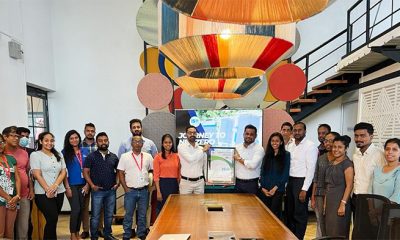
Hela Apparel Holdings completes FY 2022/23 with resilience, amidst a challenging operating environment


The fourth quarter of FY 2022/23 marked the close of a challenging year for Hela Apparel Holdings PLC. While revenue of Rs. 20.5 Bn in Q4 represented a 40.6% increase in the same period of the previous year, this was primarily driven by the impact of the rupee depreciation. In US Dollar terms, quarterly revenue declined by 9.6% year-on-year. The drop in US Dollar revenue, however, is smaller than the 19.7% year-on-year decline recorded during Q3, as consumer demand in the Group’s key export markets remained relatively resilient.
The tentative stabilisation in demand conditions during the fourth quarter, alongside the proactive cost control measures taken by the organization contributed to an improvement in profit margins. The Group’s gross profit margin increased to 13.5% in Q4, compared to 10.0% in Q3, as capacity utilisation rates improved across the Group’s manufacturing facilities. Operating profit margins also improved, supported by greater optimisation of distribution and administration expenses. That said, elevated finance costs driven by the ongoing rise in global US Dollar interest rates were a significant drag on profitability. As a result, the Group recorded a post-tax loss of Rs. 257 Mn in the fourth quarter.
For the full year ended 31st March 2023, the Group’s revenue increased by 69.3% to Rs. 95.1 Bn. Nonetheless, the significant deterioration in market conditions during H2 eroded accumulated profits, and the Group closed the year with a post-tax loss of Rs. 1,038 Mn. Despite this, Hela’s balance sheet remained in a robust position with the Net-Debt-to-Equity ratio closing FY 2022/23 at 1.6, compared to 1.8 at the same point of the previous year, supported by improvements in the working capital cycle.
In a statement accompanying the financial results, the Company noted that it expects the challenging operating environment to continue into the first half of FY 2023/24 as consumers in its key export markets remain under pressure from high inflation. In this context, it will continue to focus on proactively strengthening its strategic customer partnerships based on its long-term value proposition as a leading global apparel supply chain solutions provider.
The organization also intends to remain agile in the evolving operating environment and consider additional proactive steps to manage costs and ensure a return to profitability. Several of the strategic initiatives taken during FY 2022/23, with a precise focus on process improvements, digital systems, and supply chain management are also expected to support the improvements in profit margins in the coming quarters.
Hela Apparel Holdings PLC is a social capital-focused company built on the principles of inclusivity, equity, and climate stability. With over three decades of industry experience, Hela focuses on building strategic partnerships with global brands to provide apparel supply chain solutions with distinctive advantages. The organisation has a global presence with 10 manufacturing facilities across Sri Lanka, Kenya, Ethiopia, and Egypt, as well as design centres in Sri Lanka, the US, the UK, and France, providing direct employment to over 20,000 people. Innovative, ethical, and sustainable apparel manufacturing is at the centre of Hela’s operations. With numerous accolades for sustainability, the organization was recently endorsed as a signatory to the UN Global Compact and was awarded the ISO 14064-1:2018 certification for quantification and reporting of greenhouse gas emissions across the Group for the second consecutive year.









By Ifham Nizam
Sri Lanka’s renewable energy sector is poised for a significant investment surge as the International Solar Alliance (ISA) moves to operationalise a comprehensive Country Partnership Strategy (CPS), positioning the island as a key emerging hub for solar deployment and green financing in South Asia.
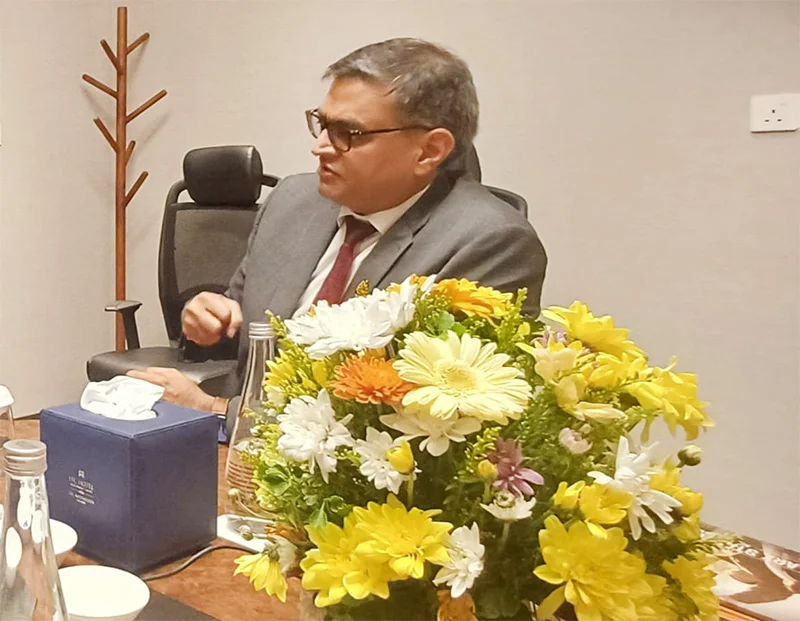
A high-level ISA delegation led by Director General Ashish Khanna is currently in Colombo (April 6–9), engaging with policymakers, multilateral lenders, and private sector stakeholders to fast-track a pipeline of solar projects exceeding 4 gigawatts (GW) under the Renewable Energy Project Development Plan (2025–2030).
From Policy to Projects: Unlocking Capital Flows
At the heart of the mission is a decisive shift from policy frameworks to bankable project execution. The CPS outlines a multi-year roadmap aimed at mobilising private capital, strengthening regulatory systems, and accelerating project approvals—long seen as a bottleneck in Sri Lanka’s energy sector.
Energy Minister Eng. Kumara Jayakody emphasised that the strategy provides “clarity across the solar value chain,” particularly in investment mobilisation and regulatory alignment. For investors, this signals reduced risk and improved predictability—two critical factors for scaling infrastructure financing.
Industry analysts note that Sri Lanka’s solar ambitions could unlock billions of dollars in investments over the next decade, especially as global funds pivot toward climate-aligned assets in emerging markets.
A key commercial opportunity emerging from the ISA mission is the focus on floating solar projects and battery energy storage systems (BESS). These segments are expected to attract both foreign direct investment (FDI) and technology partnerships.
Floating solar, in particular, offers Sri Lanka a competitive advantage due to its extensive reservoir network. Coupled with battery storage integration, it enhances grid stability—an essential requirement as renewable penetration increases.
The mission includes a dedicated Floating Solar Workshop aimed at accelerating project readiness, indicating near-term opportunities for engineering firms, developers, and financiers.
University-Industry Linkages to Drive Green Jobs
A landmark Memorandum of Understanding (MoU) to establish a Solar Technology Application Resource Centre (STAR-C) at the University of Moratuwa is expected to strengthen local technical capacity and innovation.
Beyond academia, the initiative is designed to support testing, certification, and workforce development—critical for creating a domestic solar ecosystem. This move aligns with broader efforts to localise value chains and reduce dependence on imported expertise.
Khanna highlighted that the STAR-C would play a pivotal role in job creation and skills development, reinforcing the economic multiplier effect of renewable energy investments.
Sri Lanka’s push toward solar is also driven by macroeconomic imperatives. With global fossil fuel prices remaining volatile, the country’s heavy reliance on imports has strained public finances.
Solar energy, which has already surpassed 1 GW in installed capacity, is expected to contribute nearly 75% of emissions reductions under Sri Lanka’s Nationally Determined Contributions (NDC 3.0) for 2026–2035.
More importantly, it offers a pathway to reduce foreign exchange outflows and enhance energy security—key priorities as the country navigates post-crisis economic recovery.

DevPro Guarantee Limited (DevPro) and Affno Virtual Market (Pvt) Limited (AVM) recently entered into a partnership to launch a cloud-based Software-as-a-Service (SaaS) digital marketplace platform “Green Tape Agri Exchange’ to uplift smallholder farmers/ producers in the spice value chain by connecting them with end buyers.
Smallholder farmers are the backbone of Sri Lanka’s agriculture sector, managing nearly 80% of the nation’s farmland and producing about 80% of nation’s food production. They are essential to food security, rural employment, and economic stability. However, poverty among smallholder farmers is a persistent rural crisis. Recent studies have highlighted the depth of this issue with approximately 82% of the country’s poor being concentrated in rural areas where agriculture remains the primary livelihood.
Due to inefficient marketing systems – poor market access, inadequate storage facilities and a lack of information on market prices – smallholder farmers often receive less than the optimal market prices which considerably limit their ability to expand operations, improve productivity and achieve scale.
Speaking on the partnership, DevPro’s Executive Director Chamindry Saparamadu said ‘as an organization committed to building a sustainable agriculture sector, we are pleased to collaborate with AVM to explore means to address market barriers through digital innovation. Our ultimate objective is to empower smallholder farmers and strengthen the local economy by creating a transparent and sustainable supply chain’. The CEO/ Managing Director of AVM Suren Kannangara said ‘we are excited to partner with DevPro to digitally transform the agricultural value chain. Green Tape Agri Exchange represents a scalable, data-driven model to digitize fragmented markets, improving price discovery, reducing intermediaries, and creating predictable, quality-driven market access for both farmers and buyers.
Business
Nestlé brands NESCAFÉ and MAGGI triumph at SLIM-KANTAR People’s Awards 2026 for fifth consecutive year

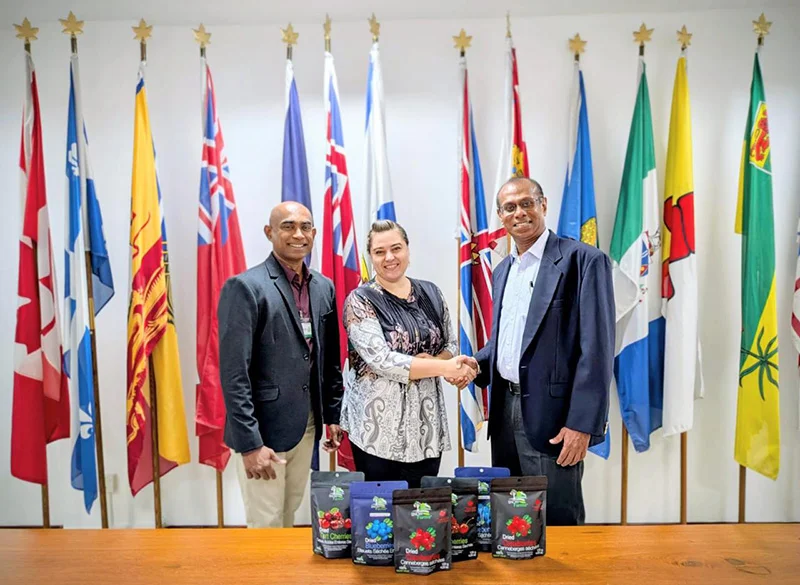
Nestlé’s household favourites continued their winning streak at the SLIMKANTAR People’s Awards 2026, taking home two awards this year. NESCAFÉ was voted People’s Hot Beverage Brand of the Year while MAGGI emerged as the joint-winner for People’s Snack Brand of the Year respectively for the fifth consecutive year. Organized by the Sri Lanka Institute of Marketing (SLIM), the SLIM-KANTAR People’s Awards is widely considered as one of the most prestigious awards ceremonies in the country, rewarding brands and personalities that are closest to the hearts of Sri Lankans.
Loved by Sri Lankans for its distinct aroma and rich taste, NESCAFÉ is made with the goodness of 100% pure coffee beans to create great coffee experiences that make life better. Made using Sri Lankan spices and the finest ingredients, the tasty goodness of MAGGI noodles has been a household favourite by Sri Lankans for over 40 years.
Sharing his thoughts, Bernie Stefan, Chairman and Managing Director of Nestlé Lanka said “The People’s Awards hold special meaning for us as they are shaped entirely by consumer choice. Being recognised for the fifth consecutive year for NESCAFÉ as Hot Beverage Brand of the Year and MAGGI as Snack Brand of the Year reflects the enduring trust Sri Lankan consumers place in our brands – trust that has been built over generations during our 120‑year journey in Sri Lanka. This recognition belongs to our teams, whose commitment to quality and understanding local tastes continues to earn the confidence of consumers. We are grateful for this continued support and remain focused on serving Sri Lankan households with tasty and nutritious products”.
Guided by its purpose of ‘unlocking the power of food to enhance quality of life for everyone, today and for generations to come’, Nestlé Lanka has been enriching Sri Lankan lives for 120 years, nourishing generations with tasty, and nutritious products across the country. The company remains committed to supporting healthier families, empowered communities, and a greener planet. Nestlé Lanka manufactures over 90% of its products locally at its state‑of‑the‑art factory in Kurunegala, upholding the highest standards of safety and quality.

Trump announces two-week ceasefire as Iran agrees to reopen Hormuz Strait

Yashasvi Jaiswal powers Royals past Mumbai Indians in 11-over thrash

Showers will occur at several places in the Western, Sabaragamuwa, Southern and North-western provinces and in Kandy, Nuwara-Eliya and Monaragala districts after 1.00 p.m.

The Sun is directly overhead Warakapola, Aranayaka, Gampola, Bibile, Inginiyagala, and Akkaraipattu at about 12:12 noon today (08)

AKD admits import of substandard coal, blames technicalities and supplier

‘Sri Lanka – China relations: Community with a Shared Future’ launched

‘Dates have the highest sugar content to fight Coronavirus’

Sunday Island 27 December – Headlines

#SundayIsland 17th December – Headlines

Sunday Island – 28th March

Sunday Island Headlines – 21 March

Sunday Island – 21st February – Headlines
-

 Features4 days ago
Ranjith Siyambalapitiya turns custodian of a rare living collection
-

 News7 days ago
2025 GCE AL: 62% qualify for Uni entrance; results of 111 suspended
-

 News4 days ago
Global ‘Walk for Peace’ to be held in Lanka
-

 Editorial7 days ago
Search for Easter Sunday terror mastermind
-

 News2 days ago
Lankan-origin actress Subashini found dead in India
-
 Opinion6 days ago
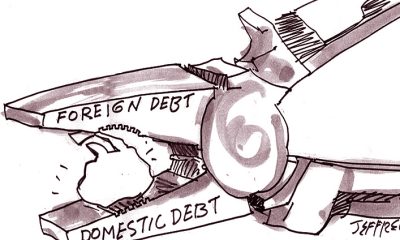
Hidden truth of Sri Lanka’s debt story: The untold narrative behind the report
-

 Opinion7 days ago
Is there hope for Palestine?
-

 Features4 days ago
Beyond the Blue Skies: A Tribute to Captain Elmo Jayawardena