
News
Health Ministry approves home treatment for asymptomatic Covid-19 patients

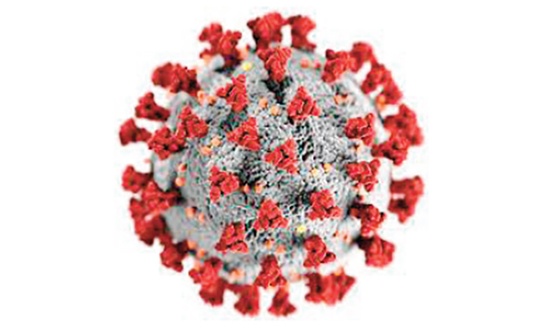
The Ministry of Health has said asymptomatic COVID-19 patients can be t treated in their own homes.
The Ministry of Health has in a media statement said that a rise in the number of COVID-19 cases, has led to the congestion of interim treatment centres and dedicated COVID-19 hospitals. Thus, there is a delay in admitting a COVID-19 patient to a hospital in the Western Province and several other parts of the country.
“A number of health unions including the Government Medical Officers Association (GMOA) have urged us to come up with a mechanism to treat some patients at home. If not, there would be increasing numbers of people who die of complications due to late hospital admissions, they warned.
Under this system, asymptomatic patients can contact a doctor via the 1390 hotline. Once a doctor is assigned to the patient, he or she will monitor the patient until he can be taken to a treatment centre.
“This will allow medical staff to focus on the priority groups like those above 60 and those with non-communicable diseases. This way we can not only manage hospital space properly but also reduce deaths.”
Around 400 doctors have been assigned to communicate with patients and monitor their progress on a daily basis.


… as Lakvijaya falters, power plants need over 2 mn litres of fuel daily
By Shamindra Ferdinando
The SJB yesterday (06) said that the NPP government owed an explanation as to why Litro Gas Lanka Limited and Laugfs Gas PLC were allowed to increase the prices of old stocks of domestic gas. Litro and Laugfs have increased the prices of 12.5 kg cylinder by Rs. 775 to Rs. 4,765 and by Rs. 1,070, to Rs. 5,700, respectively.
Convener of the Samagi United Trade Union Force (SUTUF) and the Samagi Joint Trade Union Alliance Ananda Palitha said they were aware of the state-owned gas supplier Litro and the private sector enterprise making a killing at the expense of consumers.
Acknowledging that gas and fuel prices had to be increased in view of the disruptions to the regular supply route through Hormuz Strait, the former petroleum sector worker emphasised it wouldn’t be fair, under any circumstances, to apply a new pricing formula to old stocks.
Taking advantage of the new West Asia war, the government (CPC) and three foreign private suppliers, namely Lanka IOC, Sinopec and R.M. Parks, increased prices of old fuel stocks, Palitha alleged, adding that his accusations, previously reported in the front-page of The Island, haven’t been disputed.
Responding to our queries, Palitha pointed out that Sri Lanka experienced gas supply disruption even just before the eruption of the Iran war.
Warning that further electricity tariff increases were around the corner due to failure on the part of the country’s only coal-fired power plant Lakvijaya to produce the required electricity, Palitha blamed the developing crisis on the use of low-quality coal for power generation.
Referring to recent media reports of fuel powered power plants needing 800,000 litres, daily, to meet the shortfall due to the crisis at Lakvijaya, Palitha said that the actual requirement was much more. Kelanitissa Combined cycle power plant alone required 1.3 mn litres of diesel daily, Palitha said, alleging the country was paying a very heavy price for corruption and mismanagement by the current dispensation.
According to Palitha Kerawalapitiya (Yugadanavi) Combined Cycle Power Plant required 750,000 litres of black oil/furnace oil. Together, those two power plants, namely Kelanitissa and Yugadanavi, required over 2 mn litres per day, the trade unionist activist said, warning the government of frightening economic consequences.
Having explained the requirements of other power stations in operation, Palitha said that the situation was so bad that the CEB, about three days back, began buying fuel worth Rs 1.7 bn from the Ceylon Petroleum Corporation on credit. Responding to another query, Palitha said that though the Iran war was having a major impact here, the NPP should accept responsibility for the corrupt coal deal and horrendous mismanagement of the power sector.
The government sought to downplay the crisis, claiming that Sri Lanka received Indian and Chinese support to meet its energy requirements, Palitha said. However, foreign powers were exploiting the situation here to advance their agendas, Palitha added, urging the government to come out clean.
India was increasing its hold on Sri Lanka, the trade union activist said, noting that Sri Lanka had recently declared its intention to develop a section of the Trincomalee oil tank farm together with India. According to Palitha, Indian Prime Minister Narendra Modi himself had asked President Anura Kumara Dissanayake to fast-track the project.

UN Women Regional Director for Asia and the Pacific, Christine Arab, concluded a two-day official visit to Sri Lanka (25–26 March), emphasising that closing gender gaps in labour force participation, access to economic opportunities and decision-making are critical to the country’s inclusive recovery. She also launched the Sri Lanka Country Gender Equality Profile (CGEP), a comprehensive analysis designed to inform evidence-based policymaking and strategic investments.
The CGEP notes that despite achieving high human development levels and ranking first in South Asia by 2022, Sri Lanka has continued to regress on gender equality markers, falling sharply from 16th place in the Global Gender Gap Index in 2010 to 130th by 2025 – a decline of over 100 places in just 15 years.
The publication features detailed gender statistics on women’s economic and political participation, education, health and morbidity, poverty and social protection, safety and security, as well as the gendered impacts of climate change and disasters. It also includes analysis of the country’s legal and institutional frameworks, acknowledging positive judicial and administrative reforms, while observing that persistent and layered inequalities and discriminatory social norms continue to undermine the rights of many women across the country. The profile concludes with recommendations for gender-transformative governance.
During her visit, Arab held a high-level discussion with the Minister of Women and Child Affairs, Saroja Savithri Paulraj, focusing on strengthening collaboration on policy reform, women’s economic empowerment, and efforts to end violence against women and girls.
“Gender equality is fundamental to Sri Lanka’s inclusive recovery and long-term resilience,” said Arab. “Data, strong institutions and meaningful partnerships are essential to ensuring that women and girls can fully contribute to and benefit from the country’s development.”
She also met with the High Commissioners of Australia and Canada, and their teams, and with the Embassy of Japan in Sri Lanka to reinforce partnerships supporting inclusive development and women’s leadership. Arab met members of Sri Lanka’s National Commission on Women (NCW) underscoring the importance of community-driven change and women’s voices in shaping policy.
Engagement with civil society organizations was another key component of the visit. Speaking during the discussion, Samitha Sugathimala, Programme Director, Foundation for Innovative Social Development (FISD), emphasized that “the shrinking space for civil society remains a critical challenge, particularly for organizations working on gender equality and social justice. In such contexts, collective action among civil society actors is not just important but essential to resist pushback, amplify marginalized voices and sustain community-driven change.”
In all her engagements, Arab reiterated the importance of strengthening institutions, investing in data and fostering multi-stakeholder partnerships to accelerate progress on gender equality.
The keynote address by Dr. Radhika Coomaraswamy, former United Nations Under-Secretary-General and Special Representative of the Secretary-General for Children and Armed Conflict, and former Chairperson of the Human Rights Commission of Sri Lanka, provided an in-depth analysis of the state of gender equality in Sri Lanka. It grounded these priorities in the country’s lived realities and highlighted persistent structural challenges.
A panel discussion, moderated by Arab, brought together current and former members of independent commissions to collectively explore the structural and institutional barriers that continue to impede progress, examine gaps in accountability and rights protection, and identify priority reforms required to drive meaningful, gender responsive governance in the final stretch towards 2030.
Panelist Dr. Padma Gunaratne, Member, NCW (2025–present) and Consultant Neurologist, stated that “Sri Lanka stands at a critical moment to strengthen its gender governance architecture. In this regard, it is essential to ensure that the National Commission on Women is both independent and well-resourced, while also clarifying and reinforcing the mandates of key institutions.”
Arab also appeared in an exclusive national television interview on Face to Face, where she highlighted the economic and social imperative of advancing women’s empowerment, noting that “investing in women is not only a matter of rights, but a driver of economic growth and sustainable development for Sri Lanka.”
UN Women remains committed to working alongside the Government of Sri Lanka, development partners and civil society to advance policies and programmes that promote equal rights, leadership opportunities, and economic participation for women and girls across the country.
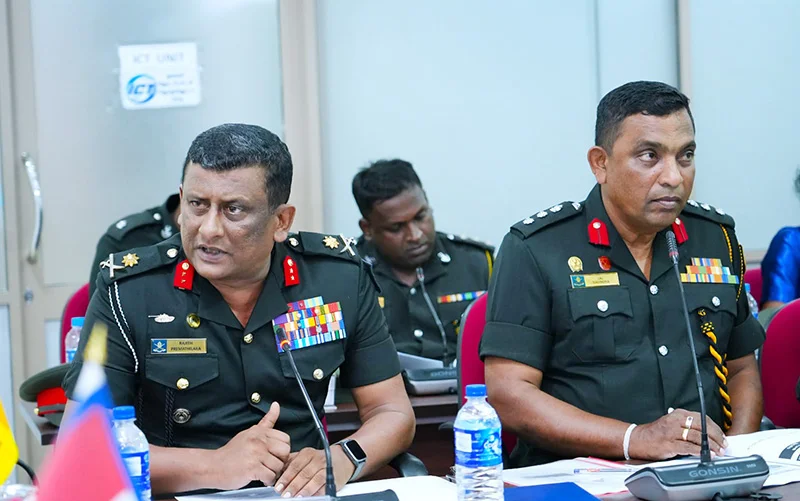
A programme to expand cadet activities in schools to promote national reconciliation and unity among the country’s youth was discussed at a workshop held recently in Jaffna.
The workshop, organised by the National Cadet Corps (NCC) in collaboration with the Ministries of Education and Defence, was held at the auditorium of the Northern Province Governor’s Office on the 17th under the patronage of Northern Province Governor N. Vethanayahan.
Officials said the expansion of cadeting in schools had been identified as a timely initiative to strengthen bonds among young people across communities while fostering discipline, teamwork and leadership skills.
Addressing the gathering, NCC Director Major General A.P.C.R. Premathilake briefed participants on plans to recruit new Cadet Platoon Officers and to establish additional cadet platoons in schools across the region.
The National Cadet Corps, which has a history of nearly one and a half centuries, has played a key role in nurturing disciplined and responsible youth while encouraging respect for diversity and teamwork among students.
The workshop was attended by 88 principals and deputy principals from schools in the Jaffna District. Officials said their participation was aimed at encouraging schools in the Northern Province to actively introduce or expand cadet units.
Also present were the Secretary to the Northern Province Governor, the Secretary to the Northern Province Ministry of Education, Zonal Directors of Education in the Jaffna District, and several senior officers of the National Cadet Corps.
Authorities said strengthening cadet activities within the school system would help build stronger relationships among students from different backgrounds while contributing to the development of responsible future leaders.

SJB: Litro, Laugfs making a killing by selling old stocks at inflated prices

UN Regional Director launches SL’s first Country Gender Equality Profile during official visit

Programme to expand cadet corps in schools to promote national reconciliation

50,000 litres of hoarded fuel seized in raids

Samash smashes century as Joes post 354

‘Tap expertise, not just capital’: A practical path for Sri Lanka’s economy

‘Dates have the highest sugar content to fight Coronavirus’

Sunday Island 27 December – Headlines

#SundayIsland 17th December – Headlines

Sunday Island – 28th March

Sunday Island Headlines – 21 March

Sunday Island – 21st February – Headlines
-
 News5 days ago
2025 GCE AL: 62% qualify for Uni entrance; results of 111 suspended
-

 Features2 days ago
Ranjith Siyambalapitiya turns custodian of a rare living collection
-

 News2 days ago
Global ‘Walk for Peace’ to be held in Lanka
-
 Business6 days ago
Hour of reckoning comes for SL’s power sector
-

 Editorial5 days ago
Search for Easter Sunday terror mastermind
-
 Opinion4 days ago
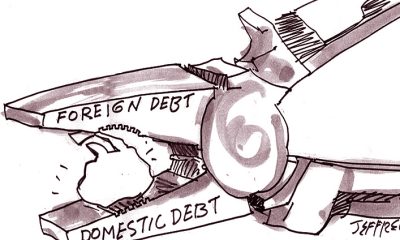
Hidden truth of Sri Lanka’s debt story: The untold narrative behind the report
-
Editorial6 days ago
Ideological confusion and identity crisis
-

 Opinion5 days ago
Is there hope for Palestine?