
Business
Hatton Plantations looks to gain on its robust capital structure

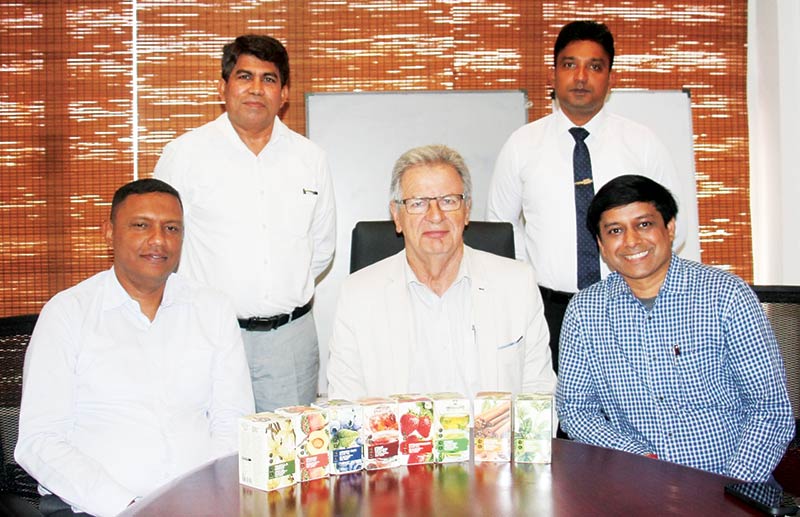
Looking for opportunities to invest in tourism and solar power verticals
Says ‘would be happy to talk to right partners’
By Sanath Nanayakkare
Getting a more realistic control over historical truth and the current significance of a company will probably be the prime concern of a potential investor looking for a strategic tie-up with a particular company, before he or she decides to invest in it.
In that context, Hatton Plantations may not have a ‘story’ to tell, but rather a ‘credible report’ to present because many investors might be cynical about listening to stories.
Hatton Plantations PLC is a subsidiary of G&G Group of Companies, a Singapore-based conglomerate whose chairman is Gary Seaton from Australia who first visited Sri Lanka in the 1970s as a backpacker tourist. Then he and his family started looking at business opportunities in Sri Lanka in the 1980s and bought the first tea company in 1996 after the plantations privatization programme came into effect in Sri Lanka. That was the well-known Pussellawa Plantations spanning across 10,000 hectares.
Then they sold it in 2017 and bought Hatton Plantations (HPL PLC) in 2019 which has 7,500 hectares on 13 estates.
Today HPL PLC has 12 tea processing factories with a combined green leaf capacity of 155,500 kg per day. It uses Orthodox, CTC, Leafy, and Green Tea manufacturing methods supported by versatile production facilities. It engages in the production of high and medium-grown teas in the key regions of Watawala, Hatton, and Lindula.
Hatton Plantations PLC, was the highest producer amongst all the Regional Plantation Companies (RPCs), having sold a quantity of 6,484,037.50 kgs with an average of Rs.1,134.11 for the year 2024, preceded by equal performances in the three previous years. And HP PLC is one company that has been replanting for the past four years continuously – a key factor that has contributed to its continuous growth.
Speaking to the media at the Company’s office in Peliyagoda recently, Gary Seaton said. “We have a vision to further expand into plantation, and we also look at two other business verticals: renewable energy and tourism. We very much believe in transitioning from fossil fuels to renewables. Sri Lanka is one of those few remaining countries that hasn’t industrialized everything and that’s very much aligned with the vision of Hatton Plantations PLC. We understand the challenges Sri Lanka faced in the last 40 years. But despite those challenges, we are with Sri Lankans. Many Sri Lankans are leaving Sri Lanka to go abroad, but we are coming from abroad to operate from Sri Lanka. We are doing it the other way around,” he said on a lighter note.
Menaka Athukorala, CEO & MD Hatton Plantations PLC said,” As part of the diversification, we are going into coffee in a major way. We initiated this project three years ago and we have already planted coffee on 100 hectares, and we are already harvesting coffee. A total of 500 hectares of coffee will be planted in the next 3 to 4 years. Our total investment in coffee would be Rs. 1 billion and we have already invested Rs. 200 million. With this, our per hectare income grows with the optimum use of the land while getting the best productivity from our workforce in a mutually beneficial way.” he said.
Gowri Shankar, CEO G&G Group of Companies, Singapore noted,” There’s a shortage of coffee in India, so it will be a potential market for our unique Sri Lankan coffee brand apart from the U.S., and Australia markets. South India loves coffee over tea and North India’s preferred beverage is tea. So, our coffee has a great opportunity to enter the South Indian market. Hence, we are looking at these three key markets for exporting our coffee.”
“Some other companies also have started growing coffee, but we are the largest producer of coffee at present. We will be setting up our coffee processing unit in the next two years which will cost about Rs. 200- 300 million. By 2026, HPL PLC’s coffee will come to the local market and exports will commence in 4 years down the line”, Menaka Athukorala said.
Touching on their tea plantations, HPL PLC said that they have started deploying mechanization, precision agriculture and tech solutions to make their operations more efficient.
HPL has already started using drone technology to apply Foliar Spray on some of their estates to deliver essential nutrients directly to the tea leaves.
“Drones are being used in pilot projects to streamline the operational process, to increase the productivity in the fields and to make the monitoring more efficient and automative,” they said.
“We are upgrading the facilities being provided to our field workforce with convenient access to toilets and bathing places. We have a workforce of 4,000 on permanent basis and an equal number on a casual basis. The issue of labour wages has not caused us much of a problem because we have so many welfare activities that ensure our workers’ well-being.”
“We are going to set up a vocational training institute on our estate in Hatton to train the children of our workers in various crafts. With the new-found skills, they can choose to work with us or go and be employed or self-employed elsewhere. We believe such socially responsible activities will foster stronger bonds between the company and the employees. That bond will take care of the whole ecosystem of Hatton Plantations for many years to come,” they said.
“For diversification in tourism, we are looking at strategic partnerships whose mainstream business is tourism. We don’t want to get into their line of business. As the infrastructure is already there with HPL’s holiday bungalows and picturesque tea estates, we will see who understands its value and bring their expertise of tourism to our assets. We will see how we can leverage those assets together with them and grow the business,” Gowri Shankar said.
Hatton Plantation PLC’s profit before tax was Rs. 1.2 billion in 2024. This year it will be slightly less because of the wage increase, and it is expected to be close to one billion rupees in FY 2024/25. And in FY 2025/26, the company expects a PBT of Rs. 1.3 billion when tech modernizations are successfully implemented.
“We have liquid cash assets that we would like to channel into these verticals. In the meantime, we are looking at the possibility of investing in tea plantation in Kenya as there is an opportunity to produce orthodox leafy teas in that country – where your yields are higher and profit margins are much greater,” they said.
The media was told that HPL was keen on investing in viable solar power projects anywhere in Sri Lanka that generates more than 5 megawatts of power.
Currently, HPL has eight hydro-power plants generating 12 megawatts. Lotus Hydro Power of the Group is the highest dividend-yielding company in the domain with around 14% yield rate, consistently maintaining it from 2014, except for the crisis-years in Sri Lanka.
“Hatton Plantations is willing to allocate Rs. 1 billion to invest in a viable solar project and we’d be happy to talk to the right partners”, “Gary Seaton said.



The Securities and Exchange Commission of Sri Lanka (SEC) successfully hosted a series of high-level meetings of the International Organization of Securities Commissions (IOSCO), bringing together leading securities regulators and enforcement officials from around the world to discuss emerging regulatory challenges, strengthen international cooperation, and enhance collective efforts to combat cross-border securities market misconduct.
The meetings, held at the Hilton Colombo from 13 to 16 October 2026, included sessions of the IOSCO Enforcement and Cooperation Committee and its Screening Group (Committee 4/SG), as well as meetings of the Monitoring Group and the Steering Committee. The event attracted approximately 50 senior representatives from securities regulators and exchanges across several jurisdictions, including Australia, Japan, the United States, the United Kingdom, France, Italy, Canada, New Zealand, India, Germany, Belgium, Singapore, China and Spain, reflecting the global significance of the discussions and the growing importance of international regulatory collaboration.
Welcoming delegates to Sri Lanka, Senior Professor D.B.P.H. Dissabandara, Chairman of the SEC, emphasized the critical role of international cooperation in safeguarding market integrity and investor confidence in an increasingly interconnected financial landscape.
“No regulator can effectively address cross-border misconduct in isolation. The speed with which information, transactions and illicit activities can move across borders requires an equally coordinated and timely regulatory response. Strong international cooperation, effective information sharing and mutual trust among regulators are essential to maintaining fair, transparent and resilient capital markets,” he stated.
The discussions focused on a range of enforcement and cooperation matters, including mechanisms for enhancing cross-border information exchange, strengthening investigative collaboration among regulators, addressing increasingly sophisticated forms of securities fraud and market abuse, and promoting the effective implementation of international standards and best practices. Participants also exchanged experiences and insights on emerging enforcement challenges arising from technological developments, digitalization of financial services, and increasingly interconnected global markets.
IOSCO is recognized as the leading international body that brings together the world’s securities regulators and serves as the global standard setter for securities regulation. Through its policy work and cooperative initiatives, IOSCO plays a central role in promoting investor protection, ensuring that markets are fair, efficient and transparent, reducing systemic risk, and strengthening confidence in capital markets worldwide.
Sri Lanka has maintained a strong and active relationship with IOSCO for more than three decades. The SEC became an Ordinary Member of IOSCO in 1993 and has been a signatory to the IOSCO Multilateral Memorandum of Understanding (MMoU) since 2004. The MMoU is the internationally recognised benchmark for cooperation and information sharing among securities regulators and serves as a critical tool in facilitating cross-border investigations and enforcement actions.

Pan Asia Bank recently entered into a one-year Memorandum of Understanding (MOU) with Ideal Motors (Pvt) Ltd, creating a new financing avenue for customers purchasing vehicles from the authorised Mahindra dealer. The strategic partnership will enable customers of Ideal Motors to access leasing facilities from Pan Asia Bank, making vehicle financing more convenient while supporting their mobility and business requirements. The agreement also provides an opportunity for the Bank to expand its leasing portfolio and strengthen its presence in Sri Lanka’s vehicle financing market.
Ideal Motors is the authorised dealer for the Mahindra vehicle range in Sri Lanka, including the Mahindra Bolero CPU Truck and Scorpio Jeep/Pickup. The vehicles cater to a range of requirements, from commercial and business applications to personal mobility, making accessible financing an important part of the purchasing decision.
The Bank’s vehicle leasing facilities are designed to simplify the financing process, with convenient repayment options and professional support to help customers select a solution suited to their requirements. For customers, the arrangement brings vehicle selection and financing closer together, reducing the need to navigate the two processes separately.
“Our partnership with Ideal Motors enables us to bring financing closer to customers at the point of vehicle purchase. We remain focused on providing convenient and flexible leasing solutions that support both personal mobility and the needs of businesses,” said Naleen Edirisinghe, Director/CEO of Pan Asia Bank.
Pan Asia Bank and Ideal Motors will work closely during the one-year partnership to maximise business opportunities and deliver a seamless financing experience to customers. The collaboration is expected to strengthen both organisations’ ability to respond to demand for commercial and personal vehicles while creating greater value for customers.
Yohan Ebell, Head of Retail Credit, Pan Asia Bank, said: “Through this partnership, we aim to make vehicle financing simpler and more accessible, with leasing solutions designed to meet the varied requirements of Ideal Motors’ customers.”
The collaboration also reflects Pan Asia Bank’s commitment to building partnerships that make financial services more accessible and responsive to the needs of individuals and businesses.
Pan Asia Bank has established a growing presence in vehicle financing, offering leasing solutions designed around customer convenience and flexibility. Its leasing proposition is supported by a nationwide branch network and a customer-focused approach, enabling customers to obtain guidance on financing options while completing their vehicle purchase.

Heritance Hotels and Resorts has secured four distinguished titles at the World Travel Awards 2026, with three national awards recognising its Sri Lankan properties and an international title for Heritance Aarah in the Maldives.
The three Sri Lankan titles recognise Heritance Tea Factory as Sri Lanka’s Leading Heritage Hotel 2026, Heritance Ahungalla as Sri Lanka’s Leading Luxury Hotel 2026, and Heritance Kandalama as Sri Lanka’s Leading Wedding Hotel 2026. Heritance Aarah was named the Indian Ocean’s Leading All-Inclusive Resort 2026.
Internationally recognised within the global travel and tourism industry, the World Travel Awards celebrate excellence across hotels, resorts, and destinations. Recognition at this level affirms the quality, distinctiveness, and consistency of the experiences delivered by Heritance Hotels and Resorts.

Heavy showers about 100 mm are likely at some places in the Northern, North-central, Central, Eastern, North-western and Uva provinces

Molineux, Dunkley enter WPL 2027 auction with top base price of INR 50 lakh

Ranawaka accuses govt. of using JVP cadres and police to suppress political opponents

Six killed as speeding bulker crashes into vehicles, shop in Akurana

Prof. Peiris, summoned by CIABOC, appeals for Ven. Gnanasara’s release

Tusker Agbo found safe and in good health

‘Dates have the highest sugar content to fight Coronavirus’

Sunday Island 27 December – Headlines

#SundayIsland 17th December – Headlines

Sunday Island – 28th March

Sunday Island Headlines – 21 March

Sunday Island – 21st February – Headlines
-

 Latest News7 days ago
Nissanka’s return headlines Sri Lanka’s Test squad against Pakistan
-

 Features2 days ago
Kotahena:A Small Enclave, An Extraordinary Legacy
-

 News6 days ago
Sri Lanka, India caught in US-Iran ship crisis
-

 News3 days ago
Asgiri Mahanayake calls for immediate release of Gnanasara Thera
-

 Latest News7 days ago
Imran Khan’s PTI braces to fight federal takeover of Khyber Pakhtunkhwa
-

 Latest News6 days ago
Missiles intercepted near Riyadh after Saudi coalition hits Yemen fuel depot
-

 Latest News6 days ago
Kusal Mendis’ unbeaten 87 hands Sri Lanka consolation win
-

 Latest News7 days ago
Former Zimbabwe player and umpire Sarah Dambanevana dies aged 36