
Sports
Hasaranga, Dasun, Bhanuka released by their IPL teams

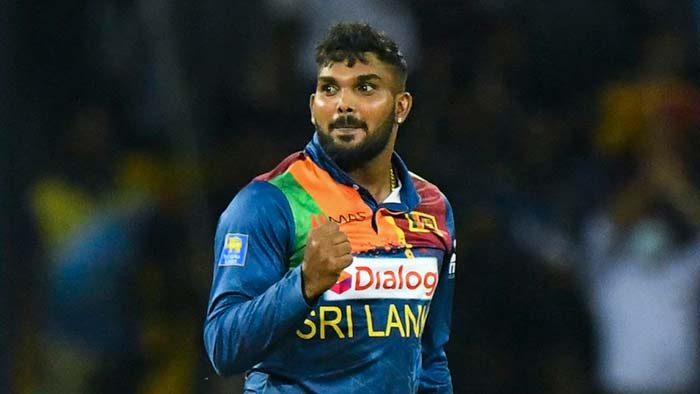
RCB are set for a massive overhaul of their bowling attack after releasing the trio of Josh Hazlewood, Wanindu Hasaranga and Harshal Patel. The franchise has spent a huge amount of money on Hasaranga (INR 10.75 cr) and Harshal (INR 10.75 cr) in particular and releasing them will boost their purse. Mumbai Indians on expected lines have released pacer Jofra Archer (INR 8 cr). The move was looked at as a gamble when they picked him a couple of seasons ago because of his injury record and the England pacer ended up playing just five games for the former champions.
Apart from Archer, MI have also released Duan Jansen, Riley Meredith, Jhye Richardson and Chris Jordan among others, a clear sign of a new-look overseas pace attack for IPL 2024.
The 2022 champions and the 2023 runners-up Gujarat Titans have retained their skipper Hardik Pandya amidst speculation surrounding his future. Given a player can be traded until seven days before an auction, the probability of Hardik moving back to Mumbai Indians still remains. Titans have released wicketkeeper KS Bharat, Sri Lankan all rounder Dasun Shanaka and the West Indies duo of Alzarri Joseph and Odean Smith among others.
Delhi Capitals have released a few players from their squad, although Prithvi Shaw is not one among them. The big names are Rilee Rossouw, Phil Salt, Sarfaraz Khan, Aman Khan, Rovman Powell and Mustafizur Rahman.
Lucknow Super Giants, a top performing side in the last two Indian Premier League (IPL) seasons, is going for an overhaul. The Sanjiv Goenka-owned side have released about nine players so that they can go into the December 19 auction with reserves of close to INR 20-25 crore. The team had qualified for the play-offs the last two seasons.
As reported earlier, Chennai Super Kings have left out some big names, including Ben Stokes (pulled out) and Ambati Rayudu (retired). Among others left out are Bhagath Varma, Subhranshu Senapati, Sisanda Magala and Kyle Jamieson.
Punjab Kings have released Bhanuka Rajapaksa, Mohit Rathee, Baltej Dhanda, Raj Bawa and Sharukh Khan. Their big-money buy Sam Curran has been retained.
With Harry Brook failing to justify his massive price tag of INR 13.25 cr last season, Sunrisers Hyderabad have let go of him and his English compatriot Adil Rashid. Brook ended up scoring only 190 runs in 11 games for the franchise with 100 of those coming in a single game.
Kolkata Knight Riders have retained their long-standing West Indian duo of Andre Russell and Sunil Narine for one more season. However, Indian seam-bowling allrounder Shardul Thakur (INR 10.75 cr) has been released. KKR have also opted for a complete overhaul of their bowling attack by releasing Lockie Ferguson, Tim Southee and Umesh Yadav. The Bangladesh duo of Shakib Al Hasan and Litton Das have been let go as well.







Defending champions Royal Challengers Bengaluru [RCB] razed Chennai Super Kings’ [CSK] attack and the record books, in front of their beloved fans at the Chinnaswamy Stadium.
After being on 91 for 1 in ten overs, RCB nearly tripled that in the last ten, pushing the limits of T20 power-hitting. RCB’s 250 for 3 was their third highest total in the IPL and the highest ever by any team against CSK in the league. In response, CSK lost their top three inside three overs and eventually slid to their third successive defeat in IPL 2026.
The Chinnaswamy surface was tacky in the early exchanges, according to Devdutt Padikkal who scored 50 off 29 balls, and the outfield was unusually slow, with quite a few strong hits plugging in the outfield. While the surface settled later in the innings, the outfield remained slow. Tim David and Rajat Patidar didn’t feel the need to hit the ball into the outfield, especially when they had the power to keep launching the ball into the night sky.
David and Patidar faced 44 balls between them and sent 14 of those disappearing over the boundary. The entire CSK batting line-up could manage only 11 sixes.
After being asked to bat, RCB needed 20 balls for the first boundary of the day. Both Matt Henry and Khaleel Ahmed hit hard lengths and made scoring hard for Phil Salt and Virat Kohli. It was Anshul Kamboj who provided CSK with the opening breakthrough when he had Kohli caught by Shivam Dube at long-on for 28 off 18 balls. Dube redeemed himself after dropping Kohli on 7 at mid-on off Khaleel Ahmed in the third over.
With the ball not coming onto the bat, Salt laboured to 15 off 16 balls. A brace of swatted fours off Kamboj then freed him up, but Shivam Dube, bowling for the first time in this season, struck with his third ball to stop Salt on 46 off 30 balls with a cutter that was banged into the pitch.
Padikkal, who had dashed out the blocks on the opening day of the season, wasn’t allowed to do so on this track. He started slowly as well – he was on 17 off 16 balls at one point – but then put then put the pedal to the floor and converted it into a 28-ball half-century. It was his second successive fifty, but it certainly wasn’t the story of the day.
David and Patidar came together at 151 for 3 at the start of the 15th over after Overton had knocked Padikkal over by cranking it up to 148kph. The carnage created by David and Patidar turned out to be the story of the day.
With only 35 balls left in the innings, David took strike for 25 of those and crashed an unbeaten 70. Only one other batter has scored as many or more without facing a ball in the first 14 overs of a T20 innings (where ball-by-ball data is available).
David was particularly brutal on Overton, taking him for a sequence 6,4,6,6,6 in the 19th over that yielded 30 runs. All of those hits had the Chinnaswamy in a frenzy. One of those even had Kohli off his seat in the dressing room and applauding David. The last of that sequence was a 106-metre monster six that disappeared out of the ground.
At the other end, Patidar had the best seat to this six-hitting show. He didn’t face a single ball for almost three overs between overs 17 and 20. In all, he faced just five balls since the 16th over. Prior to that, he had played some special shots of his own. Like the pumped six off Noor Ahmad in the 12th over. Like the sliced six over the same region off a near yorker from Khaleel four overs later. Patidar finished with an unbeaten 48 off 19 balls.
After seeing David thump one six after another, Bhuvneshwar Kumar “wasn’t sure whether I should be happy or sad”. He had 200 reasons to be happy when he had Ayush Mhatre flapping a catch to mid-off for 1 by hitting an awkward, in-between length. It was his 200th wicket in the IPL; only Yuzvendra Chahal has more wickets than him in the league.
By the end of the powerplay, CSK were 77 for 3, with Sarfaraz Khan scoring 50 of those in 24 balls. Next ball, however, Krunal Pandya had Sarfaraz stumped. Prashant Veer then showed some spark during his 43 off 29 balls after going two matches without bowling a single ball. His shovelled four between deep midwicket and wide long-off off a Krunal dart showed why franchises were locked in a bidding war for Veer at the auction.
Overton also made some quick runs, but his cameo could not offset the damage caused by the sixes he had conceded to David.
Brief scores:
Royal Challengers Bengaluru 250 for 3 in 20 overs (Phil Salt 46, Virat Kohli 28, Devdutt Paddikal 50, Rajat Patidar 48*, Tim David 70*; Anshul Kamboj 1-52, Jamie Overton 1-42, Shivam Dube 1-30) beat Chennai Super Kings 207 in 19.4 overs (Sarfaraz Khan 50, Shivam Dube 18,Prashant Veer 43, Jamie Overton 37, Anshul Kamboj 19*; Jacob Duffy 2-58, Bhuvneshwar Kumar 3-41, Abhinandan Singh 2-30, Kunal Pandya 2-36, Suyash Sharma 1-21) by 43 runs
[Cricinfo]

Mohammed Shami’s miserly 2 for 9 and Rishabh Pant’s uncharacteristic half-century helped Lucknow Super Giants [LSG] open their account in IPL 2026 as they beat Sunrisers Hyderabad [SRH] by five wickets in Hyderabad.
After Pant put SRH in, Shami dealt the early blows by dismissing Abhishek Sharma and Travis Head cheaply. He bowled three overs in the powerplay, and was done with his quota by the end of the ninth over.
Ishan Kishan and Liam Livingstone didn’t last long either, leaving SRH on 26 for 4 in the eighth over. Heinrich Klassen and Nitish Kumar Reddy rescued them by adding 116 in 63 balls – the highest fifth wicket partnership for SRH. The previous record, of 82, was set in the previous game by these two very batters. But Avesh Khan and co came back strongly in the death overs to restrict SRH to 156 for 9.
Come the chase, Aiden Markram’s 45 off 27 balls gave LSG the desired start. But the pitch wasn’t conducive to strokeplay, and LSG kept losing wickets at regular intervals. In the end, it came down to nine needed from the final over with Pant on strike. He had barely looked fluent until then but found two fours off the first two balls off Jaydev Unadkat to level the scores. Two dots later, Pant lofted one over mid-off to seal the result.
Bowling against his former team, Shami struck twice in his first seven balls. On the last ball of his opening over, he had Abhishek caught at short third with an offcutter. Then, with the first ball of his next, Shami outfoxed Head with another slower ball; Markram took a diving catch at mid-off on this occasion.
In the following over, Prince Yadav uprooted Kishan’s off stump with an inswinger to make it 11 for 3. Livingstone fell soon after. He tried to lap Digvesh Rathi but ended up deflecting the ball onto his shoulder. Pant, who was moving towards the leg side, dived to his right to complete a one-handed catch.
For the second game in a row, Klaasen and Reddy had to revive SRH’s innings. They started slowly and took SRH to 35 for 4 after ten overs – it was the fourth-lowest total by a team in the IPL at the halfway mark. SRH had hit only one four and one six until then, but after that, Klaasen and Reddy took the attack to the opposition. They plundered 79 runs in the next five overs.
Klaasen, who was dropped on 19 by Mukul Choudhary off M Siddharth, brought up his fifty off 33 balls. Reddy took only 30 to get to his. After 16 overs, SRH were 123 for 4, and would have been eyeing 170 – probably even more.
LSG’s bowlers brought them back into the contest with some excellent death bowling. Reddy holed out to sweeper cover off Siddharth in the 17th over. In the next, Klaasen went for a reverse lap off Avesh but ended up playing it too fine, and Pant dived across to take the catch. That sucked the momentum out of SRH’s innings; they could score only 33 runs in the last four overs while losing five wickets on the way.
Opening the bowling for SRH, Harsh Dubey started with a two-run over. But Markam and Mitchell Marsh picked up three fours off Reddy in the next. Markram also hit the first six of the innings when he pulled a slower ball from Unadkat over wide long-on. Marsh fell to Eshan Malinga for 14 off 12 balls, but Markram kept going. In the last over of the powerplay, he hit two fours and a six off Unadkat to take LSG to 53 for 1.
Pant was struggling at the other end but Markram ensured LSG remained ahead of the asking rate. He eventually fell to Shivang Kumar while trying to clear long-off.
Pant tried to break the shackles with back-to-back fours off Shivang in the 12th over, but Dubey had Ayush Badoni stumped. Nicholas Pooran came out at No. 5 and lasted just four balls. He swept Shivang fine, and set off for a single, without realising that Kishan had stopped the ball, and was thus run out.
Dubey tried to keep LSG in the contest with Samad’s wicket, and Harshal Patel bowled a four-run 19th over. But Pant stayed firm. Unadkat started the final over with a full delivery; Pant drilled it past him for four. Unadkat then bowled a slower one into the pitch, only for Pant to swat it down the ground for another boundary. Two dots later, Pant lofted one over mid-off to seal the game.
Brief scores:
Lucknow Super Giants 160 for 5 in 19.5 overs ( Aiden Markram 45, Mitchell Marsh 14, Rishabh Pant 68*, Ayush Badoni 12, Abdul Samad 16; Harsh Dubey 2-18, Eshan Malinga 1-30, Shivang Kumar 1-30) beat Sunrisers Hyderabad 156 for 9 in 20 overs (Liam Livingstone 14, Heinrich Klaasen 62, Nitish Kumar Reddy 56; Mohammed Shami 2-09, Digvesh Rathi 1-46, Prince Yadav 2-34, Manimaran Siddharth 1-29, Avesh Khan 2-36 ) by five wickets
[Cricinfo]

Trinity College ran riot at Sugathadasa Stadium, tearing past Royal College 58-26 with a ten-try blitz to clinch the Dialog Schools Rugby Knockouts 2026 President’s Trophy and end a 15-year title drought.
In a final dripping with history and rivalry, Trinity struck early and never loosened their grip, turning the contest into a one-sided procession after a brief Royal resistance.
Royal’s discipline wavered from the outset and Trinity pounced. After forcing early penalties, they worked the ball through the hands with purpose before centre Kevin Weerakoon finished in the corner, setting the tone for what followed.
Royal hit back swiftly through their tried-and-tested driving maul, prop Lemitha Amerasinghe crashing over with Mohamed Simak converting to edge them ahead. But it was a fleeting lead.
Trinity’s response was clinical. A well-orchestrated lineout move released Sadeesha Weerawansa and slick handling sent Dimath Abeypitiya over in the corner, skipper Shan Althaf adding the extras. Moments later, Trinity struck again, stretching Royal’s defence before Abeypitiya dotted down for his second.
Royal stayed in touch through another muscular maul, skipper Disas Pathirana finishing at the tail, but Trinity’s backline carried a sharper edge. Abdul Malik’s deft cross-kick found Ammaar Manzil, who plucked the ball out of the air to score, before Malik himself rounded off a flowing move just before the break.
At half-time, Trinity led 27-12 and Royal were already chasing shadows.
If there was any hope of a Royal revival, Trinity extinguished it immediately after the restart. Althaf pounced on a loose ball from a clever kick to extend the lead, before finishing another well-weighted cross-kick moments later to put the result beyond doubt.
With Malik pulling the strings, Trinity’s attack cut through at will. Hamza Abdeen chased down a grubber to score and Manzil capped a sweeping move after sharp interplay with Evin Jayasena and Thisara Paris as the scoreboard ticked relentlessly.
Royal managed a late rally, Hiruka Jayadinu and Akira Yatawara crossing for consolation tries with Simak converting both, but it barely dented Trinity’s dominance.
Fittingly, it was Althaf who had the final word. Completing his hat-trick after another cross-kick was gathered and recycled, the Trinity skipper sealed a commanding victory and with it, a long-awaited return to the top.
by Carlos Van de Berg

Trump threatens ‘hell’ for Iran over Hormuz Strait as deadline approaches

Tim David, Rajat Patidar inflict bruising defeat on Chennai Super Kings

Shami sets up Lucknow Super Giants victory before Pant fifty takes them home

Showers or thundershowers will occur at several places in the Northern, Eastern, North-central, Central and Sabaragamuwa provinces and in Puttalam, Galle and Matara districts after 2.00 p.m.

Sun directly overhead Beruwala, Gurulubadda, Rakwana, Godakawela, Udawalawe and Thanamalwila at about 12:13 noon today (06)

Heat Index at Caution Level in the Western, Sabaragamuwa, Southern, Eastern, North-western, Northern and North-central provinces and in Monaragala district

‘Dates have the highest sugar content to fight Coronavirus’

Sunday Island 27 December – Headlines

#SundayIsland 17th December – Headlines

Sunday Island – 28th March

Sunday Island Headlines – 21 March

Sunday Island – 21st February – Headlines
-

 News4 days ago
2025 GCE AL: 62% qualify for Uni entrance; results of 111 suspended
-

 News6 days ago
Tariff shock from 01 April as power costs climb across the board
-
 Business5 days ago
Hour of reckoning comes for SL’s power sector
-

 Features1 day ago
Ranjith Siyambalapitiya turns custodian of a rare living collection
-

 Editorial4 days ago
Search for Easter Sunday terror mastermind
-

 News1 day ago
Global ‘Walk for Peace’ to be held in Lanka
-
 Features6 days ago
Seychelles … here we come
-

 Opinion6 days ago
Sri Lanka has policy, but where is the data?