
Sports
Hasaranga and Asalanka named in ICC Men’s T20 World Cup team

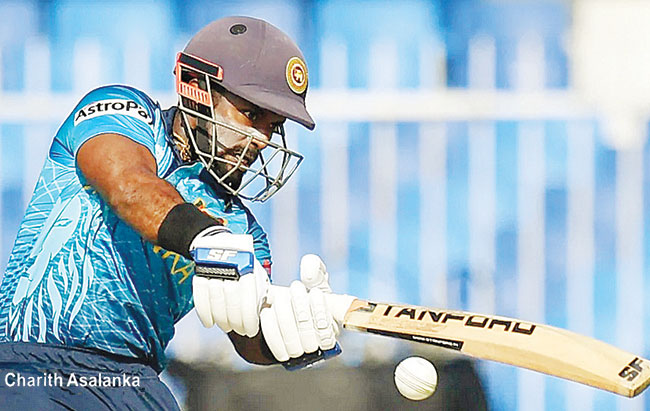
ICC T20 World Cup Tournament’s highest wicket taker Wanindu Hasaranga and Charith Asalanka have been named in the official ICC Men’s T20 World Cup Most Valuable Team of the Tournament.
While Babar Azam has been named captain of the team, players from six countries have been named in the team.
Stars from champions Australia, runners-up New Zealand, semi-finalists England and Pakistan as well as Sri Lanka and South Africa feature in the star-studded line up.
Opening batter David Warner, leg-spinner Adam Zampa and seamer Josh Hazlewood all make the cut for Australia after helping steer their side to their first ever ICC Men’s T20 World Cup title.
There are also spots for England ace Jos Buttler as wicketkeeper, Pakistan’s Babar Azam as captain, New Zealand left-armer Trent Boult and Sri Lanka star Wanindu Hasaranga – the tournament’s leading wicket-taker – in the line-up.
The side was pulled together by a selection panel featuring commentators, former international players and journalists Ian Bishop (Convenor), Natalie Germanos, Shane Watson, Lawrence Booth – of Wisden, the Daily Mail and Mail on Sunday – and Shahid Hashmi of Agence France Presse and ARY Channel.
Ian Bishop said: “As with any team selection there will be varying opinions, and robust discussion on the final composition of the squad. The panel respects that, and we encourage the strong debate that will ensue. This team was incredibly difficult to select over such a highly competitive tournament. Selections were based predominantly on the Super 12 onward to the final.”
The team of the ICC Men’s T20 World Cup 2021 (in batting order) is:
David Warner (Australia) – 289 runs at 48.16
Jos Buttler (wk) (England) – 269 runs at 89.66, five dismissals
Babar Azam (Captain, Pakistan) – 303 runs at 60.60
Charith Asalanka (Sri Lanka) – 231 runs at 46.20
Aiden Markram (South Africa) – 162 runs at 54.00
Moeen Ali (England) – 92 runs at strike rate of 131.42, seven wickets at 11
Wanindu Hasaranga (Sri Lanka) – 16 wickets at 9.75
Adam Zampa (Australia) – 13 wickets at 12.07
Josh Hazlewood (Australia) – 11 wickets at 15.90
Trent Boult (New Zealand) – 13 wickets at 13.30
Anrich Nortje (South Africa) – nine wickets at 11.55
12th: Shaheen Afridi – seven wickets at 24.14
Warner came into the tournament in uncharacteristically patchy form but laid those demons to rest in style with a power-packed set of performances.
The left-handed Australian opener racked up a tally of 289 runs – the second most of the tournament – at a healthy average of 48.16 to help propel his team to victory in Sunday’s Dubai final.
Warner struck 65 against Sri Lanka in the Super 12 stages, before a breath-taking 89 not out against the West Indies and then 49 against Pakistan in the semi-finals placed his team on the cusp of global glory.
And his 53 in the final provided the perfect support act for Mitchell Marsh – 77 not out – as Australia chased down a total of 173 to clinch their maiden ICC Men’s T20 World Cup crown.
England star Buttler was in similarly blistering form throughout, scoring just 20 runs fewer than Warner at a brilliant average of almost 90.
He cracked a perfectly-paced century against Sri Lanka – off just 67 balls – when his team needed him most, while his brutal knock of 71 not out against Australia helped fire England to an emphatic eight-wicket victory against the eventual champions.
 Captaining the side at No.3 is Pakistan skipper Babar, who was the only batter to break the 300-run barrier throughout the duration of the competition.
His 68 not out against old rivals India powered Pakistan to a memorable 10-wicket victory, while three further half-centuries in the Super 12 stages helped book his team’s slot in the semi-final against Australia.
And while they were unable to battle past Aaron Finch’s outfit, Babar helped himself to 39 in the first innings to finish his campaign in typically consistent fashion.
Asalanka slots in at No.4 after his match-winning innings against Bangladesh in the Super 12s.
With his team in pursuit of 172 to win, Asalanka cracked a scintillating 80 not out off just 49 balls to guide Sri Lanka over the line and solidify his reputation as one of his country’s brightest talents.
A further innings of 68 against the West Indies soon followed as Asalanka scored 231 runs at an average of 46.20 throughout the course of the tournament.
South African Markram and England all-rounder Moeen occupy the No.5 and 6 positions, with Markram’s quickfire 52 not out against England helping down Eoin Morgan’s team in Sharjah.
Another half-century against the West Indies helped him reach a total of 162 runs at an average of 54 while for Ali, a haul of 92 – at a strike rate of 131.42 – provided a valuable contribution for England.
His economical off-spin also went for just 5.50 per over as his seven wickets at 11 saw him function as a crucial string to England’s T20I bow.
Completing the middle order is Hasaranga, who stands tall as the tournament’s leading wicket-taker with a stunning 16 from his eight matches.
The skilful leg-spinner bagged a brilliant hat-trick against South Africa as he dismissed Temba Bavuma, Markram and Dwaine Pretorius – across two separate spells – to etch his name into ICC Men’s T20 World Cup folklore.
And a further three wickets against England, bolstered by two against Australia, saw him emerge as the most prolific bowler of the tournament and firmly deserving of his place in the Team of the Tournament.
Australian pairing Zampa and Hazlewood line up at No.8 and 9, with fellow leg-spinner Zampa lying closely behind Hasaranga in the tournament’s leading wicket-takers.
Conceding an average of his 5.81 runs an over, the Australian ace removed 13 victims across his seven matches – including a memorable five-wicket haul against Bangladesh in the Super 12s.
Zampa ended with figures of 5 for 19 off his four overs and after Australia navigated their way to the final, teammate Hazlewood followed in his footsteps with a record-equalling three for 16 against the Black Caps.
Hazlewood dismissed Kane Williamson, Daryl Mitchell and Glenn Phillips in Dubai and his figures represented the joint-best of any seamer in an ICC Men’s T20 World Cup Final alongside Indian Irfan Pathan in the 2007 showpiece.
And that helped cap a haul of 11 total wickets as the skilful right-armer proved a crucial weapon in guiding Justin Langer’s team to their maiden tournament title.
 Rounding off the side at No.10 and 11 are fellow pace bowlers Trent Boult and Anrich Nortje, who both took 13 and nine wickets respectively for New Zealand and South Africa.
Left-armer Boult took three-fers against both India and Afghanistan, while grabbing both of his team’s wickets in the final helped him finish the tournament with an average of 13.30.
Nortje’s express pace sees him slot into the team at No.11, with his nine wickets at 11.55 featuring a barnstorming performance that blew away Bangladesh.
He took three for eight off his 3.2 overs to help bowl the Tigers out for just 84 and further enhance his reputation as one of the short format’s most blockbuster bowlers.
Taking his place as 12th man is Pakistan prodigy Shaheen Afridi, who started his tournament in style with a blistering new ball spell against old foes India.
Afridi, 21, removed the talismanic top three trio of Rohit Sharma, KL Rahul and captain Virat Kohli to end with figures of three for 31 and lay the foundations for a memorable victory.
The left-arm pacer finished the tournament with seven wickets at 24.14 and will no doubt continue to star at multiple more ICC World Cup events throughout an exciting future career.






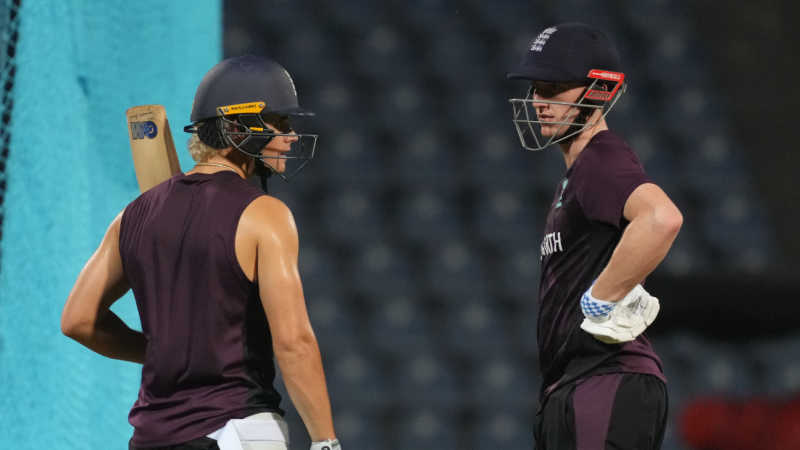
Harry Brook and Jacob Bethell have escaped with a slap on the wrist from England’s Cricket Regulator after they were found to have brought the game into disrepute for their late night antics in Wellington last year.
Brook was disciplined by the ECB after admitting that he had been out drinking the night before he captained England in their third ODI against New Zealand on November 1 and that he was “clocked” by a bouncer when trying to gain access to a late-night venue. England considered stripping him of the captaincy but instead opted to fine him in a process that was not made public.
The incident only came to light shortly after England’s defeat in the fifth Ashes Test in Sydney, over two months later, via a report in the Telegraph. Brook initially insisted that he had been on his own but later admitted that he had been accompanied by Bethell and Josh Tongue and that he had lied to protect his team mates.
The case was referred to the Cricket Regulator – an independent body which enforces the game’s regulations in England and Wales, and is ring-fenced from the rest of the ECB – which found that Bethell and Brook were both in breach of Regulation 3.2 of the ECB’s Professional Conduct Regulations.
The regulation reads: “No Participant may conduct themself in a manner, do any act or make any omission at any time which is improper or which may be prejudicial to the interests of cricket or which may bring the ECB, the game of cricket or any cricketer or group of cricketers into disrepute.”
Bethell and Brook have both accepted the ‘caution notices’ issued to them, which effectively places them on a final warning. They will not be issued with a ‘charge letter’ but the notice will remain on their disciplinary record for the next three years.
Tongue, who said this week that he had “learned from” the incident, has had no further action taken against him.
Rob Key said in December that England had encountered “none of these issues” since he became managing director, when asked about footage that showed players out drinking on the night in question. He also denied that any formal disciplinary action had been taken, though he has since claimed he meant specifically as a result of the footage.
Key admitted after the ECB’s post-Ashes review – which focused in part on England’s culture and environment – that he was concerned by some players’ drinking. “Like a lot of teams, there’s two or three players that can be irresponsible with alcohol given the opportunity,” he said. “What we’re trying to do is try to find that happy medium.”
England introduced a midnight curfew ahead of their tour to Sri Lanka and the T20 World Cup earlier this year, which is expected to remain in place this summer.
Brook, England’s Test vice-captain, is expected to play some County Championship cricket for Yorkshire before England’s three-match series against New Zealand in June. Bethell, who is also Brook’s de facto vice-captain in white-ball cricket, is at the IPL with Royal Challengers Bengaluru.
(Cricinfo)

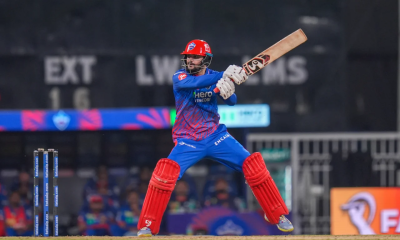
An unbeaten 70 from Sameer Rizvi proved decisive in a low-scoring contest in Lucknow, where Delhi Capitals (DC) became the first away team to win a match in IPL 2026. Coming in as Impact Player, Rizvi joined forces with Tristan Stubbs to haul DC out of trouble, after Lucknow Super Giants (LSG) had reduced them to 26 for 4 in a chase of 142.
That target proved far too small in the end, but for a while, it looked imposing as LSG’s fast bowlers swung the ball for an unusually extended length of time for a T20 contest. A red-soil surface, which seemed to quicken up in the second innings, offered seam movement too. Mohammed Shami, Prince Yadav and Mohsin Khan kept tying DC’s batters in knots.
But the seamers couldn’t keep bowling forever, and the introduction of spin turned the match decisively. LSG bowled only 2.1 overs of spin, but they went for 35 runs, with Rizvi hitting four fours and two sixes in them. That included the winning hit off the first ball of the 18th over.
DC’s other heroes on the night were their bowlers, who kept LSG to a sub-par total on a surface that played differently in the two halves of the match. If it was quick and skiddy during the second innings, it was two-paced and grippy in the first. DC’s bowlers made excellent, collective use of it. The highlight of their performance was a dipping slower ball from Lungi Ngidi,, which comprehensively bowled the dangerous Nicholas Pooran: that moment alone may have been shaved 20 or 30 runs off the target DC eventually chased.
Mitchell Marsh and Aiden Markram were one of the best opening partnerships of IPL 2025, but LSG decided to mix things up to start the new season, with their captain Rishabh Pant walking out alongside Marsh.
Their association was short-lived, with a deflection off Mukesh Kumar’s hand turning what could have been the caught-and-bowled dismissal of Marsh into the run-out dismissal of Pant at the non-striker’s end in the third over.
That moment came in the middle of a skillful display from Mukesh, who moved the ball around, tied Marsh down by denying him width or anything short, and conceded just 17 runs in three powerplay overs.
Axar Patel came on right after Pant’s dismissal and bowled two powerplay overs himself; this surely wouldn’t have happened if LSG had sent in Pooran to replace the left-handed Pant. Instead, they sent in Markram, and Axar bowled him in his second over, beating an attempted cut with his skid and angle.
LSG lost a third wicket soon after the powerplay, with Ayush Badoni – who walked in ahead of Pooran at No. 4 – nicking off to T Natarajan. LSG were 49 for 3.
After Ngidi sneaked his slower ball through Pooran, Marsh continued to struggle for fluency. He got into the 30s with a slog-swept six off Kuldeep Yadav in the 10th over, but he was beaten in flight while attempting another big hit later in the over, and holed out for 35 off 28.
From there, LSG’s innings was a slow slide to an early finish, with the constant loss of wickets forcing them into a tactical compromise. Shahbaz Ahmed, the left-arm-spin-bowling allrounder, walked in as their Impact Player, and put on the longest partnership of the innings – 26 balls, producing 33 runs – with top-scorer Abdul Samad. While it helped extend the LSG innings, it meant there would be no role in the match for mystery spinner Digvesh Rathi.
LSG were bowled out with eight balls unused, with Ngidi finishing the innings with back-to-back slower-ball wickets in the 19th over.
One of the biggest factors behind LSG’s disappointing 2025 season was a spate of injuries to their fast bowlers. This time around, they began with all their quicks fit, and their resources stretched far enough for them to leave out Mayank Yadav.
The three Indian fast bowlers who played ahead of him all got the new ball to move prodigiously. Shami sent back KL Rahul first ball, caught at deep backward point off a wide outswinger, Mohsin produced seam movement and bounce to have Nitish Rana jabbing to slip, and Prince ripped out Pathum Nissanka and Axar Patel off back-to-back legal deliveries.
Those two wicket balls came in an over that also included three wides, and that was another measure of how much the ball was swinging, in its fifth over. It continued to swing right through the first 10 overs of DC’s chase.
The bowling and conditions put Rizvi – preferred as Impact Player over Karun Nair and Ashutosh Sharma – through the wringer initially. He took 10 balls to get off strike, and was on 5 off 13 when he played his first stroke of any confidence, a ramped six off an Anrich Nortje bouncer.
The smallness of DC’s target allowed Rizvi and Stubbs to just keep batting without needing to take risks. And they knew LSG would have to bowl spin at some point – and that they didn’t have their first-choice spinner, Rathi.
Shahbaz came on in the 10th over, and Rizvi took full control, helped by some poor bowling. Shahbaz strayed down the leg side twice and bowled one long-hop, and Rizvi hit all three balls for four. With 16 coming off that over, DC only needed 65 off the last 10.
Runs continued to come slowly off the fast bowlers – Mohsin, at one stage, had figures of 3-1-6-1 – but DC knew there would be more overs of spin to come. With 49 needed off the last seven overs, LSG brought on Markram, and again Rizvi took charge, launching him for a six down the ground before back-cutting him for four.
With only one possible way back into the game, LSG’s quicks became desperate for wickets. In response, Rizvi and Stubbs put away a series of short balls from Mohsin and Nortje in the 16th and 17th overs to all but seal the game. When Samad came on to bowl the 18th, DC only needed three runs.
Brief scores:
Delhi Capitals 145 for 4 in 17.1 overs (Nitish Rana 15, Sameer Rizvi 70*, Tristan Stubbs 39*; Mohammed Shami 1-28, Prince Yadav 2-20, Mohsin Khan 1-19) beat Lucknow Super Giants 141 in 18.4 overs (Abdul Samad 36, Mitchell Marsh 35, Aiden Markram 11, Mukul Choudhary 14, Shabnaz Ahmed 15*; Lungi Ngidi 3-27, Axar Patel 1-17, Thangarasu Natarajan 3-29, Kuldeep Yadav 2-31) by six wickets
[Cricinfo]
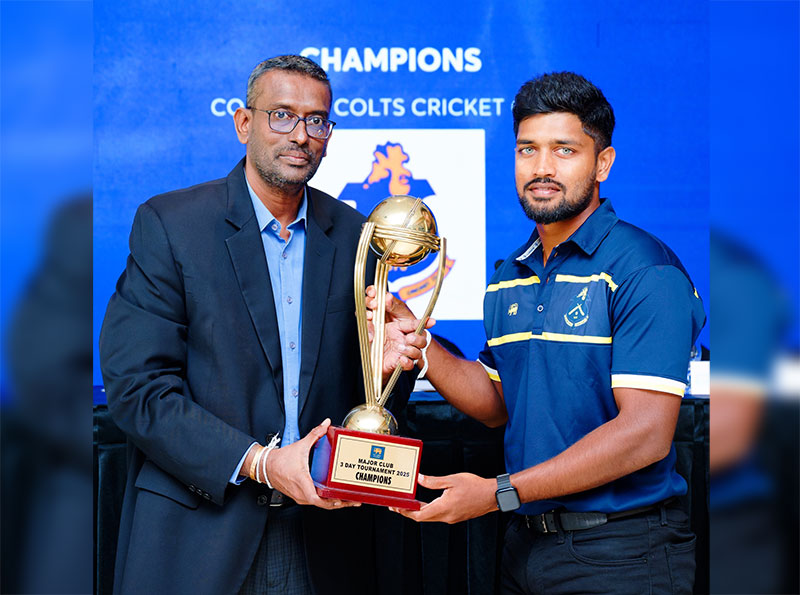
Colombo Colts Cricket Club finished off the First Class season with flying colours with their unbeaten run enabling them to win the title. Colts played seven games in the Super Eight segment and won one and drew seven games. Ace Capital gave them stiff competition and finished second.
Former Sri Lanka Under-19 cricketer Wanuja Sahan capped off a sensational season as he was Player of the Tournament. Sahan captured 54 wickets in ten games with his left-arm spin and produced 484 runs with the bat.
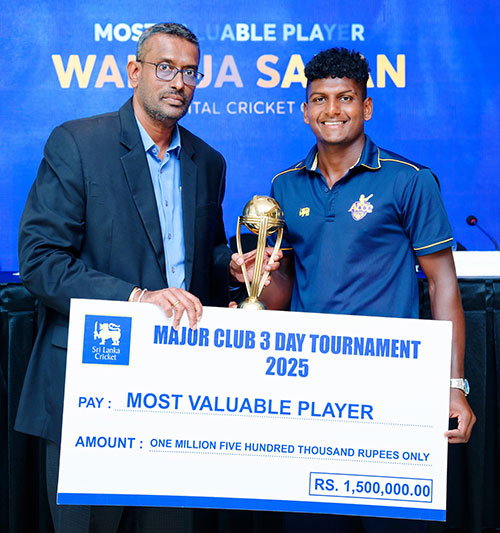
Major Club 3-Day League 2025 – Most Valuable Player – Wanuja Sahan, Ace Capital
NCC’s Lahiru Udara continued to top run charts amassing 908 runs in ten matches averaging 60 in ten games with one double hundred and three centuries.
Dilum Sudeera of Police was named Best Bowler after finishing wth 61 wickets.
SSC meanwhile having lost First Class status the last season fought their way back to regain top status and their campaign was spearheaded by Nipun Dhananjaya, who was named Best Batsman in Tier ‘B’
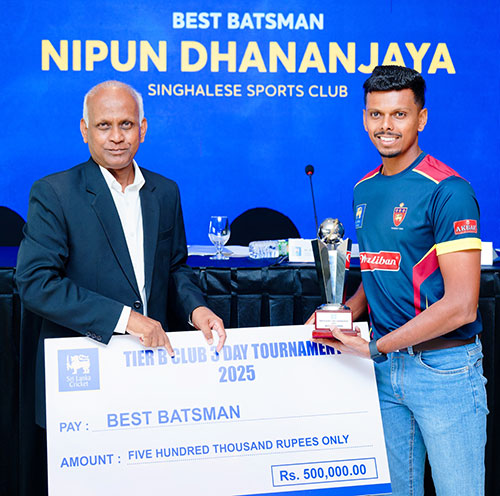
Tier ‘B’ 3-Day League 2025-26 – Best Batsman – Nipun Dhananjaya – SSC

Brook, Bethell receive warnings from Cricket Regulator after Wellington incident

Former Minister Mahinda Wijesekara passes away aged 83

Navy seize 323kg of heroin from fishing vessel in southwestern seas

Magnitude 7.4 quake hits off Indonesia’s Ternate, tsunami warning lifted

NASA successfully launches historic Artemis II moon mission

Sameer Rizvi arrives in the IPL to guide Delhi Capitals home in low-scoring chase

‘Dates have the highest sugar content to fight Coronavirus’

Sunday Island 27 December – Headlines

#SundayIsland 17th December – Headlines

Sunday Island – 28th March

Sunday Island Headlines – 21 March

Sunday Island – 21st February – Headlines
-

 Features6 days ago
A World Order in Crisis: War, Power, and Resistance
-

 News7 days ago
Energy Minister indicted on corruption charges ahead of no-faith motion against him
-

 Sports7 days ago
SLC to hold EGM in April
-

 Opinion7 days ago
When elephants fight, it is the grass that suffers
-
 Features7 days ago
Lest we forget
-

 News3 days ago
Tariff shock from 01 April as power costs climb across the board
-
 Business7 days ago
Pan Asia Bank empowers export sector as Strategic Partner of NCE Export Awards
-
 News6 days ago
Minister Jayakody indicted in Colombo High Court over alleged corruption