
Editorial
Has COPE forgotten its own report?

Monday 7th December, 2020
Former yahapalana high-ups currently in the SJB, which is only old UNP wine in a new bottle, keep daring the incumbent SLPP government to bring back ex-Central Bank Governor Arjun Mahendran from Singapore to stand trial for the Treasury bond scams. This, they have the chutzpah to do, having shamelessly shielded Mahendran and helped him make good his escape, while they were in power. During the UNP-led yahapalana government, it was the SLPP that ratcheted up pressure on the UNP to expedite Mahendran’s extradition. There has been a role reversal!
The SJB grandees should be asked why they did not call for action against Mahendran when they were Ministers in the yahapalana government, which even denied that bond scams had ever taken place. They also tried to have tainted CB Governor Mahendran reappointed, but thankfully the then President Maithripala Sirisena put paid to their efforts. They seem to be labouring under the delusion that they will be able to make the public forget their complicity in the biggest ever financial fraud in the country by faulting the present government for its failure to bring back Mahendran.
Curiously, the SLPP, which takes on the Opposition at the drop of a hat over other issues, goes on the defensive whenever the inordinate delay in having Mahendran extradited is taken up in Parliament. The government is obviously in a dilemma. One of the issues the SLPP flogged hard to win the last three elections was the bond scams; it undertook to have the bond racketeers brought to justice immediately after forming a government. Now that it is ensconced in power, it does not seem to care to fulfil its promise. Perhaps, it does not want to open up a can of worms. There is hardly any prominent politician who has not benefited from the bond scammers’ largesse.
The present COPE (Committee on Public Enterprises), under the Chairmanship of a government MP—Prof. Charitha Herath—has exposed public sector financial irregularities which have caused huge losses to the state coffers. It has also undertaken several investigations into allegations of financial mismanagement and questionable transactions involving some state institutions. Let it be urged to respect the people’s right to information by making public a vital document which has been shelved for more than five years—the first COPE report on the bond scams.
The COPE under the chairmanship of D. E. W. Gunasekara probed the first bond scam and prepared a comprehensive report, in 2015. President Sirisena, who was dependent the UNP for his political survival and bent on preventing the Rajapaksas from making a comeback, at the time, dissolved Parliament before that report was tabled. The UNP also obtained a court order preventing the publication of the document, which, it knew, would have a devastating impact on its parliamentary election campaign in that year.
The second report submitted by the COPE under the Chairmanship of JVP MP Sunil Handunnetti on the bond scams was a total disappointment. The JVP ‘floated like a bee and stung like a butterfly’, as cynics say. The COPE is described as a parliamentary watchdog committee, but what we saw under the yahapalana government was a lapdog committee, which spared no pains to prevent the then Prime Minister Ranil Wickremesinghe’s name being mentioned in its report. That was to be expected of the COPE under the yahapalana rule, which was a political menage a trois, as it were, involving the UNP, the SLFP and the JVP. The people, however, have punished most of those accused of involvement in the bond scams and/or defending the perpetrators thereof. They failed to retain their seats at the last general election. Some of those who diluted the second COPE report on the bond rackets with the help of a slew of footnotes managed to get re-elected by severing their link with Wickremesinghe and siding with Sajith Premadasa, who was critical of the bond racketeers.
Minister Ajith Nivard Cabraal, who is a former Central Bank Governor, has tabled in Parliament his 326-page book, The Great Bond Scam Cover-up, which is a vivisection of the Presidential Commission of Inquiry that probed the bond rackets. Likewise, the D.E.W. Gunasekera committee report on the bond scams must be tabled in Parliament so that it will be in the public domain. The onus is on the current COPE to release the shelved report in the public interest. Let no lame excuses be trotted out.


Wednesday 1st April, 2026
The JVP-NPP government continues to signal left and turn right. President Anura Kumara Dissanayake often does the diametrical opposite of what he promised to do while he was an Opposition MP, so much so that his political opponents mockingly ask whether former JVP MP Dissanayake has disappeared and the incumbent President is a doppelganger. SLPP General Secretary Sagara Kariyawasam tongue in cheek lamented, at a media briefing on Monday, that the former progressive Opposition MP Dissanayake had gone missing and someone else resembling him had become President.
President Dissanayake is unashamedly defending Energy Minister Kumara Jayakody, who is under a cloud, claiming that ministers cannot be sacked for what they allegedly did before being appointed to the Cabinet. But while in the Opposition, he said no politician facing allegations of wrongdoing must be elected to Parliament or any other institution, much less elevated to the Cabinet. Jayakody has also been accused of manipulating the coal procurement process in favour of an India company, which has supplied more than a dozen shipments of low-grade coal, causing a massive decrease in electricity generation at the Norochcholai power plant and a huge increase in oil-fired electricity generation as a result. This is one of the reasons for the latest electricity tariff hike.
During his presidential election campaign, Dissanayake promised that if elected President, he would ensure that nobody would be above the law. But Minister Jayakody was not arrested and remanded despite a serious charge against him that he caused a loss of about Rs. 8 million to the state through a crooked deal while serving as the procurement manager of the state-owned fertiliser company about 10 years ago. He was indicted and bailed out on the same day recently. This is in sharp contrast to the manner in which the Commission to Investigate Allegations of Bribery or Corruption has acted against former Minister Johnston Fernando and his two sons; they have been arrested and held on remand for the alleged misuse of a state-owned lorry and causing a loss of about Rs. 2.5 million to the Treasury.
Dissanayake and his party urged the previous governments to uphold transparency and accountability among other things. They pressured the SLPP-UNP government to disclose the current IMF agreement. But President Dissanayake and his ministers refuse to reveal the contents of their MoUs/pacts with India and the US.
Dissanayake used to launch into tirades against India and the US while he was an Opposition MP, demanding an end to their interference with Sri Lanka’s internal affairs. He once declared in Parliament that Jaffna had become a den of Indian spies on a mission to destabilise this country. But today he is eating out of the hands of Indian and American leaders.
A powerful millers’ cartel is manipulating the rice market. Dissanayake used to thunder in Parliament, condemning previous governments for pandering to the whims and fancies of big-time rice millers. But since his election as President, he has not cared to take any action to tame the millers’ Mafia, and farmers and consumer rights groups accuse his government of going out of its way to look after the interests of the large-scale millers who are known to have huge slush funds to bankroll election campaigns.
Dissanayake and his comrades condemned the previous government for keeping fuel prices high by increasing taxes, imposing a loss-recovery levy and obtaining illegal commissions from petroleum suppliers. The JVP/NPP made a solemn pledge to do away with corruption, reduce taxes and special levies and bring fuel prices to affordable levels. But the fuel prices soared under the JVP-NPP government even before the eruption of the Iran war. It has ignored a proposal that the loss-recovery levy on fuel be converted into a special commodity tax that can be collected from the private companies engaged in fuel trade. President Dissanayake’s government has enabled supermarket chains to monetise environmental pollution, as it were, by charging customers for single-use polythene bags instead of providing them with biodegradable grocery bags free of charge, as in other countries. It has ignored a proposal by environmentalists that supermarkets, etc., be made to transfer the proceeds from the polythene tax to the Treasury so that they can be utilised for environment protection/conservation projects.
The rich are getting richer under the current dispensation, with rice millers importing Rolls-Royces and indulging in a vulgar display of their wealth while farmers are forced to pawn their agricultural equipment and consumers are complaining of high prices of rice. The JVP/NPP politicians, who came to power promising to practise austerity, are now moving about in the fuel-guzzling luxury vehicles they promised to auction at Galle Face to raise funds for education and health. What they are practising at present runs counter to the Marxist ideals they claimed to espouse while out of power.
Thus, a wag asks whether we are witnessing a transfer of consciousness, whereby some capitalists of the same ilk as J. R. Jayewardene have taken possession of the JVP bigwigs’ frames.
Tuesday 31st March, 2026
Irate Americans are pouring into the streets to pressure President Donald Trump to step down. Ironically, their “No Kings” protests have erupted while Trump, ably assisted by Israeli Prime Minister Benjamin Netanyahu, is striving to engineer a regime change in Tehran. Protesters are saying, “Regime Change must begin at home”. Has Trump been hoist with his own petard? Trump has called the protesters a bunch of fools who do not realise the importance of his efforts to seize control of Iran’s oil resources. Is he trying to “make America great again” by plundering the wealth of other countries?
Iran has upended modern warfare and military theories by standing up to the US and Israel. By carrying out devastating retaliatory attacks, unveiling new military capabilities, such as the Mach 15 hypersonic missiles, and altering the dynamics of the Middle East conflict, Iran has triggered a paradigm shift in asymmetric warfare. Its approach to US-Israeli aggression has made military experts in Washington and Tel Aviv rethink their strategies and cast doubt on intelligence assessments and modern theories of war. Iran’s modus operandi has come under severe criticism, but its allies have pointed out that the world powers resorted to far worse things in previous conflicts, such as atomic bomb attacks, massacres, genocide and chemical warfare. As Cicero has observed, inter arma enim silent leges—in war, the laws fall silent. War is hell, as General Sherman said. This is why no country should start military conflicts.
Like a golfer going for a spectacular hole-in-one on the 18th, President Trump, who perhaps knows golf better than statecraft or warfare, egged on by Netanyahu, sent US warplanes to attack Iran. He obviously expected to make short work of the Iranian government, engineer a regime change, install a puppet government, as he did in Venezuela, and gain unrestricted access to Iran’s oil resources. But his strategy, driven by instinct rather than careful planning or expert advice, has turned out to be the geopolitical and military equivalent of a shank, if not an outright duff.
It is not possible to predict how the Iran war is going to end, much less who will win, but Trump and Netanyahu have their work cut out to steer it in the direction they desire. They are reportedly faulting their intelligence chiefs for wrong predictions about a regime collapse in Iran. Teheran’s resilience and obduracy stem from some key factors, which include an ideology of martyrdom, the current regime’s reliance on institutions rather than individuals, and a formidable axis of resistance Iran has built painstakingly for decades.
Hezbollah has opened a new front against Israel. The Houthis have started attacking Israel with missiles and threatened to close the Bab el-Mandeb Strait, which lies on the same sea route as the Suez Canal, connecting the Mediterranean Sea with the Indian Ocean. The geographical location of this chokepoint has made it extremely vulnerable to Houthi attacks. In fact, the Houthis carried out a spate of attacks on this vital shipping route from 2023 to 2025, causing massive losses to the global economy.
Iran has been able to broaden the war and make the world economy scream. The West is blind to war crimes committed by its allies and realises the need to stop wars only when it reels from severe economic shocks. The world is also facing the threat of global connectivity being disrupted. Iran has not ruled out the possibility of targeting the submarine Internet cables in the Red Sea, if push comes to shove.
A ground invasion of Iran by the US and Israel or even by a larger coalition would be extremely difficult for several military, geographic, and political reasons. Analysts often point to several major obstacles: geography and terrain making Iran a natural fortress; Iran’s size and its military and asymmetric capabilities, including a large numbers of ballistic missiles and drones; mobile missile launchers and underground facilities; proxy forces across the Middle East; naval mines and anti-ship missiles that threaten shipping; a risk of regional escalation, and severe blows to the global economy.
While the US is deploying more troops to the Middle East, Chief of the General Staff of the Israel Defence Forces Eyal Zamir has reportedly warned that the Israeli military is “going to collapse on itself” due to severe manpower shortages. He raised these concerns during a recent security Cabinet meeting chaired by PM Netanyahu. Has Israel indicated to the US that it is not in a position to deploy a large number of troops for a ground war in Iran? Sending troops to the Middle East is one thing but deploying them in Iran for combat is quite another. The White House says Trump has made no final decision on a ground assault in Iran. The US and Israel find themselves in a situation their leaders did not bargain for. Trump’s predecessors were wise enough not to take on Iran and risk a full-blown war. While trying to work out an exit strategy in the Iran war, Trump now has protests at home to contend with.


Monday 30th March, 2026
No sooner had Energy Minister Kumara Jayakody been indicted for corruption than he was released on bail last Friday. The Commission to Investigate Allegations of Bribery or Corruption (CIABOC), which filed charges against him, has alleged that in 2016, while serving as the Manager of the Procurement and Import Division of the Ceylon Fertiliser Company, he committed an act of corruption, causing a loss of Rs. 8,859,708 to the state; he influenced a procurement process related to the refurbishment of the company’s Hunupitiya warehouse to confer an undue benefit on a private contractor.
The JVP/NPP leaders have made a mockery of their much-touted commitment to good governance by shielding tainted ministers and officials. One can only hope that the government will not try to use Minister Jayakody’s indictment as a pretext to delay the parliamentary debate on the no-faith motion against him, scheduled for 10 April. It knows more than one way to shoe a horse, and has no sense of shame. It is in a dilemma over the no-faith motion against Jayakody. All MPs who defend him in Parliament will be lumped together with him. Having shielded him all along, they cannot now leave him to his fate.
In handling Minister Jayakody’s case, the CIABOC has acted faster than Iran’s hypersonic Fattah-2 missile, which travels at Mach 15. This is in sharp contrast to the manner in which it deals with Opposition politicians, their family members and cronies. They are arrested and made to languish in remand prison for months on end. The CIABOC continues to be an appendage of the government in power. The same is true of the police, who are also notorious for their partiality to the ruling party and selective efficiency. They have not arrested two ministers and a mayor involved in a forgery case. They swing into action and make arrests only when the suspects happen to be political rivals of the JVP-NPP government.
This is a country where even children are arrested and hauled up before court over minor offences. One may recall that three girls from a children’s home in Kalutara were arrested several weeks ago for breaking into a canteen and making off with some confectionery. A few years ago, a little girl was taken into custody for stealing a five-rupee coin, of all things, from a neighbour in Kalutara. The police recently arrested a person with four litres of petrol he had kept in a can for a weed-whacker to cut the grass in his garden ahead of a religious ceremony in memory of his parents. He was fined and jailed for 21 days. No such stringent action has been taken regarding the Opposition’s complaint that Minister Jayakody has caused staggering losses amounting to billions of rupees to the state through a corrupt coal procurement deal. It has been revealed that substandard coal imports have led to a huge drop in the coal-fired electricity generation at Norochcholai, and tens of thousands of litres of diesel have to be burnt daily to meet that power generation shortfall.
Legal and judicial processes have never been free from political interference in this country, and the current leaders who came to power, promising to depoliticise them are emulating previous regimes. Given this reality, one wonders whether the image of Justitia should be localised with a double-pocketed blouse over her Greco-Roman robe a la the two-pocket shirts of the ruling party leaders.
Most of those who voted for the JVP/NPP, helping bring about the 2024 regime change in the hope of creating a clean society based on equality and freedom must now be as disappointed and disillusioned as the animals that, inspired by the pigs, rebel and get rid of their owner in the Orwellian political fable, Animal Farm. Like the pigs, the incumbent rulers have made themselves ‘more equal than others’ while claiming to uphold the rule of law. They are testing the patience of the public. They are seen burning rubber in fuel-guzzling SUVs while urging the ordinary people to restrict travel and save energy.
The government is reportedly planning to launch a project to clean Beira Lake, which is stinking. A wag says it should do so expeditiously for the sake of its members rather than the public, for at this rate, their turn to swim in that polluted lake, as some SLPP politicians did in 2022, after being plunged there by angry mobs, may come sooner than expected. Politics is full of surprises.

Amelia Kerr hits 139-ball 179* as New Zealand pull off record chase to level series

Punjab Kings fined for slow over-rate

Ice-cool Connolly leads nervy Punjab Kings home on IPL debut

Showers expected in the Western, Sabaragamuwa and Southern provinces in the evening or night

Heat Index at Caution Level in the Western, Sabaragamuwa, Southern, Eastern, North-western, Northern and North-central provinces and in Monaragala district

Urea shortage threatens Yala harvest: Experts

‘Dates have the highest sugar content to fight Coronavirus’

Sunday Island 27 December – Headlines

#SundayIsland 17th December – Headlines

Sunday Island – 28th March

Sunday Island Headlines – 21 March

Sunday Island – 21st February – Headlines
-

 Features5 days ago
A World Order in Crisis: War, Power, and Resistance
-

 News6 days ago
Energy Minister indicted on corruption charges ahead of no-faith motion against him
-

 News7 days ago
US dodges question on AKD’s claim SL denied permission for military aircraft to land
-

 Business7 days ago
Dialog Unveils Dialog Play Mini with Netflix and Apple TV
-

 Sports6 days ago
SLC to hold EGM in April
-

 Opinion6 days ago
When elephants fight, it is the grass that suffers
-
 Latest News6 days ago
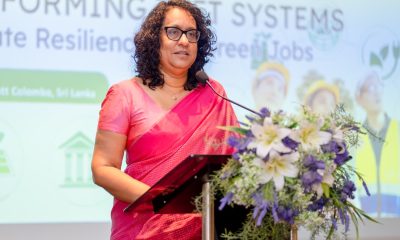
A strong Technical and Vocational Education and Training (TVET) system equips individuals with practical, relevant, and future-oriented skills helping to innovate responsibly towards a greener and sustainable future – PM
-
 Features6 days ago
Lest we forget