
News
Hand over economic management to independent technocrats: SJB MP


By Sanath Nanayakkare
Samagi Jana Balavegaya MP Patali Champika Ranawaka said in Colombo recently that managing the economy of the country should be handed over to a group of independent technocrats.
“The general public and the business people are growing increasingly less confident about the capacity of the political leadership to pull the country out of the current economic crisis. So, the situation calls for the government to turn over the management of the economy to a group chosen through a process that emphasises their relevant skills and proven performance to put the economy back in shape,” Ranawaka said.
The MP said that such technocrats needed to be truly independent and need not just serve the interests of popular politics because if a sovereign default happens, all Sri Lankans, those who voted for the government and those who didn’t, would have to face grave repercussions.
Ranawaka made these comments at an Advocata forum themed, “A National Consensus for Economic Reforms.
Ranawaka said that Sri Lanka has got into a precarious financial situation today where it can’t raise enough capital either in the domestic market or in the international capital market.
“In the next eight months, we have to honour commitments on International Sovereign Bonds and Sri Lanka Development Bonds worth nearly USD $ 3 billion with only USD $ 1.5 billion cash in hand. In this backdrop, Sri Lanka runs the risk of a default and potential bankruptcy at some point. Even if the authorities begin talks on renegotiating and rescheduling of our foreign loans, that would technically mean declaring bankruptcy. When Prime Minister Mahinda Rajapaksa asked the government of India to postpone Sri Lanka’s debt by three years, that also tantamount to acknowledging bankruptcy. If the country hits bankruptcy, it will have a negative impact across the board. It won’t be easy recovering after a default and bankruptcy. It could lead to multiple defaults. Defaults by Argentina on its foreign debt as well as the debt crisis in Greece led to a loss of confidence in their economies. They haven’t recovered fully. They may recover for some time and they falter again. Elections were held in Greece from time to time to resolve the economic issue. Masses elected leaders from the left, centre and right in the political spectrum, but nothing has worked meaningfully. The economic malaise has dragged on for 10 years in Greece. Argentina is no different. If a sovereign debt default occurs in Sri Lanka, we may face a similar situation. It would be unwise to think that when the situation aggravates, it would help the Opposition to come to power. Whoever comes to power, would have to bear the same pain and pressure, so a sovereign default must be averted,” he said.
He said that the government is still not serious about this serious situation.
“Our concern is whether political leaders and responsible authorities are paying the issue the attention it deserves. This crisis can’t be solved by providing each Grama Niladhari division with Rs. 3 million to spend on building rural infrastructure. If a default happens, its negative spillover could see the loss of thousands of jobs triggering a social explosion. The racial and religious tensions which are under wraps could flare up again and foreign investors would try to capitalise on the situation. A fine example for this is; about six months ago the Urban Development Authority put up more than 50 strategic national properties for sale under what was called ‘Selendiva’. It was said that USD 5 billion would be raised from its proceeds. Nevertheless no buyer has made any bids to date. We are often told that USD 3.6 billion is coming from Oman, USD 2.5 billion is coming from some other country and so on. But these have not materialised yet. Why? Everyone has realis-ed that Sri Lanka is on its way towards bankruptcy. And investors know that they can buy these assets for five million dollars once that happens. It is very clear that nobody is coming to buy these assets right now. There are no friends left here for us. In 2019, during our administration, we arranged four investments for the much hyped Port City and the foundation stones were laid. I can tell you that those investments or anything else won’t come to Port City next year. All countries in the world are experiencing varying degrees of volatility and instability as the virus has again plunged the world back into uncertain territory. No friends have been left for us in the midst of it.
“So coming to a national consensus on structural reforms needed to get out of the economic crisis is critical right now. It’s up to the government to show the right signals that it is ready to move along the correct political and fiscal path to get the support of everyone to do it,” he said.

Latest News
Advisory for Severe Lightning issued for Galle, Matara, Kaluthara and Rathnapura districts

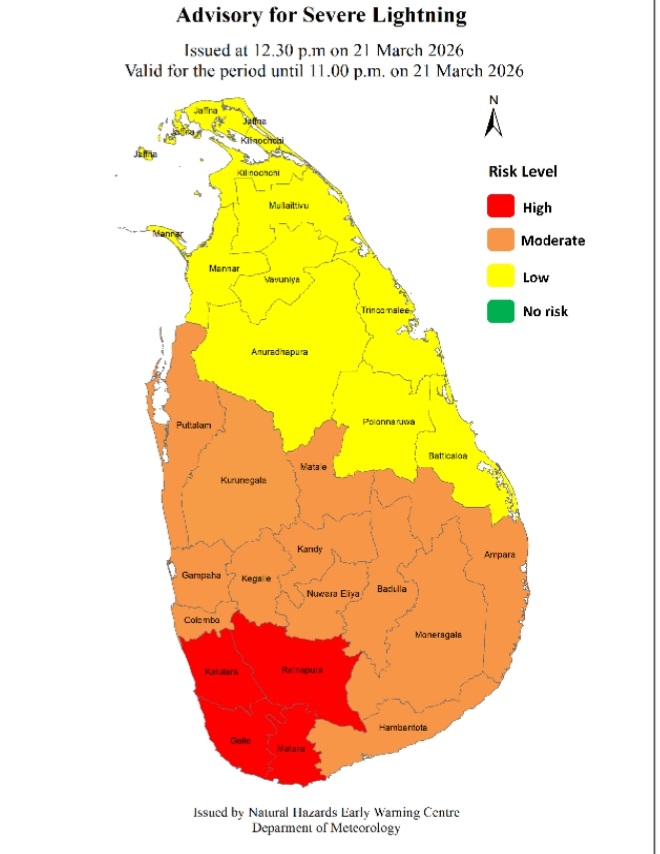
Advisory for Severe Lightning Issued by the Natural Hazards Early Warning Centre Issued at 12.30 p.m. 21 March 2026, valid for the period until 11.00 p.m. 21 March 2026
Thundershowers accompanied with severe lightning are likely to occur at some places in the Galle, Matara, Kaluthara and Rathnapura districts after 1.00 p.m.
There may be temporary localized strong winds during thundershowers. General public is kindly requested to take adequate precautions to minimize damages caused by lightning activity.
ACTION REQUIRED:
The Department of Meteorology advises that people should:
Seek shelter, preferably indoors and never under trees.
Avoid open areas such as paddy fields, tea plantations and open water bodies during thunderstorms.
Avoid using wired telephones and connected electric appliances during thunderstorms.
Avoid using open vehicles, such as bicycles, tractors and boats etc.
Beware of fallen trees and power lines.
For emergency assistance contact the local disaster management authorities.
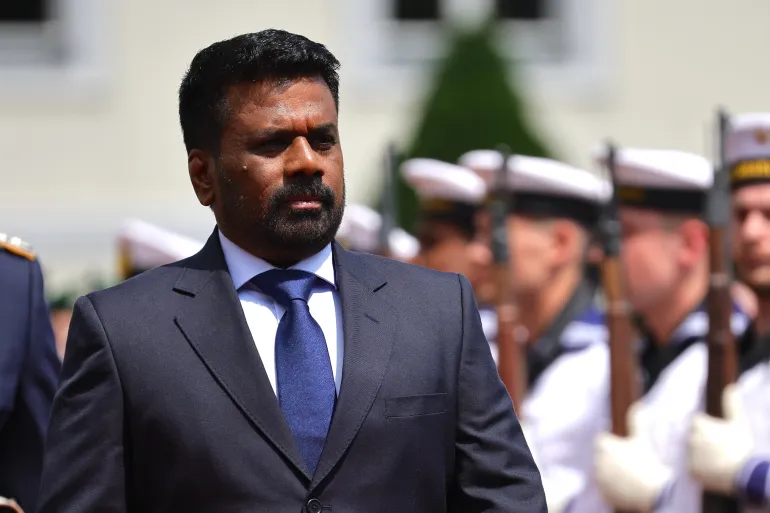
Sri Lanka’s president says his government turned down a request from the United States to land two US combat aircraft at a civilian airport earlier this month.
President Anura Kumara Dissanayake told Sri Lanka’s parliament on Friday that Washington had requested permission for the aircraft to land at Mattala Rajapaksa International Airport in southern Sri Lanka from March 4 to 8.
The request was made on February 26, two days before the US and Israel launched their military offensive against Iran.
“They wanted to bring two warplanes armed with eight antiship missiles from a base in Djibouti”, Dissanayake told lawmakers. “We turned down the request to maintain Sri Lanka’s neutrality”, he added to applause.
The US-Israeli war on Iran has sparked widespread concern globally, as Iranian missile and drone attacks across the wider Middle East have sent energy prices soaring and fuelled fears of a widening conflict.
US President Donald Trump has also been pressuring Washington’s allies to show more support for the war, slamming NATO countries as “cowards” for refusing to help secure the Strait of Hormuz.
Iran has essentially shuttered the critical Gulf waterway amid the war, forcing leaders around the world to scramble to try to offset the effects on their economies and energy supplies.
Amid the turmoil, many countries have refused to get directly involved in the war while calling for urgent de-escalation.
On Friday, Switzerland announced that it would halt any weapons exports to the US that could be used in military operations against Iran, citing its longstanding policy of neutrality.
“The export of war materiel to countries involved in the international armed conflict with Iran cannot be authorised for the duration of the conflict”, the Swiss government said.
Sri Lanka’s president also cited his country’s neutrality in the decision to deny the US request to land the two aircraft at Matalla airport earlier this month.
Dissanayake said he had received another request that same day, on February 26, from Iran to seek permission for three naval vessels to make a goodwill visit to Sri Lanka.
“With two requests before us, the decision was clear,” he said, noting that the government denied both to avoid taking sides as signs of escalating conflict emerged.
“Had we said ‘yes’ to Iran, we would have had to say ‘yes’ to the US, as well”, Dissanayake added.
In early March, Sri Lanka’s navy rescued 32 Iranian crew off IRIS Dena after it was torpedoed by a US submarine off the country’s coast, killing at least 84 people.
Days later, Sri Lanka evacuated more than 200 crew members from a second Iranian vessel, IRIS Bushehr, after the ship requested assistance from Colombo.
[Aljazeera]

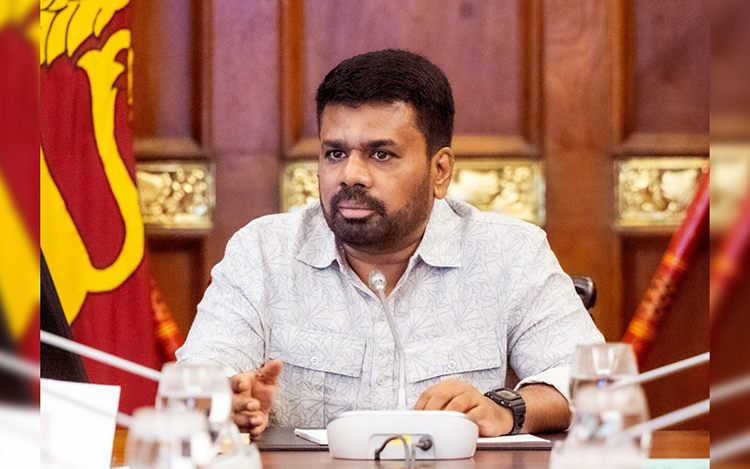
Sri Lanka refused the request by three Iranian ships to come to Sri Lanka on a goodwill visit and the request by the United States to land two of its fighter jets in Mattala, President Anura Kumara Dissanayake told Parliament yesterday.
“Sri Lanka maintained neutrality by refusing the two requests by both the US and Iran,” he said.
President Dissanayake provided a clarification on domestic fuel prices in light of rising crude oil prices in the global market and subsequent fuel price increases in other countries, triggered by the ongoing crisis in the Middle East.
The President highlighted that the Ceylon Petroleum Corporation (CPC) currently supplies 57% of the country’s fuel requirements, while the remaining 43% is supplied by the private sector.
He further noted that private sector suppliers have requested pricing that reflects current global market rates for the fuel they import.
Accordingly, the President emphasised that a decisive decision on fuel price adjustments must be reached as expeditiously as possible to ensure the continuity of the national fuel supply.
Addressing the Parliament, the President stated that the current pricing formula dictates that for every one-dollar increase in global oil prices, domestic fuel prices must rise by Rs. 2.
He noted that the primary impact being faced is driven by the surge in global fuel prices rather than the depreciation of the rupee against the US dollar.
The President said that, globally, countries have been compelled to make difficult decisions regarding fuel costs, with price increases ranging from approximately 6% to 50%.
He added that while global prices have risen by as much as 49%, the domestic increase has been limited to 8%.
He further stated that Sri Lanka is currently facing a significant challenge in maintaining fuel supply.
The Ceylon Petroleum Corporation (CPC) accounts for 57% of the country’s fuel supply. He noted that had the CPC been the sole supplier, fluctuations could have been managed by offsetting current losses with future profits.
However, he said the private sector now controls 43% of the market, and their position is that if retail prices do not reflect the current landed cost of fuel, they will cease imports.
He added that, from a business perspective, this is a valid concern, as private companies reportedly incur a loss of approximately USD 55 million per shipment, which he said is unsustainable.
The President emphasised that the contribution of the private sector is essential to maintaining the national fuel supply, but noted that they will only participate if they are able to sell at cost-reflective prices.
He stressed that the issue of fuel pricing must, therefore, be addressed urgently.
He also pointed out that under the existing Act, companies are permitted to increase prices; however, the maximum retail price is determined by the Ceylon Petroleum Corporation.
“Although we have entered into agreements with these private companies, the necessary legislative amendments to the Act have not yet been finalised,” he noted.
Regarding government revenue, the President stated that tax income from fuel currently stands at Rs. 20 billion, compared to Rs. 240 billion generated last year from taxes on diesel.

Advisory for Severe Lightning issued for Galle, Matara, Kaluthara and Rathnapura districts

Sri Lanka says it denied US request to land two aircraft at Mattala airport

Eid celebrations dimmed by war and displacement across Middle East

Showers may occur at several places in the Western, Sabaragamuwa, Northwestern and Uva provinces and in Galle, Matara, Kandy and Nuwara-Eliya districts after 1.00 pm.

Iranian strikes on bases used by US caused $800m in damage, new analysis shows

President maintains Lanka has been even-handed in dealing with Iran and US

‘Dates have the highest sugar content to fight Coronavirus’

Sunday Island 27 December – Headlines

#SundayIsland 17th December – Headlines

Sunday Island – 28th March

Sunday Island Headlines – 21 March

Sunday Island – 21st February – Headlines
-

 Business6 days ago
Browns EV launches fast-charging BAW E7 Pro at Rs. 5.8 million
-

 Life style7 days ago
From culture to empowerment: Indonesia’s vision for Sri Lanka
-

 News4 days ago
CIABOC questions Ex-President GR on house for CJ’s maid
-

 Life style7 days ago
Ranjith Fernando celebrates cricketing journey with Hob Nails to Spikes
-

 News5 days ago
Sri Lankan marine scientist Asha de Vos honoured at UNGA opening
-

 Features6 days ago
Achievements of the Hunduwa!
-
 Latest News6 days ago
QR code system will be implemented for fuel with effect from 06.00 a.m. today (15th)
-

 News5 days ago
Australian HC debunks misleading travel risk claims for Sri Lanka