
News
GTF believes political changes should lead to empowerment of parliament

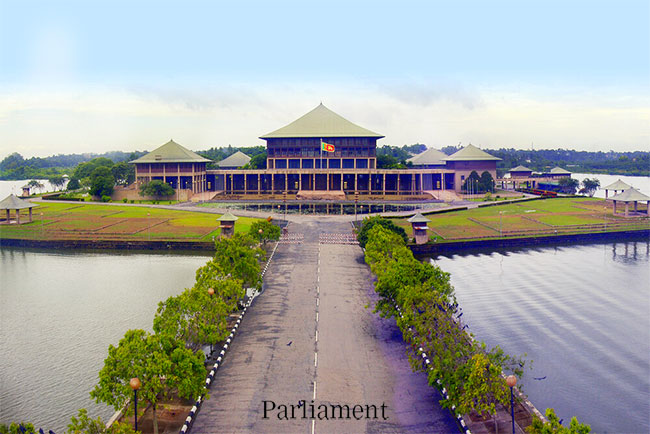
The Global Tamil Forum (GTF) has said that the change of government should lead to a truly democratic and pluralistic modern state, enshrined with a Constitution that would empower the Parliament to be the centre of power with sufficient checks and balances and full accountability to the people.
The GTF stressed that these reforms comprehensively address the ethnic issue through meaningful power devolution to the regions so that no community would feel second class or threatened in their own country. The UK headquartered group declared these critical legal and constitutional reforms should be carried out judiciously and concurrently.
Congratulating the Aragalaya (Struggle) movement in Sri Lanka for the phenomenal political victory it has achieved with the backing of the ordinary citizens, The GTF has issued the following statement: “The departure from the country and resignation as President by Gotabaya Rajapaksa is a hugely important first step – an outcome no one would have imagined even six months ago. Gotabaya was responsible and must be made accountable for not only the latest mismanagement of the economy, but also accountability issues as well.
“It is important that such a momentous transition continues peacefully and constitutionally until stable, democratic, accountable, and pluralistic governance is achieved – first through the formation of an all-party, representative government respecting the aspirations of the people expressed through Aragalaya, followed by general elections at a suitable time to form a government that truly reflects the will of the people.
“Any new government will have to face huge challenges – hard negotiations with countries and financial institutions to restructure existing loans; seek new and urgent funding to secure essential food, fuel, and medicine; and implement difficult economic measures without imposing further distress on many people who already suffer unsurmountable hardships. GTF strongly hopes such a government will not only include all the parties represented in the Parliament but also consist of legitimate and authentic representatives of all communities.
“Gotabaya Rajapaksa’s presidency may have been the least competent in the history of the country in terms of economic management and governance practices, and its discriminatory practices toward minority communities. But his government was not an exception but a continuation and acceleration of a developing trend toward increasing authoritarianism, nepotism, corruption and unaccountability, and embodiments of discriminatory treatments of minority communities. Clearly, there was an undesirable vulnerability in the electorate which the aspiring politicians willfully exploited for their own political ends.
“The present moment appears to be right for Sri Lanka to transcend the trappings of its history. It is crucial that the people and the leaders of Sri Lanka reflect deeply on the deplorable trajectory the country has traversed. How a country – the first elected democracy in South Asia with a well-recognised potential to be a success story in the region – ended up languishing among the worst performing states in the world in just 70 years. We have no doubt the unbridled majoritarian nationalism and its inability to accommodate the legitimate aspirations of Tamil, Muslim and other minority communities within a united and pluralistic country is at the root of its many failures – including the economic disaster the country is experiencing at present.
“Such profound changes will undoubtedly raise the profile of the country as a true democracy that respects rule of law and ensure Sri Lanka assumes its rightful place among the treasured nations of the world with its economic potential enhanced many folds.
“GTF wholeheartedly supports the remarkable and hopeful developments taking place in Sri Lanka at this historic moment and would be delighted to play a constructive role in ensuring that the present momentum leads to meaningful and long-lasting changes in the country through non-violent and democratic means. “



News
Establishment of an Institutional Framework to Inagurate Upper Hydro Catchment Areas Management Authority

Policy approval of the Cabinet of Ministers was granted at their meeting held on 08.06.2026 to establish the Upper Hydro Catchment Areas Management Authority for identification and
execution of a formal and long – lasting remedy to secure the central hills including the upper hydro catchment areas enabling them to sustain amidst extreme weather conditions
due to natural calamities and human activities as well as to be used for the sustainable development of the country.
Accordingly, a concept paper has been prepared including
institutional structure, activities, powers, active subject area as well as administrative and coordination mechanism for the proposed authority by an expert technical committee appointed by the Secretary to the President.
Based on the said concept paper, the Cabinet of Ministers granted approval to the resolution furnished by the President to instruct the Legal Draftsman to prepare a draft bill including legal provisions required for the establishment of Upper Hydro Catchment Areas Management Authority.
News
Introduction of Flora and Fauna (Regulation of actions of the Indigenous Community within the nominated areas) Regulations
With the objective of securing the traditional livelihood and the eco system of the indigenous community, it has been recognized the necessity of introducing a formal regulation methodology to secure their engagement in livelihood activities by being more sensitive to the existing laws.
Thereby, the Fauna and Flora (regularizing) regulations under the Fauna and Flora Protection Ordinance (Authority 469) have been prepared so that nominated activities within the prescribed area to a member of the indigenous community
who has been registered for securing the rights acquired from law or custom or usage or traditional stance to execute an act within a certain state land that is fundamental to the survival of the indigenous community permission can be granted
Accordingly, the Cabinet of Ministers granted approval to the resolution furnished by the Minister of Environment to publish the said regulations in the government gazette notification and thereby submit to the Parliament for its concurrence.
Latest News
M. M. D. J. Senarathne, appointed Director General of the Department of National Botanical Gardens
The Cabinet of Ministers approved the resolution furnished by the Minister of Environment to appoint M. M. D. J. Senarathne, who is the senior most officer in Grade I of Sri Lanka Scientific Service se

Establishment of an Institutional Framework to Inagurate Upper Hydro Catchment Areas Management Authority
Introduction of Flora and Fauna (Regulation of actions of the Indigenous Community within the nominated areas) Regulations
M. M. D. J. Senarathne, appointed Director General of the Department of National Botanical Gardens

Harmanpreet Kaur steps down as India captain

Turkiye, Pakistan agree Saudi Arabia military deployment under Mecca pact

Rumesh Tharanga among nominees announced for World Athlete of the Year 2026

‘Dates have the highest sugar content to fight Coronavirus’

Sunday Island 27 December – Headlines

#SundayIsland 17th December – Headlines

Sunday Island – 28th March

Sunday Island Headlines – 21 March

Sunday Island – 21st February – Headlines
-

 Latest News7 days ago
Gold winner Tharanga gets brand-new Honda Vezel from SLAAJ
-

 News6 days ago
US-assisted ‘Ice’ detection: NPC to examine IGP’s move to transfer drug-busting team
-

 Features7 days ago
Why Sri Lanka needs an Inclusive Civic Nationalism – urgently
-

 Editorial5 days ago
Colombo Port drug bust: The plot thickens
-

 News7 days ago
Civil society activist accuses govt. of favouring Ven. Gnanasara
-
 Midweek Review7 days ago
Dappula’s Easter Sunday ‘grand conspiracy’ claim demolished
-

 Editorial7 days ago
When crime bosses rise above law and shrines
-
Editorial6 days ago
Drug busting, transfers and trust deficit