
News
Govt. urged to seek extradition of Maulana over C-4 allegations

Focus on clandestine meetings in B’caloa prison, Wanathavilluwa estate
By Shamindra Ferdinando
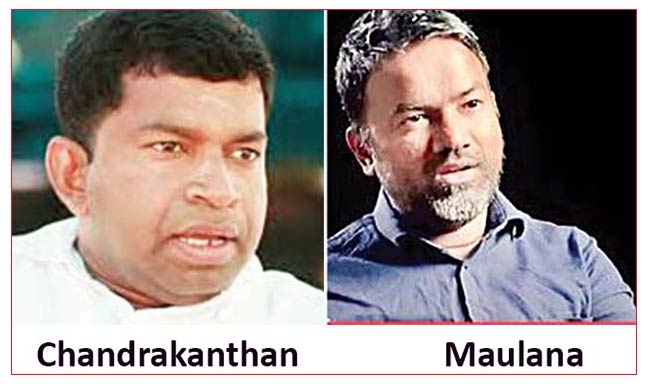
Former State Minister Sivanesathurai Chandrakanthan aka Pilleyan has refuted unsubstantiated claims made by his wartime Media Secretary Mohammed Milhilar Mohammed Hanzeer alias Azad Maulana in a Channel 4 interview in early Sept. 2023 pertaining to the 2019 Easter Sunday carnage.
Multiple blasts claimed the lives of about 270 people, including 40 foreigners, while nearly 500 sustained injuries.
Chandrakanthan, one-time Chief Minister of the Eastern Province and the leader of the Tamil Makkal Viduthalai Pulikal (TMVP), has alleged that Maulana, who had been with him during the 2006-2022 period, propagated politically motivated lies in a bid to secure political asylum in Europe.
Chandrakanthan has made his position clear when the Criminal Investigation Department (CID) recently questioned him on Moulana’s accusations. Moulana served both Pilleyan and Vinayagamoorthy Muralitharan alias Karuna Amman, one-time LTTE field commander, after the eastern Tigers sided with Mahinda Rajapaksa’s government.
Addressing the media outside the CID headquarters, Chandrakanthan said the CID, the Yahapalana administration had failed to deal with the threat of religious extremism effectively.
Chandrakanthan served as Rural Road Development State Minister during the Wickremesinghe-Rajapaksa government. The TMVP failed to secure at least a single seat at the recently concluded general election. Chandrakanthan contested from the Batticaloa district, where the Illankai Thamil Arasu Kadchi (ITAK) secured three out of five seats. The National People’s Power (NPP) and the Sri Lanka Muslim Congress (SLMC) obtained one seat each.
Maulana has alleged that former chief of Directorate of Military Intelligence (DMI) Maj. Gen. Suresh Sally met Chandrakanthan at the Batticaloa prison where he was held in connection with the 2005 Christmas Day assassination of ITAK MP Joseph Pararajasingham, at St. Mary’s church, Batticaloa.
Maulana also alleged that Maj. Gen. Suresh had met Easter Sunday suicide bombers, including their leader Zahran Hashim on a coconut estate in Vanathavilluwa, Karadiyapuval in the Puttalam district. The whistle-blower is also on record as having claimed that he received a telephone call from Salley on 21 April 2019 morning, the day of the Easter Sunday attacks directing him to pick a person from the Taj Samudra hotel, Colombo.
The Presidential Commission of Inquiry that probed the Easter Sunday attacks as well as a committee headed by retired Supreme Court Justice S.I. Imam, which conducted an investigation into the Channel 4 allegations, found that Maj. Gen Salley was neither in the country nor with the DMI at the time of the alleged meetings in Wanathawilluwa and Batticaloa.
Salley was serving at the Sri Lankan Mission in Malaysia at the time, and was at the National Defence College, India when the National Thowheed Jamath (NTJ) mounted the 2019 attacks.
Chandrakanthan told The Island yesterday (24) that those conducting investigation into Maulana’s allegation that Salley had visited him at Batticaloa prison could easily verify that claim with current prison administration. Chandrakanthan said that he had been held in the Batticaloa prison from 2015 to 2020. Among those held in the same prison at the same time were some of those taken into custody in connection with promoting religious extremism.
“No one could have met me at the Batticaloa Prison without the consent of the prison administration,” the former lawmaker said, dismissing claims that the Easter Sunday carnage had been carried out to facilitate Gotabaya Rajapaksa’s victory in the 2019 presidential election. Nothing could be more ridiculous than the claim that religious extremists mounted Easter Sunday attacks to facilitate Gotabaya Rajapaksa’s victory while at the same time accusing him of harassing minorities, Chandrakanthan said.
Whatever various interested parties said now, Gotabaya Rajapaksa or any other person fielded by the SLPP at that time could have comfortably won the presidential election, Chandrakanthan said, pointing out that the Local Government polls conducted in Feb 28 indicated in no uncertain terms that the southern electorate would overwhelmingly vote for the SLPP at presidential and parliamentary polls, the former State Minister said.
The Batticaloa High Court acquitted and released five persons, including Chandrakanthan after the Attorney General had informed the court that he wouldn’t proceed with the prosecution.
Chandrakanthan emphasised the responsibility on the part of the incumbent government to take tangible measures to have the so-called whistle-blower extradited as quickly as possible. Chandrakanthan alleged that Maulana was taking advantage of the situation to secure political asylum abroad.
The former parliamentarian urged the government to examine the negligence on the part of the security apparatus to handle a specific intelligence alert.
The ex-MP said that he would fully cooperate with the CID though he could not endorse lies under any circumstances. The crux of the matter was Maulana claimed that secret meetings had taken place in Batticaloa and Vanathavilluwa, where explosives were recovered subsequently, hadn’t been verified, Chandrakanthan said.



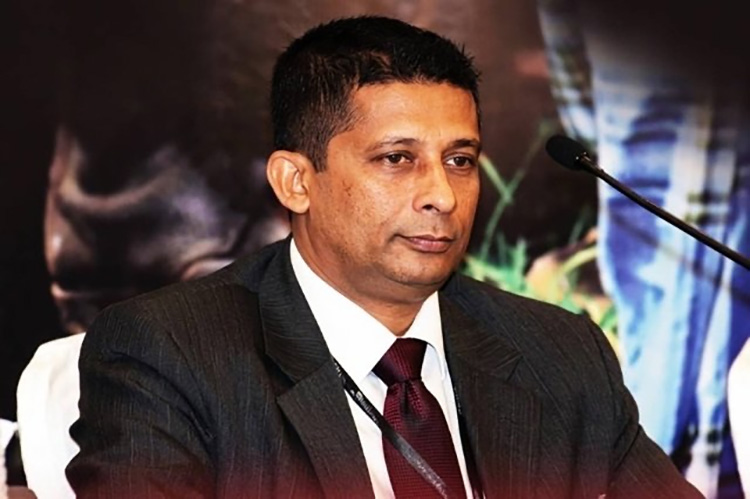
The government has chosen not to respond to questions raised by the United Nations Human Rights Council (UNHRC) regarding the detention of retired Maj. Gen. Suresh Sallay in connection with the ongoing investigations into the 2019 Easter Sunday attacks.
The Criminal Investigation Department (CID) arrested the ex-official in late February this year. The Special Rapporteur on the promotion and protection of human rights and fundamental freedoms while countering terrorism, the Working Group on Arbitrary Detention, the Special Rapporteur on the right of everyone to the enjoyment of the highest attainable standard of physical and mental health and the Special Rapporteur on the independence of judges and lawyers have jointly raised the issue on 20 July, 2026.
Drawing attention of President Anura Kumara Dissanayake to what they called alleged arbitrary detention of Sallay, former Director General of the State Intelligence Service (SIS) and former Director of Military Intelligence (DMI), under the Prevention of Terrorism Act (PTA), as well as allegations of torture and other cruel, inhuman or degrading treatment while in custody, resulting in the grave deterioration of his health, and imminent risks of retaliation through further torture and ill-treatment resulting in irreparable harm, should he be released from hospital and returned to custody, the UN sought the government explanation with a 60-day period.
The UN has stated: “This communication, and any response received from your Excellency’s Government, will be made public via the communications reporting website at the 60 days mark. Should your Excellency’s Government respond within 60 days, both the communication and the response, may be published before the 60 days mark. The communications and responses
will also be made available in the subsequent periodic report to be presented to the Human Rights Council.”
In the absence of the government’s response, the UN posted the letter, dated 20 July, 2026, addressed to President Dissanayake. The full letter can be accessed https://spcommreports.ohchr.org/TMResultsBase/DownLoadPublicCommunicationFile?gId=31125
News
Section of wartime KKS High Security Zone vacated to facilitate economic development in the area
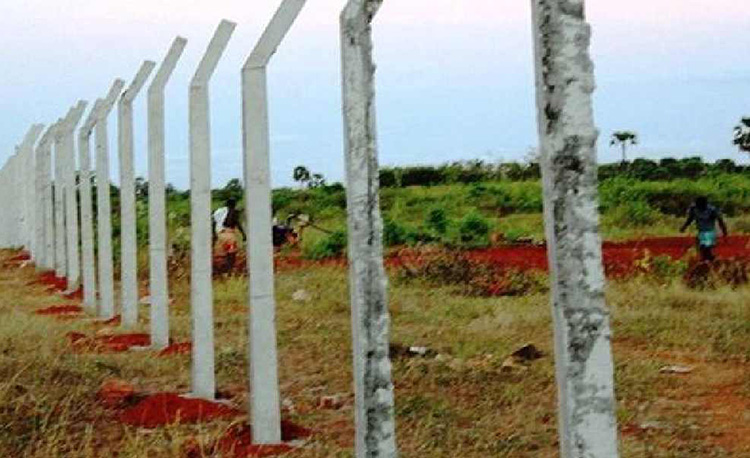
The Army, last week, vacated an area, within the wartime high security zone in the Jaffna peninsula. The Defence Ministry said that an extent of 187.56 acres of land, belonging to the Cement Corporation in Kankesanthurai, Jaffna, has been released by the military. The released land, located in Grama Niladhari Division J/233, Kankesanthurai West, within the Valikamam North (Tellippalai) Divisional Secretariat Division, had been utilised by the Sri Lanka Army since the middle of 1997.
The release of the 187.56-acre extent forms part of the initiative to make State land available for the proposed investment zone in Kankesanthurai, thereby facilitating future investment and economic development in the area.
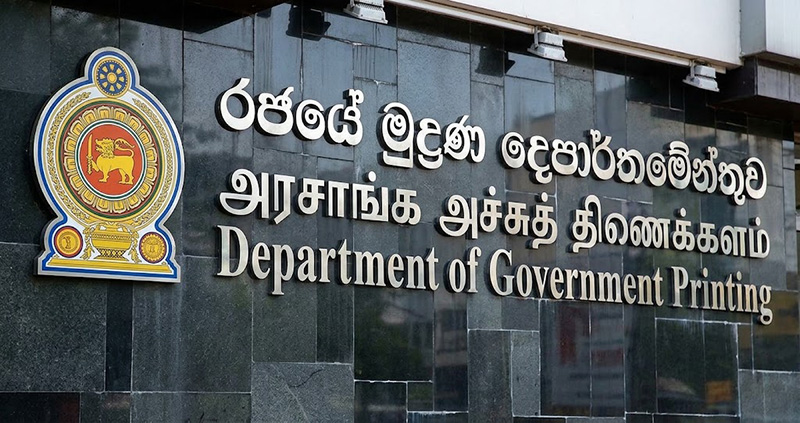
A complaint has been lodged with the Colombo Fraud Investigation Bureau against the Government Printer and the Secretary to the Ministry of Media regarding the online release of falsified documents bearing a forged Speaker’s certificate.
Attorney-at-Law Aruna Laksiri has lodged a complaint with the Colombo Fraud Investigation Bureau requesting legal action against the Government Printer of the Department of Government Printing (No. 118, Dr. Danister de Silva Mawatha, Colombo 08), Prasanna Jayaratne, and the Secretary to the Ministry of Mass Media (Asidisi Medura, 163, Kirulapone Mawatha, Polhengoda, Colombo 05), Dr. Anil Jasinghe.
The complaint alleges the commission of offences by forging and uploading falsified documents online using a forged Speaker’s certification, failure to perform statutory duties, and misappropriation of public property.
The complaint states that a copy of the English translation of the 22nd Amendment to the Constitution was downloaded and printed from the official website of the Government Printing Department (www.documents.gov.lk), which operates under the Ministry of Mass Media. On its outer cover and on page 1, the text “certified on 25th of September, 2026” is inscribed inside brackets.
The complaint pointed out that the Speaker has certified an English translation. Under Articles 23, 79, 83, and 80 of the Constitution, Parliament enacts laws and the Speaker certifies bills strictly in the Sinhala and Tamil languages; under the Constitution, therefore the Speaker cannot apply such certification to an English translation.

Showers or thundershowers will occur at several places in the most part of the island after 1.00 p.m

Geneva takes up Sallay’s case and govt. ignores opportunity to answer accusations

Section of wartime KKS High Security Zone vacated to facilitate economic development in the area

Lawyer lodges complaint against Govt. Printer, Media Ministry Secy.

Sri Lankan troops in joint anti-terrorist exercise in Russia

Nine Indian poachers brought to KKS with their boat

‘Dates have the highest sugar content to fight Coronavirus’

Sunday Island 27 December – Headlines

#SundayIsland 17th December – Headlines

Sunday Island – 28th March

Sunday Island Headlines – 21 March

Sunday Island – 21st February – Headlines
-

 Latest News5 days ago
Gold winner Tharanga gets brand-new Honda Vezel from SLAAJ
-

 Features6 days ago
Why Sri Lanka needs an Inclusive Civic Nationalism – urgently
-

 News5 days ago
US-assisted ‘Ice’ detection: NPC to examine IGP’s move to transfer drug-busting team
-

 Features7 days ago
Thailand’s biggest new global star …
-
 News7 days ago
First cases taken up by SC after enactment of 22A dismissed
-

 News6 days ago
Civil society activist accuses govt. of favouring Ven. Gnanasara
-

 Editorial4 days ago
Colombo Port drug bust: The plot thickens
-

 Editorial7 days ago
Aftershocks of 22A