
News
Govt. defends opening of new embassy despite closing down several missions


By Shamindra Ferdinando
The Foreign Affairs Ministry strongly defended its decision to set up a new diplomatic mission in Bucharest, Romania, on the basis it could help Sri Lanka generate revenue through what the Public Diplomacy Division of the Foreign Ministry called, safe and legal labour migration.
Priyanga Wickramasinghe, Director, PDD, said so in response to The Island query as to why the Foreign Ministry proposed a new diplomatic mission against the backdrop of closing down of several overseas missions, due to the forex crisis.
The Island sought an explanation, having pointed out that Sri Lanka HC in Nigeria, its embassy in Norway, Consulates in Germany, Cyprus as well as Sydney, Australia, were closed down before the change of government took place in July last year.
Responding to another query, the official said that the Foreign Affairs Ministry recently received the go ahead from the Sectoral Oversight Committee on International Relations. In fact, the parliamentary committee instructed the Foreign Affairs Ministry to expedite the opening of the embassy as all related formalities have been completed.
In the wake of Sri Lanka’s announcement on the closing of its mission in Oslo, Norway declared that it would terminate its mission in Colombo at the end of July, this year.
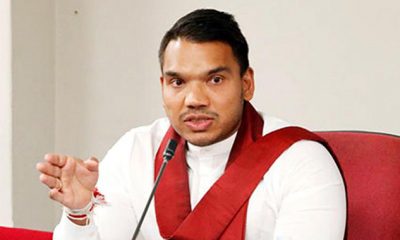
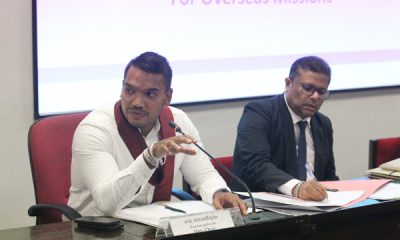
Parliament said that the Sectoral Oversight Committee on International Relations, chaired by Namal Rajapaksa, MP, discussed the issue at hand with the Foreign Affairs Ministry. Lawmakers Niroshan Perera, Mayantha Dissanayake, Akila Ellawala, Yadamini Gunawardena, and Dr. Harini Amarasuriya were present.
According to the Director, PPD, the Foreign Affairs Ministry has received Cabinet approval to establish a mission in Romania, in October, 2020, in the wake of the last general election.
Pointing out that Romania upgraded the status of its mission in Colombo to a full-fledged Embassy in 2017, the Ministry said establishing an embassy there would be a reciprocal, goodwill gesture on the part of Sri Lanka. That would give new momentum to the bilateral engagement and help consolidate multifaceted cooperation with the EU member.
Asserting that the number of Sri Lankans working, could be as many as 40,000, and the number of registered is approximately 15,000, the Ministry described Romania as the most attractive and accessible labour destination for Sri Lankans in the EU – from skilled to low-skilled (blue-collar) job categories in the IT, hospitality, construction and agri-business/agriculture and apparel sectors.
Romania has become quite an attractive destination for Sri Lankans, since 2016, the Ministry said.
The Ministry said with the increase in the number of Sri Lankans there, the mission in Warsaw, Poland, concurrently accredited to Romania, found it difficult to address consular issues (employment-related issues/job losses/employer/employee complaints) hence the need for a mission in Bucharest.
Against the backdrop of the EU funding granted to Romania for infrastructure development projects (hospitals, housing, railways, highways, renewable energy, etc.), the Ministry expected to push for a larger share of the non-EU foreign labour market. The Ministry expressed confidence in securing as many as 10,000 jobs there, annually.





Suspect also wanted for child abuse: Extradition process underway
Among seven persons arrested in the United Kingdom for people smuggling is a Sri Lankan wanted by French authorities for the rape of a child.
UK’s National Crime Agency said that it collaborated with police and international partners in INTERPOL’s largest-ever operation targeting people smuggling and human trafficking.
Operation Liberterra III was led by the NCA’s Joint International Crime Centre (JICC) and targeted offenders wanted for a range of crimes who had entered the UK illegally.
Officers from the National Extradition Unit at the JICC made five arrests across London, Bedfordshire, Merseyside and Greater Manchester.
Those arrested included:
A 30-year-old Sri Lankan man arrested in Liverpool and wanted in France for the rape of a child
A 38-year-old Iraqi man wanted for rape in Germany arrested in Greater Manchester
A 29-year-old Egyptian man wanted for murder in France arrested in Bedfordshire
A 41-year-old Syrian man arrested in Greater Manchester and wanted in Germany for organising illegal small boat crossings
A 30-year-old Bulgarian man arrested in London for human trafficking and wanted in France
Greater Manchester Police teams also made two arrests across the county during the operation which was held between 10 and 21 November last year.
A 23-year-old Ukrainian man wanted in Germany for sexual exploitation
A 31-year-old Romanian man wanted in Romania for sexual exploitation
Extradition proceedings are underway for all seven suspects.
The NCA website quoted its Deputy Director of International Rick Jones as having said: “This global operation is a prime example of our commitment to working closely and effectively with international partners to tackle people smuggling and human trafficking.
“We were proud to host the European Co-ordination Unit and used a range of our specialist capabilities to gather and disseminate intelligence to law enforcement agencies across the world, and to enable our officers to identify, locate and detain offenders wanted overseas.
“As a result, seven suspects wanted in connection to serious offences have been removed from our communities and extradition proceedings are ongoing to ensure they face justice.”
Globally, 3,744 suspects were arrested including 1,800 for human trafficking and migrant smuggling offences.
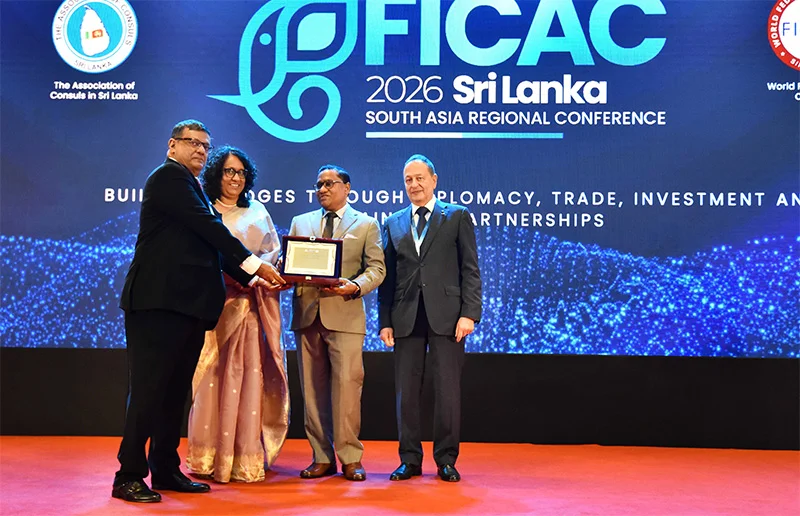
Addressing a gathering of the world’s consular community, Foreign Minister Vijitha Herath issued a pointed, diplomatic request yesterday for the enhanced protection of Sri Lankan citizens abroad, a message delivered against the backdrop of a recent alleged assault on Sri Lankan fishermen by the Indian Coast Guard.
The occasion was the inauguration of the FICAC 2026 South Asia Regional Conference, hosted by The Association of Consuls in Sri Lanka together with the World Federation of Consuls (FICAC) at Cinnamon Life.
Minister Herath, while outlining Sri Lanka’s foreign policy of “non-alignment, strategic autonomy, and constructive engagement,” directly tasked the honorary consul community with a critical role. “I request the honorary consul community to maintain a continued and enhanced focus on safeguarding the rights and welfare of Sri Lankan nationals in respective jurisdictions,” he stated.
The appeal carries significant weight following recent media reports which detailed claims by a group of fishermen from Wennappuwa that they were assaulted by uniformed Indian Coastal Guards. The incident, alleged to have occurred partly in Sri Lankan territorial waters, resulted in hospitalisations and has been referred to the Foreign Affairs Ministry and Navy for investigation. Minister Herath’s carefully calibrated statement before the international audience underscored the government’s proactive but diplomatic approach to citizen welfare overseas.
Prime Minister Harini Amarasuriya, who also addressed the inaugural session, framed Sri Lanka as a nation on a resurgent path. She thanked FICAC for selecting Sri Lanka, noting the choice reinforces the country’s returning credibility under President AKD’s administration.
“Fiscal management is in good control with contained inflation and increased reserve levels and global confidence is returning as the country is moving towards stability, expanded economic activity and inclusive growth,” the Prime Minister stated. She also acknowledged the severe challenge posed by climate change, citing Cyclone Ditwah, and thanked the international community for its support during the disaster, which helped quickly revive the tourism sector.
Both leaders positioned the consular network as indispensable partners in Sri Lanka’s recovery and global re-engagement. Minister Herath emphasised their role in bridging “governments, businesses and communities,” while the Prime Minister stated such forums help reconsolidate the support of global actors.”
The three-day FICAC conference brings together consular officials from across South Asia, focusing on their unique role in facilitating diplomacy, trade, and legal cooperation outside traditional embassy channels.
By Sanath Nanayakkare
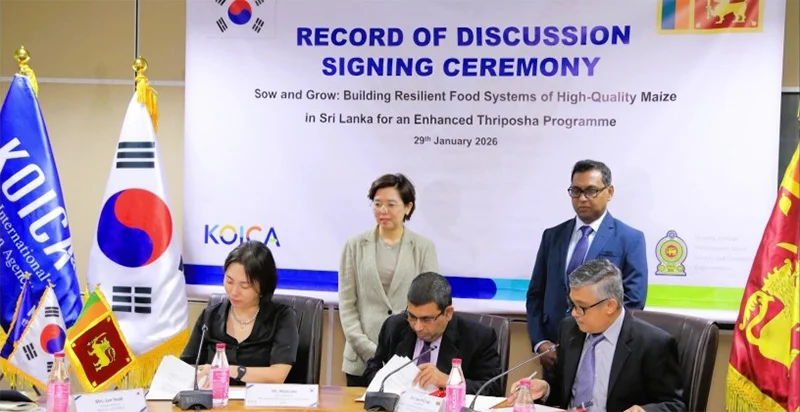
The Korea International Cooperation Agency (KOICA) has reached agreement with Sri Lanka to strengthen the country’s Thriposha nutrition programme through climate-resilient, locally sourced food systems.
According to the Korean Embassy here the agreement formalised a USD 10 million partnership that would enhance domestic production of high-quality maize, reduce reliance on imports, and reinforce the sustainability of Sri Lanka’s flagship nutrition intervention for children and mothers. The agreement in this regard reflected the shared commitment of the Republic of Korea and Sri Lanka to advancing inclusive, resilient, and sustainable development outcomes, the Embassy stated.
The agreement was signed in the presence of the Ambassador of the Republic of Korea to Sri Lanka Ms. Miyon Lee, the Minister of Rural Development, Social Security and Community Empowerment Dr. Upali Pannilage, Country Representative, World Food Programme (WFP) Philip Ward, and senior representatives from the Ministry of Agriculture, Ministry of Health, Ministry of Trade, Sri Lanka Thriposha Limited, demonstrating the commitment by all relevant stakeholders of this unique project.

Shower will occur in the Northern, North-central, Eastern and Uva provinces and in Nuwara-Eliya and Matale districts

Interpol crackdown: Sri Lankan man among seven arrested in UK for human smuggling

Sri Lanka calls on global consular corps to protect nationals amid fishermen incident

Korean boost for Thriposha programme: Partnership worth USD 10 mn

Development Officers’ Association steps up protest campaign

‘Sri Lanka’s forests are undervalued economic assets — and markets are paying the price’

‘Dates have the highest sugar content to fight Coronavirus’

Sunday Island 27 December – Headlines

#SundayIsland 17th December – Headlines

Sunday Island – 28th March

Sunday Island Headlines – 21 March

Sunday Island – 21st February – Headlines
-
 Opinion4 days ago
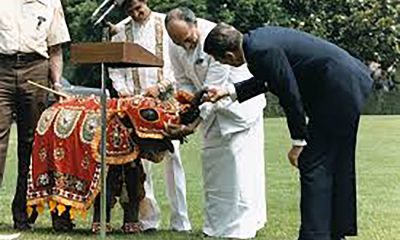
Sri Lanka, the Stars,and statesmen
-
 Business5 days ago
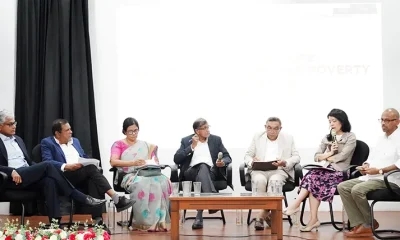
Climate risks, poverty, and recovery financing in focus at CEPA policy panel
-

 Business3 days ago
Hayleys Mobility ushering in a new era of premium sustainable mobility
-
 Business3 days ago
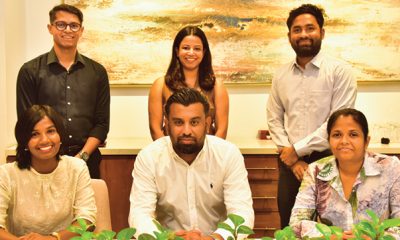
Advice Lab unveils new 13,000+ sqft office, marking major expansion in financial services BPO to Australia
-
 Business3 days ago
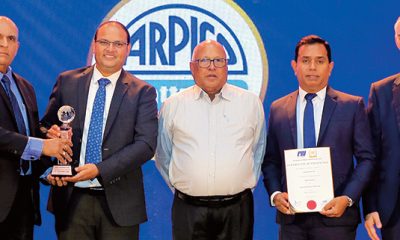
Arpico NextGen Mattress gains recognition for innovation
-
 Business2 days ago
Altair issues over 100+ title deeds post ownership change
-

 Business2 days ago
Sri Lanka opens first country pavilion at London exhibition
-

 Editorial3 days ago
Govt. provoking TUs