
News
Govt. accused of undercutting gene sequencing done by Jayewardenepura University

By Rathindra Kuruwita
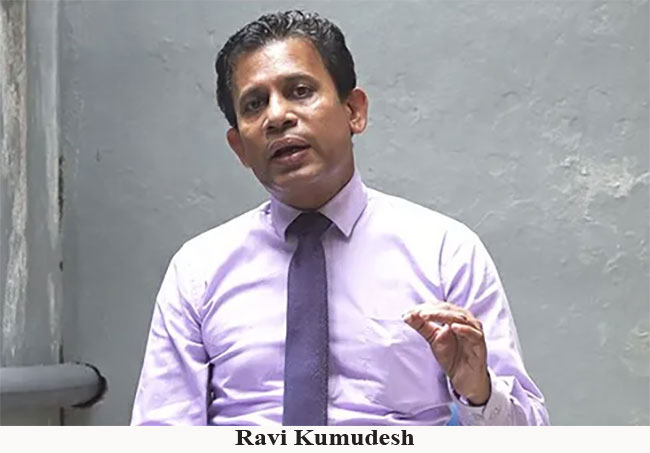
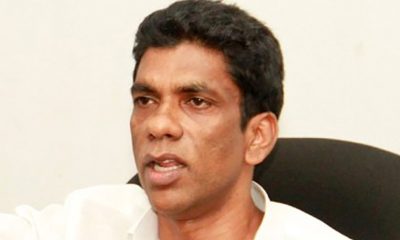
The government is trying to sabotage the drive to detect the Omicron COVID variant by preventing the University of Sri Jayewardenepura from conducting gene sequencing, College of Medical Laboratory Science (CMLS) President, Ravi Kumudesh alleged yesterday.
Kumudesh told The Island that one of the persons with Omicron detected in Sri Lanka was an Indian national and that he was allowed to come in and roam about the country, due to the loopholes in the systems put in place by the Ministry of Health.”When the Health Ministry makes guidelines, they don’t think about controlling the pandemic. A few people in charge of making these guidelines, act according to their whims and fancies. We have detected a few cases of Omicron but this was because of luck and dedication of lab technologists and the researchers at the University of Sri Jayewardenepura,” he said.
Kumudesh said that although, gene sequencing of the Indian was done, it was a prohibited act according to the guidelines. Technically, unless some senior officers approved it, gene sequencing of individuals leaving the country and those who had been double jabbed was not possible, he said.
“The Indian had been double jabbed and this only proved how ridiculous the guidelines are. To ensure that there will not be future embarrassments, these officials are now trying to cut the University of Sri Jayewardenepura out of the process. They have issued a circular appointing several establishments to carry out gene sequencing in the future,” he said.
Kumudesh said that they had asked health officials to start gene sequencing in state run labs for the past two years.
“We also warned that due to the lax testing at the Bandaranaike International Airport (BIA), there is a strong possibility of a new variant of COVID-19 entering the country. We said that even a travel ban would be useless unless the country enhances its testing and surveillance capacities,” Kumudesh said.
The CMLS President said that PCR tests were not conducted on passengers on arrival and that it was likely that even those not fully vaccinated were entering the country. “Gene sequencing in respect of those infected with COVID inside the country was at a minimal level, and therefore, there is no way we can find out whether a new variant has entered the country and spread until it is too late.”
“There are two state-of-the-art labs at the BIA but no tests are done there. We are not ready, at all. Several nations are imposing travel bans on travellers from South Africa and the region. Perhaps, we should follow suit. However, the fact that we don’t test those coming in means that even a travel ban might be useless,” he said.



The Ministry of Education has yet to clarify whether school hours will be extended by 30 minutes from next Monday (05) under the proposed new education reforms, Ceylon Teachers’ Union (CTU) General Secretary Joseph Stalin has said.
Stalin told The Island that the Ministry should reconsider the planned reforms, warning that decisions taken without adequate study and consultation could have serious repercussions for nearly four million schoolchildren.
He said the Education Ministry had announced that education reforms would be implemented in Grades from 1 to Grade 6, but it had not said anything about the Grades above 6. This lack of clarity, he said, had created confusion among teachers, parents and students.
Stalin also noted that although learning modules had been issued, students are required to obtain photocopies based on the codes introduced in these modules. However, the Ministry had not revealed who would bear the additional financial burden arising from those costs, raising further concerns over the practical implementation of the reforms.
by Chaminda Silva ✍️
The Sri Lanka Navy has lauded the critical support provided by foreign warships that were in the country for the International Fleet Review (IFR) 2025, assisting in humanitarian and disaster relief operations following the recent severe weather, the Navy said yesterday.
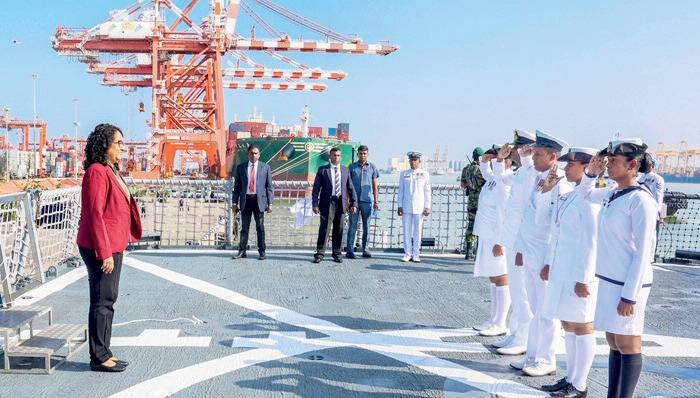
The IFR 2025, held off the Galle Face seas, also marked the 75th anniversary of the Sri Lanka Navy. Prime Minister Harini Amarasuriya, representing the government of Sri Lanka, received the traditional naval salute onboard SLNS Gajabahu as the visiting warships paid their respects.
Eight foreign naval vessels had arrived in Sri Lanka by November 27 under the IFR theme “Sailing Strong – Together.” Participating ships included Bangladesh’s BNS PROTTOY, India’s aircraft carrier INS VIKRANT and INS UDAYGIRI, Iran’s IRIS NAGHDI, the Maldivian Coast Guard’s CGS HURAVEE, Malaysia’s KD TERENGGANU, Pakistan’s PNS SAIF, and Russia’s GREMYASCHCHY.
Due to the nationwide weather disaster, the visiting warships were quickly redirected to support relief operations. The Sri Lanka Navy highlighted the efforts of helicopters deployed from India’s INS VIKRANT and Pakistan’s PNS SAIF, which played a key role in search and rescue missions for affected communities.
The IFR continued as planned, allowing the visiting warships to honour Sri Lanka’s maritime traditions while reinforcing regional cooperation and partnerships needed to tackle both non-traditional maritime threats and climate-related disasters.
Prime Minister Harini Amarasuriya also thanked diplomatic officials from the High Commissions and Embassies of Bangladesh, India, Iran, Maldives, Malaysia, Pakistan, and Russia for their support in the disaster relief efforts.

Sri Lanka had received humanitarian assistance from 22 foreign countries and the World Food Programme (WFP) to support communities affected by Cyclone Ditwah, the Ministry of Defence said yesterday.
To ensure the transparent management, coordination and effective distribution of foreign relief supplies, the President has established the High-Level Committee for Foreign Relief Aid (Supplies) Coordination (HL-FRAC). The Committee is chaired by Deputy Minister of Defence, Major General (Retd) Aruna Jayasekara.
The Committee has met on several occasions and taken measures to ensure efficiency and accountability in relief operations. All foreign assistance arriving through airports and seaports is being securely stored at the Orugodawatta warehouse complex, while distribution to affected communities has been strengthened through the National Disaster Relief Services Centre (NDRSC).
The sixth meeting of the Committee was held on Tuesday (Dec 30) at the Disaster Management Centre (DMC), where media were briefed on the foreign humanitarian assistance received and the role played by international relief teams.
Assistance received includes essential food items, medicines and technical equipment for disaster management operations. The international community has also provided civil engineering equipment for bridge restoration, transport and logistics vehicles, special tents and protective shelters for displaced families, as well as household items and clothing to help affected people resume daily life.
The Government has taken steps to ensure that all humanitarian aid is distributed swiftly and with the highest level of transparency. Details of the distribution process are reported every three days to the Presidential Secretariat and the Prime Minister’s Office, with updated information released to the media.
Distribution from the Orugodawatta warehouse is being carried out through District Secretariats, based on requests submitted by Divisional Secretaries. Storage capacity at the complex has been expanded, security enhanced and operational support strengthened. The Deputy Minister of Defence said arrangements would also be made to conduct a formal audit of the entire distribution process in the future.
In addition to material assistance, several countries have provided human resource support since the onset of the disaster. Relief teams comprising 89 specialists from seven countries are currently engaged in operations, working closely with local agencies in search and rescue missions, emergency medical care and urgent construction work.
Using modern technology, the teams have also supported disaster monitoring, mapping of affected areas and water purification to ensure access to safe drinking water. Some teams have already completed their missions and departed the country.
Deputy Minister Jayasekara, on behalf of the President and the people of Sri Lanka, expressed gratitude to all foreign governments and their citizens for their assistance during the crisis. He also commended the Sri Lankan expatriate community for extending support and making sacrifices to help the country in its time of need.

CTU raises questions about education reforms

Navy lauds foreign warships that came to assist in disaster relief ops here

It’s PC polls, stupid

Sri Lanka’s economy: A slow healing journey in 2026

Global aid flows in as Lanka rallies relief for Cyclone Ditwah victims

Red Cross launches nationwide cleanup drive after Cyclone Ditwah

‘Dates have the highest sugar content to fight Coronavirus’

Sunday Island 27 December – Headlines

#SundayIsland 17th December – Headlines

Sunday Island – 28th March

Sunday Island Headlines – 21 March

Sunday Island – 21st February – Headlines
-

 Sports4 days ago
Gurusinha’s Boxing Day hundred celebrated in Melbourne
-

 News7 days ago
Lankan aircrew fly daring UN Medevac in hostile conditions in Africa
-
 News2 days ago
Leading the Nation’s Connectivity Recovery Amid Unprecedented Challenges
-

 Sports5 days ago
Time to close the Dickwella chapter
-

 Features3 days ago
It’s all over for Maxi Rozairo
-

 News5 days ago
Environmentalists warn Sri Lanka’s ecological safeguards are failing
-
 News3 days ago
Dr. Bellana: “I was removed as NHSL Deputy Director for exposing Rs. 900 mn fraud”
-
 Features5 days ago
Digambaram draws a broad brush canvas of SL’s existing political situation