
News
GMOA wants Health Ministry officials to get cracking with 2023 budget allocation to end severe drug shortage

By Rathindra Kuruwita
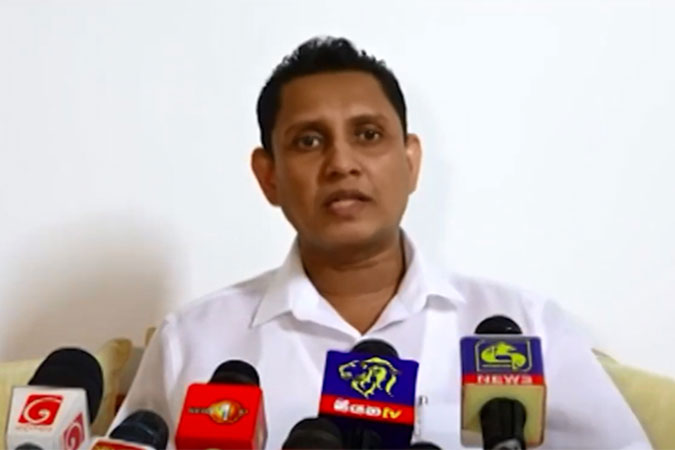
Health Ministry officials must take steps to use Rs 321 billion allocated for health by the 2023 budget to solve the severe drug shortage, Government Medical Officers Association (GMOA) Secretary Dr. Haritha Aluthge told The Island yesterday.The GMOA Secretary said that there were many weaknesses in the procurement of medical supplies and these need to be addressed immediately.
“The process is also too complicated and there is a great deal of corruption in the sector,” said Dr. Aluthge.
There had been an attempt to expand the post graduate training opportunities for doctors with the 2023 budget, Dr. Aluthge said. “Postgraduate training is now available at the Colombo University. The budget proposes such programmes in Peradeniya, Ruhuna and Jaffna universities. This is a positive development as this will update the knowledge of doctors and develop their skills,” he said.
Dr. Aluthge said that the government was planning to establish another institution to determine the quality of degrees. A similar proposal was brought in when President Wickremesinghe was the Prime Minister of the Yahapalanaya government, he said.
“A lot of people, including the GMOA opposed this because this would have an adverse effect on the work done by the University Grants Commission and the existing mechanisms that gauge the quality of university degrees. We are keeping a close tab on this proposal and will oppose this proposal if it affects the quality of degrees,” he said.
Dr. Aluthge said that the budget had proposed to establish the paying ward system in government hospitals. “This is a strange proposal given that some hospitals including the Colombo National Hospital, already have this,” he said.
“However, the proposal to establish paying wards at Base Hospitals is suspicious. This might be a step-in privatising healthcare and will affect healthcare provided to the poorest segments of the population,” he said.
The GMOA Secretary said that they had been highlighting the high prevalence of malnutrition. The government has allocated Rs. 500 million to address this problem. “We must now ensure that the money is used properly. We must identify those who are the most in need and ensure that there is no corruption here.”
Dr. Aluthge said that the government was attempting to increase the tax revenue and given the crisis faced by the country, this is a necessity. However, some of the proposals to boost tax income are arbitrary and counter-productive.
“This has caused anger and fear among many professionals. This might also lead to more professionals leaving the country. We have already called for amending what, we think, are unfair revisions to tax policy. We believe that taxes must be collected and funds raised therefrom spent in a transparent manner.
Dr. Aluthge said that over the years a number of positive proposals had been made in budgets, but they had not been implemented.
“There are some welcome proposals. There are some bad ones as well. We fear that while the worst proposals are implemented, the good ones will be ignored. We will work with all concerned parties to ensure that the quality of the health services is maintained and defeat any attempt to privatise healthcare.”


Govt. tells fuel distributors to maintain stocks to ensure uninterrupted supplies
by Saman Indrajith and Norman Palihawadane
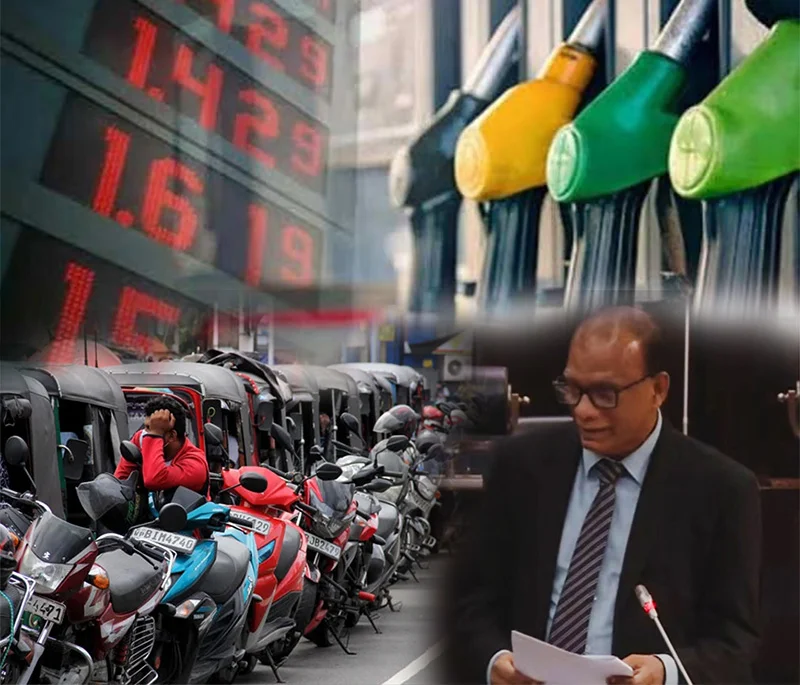
The government had instructed private fuel distributors to maintain minimum stocks and ensure uninterrupted supplies to the market, Energy Minister Anura Karunathilaka told Parliament yesterday (06).
Karunathilaka said the Ministry of Energy Secretary had notified the relevant companies of the requirement, following a reduction in supplies by some private distributors, amid higher international fuel prices.
The Minister said private companies had informed the government that they were facing losses because international prices had risen while fuel was being sold, locally, at prevailing prices. As a result, some companies had reduced the volumes released to the market.
The reduced supplies had increased the burden on the Ceylon Petroleum Corporation (CPC), whose share of the diesel market had risen from about 54% to 82%, the Minister said.
“The CPC currently holds an 82% share of the market,” he said, adding that it had increased its supplies, compared with February, to compensate for the reduction by private distributors.
Karunathilaka said the government could not, under the existing agreements with private companies, specify the quantities they should supply to individual filling stations. However, it could require them to maintain minimum stocks in the country.
The Minister said the Energy Ministry had already instructed companies that had failed to maintain the required stocks to take steps to prevent supply disruptions.
The Minister attributed the queues reported at some filling stations to reduced supplies from private distributors, as well as normal variations in fuel distribution. He also said demand for CPC fuel had increased because private companies generally did not provide fuel to dealers on credit, while the CPC offered a three-day credit facility.
“We expect that, as the Ceylon Petroleum Corporation takes on this additional burden, the problem will ease to some extent by Wednesday or Thursday,” Karunathilaka said.
He said instructions had also been issued to increase supplies to CPC filling stations. A special discussion on the issue is scheduled for today (07), with officials of the Energy Ministry and CPC expected to participate,
along with President Anura Kumara Dissanayake.
Meanwhile, Petroleum Dealers’ Association officials have called for an early solution to the supply issue. Association Chairman D.V. Shantha Silva said queues had been reported at many filling stations, mainly those operated by private distributors.
He said the situation was not due to an overall shortage of fuel, but was linked to reduced orders by Lanka IOC, Sinopec and R.M. Parks amid concerns over losses incurred on fuel sales.
The Ceylon Petroleum Private Tanker Owners Association has urged motorists to refrain from panic buying, saying there was no nationwide disruption to fuel supplies.
The government earlier increased fuel prices and introduced a per-litre diesel subsidy following concerns raised by distributors over rising international prices.
by Norman Palihawadane
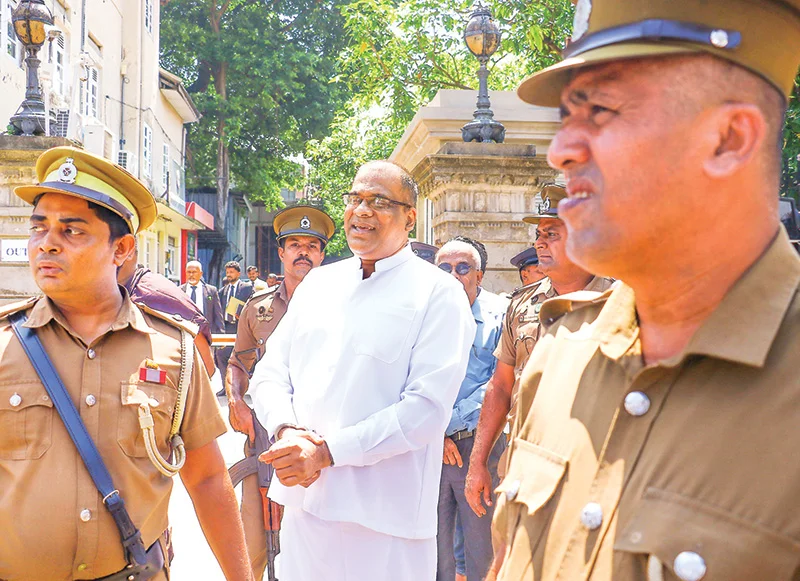
Bodu Bala Sena General Secretary Ven. Galagodaatte Gnanasara Thera, who has been ordered by the court to serve the remainder of his prison sentence, is to be assigned to the prison ‘printing work party’, prison officials said yesterday.
The monk was produced before the Colombo High Court yesterday by prison officials in connection with a warrant issued by the court.
He appeared before the court in civilian attire.
Prison sources said arrangements were being finalised for his detention and that he would subsequently be assigned to the printing work party.
The Thera initially objected when prison officials instructed him to change from his robes into the attire worn by convicted prisoners.
He later agreed to wear the prescribed prison clothes, sources said.
The Supreme Court, in September, annulled the presidential pardon granted to Gnanasara Thera in 2019. He had been serving a six-year prison sentence imposed following his conviction for contempt of court but had served only about nine months when then President Maithripala Sirisena granted him a presidential pardon in May 2019.
Following the Supreme Court ruling, the Thera was required to serve the remainder of his sentence. He was subsequently reported missing, prompting the Court of Appeal to issue an open warrant for his arrest.
The Court of Appeal on Monday ordered the authorities to enforce the remainder of his prison sentence.
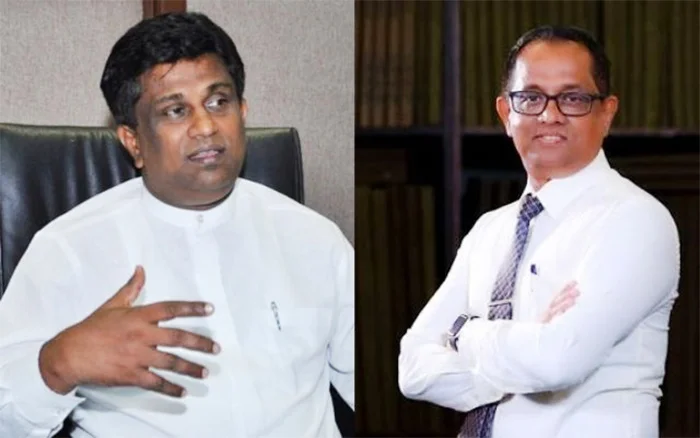
Speaker Dr. Jagath Wickramaratne yesterday ruled that a privilege complaint submitted by SJB Kalutara District MP Ajith P. Perera did not constitute a prima facie breach of parliamentary privilege.
The ruling was made in response to a notice of privilege submitted by Perera on October 02.
Perera alleged that his parliamentary privileges had been breached over the failure to take formal action or reach a final decision on a written request submitted on August 03 by 18 Opposition MPs seeking the appointment of a Special Select Committee to investigate delays in the judicial system and prison overcrowding.
He had also requested that the matter be referred to the Committee on Ethics and Privileges for investigation and recommendations.
In his ruling, Speaker Wickramaratne said the Speaker, as the Presiding Authority and guardian of the powers, rights and privileges of Parliament, could not be subjected to a privilege complaint or disciplinary inquiry by a committee subordinate to the Chair in respect of actions taken in an official capacity.
He said that, under the Standing Orders, the Speaker was required to independently determine whether a prima facie case of breach of privilege existed.
Referring a complaint against the Speaker to a committee functioning under the Speaker’s authority would, therefore, create a procedural contradiction, he said.
Accordingly, the Speaker ruled that Perera’s notice did not constitute a prima facie breach of parliamentary privilege and disallowed the request to refer the matter to the Committee on Ethics and Privileges.

Ronaldo apologizes for Portugal walkout; says Jesus broke promise

Showers in the Western, Sabaragamuwa, Central, Uva, North-western and Southern provinces and in Anuradhapura and Mannar districts

Fuel crunch looms

Gnansara Thera to be assigned to prison printing section: Officials

Speaker rejects Ajith Perera’s privilege complaint

OIC of FCID summoned before Maligakanda Magistrate

‘Dates have the highest sugar content to fight Coronavirus’

Sunday Island 27 December – Headlines

#SundayIsland 17th December – Headlines

Sunday Island – 28th March

Sunday Island Headlines – 21 March

Sunday Island – 21st February – Headlines
-

 News6 days ago
US-assisted ‘Ice’ detection: NPC to examine IGP’s move to transfer drug-busting team
-

 Editorial5 days ago
Colombo Port drug bust: The plot thickens
-

 Editorial6 days ago
Drug busting, transfers and trust deficit
-

 Features3 days ago
The first woman in the foreign service or Ceylon Overseas Service it was then called
-

 Editorial4 days ago
Fuelling discontent and protest
-

 Latest News4 days ago
Tharindu Rathnayake, bowlers secure Asian Games Bronze for Sri Lanka
-
 News6 days ago
Sri Lankan facing death penalty in Saudi Arabia: Mano G appeals to Crown Prince
-
 News5 days ago
ADB-backed virtual net metering project faces policy contradiction