
News
GL urges AG to ensure compliance with SC recommendations before Speaker certifies Online Safety Bill


… alleges 13 mandatory recommendations discarded
by Shamindra Ferdinando
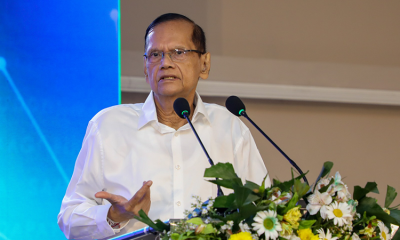
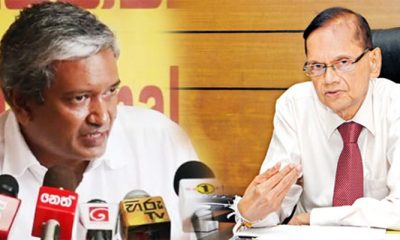
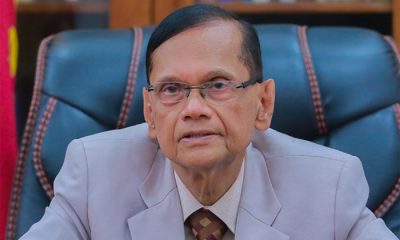
Alleging that the Wickremesinghe-Rajapaksa government hadn’t introduced the amendments proposed by the Supreme Court in respect of the Online Safety Bill, dissident SLPP National List MP Prof. G.L. Peiris yesterday (29) said that the certification of that Bill by Speaker Mahinda Yapa Abeywardena should be subjected to sanction by Attorney General Sanjay Rajaratnam, PC.
Addressing the media at his Kirula road residence, former External Affairs Minister Prof. Peiris accused the government of discarding at the Committee Stage what he called 13 mandatory amendments proposed by the SC.
There hadn’t been a previous instance of a government acting in such a manner in the recent past, Prof. Peiris said, alleging that both the Constitution as well as the Standing Orders of the Parliament were brazenly violated.
Yesterday’s briefing was the first since Prof. Peiris recently switched his allegiance to the SJB.
Prof. Peiris stressed the responsibility on the part of the AG to ensure that the Bill passed by Parliament on 24 January included SC’s recommendations.
The former minister pointed out that the SC declared the Bill could be passed with a simple majority if the recommended amendments were included at the Committee Stage. While discarding the recommended amendments, the government altered the Bill further by granting authority to the executive to remove a person from the five-member Online Safety Commission, Prof. Peiris said.
Prof. Peiris added that the Opposition eagerly awaited the AG’s stand on the Online Safety Bill passed by Parliament. The Opposition lawmaker alleged that the relevant Sectoral Oversight Committee hadn’t been given an opportunity to peruse the Bill before the commencement of the two-day debate (January 23 and 24). Prof. Peiris said that the Opposition expected the AG to take remedial measures against the backdrop of SC declaration that the Bill could be passed with a simple majority if clauses 3, 5, 7, 9, 11,12, 13, 14, 15, 16, 17, 18, 19, 20, 21, 22, 23, 25, 26, 27, 28, 29, 30, 31, 32, 36, 37, 42, 45 and 53 were amended. The SC determined that clause 56 should be passed by a special majority in Parliament.
At the end of the debate on the Second Reading of the Bill, Chief Opposition Whip Lakshman Kiriella, MP, called for a division. Accordingly, 108 votes were cast in favour of the Bill and 62 votes were cast against it. Thus, the Second Reading of the Bill was passed by a majority of 46 votes.
Prof. Peiris said that several Opposition MPs asked for a vote on the Third Reading but Speaker Abeywardena ignored their call. The former Law Professor said that of the 57 clauses the SC found fault with over 30 therefore more than 50% of the Bill was contrary to the Constitution.
The government also thwarted another dissident SLPP member Chandima Weerakkody introducing an amendment. The Galle District MP called for a division bringing in an amendment to section 36 of the draft Bill. Accordingly, 51 votes were cast in favour of the amendment and 92 votes were cast against. Thus, the said amendment was defeated by a majority of 41 votes. The Third Reading of the Bill was then passed without a vote.
Prof. Peiris said that the threat posed by the Online Safety law should be examined taking into consideration the proposed Anti-Terrorism Bill and the Broadcasting Regulatory Commission Bill meant to suppress the Opposition. Alleging that the government was bent on crushing the Opposition in line with its overall political strategy, Prof. Peiris said that discriminatory laws were being introduced with an eye on the presidential polls expected to be held later this year.
The former Minister declared a future SJB-led government would annul the Online Safety law. Prof. Peiris said that a suitable new law would be introduced after taking into consideration the views of all stakeholders.
Prof. Peiris warned the government of dire consequences over enactment of laws against the wishes of the people as well as the international community.
Prof. Peiris pointed out that the issue at hand is Speaker Abeywardena’s continuing failure to represent the interests of the Parliament.






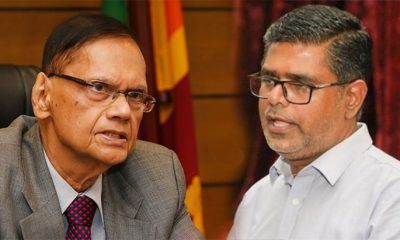


The Cabinet of Ministers has approved the resolution furnished by the President in his capacity as the Minister of Digital Economy, to appoint H.M.J.M.Herath, a special Grade officer in Sri Lanka Administrative Service, who is currently serving as the District Secretary / Government Agent of Kegalle, to the post of Commissioner General of Registration of Persons
The need has been identified to amend the Water Resources Board Act, No. 29 of 1964, so as to expand the mandate of the Water Resources Board to effectively regulate activities such as the misuse and excessive extraction of groundwater and the surface water generated therefrom.
Accordingly, the Cabinet of Ministers has approved the resolution furnished by the Minister of Environment to instruct the Legal Draftsman to formulate a draft Bill to amend the said Act
News
Securing public sector employment opportunities for Athletes demonstrating National-Level sporting excellence

The Cabinet of Ministers has approved the proposal submitted by the Minister of Youth Affairs and Sports to formulate an appropriate policy framework to secure employment opportunities in public, semi-government, and statutory institutions through a transparent, fair, and merit-based selection process, ensuring long-term job security for athletes.

H.M.J.M.Herath appointed Commissioner General of Registration of Persons

Water Resources Board Act, No. 29 of 1964, to be amended

Securing public sector employment opportunities for Athletes demonstrating National-Level sporting excellence

Cabinet gives green light for old court complex buildings located in Galle Fort to be utilized for a Tourism Promotion Project.

Seven Eritrean players fail to return home after international match

Artemis II crew head for home after travelling further from Earth than anyone before

‘Dates have the highest sugar content to fight Coronavirus’

Sunday Island 27 December – Headlines

#SundayIsland 17th December – Headlines

Sunday Island – 28th March

Sunday Island Headlines – 21 March

Sunday Island – 21st February – Headlines
-

 Features3 days ago
Ranjith Siyambalapitiya turns custodian of a rare living collection
-

 News6 days ago
2025 GCE AL: 62% qualify for Uni entrance; results of 111 suspended
-

 News3 days ago
Global ‘Walk for Peace’ to be held in Lanka
-

 Business7 days ago
Hour of reckoning comes for SL’s power sector
-

 Editorial6 days ago
Search for Easter Sunday terror mastermind
-

 Opinion5 days ago
Hidden truth of Sri Lanka’s debt story: The untold narrative behind the report
-
Editorial7 days ago
Ideological confusion and identity crisis
-

 Opinion6 days ago
Is there hope for Palestine?