
News
GL felicitated by Colombo University alumni


The Alumni Association of the University of Colombo felicitated their former Vice Chancellor and an illustrious alumnus Prof. G. L. Peiris, the newly appointed Minister of Education recently at a function held at the Senate Hall of the University of Colombo. The event was attended by Vice Chancellors, Deans, Academics and Alumnus.
Mr. Rajeev Amarasuriya, the President of the Alumni Association in his Welcome Address said “As an admired academic and university administrator, we can confidently say that there is no better person to be given the portfolio of the Minister of Education, and during your term of office we look forward to many revolutionary changes in our education system, which has much room for improvement.”.
He also mentioned the support extended by Prof. Peiris to the Association and said “when we were formulating the plan for the Swimming Pool Complex for the University of Colombo, Prof. Peiris was someone with whom, very early on I shared the plans, and we look forward to your support in seeing this project to completion before long”. He also thanked Mrs. Savitri Peries for her presence and said she has been the silent strength behind his success.
The Vice Chancellor of the University of Colombo, Senior Professor Chandrika Wijeyaratne congratulated Prof. Peiris on his appointment and wished him all the best in the important national task of reforming the Educational Sector which has been entrusted to him. She reiterated that the University of Colombo has been ranked No 1 among all universities in the country as a result of strategic planning targeted at sustainable development goals, extensive research and development work that was carried out by the University with emphasis on value addition, hosting the AUA Youth Forum in 2019, participating in International webinars, and becoming the best performing university after the COVID 19 shut down.
Mr. Thilak Karunaratne, former President of the Alumni Association traced the milestones of Prof. Peiris’ outstanding education and academic achievements and his political journey. He referred to some fond memories and anecdotes about his school days.
Prof G L Peiris was formally introduced by Prof. Indira Nanayakkara Dean of the Faculty of Law.
He said that he was very happy to be back in the University of Colombo which is very familiar territory to him, having been in the University of Colombo for 26 years in different capacities, and ending up as its Vice Chancellor.
Prof. G.L. Peiris said that each of the 13 universities must focus on a unique and a different way to be identified for their strengths and capacity. Each University should be seen as different from the other. He raised the concern that the university system is unable to accommodate a large number of students although they qualify with the required marks for university entrance and therefore he has plans to increase the intake to the Universities.
He drew attention to the mismatch in university curricula against the requirements of employers for suitable employment in the job market. Private Sector employers have said that there are many vacancies for employment in the Private Sector but they are unable to find candidates to fill these vacancies. Undergraduates need to be taught Information Technology before they graduate from the University and also made competent to work in English if they are to obtain gainful employment, the minister said.
Prof. Peris also referred to the contribution made by Past President of the Alumni Association, the late Mrs. Sujata Jayawardena by building a Hostel to accomodate Women Undergraduates at Buller’s Lane since at that time the University had rented 32 individual houses to accommodate these students.
The event concluded with the vote of thanks delivered by the Vice President of the Association Ms. Suranjani Wickramaratne.


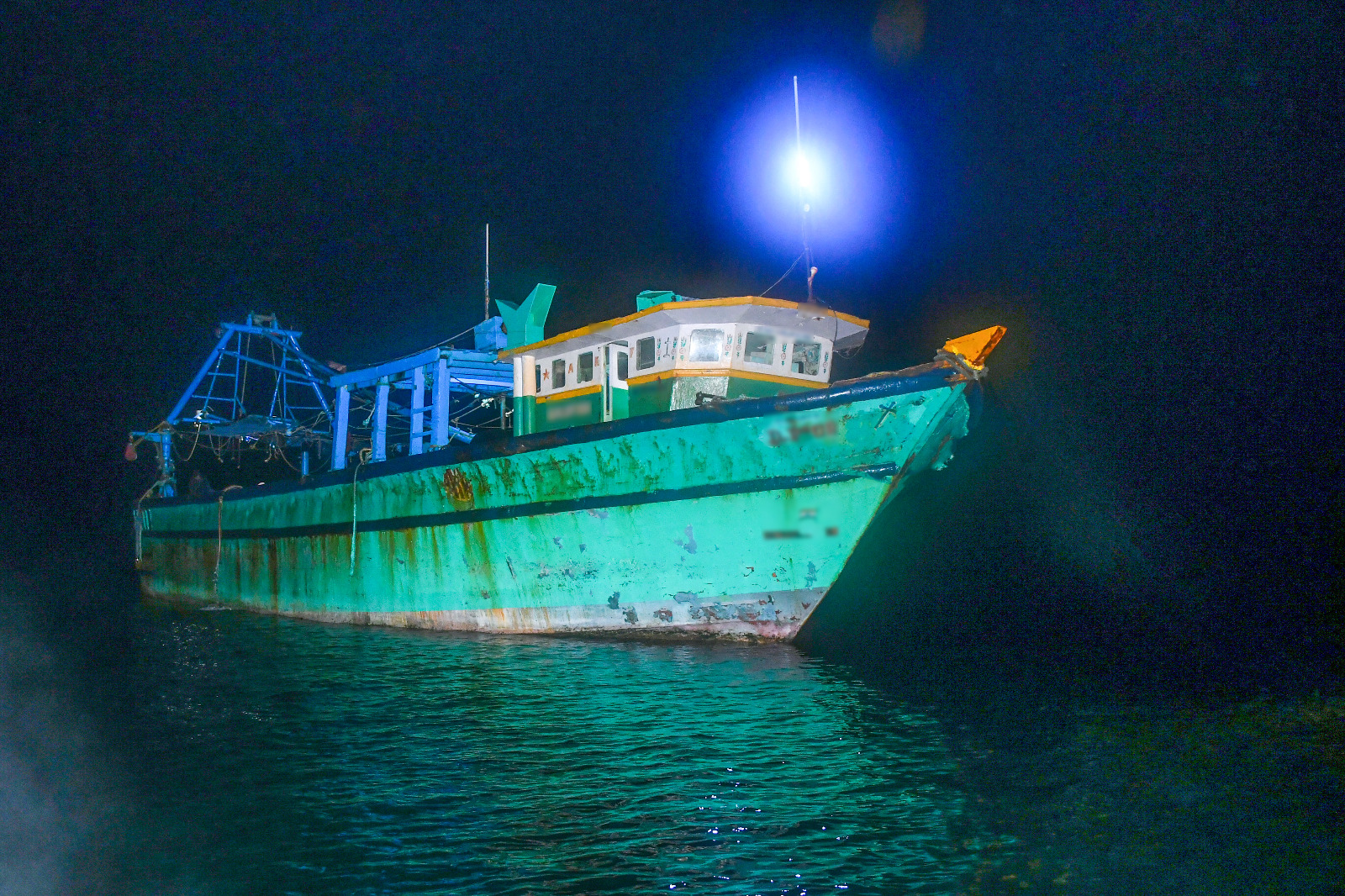
During an operation conducted in the dark hours of 22 Feb 26, the Sri Lanka Navy seized an Indian fishing boat and apprehended twelve (12) Indian fishermen while they were poaching in Sri Lankan waters, in the sea area south of Mannar.
The seized boat and the Indian fishermen were handed over to the Fisheries Inspector of Dikovita for onward legal proceedings.
FSL assures legal backing for them
Families of those sentenced to death by the Three-member Gampaha High Trial-at-Bar, over the killing of SLPP MP Amarakeerthi Atukorale, and his police bodyguard, met a senior official of the Presidential Secretariat, yesterday (23), to seek backing for their move to appeal against the verdict.
Having made representations, they addressed the media, outside the Presidential Secretariat, where they declared their intention to move the higher court against the decision.
The SLPP MP and his security officer were killed by an Aragalaya mob on 09 May, 2022, at Nittambuwa. The same day Aragalaya mobs unleashed violence against the then government MPs across the country, torching dozens of their properties.
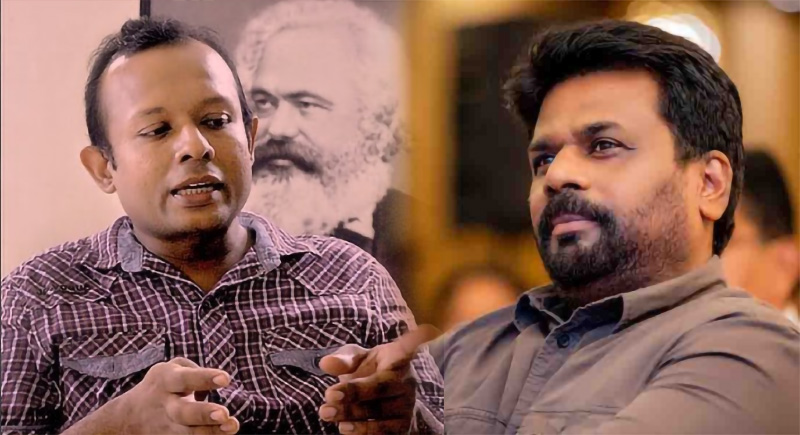
The Frontline Socialist Party (FSP) yesterday said that they would help the families of those sentenced to death to move court against the Gampaha High Court Trial-at-Bar decision. Responding to The Island queries, FSP spokesman Pubudu Jayagoda said that their representatives had already met the families and necessary work was being done to move the Supreme Court. Twenty three persons were acquitted and four handed six-month prison terms, suspended for five years
Jayagoda said that one of the HC judges differed in the ruling. Asked whether they received backing from any other political party and groups that had been involved in the 2022 protest campaign to defend those who had been found guilty, Jayagoda said such support was lacking.
The JVP/NPP played a significant role in the violent protest campaign that forced President Gotabaya Rajapaksa to step down. Pointing out that the Attorney General, too, was appealing against the court decision on the basis that the number of persons sentenced to death should be much higher, Jayagoda said that the Nittambuwa incident couldn’t be examined in isolation without taking into consideration the SLPP goon attack on Galle Face protesters on 09 May, 2022. (SF)
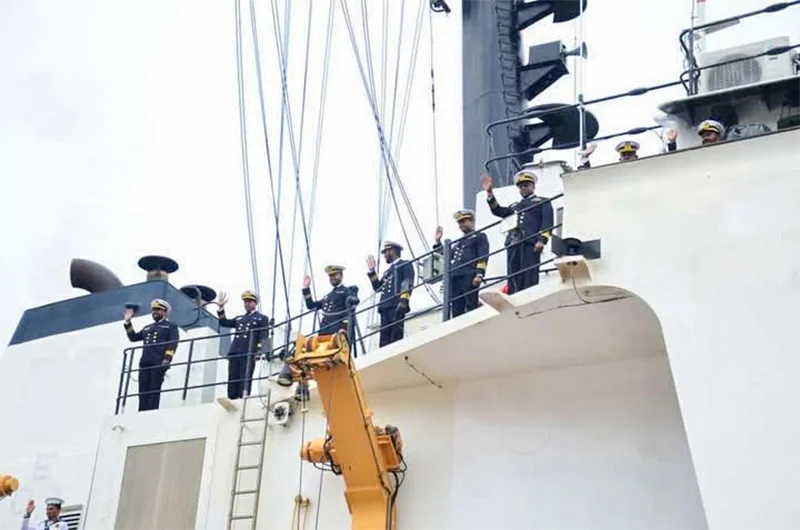
Offshore Patrol Vessel P 628 of the Sri Lanka Navy departed Baltimore, USA, for Colombo, on 20 February.
The ex-United States Coast Guard Cutter, USCGC Decisive was officially handed over to the SLN on 02 December, 2025, as the latest addition to the SLN fleet, under the Pennant Number P 628.
Measuring 64 metres in length, this ‘B-Type Reliance Class 210-foot Cutter’ is equipped with advanced technological systems and facilities, capable of conducting extensive surveillance operations spanning up to 6,000 nautical miles per patrol.
The vessel’s voyage to Colombo is historic, possibly marking the longest-ever passage undertaken by a Sri Lanka Navy ship. Covering approximately 14,775 nautical miles, the journey will see the P 628 navigate from Baltimore through the Atlantic Ocean, the Panama Canal (a first for a Sri Lankan naval vessel), the Pacific Ocean, and into the Indian Ocean, via the Straits of Malacca. The ship is expected to arrive in Sri Lanka during the first week of May, 2026.

Navy seize an Indian fishing boat poaching in Mannar seas

Fair weather will prevail except for showers in the Southern province and in Rathnapura, Monaragala and Kaluthara districts after 2.00 p.m

Families of those sentenced to death for killing MP Atukorale seek AKD’s intervention

OPV leaves Baltimore, expected in Colombo in May

Unions sound alarm over coal procurement and power sector restructuring

MAS Group moving to India: CP asks NPP govt. to act

‘Dates have the highest sugar content to fight Coronavirus’

Sunday Island 27 December – Headlines

#SundayIsland 17th December – Headlines

Sunday Island – 28th March

Sunday Island Headlines – 21 March

Sunday Island – 21st February – Headlines
-

 Features2 days ago
Why does the state threaten Its people with yet another anti-terror law?
-

 Features2 days ago
Victor Melder turns 90: Railwayman and bibliophile extraordinary
-

 Features2 days ago
Reconciliation, Mood of the Nation and the NPP Government
-

 Features1 day ago
LOVEABLE BUT LETHAL: When four-legged stars remind us of a silent killer
-
 Features2 days ago
Victor, the Friend of the Foreign Press
-
 Latest News3 days ago
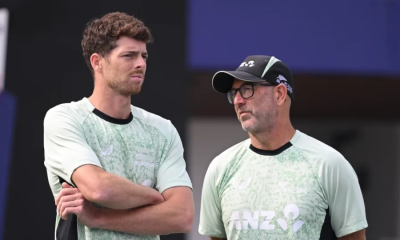
New Zealand meet familiar opponents Pakistan at spin-friendly Premadasa
-

 Latest News3 days ago
Tariffs ruling is major blow to Trump’s second-term agenda
-

 Latest News4 days ago
ECB push back at Pakistan ‘shadow-ban’ reports ahead of Hundred auction