
Business
‘Giving up was never an option’: The fisherman who fought back after losing millions in SL

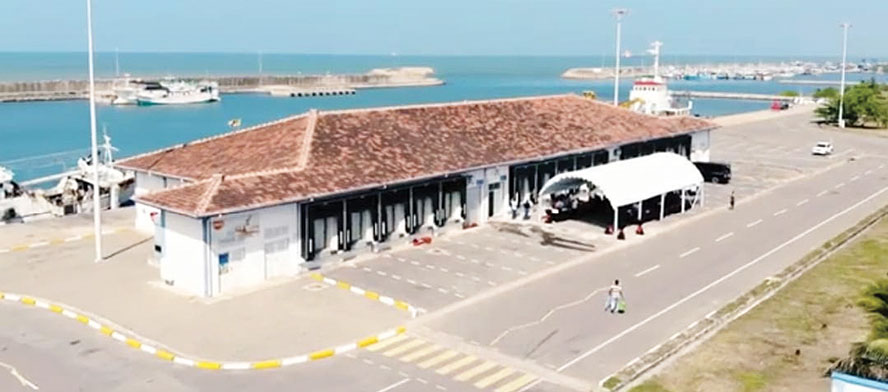
Spanish Israeli entrepreneur Simon Max Astandoust, a fourth-generation member of the renowned Astan fishing family, has endured years of legal battles, business setbacks and the loss of millions of dollars after investing in Sri Lanka’s fishing industry. Yet, despite the challenges, he has chosen to stay and rebuild.
In an interview with the Sunday Island, the founder and CEO of Seamax Ceylon (Pvt) Ltd speaks about his struggle, the restoration of his state-of-the-art factory vessel Astan II, and his plans to introduce cutting-edge seafood technology to Sri Lanka.
Q: You began operations in Sri Lanka in 2018. What was your original vision and investment?
A: We started operations in 2018 with an initial investment of around US$1 million. Over time, that investment grew into several million dollars because we believed Sri Lanka had enormous potential in the fishing industry.
My original intention was to develop a project through the Board of Investment (BOI) and introduce new technology to the country. However, the Government at the time encouraged us to work directly with it instead. We believed that this partnership would help us move forward faster and create something unique for Sri Lanka.
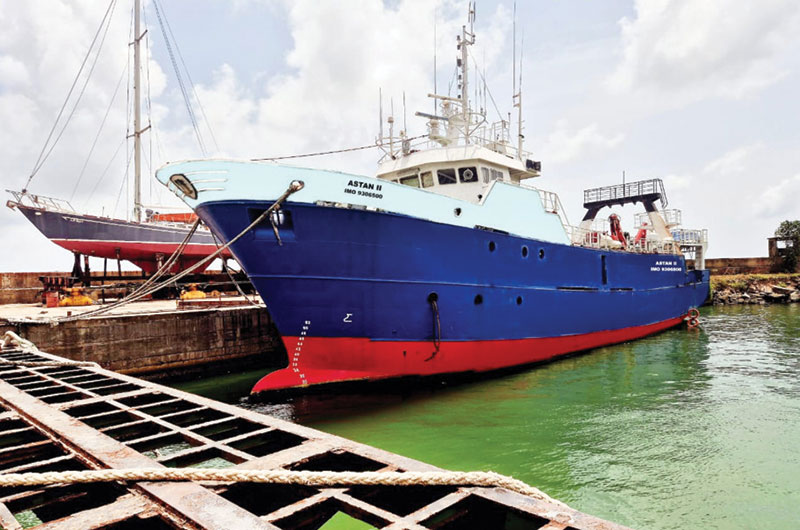
Overhauled Astan II
Our goal was to operate within the harbour and establish a modern fishing operation centred around advanced technology and sustainable seafood processing.
Q: What challenges did you face after starting operations?
A: Around eight to 18 months after we began our investment, COVID-19 hit. The pandemic created enormous difficulties. In countries such as Spain and the United States, governments provided financial support to help businesses survive. Here, the Government itself was facing a difficult economic situation and was unable to provide similar assistance.
Initially, we were told that there would be a grace period and that we would not be pressured for payments as long as we maintained our workforce and kept the operation alive. But later, that understanding changed, and demands for payments began despite the fact that we had a 15-year agreement.
That was the beginning of the major conflict.
Q: How did the change of Government affect your operations?
A: When a new Government came into power, the 15-year agreement signed with the previous administration was not recognized. The factory was closed and legal action was initiated against us.
This was extremely difficult because we had invested heavily based on a long-term agreement. We had built infrastructure, brought in technology and created employment opportunities.
During this period, while the vessel was caught up in legal disputes, a group of people attempted to take control of the ship. One of the most painful experiences was that some lawyers who had been working for us changed sides and supported those attempting to take the vessel.
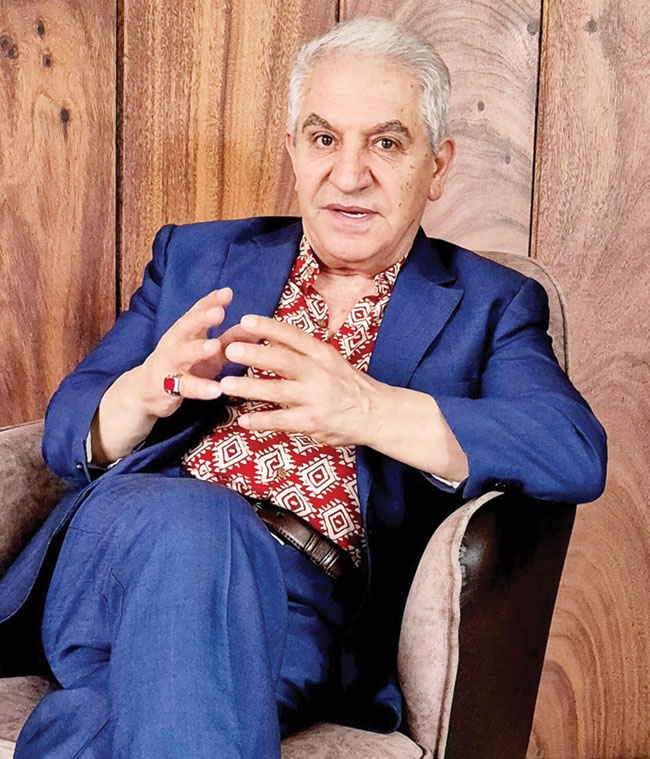
Simon Max Astandoust
The legal battle continued for years and only concluded in 2025.
Q: Your vessel, Astan II, is central to your investment. What happened to it during this period?
A: Astan II is not just a fishing vessel. It is a huge factory vessel with a complete processing facility inside. It was designed to bring a completely new level of technology to Sri Lanka’s fishing industry.
Unfortunately, because it remained idle during the legal proceedings, it suffered significant damage. Ships cannot simply sit in a harbour for months or years without proper operation and maintenance. The Sri Lankan weather conditions are particularly harsh on vessels.
The vessel deteriorated badly, but after we regained control, we decided to completely restore it. It was overhauled.
Q: How much did the restoration cost and what work was involved?
A: The restoration cost approximately US$1.5 million and took about one year, beginning in 2025. The vessel was almost a complete rebuild. One of the biggest technical challenges was repairing the three generators. Because the harbour did not provide electricity, these generators had been running continuously to maintain the vessel. Over time, this caused significant wear and tear.
Finding replacement parts was another major challenge. Many of these parts are not imported into Sri Lanka, so every component had to be sourced from different countries and brought in individually.
A team of around 14 to 20 people worked on the restoration, including a Sri Lankan chief engineer and local professional deck crew. Their expertise and dedication were extremely important.
Today, the vessel is in brand-new condition.
Q: You mentioned that the absence of diplomatic representation made your struggle more difficult. Why?
A: I hold Spanish and Israeli citizenship, and neither Spain nor Israel has an embassy in Sri Lanka. Normally, when a foreign investor faces serious difficulties, an ambassador can engage with authorities and help protect the investor’s interests.
In my case, I had to face everything alone. I had to deal directly with government institutions and the legal system through my lawyers. Having diplomatic support would have made a significant difference. But ultimately, I had to rely on the courts and the legal process.
Fortunately, the maritime judges understood the complexity of the situation and the importance of maritime law. Their fair approach restored some of my confidence.
Q: Your vessel uses unique -70°C “Ultra-Fresh” technology. Can you explain how it works?
A: This is one of the most exciting parts of our project. The technology comes from Japan and is only about two years old. Traditional freezing methods often affect the quality of fish because the freezing process is slower and damages the texture. This technology works differently. It uses a glazing process where the fish is frozen from the outside, creating a protective layer.
Within approximately two hours, the fish is completely frozen. This process eliminates bacteria and preserves the quality of the fish.
When the fish is later defrosted using the correct method, it is almost exactly like fresh-caught fish from the ocean. The taste, texture and quality are preserved. At present, nobody else in Sri Lanka is carrying out this type of ultra-fresh freezing technology onboard a fishing vessel.
Q: What advantage will this technology give Sri Lanka?
A: Sri Lanka has excellent fishing resources, but we need to move beyond simply catching fish. The future is about value addition, quality control and accessing premium international markets.
With this technology, Sri Lanka can export seafood at a much higher value because customers will receive a product that maintains the quality of freshly caught fish.
This is not just about one company. It is about introducing a new concept to the country’s fishing industry.
Q: After everything you have experienced, why did you decide to continue investing in Sri Lanka?
A: I come from a family of fishermen. This is my fourth generation, and my son represents the fifth generation. Fishermen are not people who give up easily. The sea teaches you resilience. You face storms, difficulties and uncertainty, but you continue. Of course, there were moments when I lost faith. Losing millions of dollars and spending years in court is not easy for anyone.
But eventually, the justice system gave me confidence again. The maritime judges understood the situation and treated the case fairly. That showed me that there are people in Sri Lanka who understand the importance of protecting investment and respecting the law. That is why I decided to continue.
Many people told me that, despite the difficulties, the Sri Lankan judiciary would ultimately deliver justice. At the time, after years of uncertainty, it was difficult to know what the outcome would be. But in the end, that is exactly what happened. The courts examined the facts and delivered a fair judgment.
The maritime judges understood the complexity of the situation and the importance of maritime law. Their fair approach restored my confidence—not only in the legal system but also in Sri Lanka itself.
Q: What are your future plans for Seamax Ceylon?
A: Our plan is to expand significantly. We intend to bring two or three more large factory vessels to Sri Lanka, along with five local fishing vessels. We also plan to establish a new processing factory near the beach. However, this time we will work through the Board of Investment rather than entering into a direct agreement with the Government.
The BOI provides a structured framework for investors, and we believe this is the right way forward. My son Sam, who is the CEO of our US-based company, will also return to Sri Lanka to help introduce successful business concepts and support the next stage of development.
Q: What keeps you motivated after such a difficult journey?
A:The answer is simple: we do not give up. I come from a family of fishermen. This is my fourth generation, and my son represents the fifth generation. Fishermen understand struggle. You cannot control the ocean, but you learn how to survive. You face storms, difficulties and uncertainty, but you continue moving forward.
I have lost money, faced difficult times and experienced moments of disappointment. But I never stopped believing in the potential of Sri Lanka. One thing that gave me strength was the faith many people placed in the country’s judiciary. I was repeatedly told that the courts in Sri Lanka would deliver justice, and ultimately that belief was proven right. The maritime judges understood the situation and gave a fair decision based on the law.
That experience reminded me that, despite challenges, Sri Lanka has institutions and people who respect justice. That is why I decided not only to stay but also to invest again.
For me, this is not merely a business project. It is about resilience, trust and proving that when you believe in something, you continue fighting until you succeed.
by Saman Indrajith ✍️

By Ifham Nizam
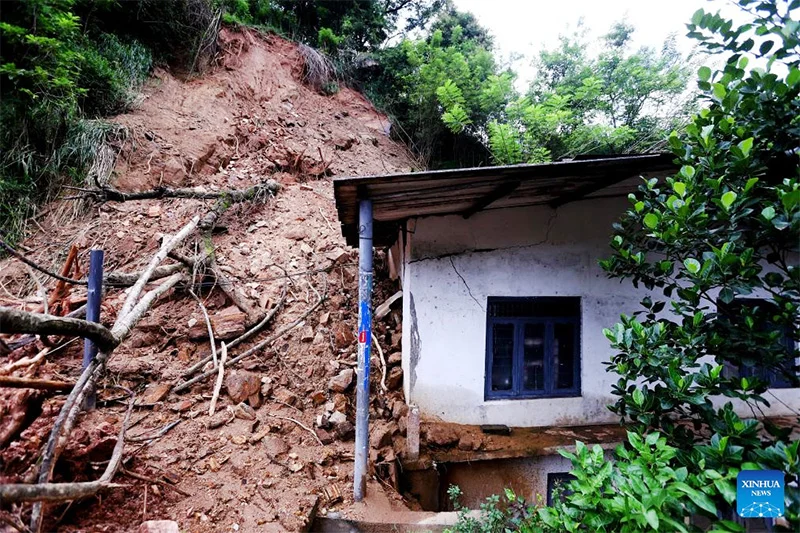
The World Bank has approved USD 110 million in additional financing to rebuild around 600 kilometres of roads damaged by Cyclone Ditwah, with the investment aimed not merely at restoring connectivity but at making critical transport infrastructure more resilient to future climate shocks.
The financing comes against a much larger recovery requirement for the transport sector, estimated at USD 1.31 billion, highlighting the scale of the infrastructure challenge following one of the most destructive weather disasters to hit the country in recent years.
The World Bank said the additional financing, provided through the International Development Association (IDA) Crisis Response Window, would support road reconstruction incorporating improved drainage, landslide protection and upgraded engineering standards.
‘Cyclone Ditwah has had a devastating impact on connectivity across Sri Lanka, but rebuilding also gives us an opportunity to build back stronger, said Gevorg Sargsyan, World Bank Group Country Manager for Sri Lanka and Maldives.
The World Bank said the programme would go beyond repairing damaged roads, helping reconnect farmers with markets, communities with essential services and households with economic opportunities.
The additional financing will extend the Inclusive Connectivity and Development Project (ICDP) by three years, taking total World Bank transport investment under the operation to USD 610 million.
The World Bank’s December 2025 GRADE assessment estimated Cyclone Ditwah had caused USD 4.1 billion in direct physical damage, equivalent to around four percent of GDP. Infrastructure accounted for approximately USD 1.735 billion, or 42% of the total, with roads, bridges, railways and water systems among the heavily affected assets.
The Bank has stressed that the USD 4.1 billion estimate measures direct physical damage and does not include income or production losses or the full cost of recovery and reconstruction.
The transport sector alone suffered extensive disruption, making the rebuilding of road networks a critical component of the broader economic recovery.
The latest USD 110 million package is expected to directly benefit more than 830,000 people, while nearly two million people across eight districts are expected to benefit from improved connectivity.
The programme is also expected to support employment during reconstruction and improve market access for approximately 22,000 tea, vegetable and paddy farmers.
The World Bank’s intervention therefore combines immediate disaster recovery with a longer-term infrastructure objective: ensuring that money spent on reconstruction does not simply restore roads to their pre-disaster condition but reduces their vulnerability to the next extreme-weather event.
That approach is becoming increasingly important as climate-related disasters place additional pressure on already constrained public finances.
Rebuilding the same infrastructure repeatedly after floods, landslides and other disasters carries a significant economic cost, making resilience an increasingly important part of infrastructure investment decisions.
Business
SLIC Life offers Rs.1million free life cover to parents of children born on World Children’s Day 2026

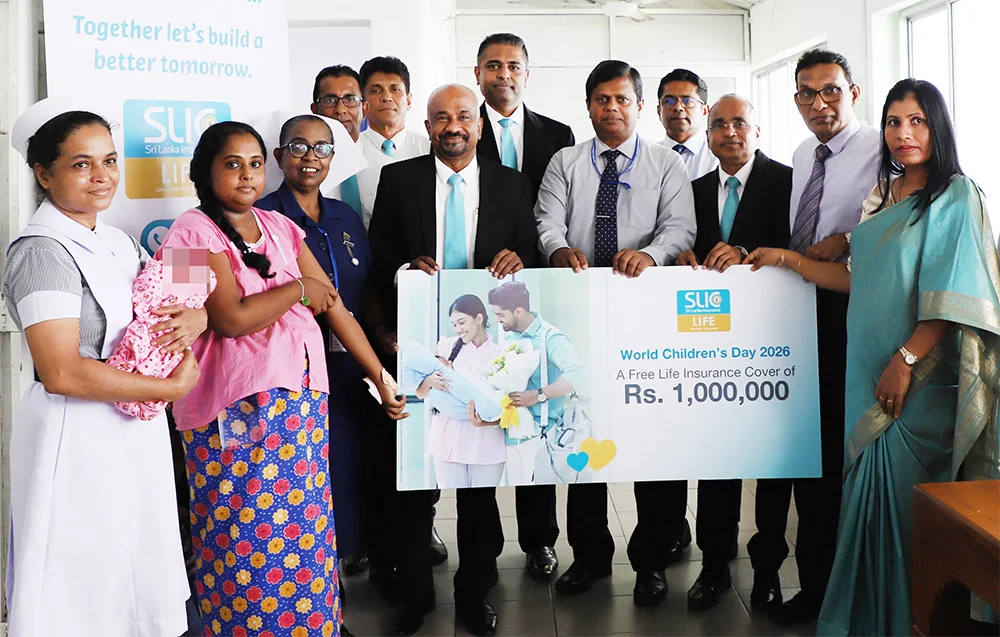
In celebration of World Children’s Day 2026, Sri Lanka Insurance Life (SLIC Life) has once again extended a Rs. 1 million free life insurance cover to the parents of every child born on 1 October 2026, across Sri Lanka. Now in its fifth consecutive year, the initiative was implemented island-wide, covering hospitals across the country and enabling parents of newborns to benefit from this special offering.
Beyond providing financial protection, the initiative seeks to highlight the importance of planning for a family’s financial security from the very beginning of a child’s life.
“The birth of a child marks the beginning of a new journey filled with hopes, dreams and aspirations. At SLIC Life, we believe that protection should begin from the very start of that journey. Through this initiative, we aim to create greater awareness of the importance of planning ahead and the role life insurance can play in safeguarding families against life’s uncertainties. As we continue this initiative for the fifth consecutive year, we remain committed to extending meaningful protection to Sri Lankan families and contributing towards a more secure future for the next generation,” said Dr. Sameera Dharmasena, Chief Executive Officer of SLIC Life.
Launched in 2022 as part of SLIC Life’s Corporate Social Responsibility (CSR) programme, the World Children’s Day initiative was introduced with the aim of supporting parents and strengthening financial security for families at an important stage in their lives. Over the years, the initiative has become a significant part of SLIC Life’s annual CSR calendar, reflecting the company’s broader commitment to children, families and communities.
SLIC Life’s commitment to children and education extends across several long standing CSR initiatives. The ‘Pasal Piriyatha Surakimu’ programme, launched in 2007, has benefited over 3,365 underprivileged schools through initiatives including classroom refurbishments, water facilities, libraries and learning resources. The 2026 edition of the programme is scheduled to be carried out in November, continuing SLIC Life’s efforts to enhance learning environments for children across the country. Complementing this, the ‘Suba Pathum Scholarship Programme’, which has been conducted since 2014, has now awarded 2,425 scholarships valued at Rs. 265 million to children of policyholders who demonstrate excellence in national examinations. The programme reflects SLIC Life’s continued focus on supporting educational aspirations and creating opportunities for the next generation.
Children remain at the heart of SLIC Life’s commitment to building a more secure future. Through the annual World Children’s Day initiative and its wider CSR programmes, SLIC Life continues to demonstrate that the value of insurance extends beyond financial protection, contributing to stronger and more resilient families and communities.
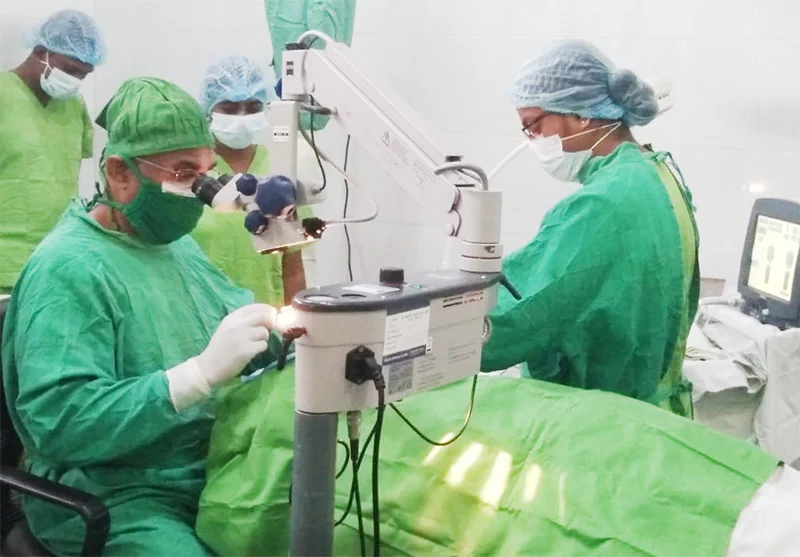
At a recent seminar HelpAge Sri Lanka (HASL) thanked local and foreign donors for strengthening the on-going free cataract surgeries program conducted by HelpAge Eye Hospital, Wellawatta for less- privileged elders over 55 years.
According to HelpAge Eye Hospital statistics the free cataract surgery programme was commenced in 2002 and over 55,000 surgeries have so far been performed for elderly citizens.
Head of HelpAge Eye Hospital Mahanama Wijesinghe said needy persons over 55 years of age could contact the hospital on telephone numbers 0112555759 and 0112589450 for free cataract surgeries.
‘Steps have been taken to conduct surgeries within a short duration of 30 days after attending the Eye Hospital clinic, he said.
Wijesinghe thanked all donors for their donations towards helping underprivileged citizens of the country.
HelpAge, Executive Director Dr. Harsha Bandara said HelpAge also conducts free medical and eye camps for needy elders and thanked donors for their donations towards this meritorious cause.
He requested philanthropists and donors to make their contributions for the sake of the needy.

Establishment of an Institutional Framework to Inagurate Upper Hydro Catchment Areas Management Authority
Introduction of Flora and Fauna (Regulation of actions of the Indigenous Community within the nominated areas) Regulations
M. M. D. J. Senarathne, appointed Director General of the Department of National Botanical Gardens

Harmanpreet Kaur steps down as India captain

Turkiye, Pakistan agree Saudi Arabia military deployment under Mecca pact

Rumesh Tharanga among nominees announced for World Athlete of the Year 2026

‘Dates have the highest sugar content to fight Coronavirus’

Sunday Island 27 December – Headlines

#SundayIsland 17th December – Headlines

Sunday Island – 28th March

Sunday Island Headlines – 21 March

Sunday Island – 21st February – Headlines
-

 Latest News7 days ago
Gold winner Tharanga gets brand-new Honda Vezel from SLAAJ
-

 News6 days ago
US-assisted ‘Ice’ detection: NPC to examine IGP’s move to transfer drug-busting team
-

 Features7 days ago
Why Sri Lanka needs an Inclusive Civic Nationalism – urgently
-

 Editorial5 days ago
Colombo Port drug bust: The plot thickens
-

 News7 days ago
Civil society activist accuses govt. of favouring Ven. Gnanasara
-
 Midweek Review7 days ago
Dappula’s Easter Sunday ‘grand conspiracy’ claim demolished
-

 Editorial7 days ago
When crime bosses rise above law and shrines
-
Editorial6 days ago
Drug busting, transfers and trust deficit