
Business
Getting the gaming regulations right; Advocata calls for independence in the Gambling Regulatory Bill


Regulators must hold the cards—not the minister
The Advocata Institute urges the Government of Sri Lanka to withdraw and redraft the proposed Gambling Regulatory Authority Bill, citing its most pressing flaw, the excessive and unchecked powers vested in the Minister of Finance, which compromise the independence of the regulator and jeopardize the integrity of the industry.
“The independence of a regulatory body is nonnegotiable. Without it, we risk creating a framework that lacks credibility, is vulnerable to political interference, and cannot deliver on its mandate,” said Sudaraka Ariyaratne, Research Consultant at Advocata. “In its current form, the Bill does not create a regulator. It creates a proxy.”
Under the draft law, the Minister holds a sweeping authority to appoint the regulator’s Director General (DG) and board members, issue binding directives, and singlehandedly make regulations. Such over centralization of power departs from international best practices and undermines the very rationale for a statutory regulator which is to provide impartial, consistent, and transparent oversight.
Advocata proposes that appointments to the Board should be subject to approval by the Constitutional Council, the DGl should be selected through a competitive process like in the private sector, and rulemaking power should lie with the Authority itself mirroring models like Sri Lanka’s Securities and Exchange Commission (SEC Act No. 19 of 2021).
While independence is the cornerstone issue, the draft bill suffers from other critical policy shortcomings:
Key Policy Issues in the Current Draft
● No Representation from the Tourism Sector:
The bill fails to include ex officio representation from the Sri Lanka Tourism Development
Authority (SLTDA), despite the strong link between gaming and tourism. Hospitality is also not considered a qualification to be appointed to the board.
● Lottery Sector Exemptions:
The draft bill exempts the National and Development Lotteries Boards from regulation,
even though lotteries are a form of gambling. This leaves the state-run lottery industry unregulated, despite concerns over financial mismanagement and consumer protection.
● Lack of Provisions for Online Gambling:
The bill ignores the growing online gambling sector, with no requirements for patron registration or control over foreign operated platforms. Advocata recommends explicit provisions to regulate access and monitor harmful effects, particularly those emerging from crossborder digital platforms who have promotional partnerships with local sporting authorities
● Weak Revenue Oversight:
The Authority lacks any mechanism to trace operator revenues or enforce tax compliance. This leaves room for underreporting and revenue leakage.
● Inadequate Penalties for Violations:
Offenses under the draft bill are met with fines as low as LKR 100,000 and imprisonment up to two years is grossly inadequate for a billion rupee industry.
The Gambling Regulatory Authority Bill, while timely and necessary, must be reworked to ensure it establishes a truly independent, empowered, and credible institution. Advocata calls on the government to reintroduce the bill after public consultation and expert review to address the structural and regulatory gaps that persist in the current draft.


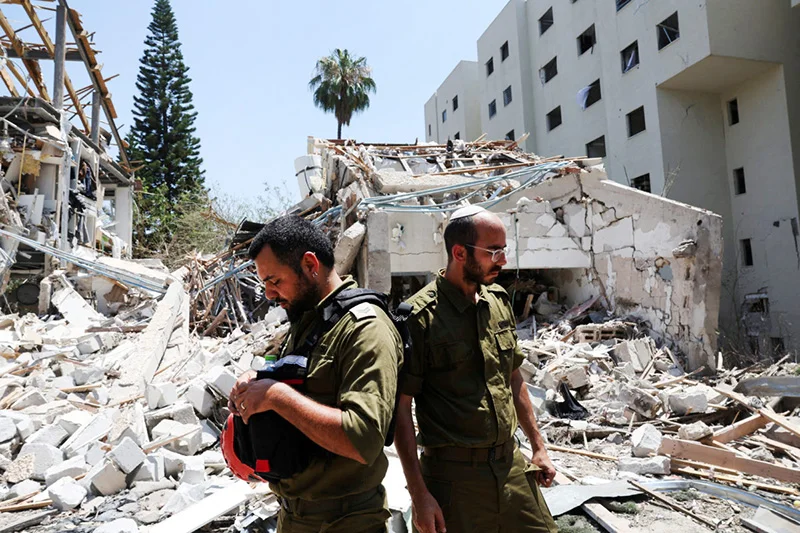
The U.S. and Israeli strikes on Iran have reignited geopolitical tensions in the Middle East, stoking fears of a broader conflict that could disrupt critical energy supply routes – particularly the Strait of Hormuz, through which roughly one-fifth of the world’s oil supply flows. Brent crude has already edged higher, and global oil markets warn prices could climb toward, or even exceed, US$80–100 a barrel if hostilities escalate.
Against this backdrop, an independent economic analyst told The Island that for Sri Lanka – a small, fuel-importing economy with limited domestic energy resources – the implications could be significant.
“Sri Lanka imports over 90% of its petroleum requirements, and any sustained rise in global crude prices would expand the annual import bill, placing renewed pressure on already tight foreign exchange reserves,” he said.
Even moderate spikes in oil prices, he noted, tend to filter quickly through the domestic economy. “Higher fuel costs translate into increased transport and production expenses, which feed into inflation and erode household purchasing power. Freight charges for essential goods – from food items to industrial inputs – would also rise.”
“The Middle East remains a key source of remittances and export demand,” the analyst explained. “A large share of Sri Lankan migrant workers are employed in Gulf economies, while regional markets absorb tea and other exports. Heightened instability could weaken remittance inflows and soften demand, further straining the balance of payments.”
When asked whether the Central Bank of Sri Lanka (CBSL) might be compelled to shift policy in response, the analyst said the monetary authority faces a delicate balancing act.
“Rising import inflation stemming from higher global energy prices could push the Central Bank to maintain – or even tighten – its monetary policy stance in order to safeguard price stability and support the rupee. A firmer stance may be deemed necessary to anchor inflation expectations and preserve market confidence. The Central Bank is therefore likely to monitor inflation data closely in the coming weeks to assess whether energy-driven price pressures prove temporary or more entrenched,” he said.
Meanwhile, Ceylon Petroleum Corporation (CPC) Chairman S. Rajakaruna said that Sri Lanka’s fuel imports – sourced primarily from Singapore and India – reduce immediate exposure to supply disruptions directly linked to Middle Eastern routes. He also sought to allay public concerns, noting that the country currently maintains sufficient fuel stocks for approximately one month and that there need not be any queueing up by the public to hoard supplies.
However, the analyst cautioned that while physical supply may remain stable, global price pass-through effects are an unavoidable risk.
Meanwhile, Opposition politician Wimal Weerawansa said that official assurances of “one month’s stock” tend to unsettle the public, arguing that such statements evoke memories of past shortages and public distress.
By Sanath Nanayakkare
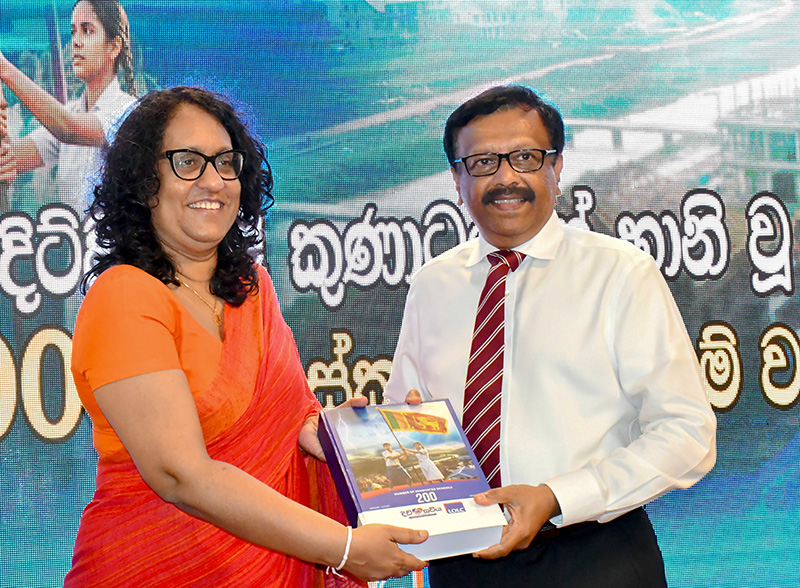
The Ministry of Education officially recognised LOLC Holdings PLC for its flagship humanitarian initiative, Divi Saviya, at a special ceremony held on 27th February 2026 in Battaramulla. The event marked the second time the Ministry has acknowledged the programme’s contribution to the nation’s education sector.
Group Managing Director/CEO Kapila Jayawardena presented a project update to Prime Minister and Education Minister Dr. Harini Amarasuriya, highlighting the rapid restoration of 200 schools under Phase 02 of ‘Obai, Mamai, Ape Ratai’. The schools were repaired and handed over within just 45 days, enabling students displaced by Cyclone Ditwah to safely resume learning.
Phase 02 follows a needs assessment that identified 200 damaged schools and 4,000 displaced families. Implemented with Divisional Secretariats and Disaster Management Centres, the Rs. 500 million programme has delivered Family Super Packs and school renovations across six districts.
Kapila Jayawardena stated, “It was a privilege to share these outcomes with the Prime Minister. This recognition reflects how private sector collaboration can complement government efforts during national challenges.” Plans are underway to fully rebuild select schools destroyed by the cyclone.
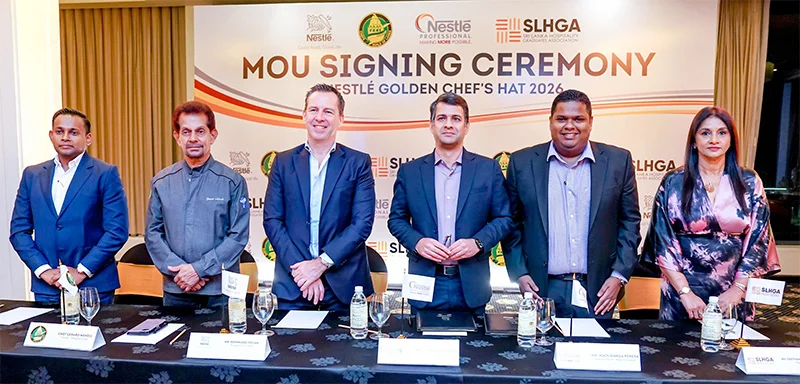
Nestlé Professional, the B2B arm of Nestlé Lanka, signed a Memorandum of Understanding (MoU) with the Chefs Guild of Lanka and the Sri Lanka Hospitality Graduates Association to collaborate in organizing the Nestlé Golden Chef’s Hat and Nestle Golden Chef’s Hat Junior Competition 2026. This islandwide culinary competition aims to identify, nurture, and develop emerging culinary talent within Sri Lanka’s hospitality industry, reinforcing Nestlé Professional’s commitment to supporting the growth of the hospitality sector and the next generation of chefs.
The Chefs Guild of Lanka will support the Professional category of the Nestlé Golden Chef’s Hat Competition 2026, facilitating eight regional competitions across the island. These regional rounds will provide a competitive platform for professional chefs to showcase their culinary expertise while helping them to develop their culinary skills further.
In parallel, Nestlé Professional Sri Lanka, in collaboration with the Sri Lanka Hospitality Graduates Association and Chefs Guild of Lanka, will organize the Junior Nestlé Golden Chef’s Hat Competition 2026, aimed at nurturing students within Sri Lanka’s hospitality sector. The regional rounds of the junior competition will be conducted across prominent hotel schools island‑wide, creating a structured platform to identify, mentor, and inspire the young students who aspire of becoming the top chefs in the country and world-wide.
Bernie Stefan, Chairman and Managing Director of Nestlé Lanka commented, “For 120 years, Nestlé has been enriching Sri Lankan lives by unlocking the power of food and beverages to enhance quality of life. This commitment has also been demonstrated in our endeavour to strengthen Sri Lanka’s foodservice ecosystem. The Nestlé Golden Chef’s Hat Competition 2026 and Junior Competition is a platform that brings together industry expertise, education, and opportunity – empowering both professional chefs and hospitality students to reach their full potential.

War photographer Paul Conroy dies as tributes paid

Allies of US in the Gulf bear brunt of Iran attacks

Dry weather will prevail in most parts of the island

Israel resumes attacks as Iran vows to avenge supreme leader’s death

CPC has enough fuel stocks

Lanka, Pakistan strengthen ties at 13th JEC

‘Dates have the highest sugar content to fight Coronavirus’

Sunday Island 27 December – Headlines

#SundayIsland 17th December – Headlines

Sunday Island – 28th March

Sunday Island Headlines – 21 March

Sunday Island – 21st February – Headlines
-

 News7 days ago
Prime Minister Attends the 40th Anniversary of the Sri Lanka Nippon Educational and Cultural Centre
-

 Opinion3 days ago
Jamming and re-setting the world: What is the role of Donald Trump?
-

 Sports7 days ago
Dottin out obstructing the field as Sri Lanka clinch series
-
 Features3 days ago
An innocent bystander or a passive onlooker?
-
 Features5 days ago
Building on Sand: The Indian market trap
-
 Opinion5 days ago
Future must be won
-
 Features4 days ago
Ratmalana Airport: The Truth, The Whole Truth, And Nothing But The Truth
-
 Business4 days ago
IRCSL transforms Sri Lanka’s insurance industry with first-ever Centralized Insurance Data Repository