
Editorial
Gathering momentum in anti-Covid drive

The vaccination program against Covid-19 in this country has begun gathering momentum and, predictably, many questions and controversies have also began surfacing. Several opposition MPs from the Samagi Jana Balavegaya and the JVP proclaimed that they will not jump the queue and avail themselves of the special vaccination privilege granted to MPs. They have received some left handed compliments for this gesture with some commentators lauding what they have done in this regard but adding that they are not averse to enjoying the many other privileges lavished on our legislators. These are too many to recount and in any case well known to the electors who sent them to parliament. Vaccinating 225 parliamentarians will obviously not disrupt a roll out involving the administering of millions of doses to a sizable proportion of our population. But a wrong signal has gone out that some are more equal than others in this country.
We’ve been treated to telecasts of some MPs driving to the Army Hospital to get their jabs. Others have gone on the airwaves to say why they will not utilize the privilege. The JVP leader Anura Kumara Dissanayake said the other day that the Danish premier has said he was on the bottom of the priority list in his country. A handful of our MPs, including the health minister – who incidentally took the Dammika peniya – got infected with the virus and all, thankfully, have recovered. But former Speaker WJM Loku Bandara died on Covid, reportedly having declined to be put on a ventilator. MPs have not decided on party lines whether they will or will not get themselves vaccinated on a priority basis. There was even one report of reluctance of some Tamil MPs to get vaccinated at the Army Hospital. This earned them a well deserved rap on the knuckles from the army commander.
We run in this issue of our newspaper some articles discussing the vaccination program. One contributor has confessed delight at the aggressive questioning of the deputy health minister of Viyathmaga fame on a national television program. This worthy, trying to justify preferential treatment for MPs , looked like a “deer caught in the headlights” and did not even seem to himself believe what he was saying, this writer has said. The Island reported yesterday that Venerable Athureliya Ratana, who fought his way to a national list seat in the legislature was taking an Indian jab to go to China. The venerable priest who’s had many avatars in his political career, entered parliament this time round with the Ape Janabala Party livery. He’d previously been elected on the tickets of the Jathika Hela Urumaya, United People’s Freedom Alliance and the UNP. Having been vocal on the quality of the Indian vaccine and virtues of ayurvedic protection against the virus, he said he took the jab to avoid long quarantine in China he would shortly visit. He clearly did not wish to scuttle his trip to live up to previously stated positions.
We are also running an informative update on the Covid-19 vaccine written by a senior consultant paediatrician who is president of the Vaccine and Serum Forum of Sri Lanka. He has given a great deal of useful information and said that “the majority of the vaccines used so far may not provide the expected picture-perfect immunity and the world may continue to have Covid-19 infection.” But based on evidence, there has been speculation claiming that the vaccination could provide almost 100% protection from death which “is what we all want.”
The government has planned to buy many million doses of the Covishield vaccine from the Serum Institute of India, the world’s largest vaccine manufacturer, and the State Pharmaceutical Corporation is reported to have placed an order for 18 million doses already. There is no word yet of when this supply is expected to arrive. But vaccination is proceeding according to plan and hopefully the inoculation of front line workers fighting the pandemic can be soon completed. The half a million doses gifted by India was landed at Katunayake at the end of last month and vaccinations commenced the very next day. Despite all the negative recent commentary about India in the local media, Sri Lankans must be grateful for India’s contribution to fight the virus. President Gotabaya Rajapaksa who received the first consignment at the Bandaranaike International Airport thanked the people of India for their generosity.
In addition to the Indian vaccine, 300,000 doses donated by China is also due in the short term. The World Health Organization (WHO) will provide 20 percent of our requirements as a grant. As two doses are needed for each person inoculated, half as many people as the number of doses purchased or obtained as gifts/grants will get the needed cover. But it has been stressed that total immunity is not possible and various success rates for the different vaccines have been published. Funds for the procurement have been accorded the highest priority; yet we must guard against the delays too often encountered in government purchases. While nobody must be allowed to make a fast buck on procuring the vaccine – let us not forget the recent ruckus over PCR testing machines – there has to be a consciousness that too much red tape can work against us in a buyers’ market.
The private sector has been granted some space to help fight the pandemic and PCR testing is available in some private hospitals. It may be worth exploring whether they should also be permitted to procure the vaccine and offer inoculation to those who can afford to pay. In one of the articles we run today, the writer has said that countries like India, Pakistan and Bangladesh are moving in the direction of permitting retail sale of the vaccine. He has expressed the opinion that this is a sensible move that will help take some pressure off state facilities. This has already happened in the case of ordinary healthcare and also in education. Private hospitals have already begun providing Covid treatment in spaces obtained in hotels without guests. So allowing them to also offer vaccination should be considered.


Thursday 12th March, 2026
It is not possible to predict who will emerge victorious in the ongoing war in the Middle East or whether the conflict will end without a clear winner though US President Donald Trump and Israeli Prime Minister Benjamin Netanyahu would have the world believe that they will surely be the winners. The US-Israel military power is doubtlessly far superior to that of Iran, but in a war of this nature, military might alone does not guarantee a clear victory.
Difficult as it may be to predict who will win in the current Gulf conflict, the overall loser is already known; it is the world economy. Global markets are heavily reliant on President Trump’s assurance that the war will not last long, and the release of the G7 strategic oil reserves to stabilise the world oil supply. But Trump’s most intense airstrikes on Tuesday have not yielded the desired results. Iran remains defiant and has raised the stakes for the global economy by threatening to bring oil exports from the region through the Strait of Hormuz to a complete halt unless the US and Israel stop attacks. It continues to fire missiles and carry out drone attacks on US interests in the region. Trump has announced that the US will seriously consider providing security to the ships sailing through the Hormuz Strait, but whether the US is equal to the task is the question. It is being argued in some quarters that Trump and Netanyahu have already bitten off more than they can chew.
There is reason to believe that Trump went to war with Iran without a proper assessment of the ground situation. His plan was to make short work of the current Iranian regime with shock-and-awe aerial bombardments and the assassination of Iranian Supreme Leader Ayatollah Ali Khamenei, but his plan has apparently gone awry. The slain Iranian leader’s son has been elected the Supreme Leader. Trump may have expected the Iranian anti-government protesters to make the most of the ongoing bombing spree, come out in their millions and bring down their embattled regime, but they are silent today. Perhaps, they are too scared to challenge the beleaguered regime, which has warned that ‘every soldier has his finger on the trigger’ and protesters will be treated as traitors. It is also possible that the protesters are now disillusioned with the US after realising that Washington has sought to use them as a cat’s paw in its efforts to grab Iran’s oil resources.
Has the US made, in Iran, a military miscalculation similar to the one in Afghanistan? The US Intelligence community and the military estimated that Kabul was resilient enough to hold out for several months after the withdrawal of the US troops in 2021. But that city fell to the Taliban in days, causing the then US President Joe Biden to admit that the collapse had happened “more quickly than the US had anticipated”.
Iran may not have anticipated a joint US-Israel military operation of this magnitude. It remains to be seen whether Iran can sustain its missile and drone attacks vis-à-vis the US-Israeli air strikes on its arms stockpiles and military installations. However, what one gathers from the views of military analysts is that it is very unlikely that President Trump will go so far as to deploy ground troops in Iran, with about 59% of Americans opposing his war, according to opinion surveys. In its war for oil in Iraq, the US had the backing of a much broader international coalition.
Nothing could be more humiliating to the US than Washington’s call for help from Ukraine to deal with the Iranian drones. Ukrainian President Volodymyr Zelensky, whom President Trump once showed the door during a White House meeting, has confirmed that the US sought his help to defend its allies in the Persian Gulf against the Iranian drones. Did Trump start a war without a proper assessment of the enemy’s drone capability?
The enormous economic cost of the Middle East conflict will have to be borne by not only the parties thereto but also by the entire world. Trump’s assurances and the G7 responses have prevented panic in global markets, but unless the US and Israel end the war soon and take steps to keep the Strait of Hormuz functional, oil prices will soar again, pushing the world closer to a global recession. If Trump and Netanyahu stop their war midway, they will face a domestic political backlash. Trump and Netanyahu have the Epstein files and corruption charges to contend with, respectively. The Trump administration is facing midterm elections in November. Politically speaking, Trump and Netanyahu are on a tiger ride in the Middle East.
The biggest challenge before the US and Israel in the ongoing conflict is to prevent Iran from shifting the war to the economic front, and make the global economy scream.
Wednesday 11th March, 2026
There can be no bigger affront to Karl Marx’s legacy than the JVP’s claim that it espouses Marxism. Marx envisioned the creation of a future society free from exploitation. The latest fuel price hikes announced by the JVP-led NPP run counter to the Marxist principle of freedom from exploitation.
The sudden fuel price hikes, which have come close on the heels of the monthly fuel price revision announced on 28 February, cannot be considered legal, for they are not consistent with the Cabinet-approved fuel pricing formula. The government insisted during the recent panic buying and hoarding of fuel that the existing petroleum stocks were sufficient for more than one month, and there was no need for the public to queue up outside filling stations.
Chairman of the Ceylon Petroleum Corporation (CPC) D. J. Rajakaruna, flanked by Cabinet Spokesman Dr. Nalinda Jayatissa, gave an assurance, at a recent post-Cabinet media briefing, that the local fuel prices would not be increased in view of the global situation at least for another month or two. The fuel price revision on 28 February is proof that neither the CPC nor the Indian Oil Company (IOC) nor Sinopec purchased fuel at the current world market prices. Minister Jayatissa has reportedly claimed that fuel consumption has risen sharply over the past several days, leading to a drop in the existing reserves, and fuel had to be procured at higher global market prices. There is no way the government can justify jacking up fuel prices because the CPC prices revised on 28 February were cost reflective, and fuel stocks currently being released to the market were procured at much lower prices. Therefore, the latest fuel price increases are nothing but unfair and irrational. The motive of the government is to maximise profit at the expense of the public.
A CPC Director also made a vain attempt yesterday to justify the fuel price hikes. He said that by increasing the prices of the existing petroleum stocks, the government had sought to prevent a massive price hike upon the arrival of new fuel shipments. His flawed logic is an insult to the intelligence of the public. It is doubtful whether he was aware that oil had dropped to USD 90 per barrel from USD 119 per barrel in the world market overnight as US President Donald Trump predicted that his war with Iran was nearing its end, and G7 countries took steps to release strategic petroleum reserves to stabilise the market.
It is being argued in some quarters that fuel price increases will help reduce fuel consumption. There is no gainsaying that fuel consumption has to be curtailed during a global crisis, but that objective can be achieved with the help of QR-based fuel rationing. Huge increases in fuel prices are bound to push inflation up, with the prices of all essentials soaring. Private bus owners and trishaw operators have already demanded fare revisions. Even those who have no knowledge of Keynesian macroeconomic theory are familiar with the concept of sticky prices. Price increases are not followed by corrections in this country, and the Consumer Affairs Authority is a paper tiger.
The Opposition is of the view that the government has increased fuel prices to meet the cost of additional thermal power to be produced to overcome a generation shortfall caused by low-grade coal imports. This argument is tenable.
Meanwhile, fuel prices have an embedded debt-recovery levy that helps the CPC pass its legacy debt on to the public. This levy has enabled the IOC and Sinopec to make excessive profits, as they are not required to transfer the proceeds therefrom to the Treasury, according to a former petroleum minister. If so, the solution is to convert the debt-recovery levy into a special-purpose tax, which can be imposed on fuel marketed by IOC and Sinopec as well. It may also be possible to reduce the rate of the levy significantly by widening its application.
The unconscionable profits made from the sudden fuel price hikes are against the legal maxim that “no one should be enriched to the detriment of another”. The JVP-NPP government should be ashamed of fishing in troubled waters. It must stop exploiting the people who are struggling to make ends meet.
Tuesday 10th March, 2026
US President Donald Trump’s Epic Fury has left the world gnashing, with a global fuel shortage looming large. Oil prices have already surged past USD 100 a barrel amidst rising tensions in the Middle East. They are set to climb higher. The US-Israeli air strikes on Iran and retaliatory attacks are not likely to end any time soon. Both sides are targeting oil fields and storage facilities, sending shockwaves across the world.
Trump’s re-election led to euphoria in business circles, which mistakenly thought that he would not resort to anything that would adversely impact the global economy. But he has proved that he is not worried about the world economy at all. When Reuters recently asked him about the surging oil prices, he audaciously claimed: “They’ll drop very rapidly when this [the war on Iran] is over, and if they rise, they rise, but this is far more important than having gasoline prices go up a little bit.” Contrary to his prognosis, gasoline prices in the US rose from USD 2.92 a gallon, the lowest since 2020 to USD 3.40 a gallon. Trump’s plan to make short work of Iran has gone awry for all intents and purposes, and all signs are that the war will drag on indefinitely. It will be a huge gamble for the US to deploy ground troops in Iran. The Republican thinking, according to the likes of
hawkish Senator Lindsey Graham is now that Venezuela has fallen in line, the US may be able to gain control over about 30 percent of the global oil production if it defeats Iran and installs a puppet regime in Tehran. Hope is said to spring eternal.
Iran is apparently shifting the war to the economic front by closing the Strait of Hormuz, and doing everything possible to cause disruptions to the global oil supply. Worse, the intensifying conflict in the Middle East has raised significant concerns about a potential global recession due to energy supply shocks and crippled shipping routes. The region is a critical chokepoint, accounting for roughly 20% of global oil and liquefied natural gas shipments, and supply disruptions threaten to spike inflation and slow global growth.
Managing Director of the International Monetary Fund, Kristalina Georgieva, has warned about worldwide inflation risks arising from the conflict in the Middle East, pointing out that every 10% increase in oil prices, if sustained for most of the year, could lead to a 40-basis point rise in global inflation. This is an unnerving proposition, especially for vulnerable economies, such as Sri Lanka, which is emerging from a crippling economic crisis. The developing nations are without sufficient foreign currency reserves to withstand long-term shocks from a protracted Middle East conflict.
Bangladesh has reportedly been compelled to close its universities as part of a strategy to weather energy supply disruptions due to the Middle East conflagration and the closure of the Hormuz Strait. Other countries in this region and elsewhere may have to adopt such drastic measures to overcome possible fuel supply shortfalls. Bangladesh is reported to have posed daily limits on fuel sales due to panic buying and hoarding.
A trade unionist representing the Opposition in this country has warned of a possible fuel shortage despite the government’s assurances that there are sufficient petroleum stocks. He has urged the government to keep the public informed of fuel availability regularly. He may have issued that warning in good faith, but it is fraught with the danger of triggering another panic buying spree. It was with the greatest difficulty that the government brought fuel panic buying and hoarding under control a few days ago. Everyone ought to act responsibly at this juncture.
There is no need to hit the panic button yet, but urgent action is called for to prevent a possible fuel crisis. The available fuel stocks must be properly managed as the possibility of suppliers invoking the force majeure clause in agreements due to the worsening Middle East crisis and the resultant supply disruptions cannot be ruled out. It will be extremely difficult to replenish fuel supplies in such an eventuality. Prudence demands that the QR-based fuel distribution be reintroduced at the first sign of trouble. There’s no shame in rationing fuel during a global crisis.

Heat Index at ‘Caution level’ at some places in the Western, Sabaragamuwa, Southern and North-western provinces and in Monaragala and Mannar districts

Showers or thundershowers will occur at several places in the Western and Sabaragamuwa provinces and in Galle, Matara, Kandy and Nuwara-Eliya districts after 2.00 pm.

Power sector reforms jolted by 40% pay hike demand

UN scientific research ship here amidst ban on such vessels

Prez assures energy supplies for the time being

Historic address by BASL President at the Supreme Court of India

‘Dates have the highest sugar content to fight Coronavirus’

Sunday Island 27 December – Headlines

#SundayIsland 17th December – Headlines

Sunday Island – 28th March

Sunday Island Headlines – 21 March

Sunday Island – 21st February – Headlines
-

 News6 days ago
University of Wolverhampton confirms Ranil was officially invited
-

 News5 days ago
Peradeniya Uni issues alert over leopards in its premises
-

 News6 days ago
Female lawyer given 12 years RI for preparing forged deeds for Borella land
-

 News3 days ago
Repatriation of Iranian naval personnel Sri Lanka’s call: Washington
-
 News6 days ago
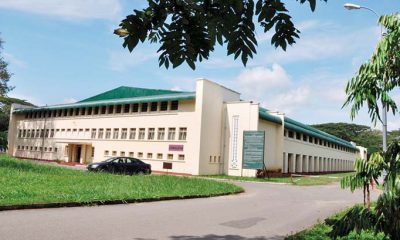
Library crisis hits Pera university
-

 News5 days ago
Wife raises alarm over Sallay’s detention under PTA
-

 News6 days ago
‘IRIS Dena was Indian Navy guest, hit without warning’, Iran warns US of bitter regret
-
 Latest News6 days ago
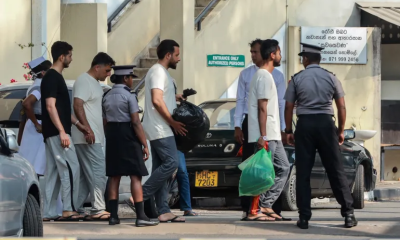
Sri Lanka evacuates crew of second Iranian vessel after US sunk IRIS Dena