
Sports
Ganganath and Senevirathne shine as Isipatana earn major honours

59th Battle of Brothers Big Match
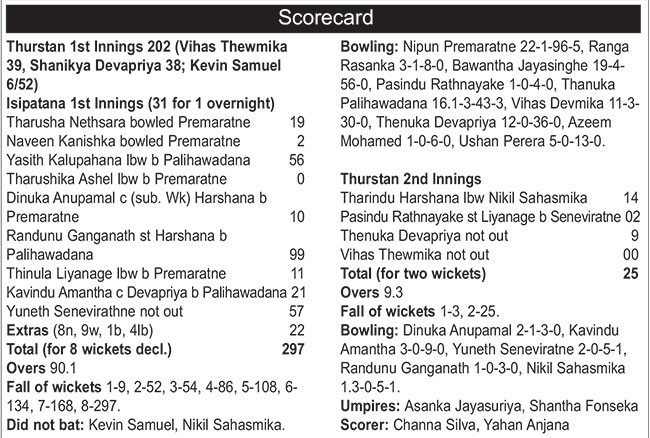
Isipatana earned major honours against their arch-rivals Thurstan as Randunu Ganganath with a top score of 99 runs and Yuneth Senevirathne with an unbeaten half-century excelled for them on day two of the 59th Battle of Brothers Big Match which ended in a draw at the SSC on Tuesday.
In reply to Thurstan’s 202 runs, Isipatana posted 297 for eight wickets declared as Ganganath, and Yuneth Senevirathne put on an eighth wicket stand of 129 runs.
Commencing from the overnight score of 31 for one wicket Isipatana lost four wickets before lunch but they managed to add 103 runs during the first session. Overnight batsman Yasith Kalupahana kept the scoreboard ticking with a half-century. He scored 56 runs inclusive of nine fours (in 98 balls) before being given leg before wicket to Thanuka Palihawadana.
Nipun Premaratne was the chief tormentor of Isipatana as he threatened to bowl them out for a low score. Premaratne completed a five-wicket haul either side of lunch and at one stage Isipatana were seven wickets down for 168 runs. That was when Ganganath was joined by number nine batsman Yuneth Seneviratne to guide them to safety.
Isipatana had a lead of 95 runs when Ganganath was stumped by Tharindu Harshana off the bowling of Thanuka Palihawadana just one run short of a century. Ganganath had faced 161 balls and scored six fours and a six in his knock. Seneviratne was unbeaten on 57 runs when Isipatana finally decided to declare their innings.
Thurstan in their second essay posted 25 runs for two wickets.


by Rex Clementine
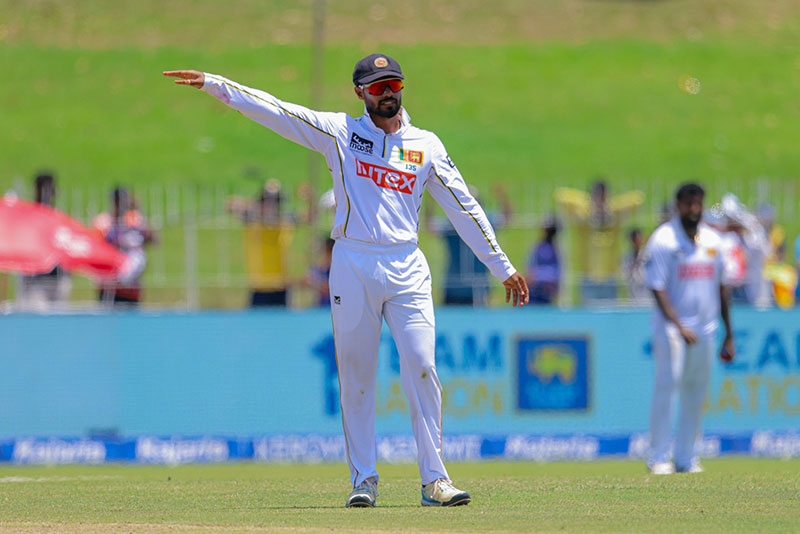
Sri Lanka’s Test captain Dhananjaya de Silva has done an Ian Botham. No, not by pulling off a miraculous victory against Australia at Headingley, but by resigning a minute before he was sacked.
The writing had been on the wall for DDS after he got his sums horribly wrong during the recent home Test series against India. His defensive approach from day one left Sri Lanka chasing the game rather than dictating terms and the hosts eventually surrendered the series.
There had also been growing criticism of DDS’s inability to lift the side when the chips were down. His laid back attitude, particularly the sight of him cracking jokes with team mates in the SSC dressing room balcony while Sri Lanka were following on, did not go down well with the cricket establishment.
Not that DDS was doing anything out of character. By nature, he is a relaxed, easy going individual who loves his video games and rarely seems to have a worry in the world. The mistake was made by those who handed such a character the Test captaincy and then expected him to turn into a fire breathing leader overnight.
DDS was so chilled out that even SLC’s photographers had reason to complain during the India Test series when the official team photograph was being taken.
Sri Lanka have been guilty of failing to groom leaders and in recent years the captaincy has too often fallen into someone’s lap by default rather than through careful planning. The result has been a revolving door of captains, with little thought given to succession.
DDS’s successor, Kusal Mendis, is no Mike Brearley or Ian Chappell when it comes to tactical nous, but to his credit, he has worked hard in recent years to shed his bad boy image and become a more responsible cricketer.
More than anything, Mendis has discovered consistency with the bat. Equally impressive in the eyes of the authorities has been his willingness to shoulder responsibility. He has never been one to duck a challenge, even when the workload has threatened to become overwhelming.
Currently, Mendis keeps wicket in both white ball formats while batting at the top of the order. With the additional burden of becoming Sri Lanka’s all format captain, he is set to be relieved of wicketkeeping duties in Test cricket.
The selectors are now on the lookout for a replacement ahead of the Pakistan assignment, although they are unlikely to turn to Niroshan Dickwella again. That particular chapter, it seems, has been closed.
Meanwhile, Chairman of Selectors Kapila Wijegunawardene has broken his silence over Wanindu Hasaranga’s omission, confirming that the star leg-spinner had indeed been dropped rather than sidelined through injury.
Wijegunawardene made little attempt to sugar coat the selectors’ disappointment with a player whose immense talent has not always translated into performances befitting his reputation.
“Hasaranga has not lived up to expectations, to be frank,” Wijegunawardene said.
“The player understands that too. We had expected a lot of him. His knowledge of the game is immense and he has much more to offer, and we are confident he will stage a comeback,” Wijegunawardene added.

by Reemus Fernando
St. Benedict’s College Kotahena completed their group stage matches with a crushing ten wickets win over St. Sebastian’s College Katuneriya while St. Joseph Vaz College Wennappuwa bounced back from their initial defeat with back to back victories to stay alive in the Under 19 Division I Tier ‘B’ tournament.
For Bens it was their fourth victory in the tournament on Wednesday. Their only blemish this season was against Dharmaraja. The Bens recorded victories against De Mazenod Kandana (by 140 runs), St. Aloysius’ Galle (by three wickets) and Taxila Horana (by 162 runs ) before cruising to a ten wicket win aganst St. Sebastian’s Katuneriya. Manikya Deshapriya with a four wicket haul (4 for 8 in six overs) and Vihanga Rathnayaka taking three wickets rattled their opponents for 64 runs in their final group ‘A’ match.
Group ‘C’ became wide open on Wednesday when St. Joseph Vaz beat Ananda College by 89 runs at Ananda Mawatha.
Batting first, St Joseph Vaz College posted 225 for eight wickets in their alloted 50 overs, with Damesh Mathisan leading the way with a valuable 124-ball knock of 88, his most notable batting performance this season. His patient innings included eight fours and a six. Amal Denuwan added 31 off 69 balls, while Savio Fernando contributed 24.
In reply, Ananda were bowled out for just 136 run with Danindu Sellaperuma’s 41 being the highest contribution.
Amal Denuwan took four wickets for 20 runs in an outstanding spell of 8.3 overs, including two maidens. Damesh Mathisan completed an impressive all-round display taking two wickets for 28 runs.
Thathnula Liyanage took one, while Oshen Binara claimed two for 19.
In their season opening encounter St. Joseph Vaz conceeded a 66 run defeat at the hands of Maliyadeva College Kurunegala. They were bowled out for 107 runs at Kadirana.
In their second encounter they bounced back as their bowlers dominated reducing Devapathiraja to 79 runs. Oshen Binara (4.5-1-14-4), Mayon Fernando (4-0-16-3) and Lowthuru Dilpahan (6-0-23-2) returned notable bowling figures. Isuru Induwara (31n.o.) and Savio Fernando (23n.o.) then guided them to victory putting up an unbroken third wicket stand of 48 runs.
Back to back victories now has helped the school keep alive their hopes of reaching the knockout stage. They will meet Lyceum International Wattala and Sri Dharmaloka College Kelaniya in their next two matches.
The victory has wide opened group ‘C’ with three teams registering two wins each. Ananda and Devapathiraja College Ratgama are the other teams to have recorded two wins.
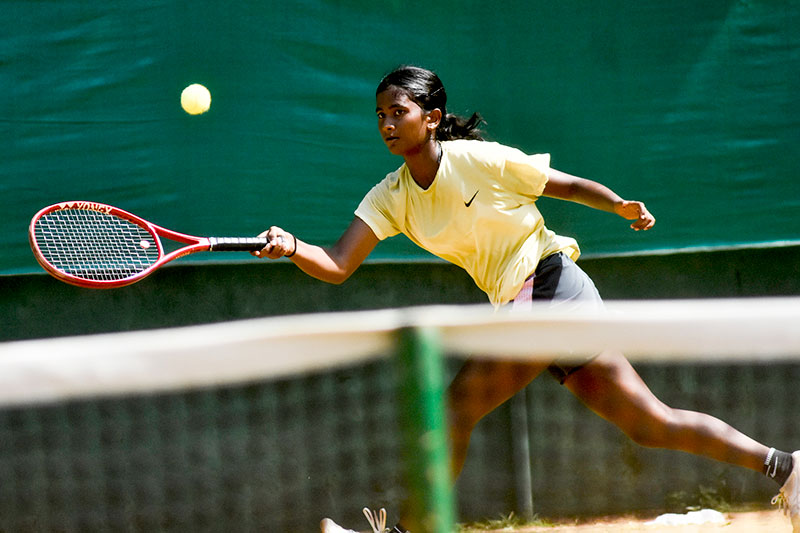
ATF 16 & Under Tennis
Kiyara Jayamanne is set to meet Risindi Hewawasam in the girls’ singles final after they won their semi finals of the ATF 16 & Under Colombo 2026 Week 1 tournament continued at the Sri Lanka Tennis Association courts.
Kiyara Jayamanne defeated fellow Sri Lankan Disini Samaraweera 6-3, 6-3 to book her place in the final. Risindi Hewawasam also secured a straight-set victory, overcoming Methuli Naotunna 6-2, 6-3.
The boys’ semi-finals saw Anthony Castigador of the Philippines dominate Sri Lanka’s Damsath Peiris, winning 6-0, 6-0. India’s Gurshaan Chahal completed the finalists’ line-up with a 6-2, 6-1 victory over Sri Lankan Yonal Dankubura.
-
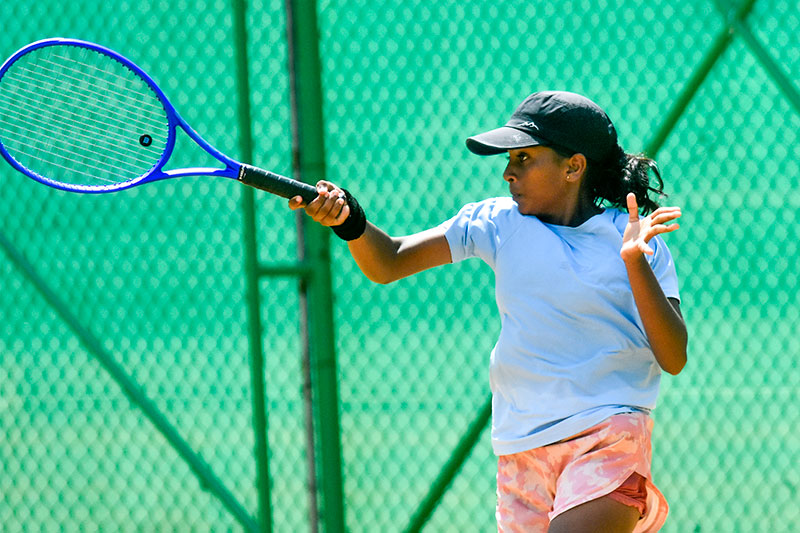
- Risindi Hewawasam
-
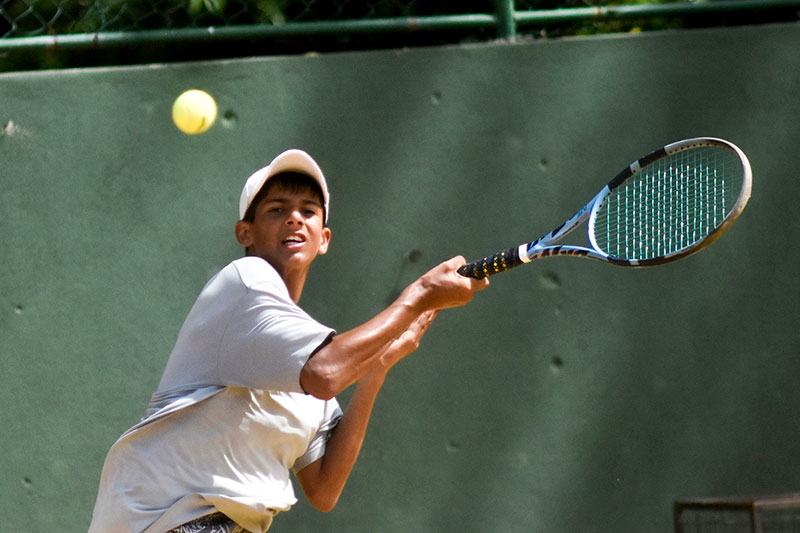
- Gurshaan Chahal
-
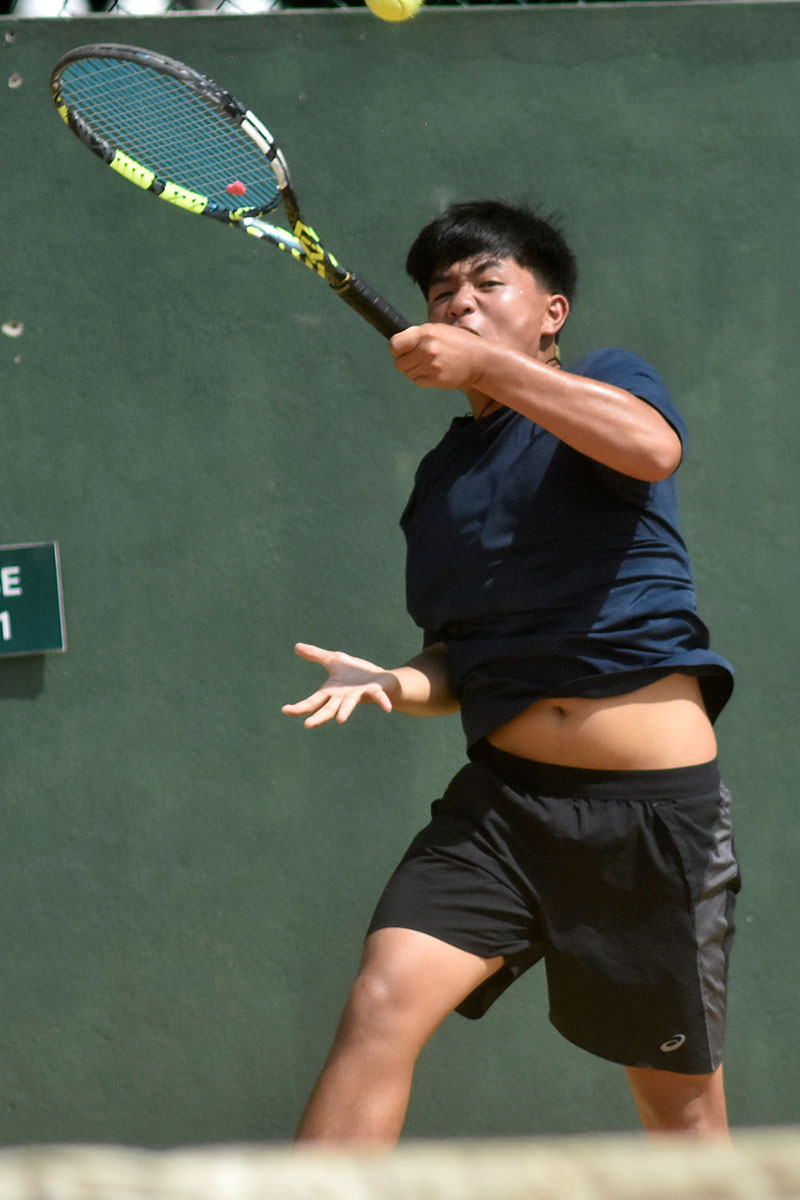
- Anthony Castigador (Pix by Kamal Wanniarachchi)

Showers or thundershowers will occur in most part of the island after 1.00 p.m.

Removing monk’s robes matter for Sangha to decide: Mahanayake Theras

NDB fraud Rs 60mn more than reported

President orders review of laws on treatment of imprisoned monks

BHC, Colombo: “LTTE remains a proscribed org. in the UK”

Sri Lanka runs out of essential anti-TB medicines, India comes to rescue

‘Dates have the highest sugar content to fight Coronavirus’

Sunday Island 27 December – Headlines

#SundayIsland 17th December – Headlines

Sunday Island – 28th March

Sunday Island Headlines – 21 March

Sunday Island – 21st February – Headlines
-

 Features5 days ago
The first woman in the foreign service or Ceylon Overseas Service it was then called
-

 Editorial6 days ago
Fuelling discontent and protest
-

 News4 days ago
Geneva takes up Sallay’s case and govt. ignores opportunity to answer accusations
-

 Foreign News6 days ago
Ten injured after car crashes into rugby supporters in Australia
-

 Latest News6 days ago
Tharindu Rathnayake, bowlers secure Asian Games Bronze for Sri Lanka
-

 News5 days ago
Nearly 20 Iranian tankers stranded off Lanka amid US sanctions
-

 Features4 days ago
Sri Lanka Cricket Bill: Governance reform is not yet a cricket strategy
-

 News5 days ago
Lanka enters new phase of prosecutions as hurdles clear